
As the United States moves toward the 2030 Census, a critical issue that has long distorted political representation is once again being left unresolved at the federal level. Prison gerrymandering—the practice of counting incarcerated individuals as residents of the districts where they are imprisoned rather than where they lived prior to incarceration—remains firmly embedded in the census framework. Despite years of advocacy, research, and growing public awareness, the U.S. Census Bureau has chosen not to implement a nationwide fix, instead placing responsibility squarely on states and local governments to address the problem themselves.
This decision carries significant implications, not only for how political power is distributed, but for how communities—particularly those already marginalized—are represented within the democratic process. At its core, prison gerrymandering is not a technical oversight. It is a structural issue that reshapes electoral maps, reallocates influence, and reinforces systemic inequities in ways that are both measurable and deeply consequential.
The mechanics of the issue are straightforward, but the impact is far-reaching. When incarcerated individuals are counted in the locations of the prisons where they are confined, those areas—often rural districts—receive an artificial boost in population. This inflated population count translates into increased political representation and, in some cases, greater access to resources tied to population metrics. Meanwhile, the communities from which these individuals originate—typically urban areas—lose representation, despite maintaining the social and economic ties to those individuals.
The result is a redistribution of political power that does not reflect actual community composition. Districts with large prison populations gain influence without gaining constituents who can participate in civic life, while districts that have experienced the removal of residents through incarceration are effectively penalized. This imbalance undermines the principle of equal representation, a foundational element of democratic governance.
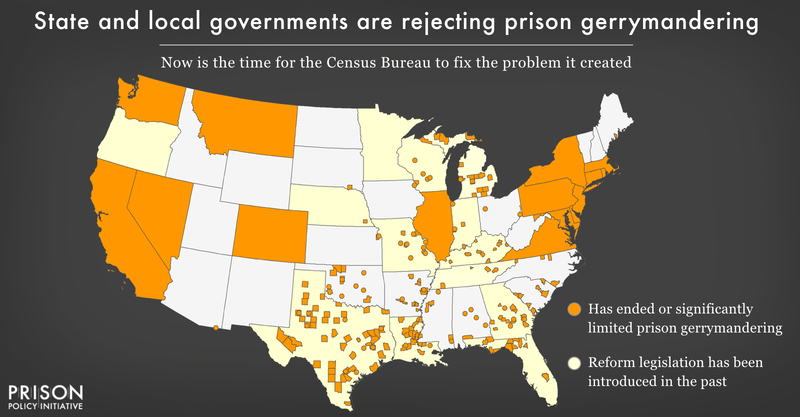
The Census Bureau’s decision to maintain the status quo for 2030 signals a continuation of this imbalance. Rather than implementing a uniform federal policy that would count incarcerated individuals at their last known address, the Bureau has deferred to states and local jurisdictions, allowing them to determine whether and how to adjust their own redistricting processes. While some states have taken steps to address prison gerrymandering through legislative or administrative changes, many have not, resulting in a patchwork system where representation depends heavily on geography.
This decentralized approach raises important questions about consistency and equity. When the correction of a systemic issue is left to individual states, the outcome is inherently uneven. Some jurisdictions may implement reforms that more accurately reflect population distribution, while others may continue to rely on outdated or inequitable practices. The absence of a federal standard means that the integrity of representation varies across the country, creating disparities that are difficult to reconcile within a unified national framework.
The implications extend beyond redistricting. Population counts derived from the census influence a wide range of policy decisions, from the allocation of federal funding to the planning of infrastructure and public services. When those counts are skewed, the effects ripple outward, shaping outcomes in ways that are not immediately visible but are deeply embedded in the functioning of government systems.
Within the broader context of justice reform, prison gerrymandering represents a critical intersection between incarceration policy and civic representation. It highlights how the consequences of incarceration extend beyond the individual, affecting entire communities and altering the distribution of political power. This connection is increasingly recognized within advocacy efforts and policy discussions, particularly in spaces focused on systemic reform, including those highlighted across Sustainable Action Now’s private prisons coverage.
The persistence of prison gerrymandering also reflects a broader challenge in addressing structural inequities. While awareness of the issue has grown, translating that awareness into policy change has proven more complex. The decision to defer responsibility to states suggests a reluctance at the federal level to impose a uniform solution, even as the need for such a solution becomes more apparent.
For communities affected by this practice, the consequences are tangible. Representation is diluted, resources are redistributed, and the ability to influence policy decisions is diminished. These effects are compounded in areas where incarceration rates are disproportionately high, often intersecting with broader issues of economic inequality and racial disparity. The result is a system that not only reflects existing inequities but actively reinforces them.
Addressing prison gerrymandering requires a shift in how representation is conceptualized. It involves recognizing that residency is not defined solely by physical location, particularly in the context of incarceration. Individuals who are temporarily removed from their communities do not lose their connection to those communities, nor do those communities lose their stake in the individuals. A more accurate approach would reflect these realities, ensuring that representation aligns with lived experience rather than institutional placement.
The path forward is not without precedent. States that have implemented reforms provide a model for how the issue can be addressed, demonstrating that change is both possible and effective. These efforts often involve reallocating incarcerated populations to their last known address for the purposes of redistricting, a process that requires coordination but yields a more equitable distribution of representation.
However, without a federal mandate, these efforts remain uneven. The 2030 Census decision underscores the need for continued advocacy, policy development, and public engagement. It highlights the importance of maintaining focus on issues that may not always dominate headlines but have profound implications for how democracy functions in practice.
The conversation around prison gerrymandering is ultimately a conversation about fairness—about ensuring that representation reflects reality and that political power is distributed in a way that aligns with the principles of equity and inclusion. It is a reminder that the structures underpinning governance are not static; they are shaped by decisions, policies, and the willingness to address systemic challenges.
As the countdown to the 2030 Census continues, the question is not whether prison gerrymandering will persist—it is how it will be addressed in the absence of federal action. The responsibility now rests with states, local governments, and the broader network of advocates and stakeholders committed to reform. The outcome will depend on the extent to which these entities are willing to engage with the issue and implement changes that reflect both the evidence and the principles at stake.
In the absence of a unified solution, the work of ensuring equitable representation continues at multiple levels, driven by the recognition that the integrity of the democratic process depends on the accuracy and fairness of the systems that support it.