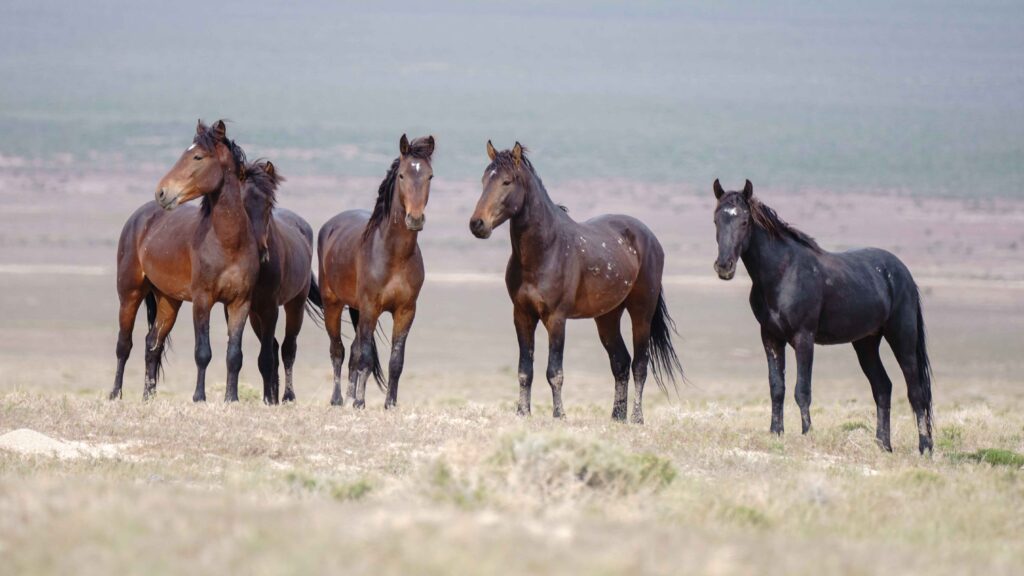
Across the sweeping deserts, grasslands, and mountain ranges of the American West, wild horses remain one of the most powerful living symbols of the country’s history. Their presence on public lands evokes images of frontier independence, resilience, and the untamed landscapes that shaped the identity of the United States.
Yet despite their cultural significance and legal protections, wild horses and burros continue to face serious threats. Management policies, land use conflicts, government roundups, and controversial holding programs have ignited a decades-long debate about how these animals should be treated and protected.
In response, a growing network of advocates, conservationists, researchers, and nonprofit organizations has mobilized under a shared mission: protecting wild horses and ensuring they can live freely and humanely on the lands they have occupied for generations.
The modern Protect Wild Horses movement represents a broad coalition of voices working to safeguard these animals through policy reform, humane population management, habitat protection, and public education. Organizations across the United States have devoted years to defending wild equines, challenging controversial government practices, and promoting science-based alternatives that prioritize both animal welfare and ecological balance.
For readers seeking to better understand the movement, the issues surrounding wild horse management reveal a complex intersection of environmental policy, public land stewardship, and ethical responsibility toward wildlife.
The Cultural and Historical Importance of Wild Horses
Wild horses have roamed North American landscapes for centuries. Their story is deeply intertwined with the history of exploration, settlement, and the development of the American West.
Originally descended from domesticated horses introduced by Spanish explorers in the 16th century, many of these animals eventually formed free-roaming herds across vast public lands.
Over time, wild horses became symbols of independence and the pioneering spirit that defined Western expansion. Their cultural significance inspired public concern as populations declined due to hunting, habitat loss, and government removal programs during the early twentieth century.
Public outcry ultimately led to one of the most important wildlife protection laws in the nation’s history.
The Wild Free-Roaming Horses and Burros Act of 1971
In 1971, Congress passed the Wild Free-Roaming Horses and Burros Act, a landmark law designed to protect wild equines from capture, harassment, and killing.
The legislation declared these animals to be “living symbols of the historic and pioneer spirit of the West.” It mandated that wild horses and burros be protected on public lands where they existed at the time of the law’s passage.
Responsibility for managing these populations was assigned primarily to the Bureau of Land Management (BLM) and the U.S. Forest Service, agencies tasked with maintaining healthy herd populations while balancing land use among wildlife, livestock grazing, and other public land activities.
While the law represented a major victory for conservation, debates about how to manage wild horse populations have persisted for decades.
The Modern Protect Wild Horses Movement
Today, several prominent organizations lead the national effort to defend wild horses and advocate for humane management policies.
Among the most influential groups is American Wild Horse Conservation, a nonprofit organization widely recognized as the nation’s leading advocate for free-roaming equines.
The organization focuses on promoting in-the-wild management strategies that allow horses to remain on their native lands while controlling population growth through humane methods.
One of its most notable initiatives is the development of the world’s largest fertility control program for wild horses. Using a vaccine known as PZP, wildlife managers can slow herd population growth without resorting to mass roundups or removals.
This approach has gained support among scientists and animal welfare advocates as a more compassionate alternative to traditional management practices.
Other key organizations also play important roles in protecting wild horses.
Return to Freedom, for example, operates a sanctuary in California dedicated to preserving wild horse bloodlines and protecting natural habitats. The organization works to ensure that genetically significant herds are safeguarded for future generations.
The Cloud Foundation, founded by filmmaker and advocate Ginger Kathrens, focuses heavily on public education and research. Through documentaries, field observation, and outreach campaigns, the organization has helped bring global attention to the behavior and social structure of wild horse herds.
Meanwhile, Wild Horse Education, based in Nevada, monitors government management programs and frequently engages in legal challenges aimed at preventing inhumane treatment and protecting horses from entering the slaughter pipeline.
Together, these organizations form a network of advocates working to reshape national policies surrounding wild horse management.
The Controversy Surrounding Helicopter Roundups
One of the most controversial aspects of wild horse management involves helicopter roundups, a practice used by government agencies to capture horses on public lands.
During these operations, helicopters chase wild horses across rugged terrain and funnel them into temporary traps where they are captured and transported to holding facilities.
Critics argue that the process is extremely stressful for the animals and can result in injuries, exhaustion, and the separation of family bands that have lived together for years.
Advocates also note that young foals and older horses are particularly vulnerable during these high-speed chases.
Animal welfare organizations have documented numerous instances in which horses collapsed or were injured during roundups, fueling calls for alternative management strategies.
In response, many advocacy groups now emphasize fertility control and habitat management as more humane approaches to maintaining sustainable herd populations.
The Growing Issue of Holding Facilities
Another major challenge involves the thousands of wild horses currently housed in government-funded holding facilities.
Over the years, captured horses have accumulated in off-range pastures and corrals across the country. Today, tens of thousands of animals remain in long-term holding environments far removed from their native ranges.
Critics argue that this system is both financially unsustainable and ethically problematic.
Maintaining these facilities costs taxpayers tens of millions of dollars annually. At the same time, many advocates believe that wild horses belong on public lands, not confined in holding pens for the rest of their lives.
Efforts to expand fertility control programs aim to reduce the need for roundups and prevent the continued growth of these holding populations.
The Threat of the Slaughter Pipeline
Perhaps the most alarming concern among wild horse advocates involves the risk that captured horses may ultimately enter the slaughter pipeline.
Although slaughtering horses for human consumption is largely prohibited within the United States, loopholes in existing regulations have allowed horses to be sold through intermediaries and transported to slaughterhouses in Mexico or Canada.
Advocacy organizations work tirelessly to close these loopholes and ensure that federally protected wild horses are never funneled into commercial slaughter operations.
Strengthening adoption programs, improving monitoring systems, and tightening regulations on horse sales are among the measures proposed to address this issue.
Land Use Conflicts on Public Lands
Wild horse management is also shaped by competing demands on public land resources.
Many of the same lands inhabited by wild horses are also used for livestock grazing under federal permits issued to private ranchers.
Advocates frequently argue that livestock grazing significantly outnumbers wild horses on public lands and contributes more heavily to land degradation.
They contend that wild horses are often blamed for ecological damage that may actually be linked to overgrazing by cattle and sheep.
Resolving these conflicts requires balancing the needs of wildlife, ranching communities, conservation efforts, and public land policy.
Humane Solutions for the Future
The Protect Wild Horses movement emphasizes solutions that allow horses to remain on the range while maintaining healthy population levels.
Among the most promising approaches is the expanded use of fertility control vaccines such as PZP.
This method prevents pregnancies temporarily without harming the animals or disrupting herd dynamics. It allows populations to stabilize gradually while preserving the natural behavior and social structures of wild horse bands.
Advocates also support increased funding for field monitoring, habitat restoration, and public education programs that encourage responsible stewardship of public lands.
By focusing on science-based strategies rather than reactive removal programs, supporters believe the nation can protect wild horses while preserving the ecosystems they inhabit.
Public Awareness and the Role of Advocacy
Protecting wild horses ultimately depends on public awareness and engagement.
Documentary filmmakers, photographers, wildlife biologists, and grassroots advocates have played essential roles in bringing attention to the challenges facing these animals.
Through educational campaigns, legislative advocacy, and litigation, organizations within the Protect Wild Horses movement continue to push for reforms that reflect both ecological science and humane values.
Public support has historically been a powerful force in shaping wildlife policy. The passage of the 1971 Wild Free-Roaming Horses and Burros Act itself was the result of widespread public concern about the treatment of these animals.
Today, advocates believe that renewed public engagement can once again drive meaningful change.
Why Wild Horses Matter to the Future of Conservation
Wild horses occupy a unique place in American culture and environmental history. They are not merely relics of the past; they remain active participants in the ecological landscapes of the West.
Protecting them requires thoughtful policy, scientific management, and a commitment to humane stewardship.
The Protect Wild Horses movement reflects a broader shift in how society approaches wildlife conservation—recognizing that ethical responsibility extends beyond simply preserving species to ensuring their well-being and freedom in natural environments.
As debates over public land use, wildlife protection, and environmental sustainability continue, the fate of America’s wild horses will remain a defining issue.
Their future will depend not only on government policy but also on the voices of citizens who believe these animals deserve to remain what they have always been: living symbols of the American West, running free across the landscapes that shaped the nation’s story.