
In the United States, punishment does not always end at sentencing. For many people placed on probation, the penalties extend far beyond court supervision. They reach into housing, employment, voting rights, and increasingly, access to food.
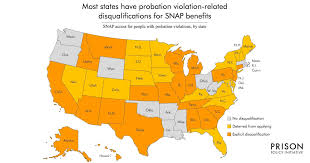
A newly added analysis titled “Hunger as punishment: How states restrict SNAP benefits for people on probation” on the Prison Policy Blog underscores a troubling national pattern: a patchwork of state statutes and administrative decisions that limit access to the Supplemental Nutrition Assistance Program (SNAP) for individuals under probation supervision.
At Sustainable Action Now, where our Private Prisons coverage examines the structural expansion of carceral control, this development demands deeper scrutiny. Food insecurity as a collateral consequence of probation raises urgent questions about justice, public safety, economic stability, and human dignity.
Because when access to basic nutrition becomes conditional, punishment shifts from accountability to deprivation.
SNAP and the Carceral System: A Collision of Policy Frameworks
The Supplemental Nutrition Assistance Program, commonly known as SNAP, exists to reduce hunger and stabilize households with low incomes. It is a public health intervention, an anti-poverty mechanism, and an economic stimulus tool. By design, it prevents food insecurity from cascading into broader social instability.
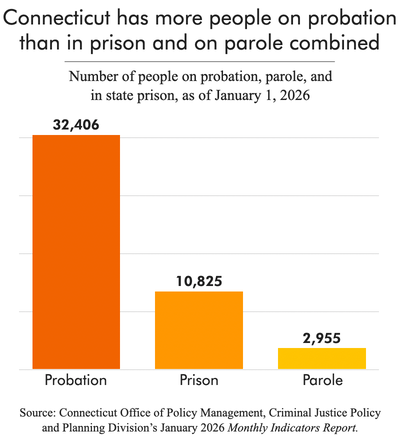
Probation, by contrast, is a form of community supervision imposed in lieu of incarceration or following release. It is meant to support reintegration while ensuring compliance with court-ordered conditions.
On paper, these systems serve distinct functions. In practice, they intersect in ways that can amplify hardship.
Federal law historically imposed a lifetime SNAP ban for individuals convicted of certain drug-related felonies. While many states have modified or opted out of that ban, implementation varies widely. In some jurisdictions, eligibility hinges on compliance with supervision requirements, participation in treatment programs, or satisfaction of administrative conditions that can be difficult to meet.
The result is a fragmented national landscape where food assistance eligibility depends not solely on income and need, but on criminal legal status and bureaucratic interpretation.
A Patchwork of Restriction
The phrase “patchwork of statutes and administrative choices” is not rhetorical. It reflects the uneven and often opaque ways states apply SNAP eligibility rules to people on probation.
In some states, individuals on probation face additional reporting requirements. In others, certain felony convictions still trigger restrictions unless specific conditions are satisfied. In certain jurisdictions, procedural barriers effectively function as deterrents, discouraging eligible individuals from applying at all.
This variability creates geographic inequity. A person on probation in one state may qualify seamlessly for SNAP benefits, while a similarly situated individual in another state may face partial denial, delays, or complex compliance mandates.
Food security becomes contingent not only on economic need but on state-level political decisions.
That inconsistency undermines the foundational principle of SNAP as a safety net.
Hunger as a Collateral Consequence
Probation is often framed as a rehabilitative alternative to incarceration. Yet the reality of probation can include strict reporting schedules, mandatory fees, employment requirements, travel limitations, and the constant risk of revocation for technical violations.
Layering food access restrictions onto that framework compounds instability.
Individuals on probation frequently encounter employment barriers due to background checks, occupational licensing restrictions, and stigma. Many return to communities already experiencing concentrated poverty and limited access to grocery infrastructure. Housing insecurity is common. Transportation is often unreliable.
In this context, SNAP benefits are not a luxury. They are stabilizing infrastructure.
When access to food assistance is restricted, the consequences ripple outward. Food insecurity is strongly associated with higher stress levels, worsened mental health outcomes, and increased likelihood of economic desperation. For individuals navigating probation conditions, added instability increases the risk of noncompliance, which in turn can lead to revocation and incarceration.
If probation is intended to support reentry and reduce recidivism, restricting nutrition support works in the opposite direction.
The Private Prison Parallel
At SAN, our focus on private prisons centers on how economic incentives shape incarceration patterns. The SNAP restriction issue reveals a related dynamic: how policy choices extend punitive frameworks beyond prison walls.
Private prison contracts often depend on occupancy levels. Probation systems depend on compliance structures. When social support is weakened, the risk of failure rises. Failure can lead back to incarceration. Incarceration feeds system demand.
While SNAP restrictions are not designed to boost prison populations, their effect can intersect with broader carceral incentives. Structural instability is rarely neutral in a system where technical violations carry severe consequences.
The denial of food assistance may not appear as dramatic as a sentencing decision. Yet in aggregate, these policies reinforce cycles of vulnerability that sustain the broader criminal legal apparatus.
Food as a Human Right, Not a Behavioral Incentive
Conditioning food access on criminal legal status raises fundamental ethical concerns.
Nutrition is a basic human need. Public assistance programs recognize that hunger undermines physical health, cognitive function, and community stability. Using food eligibility as leverage risks transforming a public health tool into a behavioral enforcement mechanism.
Probation supervision already includes monitoring and sanctions for noncompliance. When states add SNAP restrictions tied to supervision status, they effectively extend punishment into the realm of subsistence.
This is particularly concerning given that probation disproportionately affects low-income communities and communities of color. Restricting SNAP for people on probation amplifies existing inequities rather than correcting them.
If public policy aims to reduce crime, improve public safety, and promote reintegration, stable access to food should be foundational—not conditional.
Administrative Barriers as Invisible Punishment
Even in states that have formally opted out of lifetime bans, administrative hurdles can function as de facto restrictions. Complex paperwork, documentation requirements, unclear guidance, and inconsistent agency interpretation can discourage applications or lead to erroneous denials.
For individuals balancing probation check-ins, employment searches, childcare responsibilities, and transportation challenges, navigating bureaucratic mazes becomes another stressor.
Invisible barriers can be as impactful as explicit bans.
When hunger becomes a byproduct of paperwork friction, the policy outcome is no less consequential.
Economic and Public Safety Implications
Restricting SNAP for people on probation does not eliminate need. It shifts the burden.
Local charities and food banks absorb additional demand. Emergency healthcare systems bear increased strain from malnutrition-related conditions. Families already operating at economic margins stretch resources further. Children in affected households experience heightened food insecurity.
Moreover, destabilization increases the likelihood of probation violations. Revocations generate court costs, incarceration expenses, and long-term economic damage to individuals and communities.
From a fiscal standpoint, limiting SNAP eligibility for probationers may produce short-term budgetary optics, but it risks long-term public expenditure through increased correctional and social service costs.
Stable nutrition is one of the least expensive and most effective crime prevention strategies available.
The Moral Architecture of Reentry
Reentry policy is often discussed in terms of employment programs, housing initiatives, and counseling services. Yet food security is rarely centered in that conversation, despite being foundational to every other success metric.
A person cannot focus on job interviews, therapy appointments, or compliance reporting while facing hunger.
If probation is to function as an alternative to incarceration, it must be supported by policies that enhance stability. Food assistance is a stabilizer.
Removing or restricting it undermines the very objectives probation is supposed to achieve.
Why This Matters Now
Across the country, criminal justice reform debates are evolving. Conversations about decarceration, sentencing reform, and private prison contracts are increasingly mainstream. Yet collateral consequences like SNAP restrictions often remain buried in statutory fine print.
The addition of this issue to the Prison Policy Blog brings national visibility to a practice that has persisted quietly for years.
At Sustainable Action Now, we see this as part of a larger accountability narrative. Justice reform is incomplete if it ignores economic exclusion. Ending private prison contracts is critical, but so is dismantling policies that perpetuate deprivation in community supervision systems.
Food insecurity should never function as an extension of punishment.
A Call for Coherent Policy
If states are serious about reducing recidivism, strengthening families, and promoting equitable public safety, SNAP eligibility should be aligned with reintegration goals rather than constrained by punitive reflex.
Uniform standards that prioritize need over status would reduce geographic inequity. Simplified administrative procedures would lower barriers to access. Clear public communication would ensure eligible individuals are not deterred by confusion.
Public policy reflects collective values. When food access is restricted based on probation status, the signal is clear: punishment extends beyond confinement.
It does not have to.
At SAN, we will continue to monitor how criminal legal policies intersect with economic justice. Because hunger is not rehabilitation. It is destabilization.
And in any system that claims to pursue justice, destabilization should never be the objective.