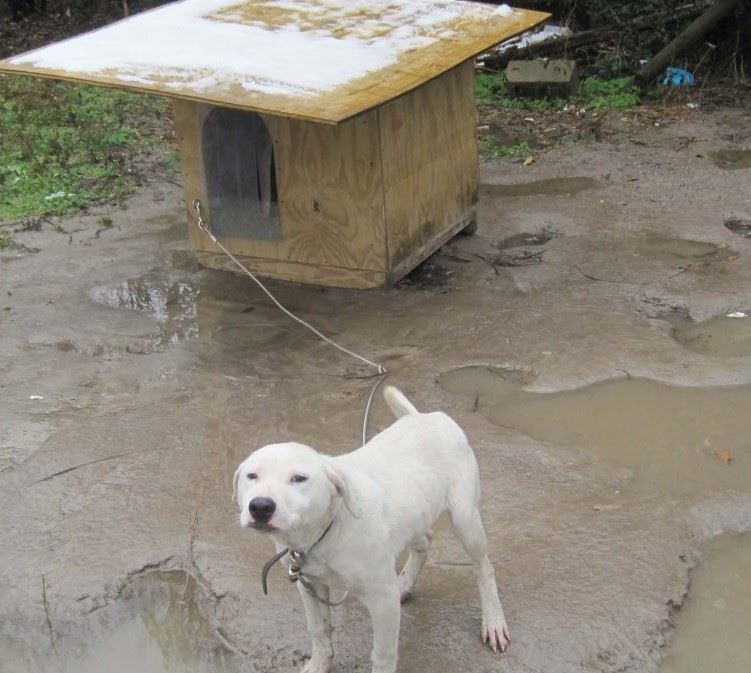
There is a quiet, persistent form of animal suffering that unfolds every day in neighborhoods across the country, often just beyond the edge of visibility and far outside the urgency it deserves. It does not make headlines in the same way as large-scale wildlife exploitation or trafficking, yet its impact is deeply personal, prolonged, and profoundly damaging. It is the neglect of companion animals—most visibly, the practice of leaving dogs tethered outside, restrained to a fixed point, isolated from interaction, and deprived of the most basic elements of care, stimulation, and dignity.
For many people, the image of a dog tied to a pole, a fence, or a chain in a yard may seem like an unfortunate but normalized reality. But normalization does not equate to acceptability, and what appears routine is, in fact, a form of chronic neglect that undermines both the physical and psychological well-being of the animal. Dogs are not passive observers of their environment; they are highly social, emotionally responsive beings whose survival and development depend on connection, engagement, and consistent care. When those needs are denied, the consequences are not abstract—they are immediate, cumulative, and often irreversible.
A dog does not understand why it has been left outside for hours, days, or in some cases, years. It does not comprehend the rationale behind being tethered to a fixed point, unable to move freely, explore, or interact. What it does experience is the sensation of isolation, the frustration of confinement, and the stress of an environment it cannot escape. Over time, this condition manifests in both behavioral and physiological changes. Dogs subjected to long-term tethering often develop heightened anxiety, aggression, or withdrawal. Their bodies reflect the strain as well, with increased susceptibility to injury, illness, and environmental exposure.
The practice of tethering is frequently defended as a matter of convenience or necessity, but from an animal welfare perspective, it represents a failure to meet the most basic standards of care. Proper guardianship requires more than providing food and water; it demands attention, interaction, and an environment that allows for natural behaviors. A dog confined to a chain or rope is denied all of these. It cannot run, play, or engage in meaningful activity. It cannot seek shelter when conditions become extreme. It cannot escape from threats, whether environmental or human. In many cases, it is left to endure heat, cold, rain, and isolation without recourse.
This issue is not limited to individual cases—it reflects a broader disconnect between the responsibilities of animal guardianship and the realities of how animals are treated in everyday settings. Across communities, there remains a lack of awareness about what constitutes neglect and how seemingly minor decisions can result in significant harm. The assumption that a dog can simply “live outside” ignores the fundamental nature of the species. Domestic dogs have evolved alongside humans, forming bonds that are central to their well-being. To remove them from that context is to strip away a core aspect of their existence.
The implications extend beyond the individual animal. Chronic neglect contributes to broader patterns of animal welfare challenges, including increased risk of abandonment, behavioral issues that lead to surrender, and strained resources within shelters and rescue organizations. It also raises important ethical questions about how society defines and enforces standards of care. When neglect is visible yet unaddressed, it signals a gap between values and action—a gap that must be closed through education, advocacy, and policy.
Organizations working within the space of animal and wildlife protection continue to highlight these issues as part of a larger effort to address systemic abuse and neglect. Within the broader context of advocacy featured across Sustainable Action Now’s animal and wildlife coverage, tethering and neglect are recognized as critical areas requiring sustained attention. These are not isolated incidents; they are part of a continuum of harm that affects both domestic and wild animals, driven by a combination of misunderstanding, indifference, and insufficient regulation.
Addressing this issue requires a multifaceted approach. At the individual level, it begins with awareness—understanding that animals are not accessories or property to be managed at convenience, but sentient beings with specific needs. At the community level, it involves creating environments where neglect is recognized and addressed, whether through education, outreach, or intervention. At the policy level, it requires clear standards and enforcement mechanisms that define acceptable care and hold guardians accountable when those standards are not met.
Equally important is the role of cultural perception. Changing how people think about animals is as critical as changing laws or practices. When dogs are viewed as integral members of a household rather than peripheral responsibilities, the likelihood of neglect decreases. This shift is not instantaneous, but it is achievable through consistent messaging, visible examples of responsible care, and a collective commitment to prioritizing animal welfare.
The question of why someone would acquire an animal only to leave it tethered and neglected is one that reflects a deeper issue of disconnect. It is not simply a matter of poor decision-making; it is indicative of a broader lack of understanding about what it means to care for another living being. Addressing that disconnect requires more than criticism—it requires engagement, education, and a willingness to confront uncomfortable realities.
Ultimately, the issue of tethering and neglect is about responsibility. It is about recognizing that the decision to bring an animal into one’s life carries with it an obligation that extends far beyond basic provision. It is about ensuring that every animal has the opportunity to live in an environment that supports its physical health, emotional well-being, and natural behaviors.
In a world where large-scale environmental and wildlife issues often dominate the conversation, it is easy to overlook the suffering that occurs at a smaller, more localized level. Yet these everyday instances of neglect are no less significant. They represent a direct and preventable form of harm, one that can be addressed through awareness, action, and a renewed commitment to the principles of humane care.
For those who encounter these situations, the response matters. Speaking up, reporting neglect, and supporting organizations that advocate for animal welfare are all part of a broader effort to create change. The goal is not only to alleviate individual suffering, but to establish a standard where such conditions are no longer accepted as normal.
Dogs do not have the ability to articulate their experience, but their behavior, their condition, and their environment tell a clear story. It is a story that demands attention, compassion, and action—one that challenges individuals and communities alike to reconsider what it means to care, and to ensure that no animal is left to endure neglect in silence.