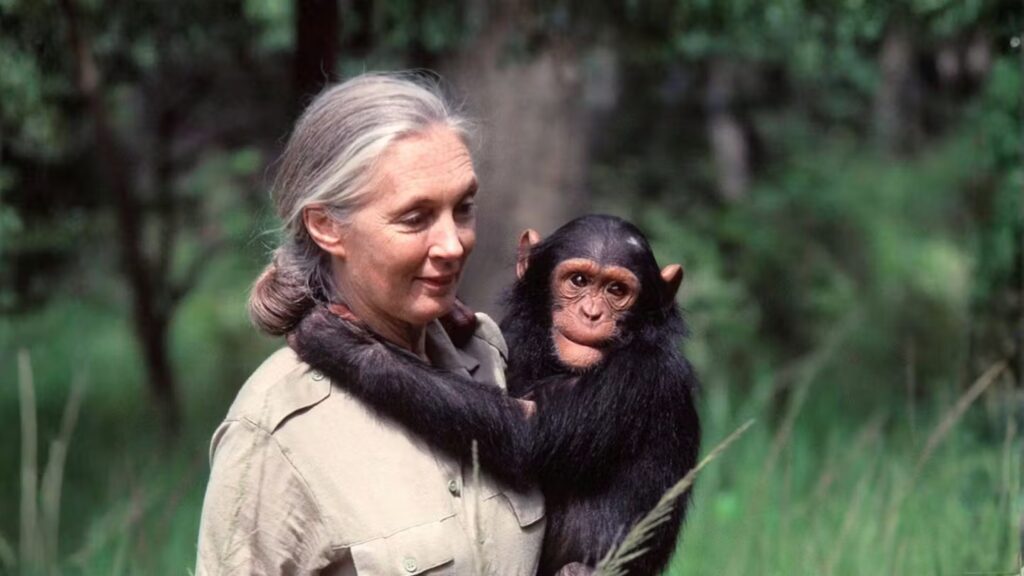
The global movement for animal welfare and environmental protection has entered a defining new chapter—one shaped not by the presence of its most iconic voice, but by the enduring force of her legacy. As the world continues to absorb the profound loss of Dr. Jane Goodall in October 2025, 2026 has already emerged as a year of action, reflection, and renewed purpose. Across continents, institutions, governments, scientists, and everyday advocates are mobilizing around a singular truth she championed for more than six decades: every animal matters, and every individual has the power to create change.
At Sustainable Action Now, this moment is not simply about remembrance—it is about acceleration. The global response to Dr. Goodall’s life work is transforming admiration into measurable action, pushing forward initiatives that directly confront wildlife exploitation, habitat destruction, and systemic abuse of animals. The developments unfolding in early 2026 signal something far greater than tribute—they represent a coordinated global awakening rooted in her philosophy of hope-driven activism.
The formal establishment of “Jane Goodall Day” marks one of the most significant milestones in this evolving movement. Officially recognized on April 3, her birthday, the day is designed not as a symbolic observance, but as a global call to action. Communities worldwide are being mobilized to participate in conservation efforts, animal protection initiatives, and environmental restoration projects. Unlike traditional commemorations, this initiative is structured to generate tangible impact—local cleanups, wildlife advocacy campaigns, policy engagement, and grassroots education efforts all tied to a unified global framework. The rapid adoption of this day, including legislative recognition at the state level in places like Illinois, underscores the scale of her influence and the urgency of continuing her mission.
Simultaneously, the inaugural Hope Gala in London has set a powerful precedent for how the international community will carry forward Goodall’s work. This was not merely a fundraising event—it was a strategic alignment of leaders in conservation, animal welfare, and ethical science. Honoring Dr. Jill Robinson for her groundbreaking work to end bear bile farming sent a clear message: the future of animal advocacy will be defined by bold, systemic interventions that dismantle cruelty at its source. The gala demonstrated that legacy is not passive—it is an engine for funding, recognition, and expansion of critical initiatives worldwide.
In the United States, the launch of the “Double Impact Campaign” reflects a sophisticated understanding of how to scale influence through financial mobilization. By matching donations up to $300,000, the initiative is not only amplifying resources for conservation efforts but also reinforcing a key principle that defined Goodall’s career: collective action multiplies outcomes. This approach transforms individual contributions into exponential impact, directly supporting programs that combat wildlife trafficking, protect endangered species, and restore fragile ecosystems.
These developments are occurring alongside continued international policy advocacy led by the Jane Goodall Institute. On World Wildlife Day 2026, the organization issued a comprehensive call for a unified global response to the accelerating crises of wildlife trafficking and habitat destruction. This is not rhetorical positioning—it is a strategic push for coordinated international legislation, enforcement mechanisms, and cross-border collaboration. The scale of illegal wildlife trade and ecosystem degradation demands a response that matches its complexity, and the Institute remains at the forefront of shaping that response.
Equally critical is the continuation of the Gombe Stream Research project, the longest-running wild chimpanzee study in the world. What began in 1960 as a groundbreaking exploration of primate behavior has evolved into one of the most important scientific datasets in environmental history. Today, it stands as both a research cornerstone and a living testament to Goodall’s methodology—one that challenged traditional science by recognizing the emotional and social complexity of animals. The continuation of this work ensures that her scientific contributions remain active, relevant, and deeply influential in shaping modern conservation strategies.
The posthumous recognition of Dr. Goodall’s contributions further reinforces the breadth of her impact. Honors such as the Realscreen Action Award highlight a dimension of her work that is often underestimated—the power of storytelling. Through documentary filmmaking and public engagement, she reshaped how global audiences perceive animals, transforming them from abstract subjects into individuals worthy of empathy, protection, and respect. This narrative shift remains one of the most powerful tools in advancing animal welfare today.
What is emerging in 2026 is not simply a continuation of Jane Goodall’s work—it is a scaling of it. The integration of policy, science, public engagement, and financial mobilization reflects a mature, multi-layered movement that is capable of driving systemic change. This is where the mission of Sustainable Action Now intersects directly with the global momentum she created. The focus is no longer limited to awareness; it is centered on accountability, measurable outcomes, and sustained pressure on industries and systems that perpetuate animal abuse and environmental harm.
The broader implications extend into every sector—agriculture, fashion, pharmaceuticals, tourism, and beyond. The conversation is shifting from ethical consideration to operational transformation. Companies are being challenged to redefine supply chains, governments are being pushed to strengthen protections, and consumers are increasingly aligning their choices with their values. This is the ripple effect of a life’s work that refused to separate compassion from action.
For readers and advocates engaging with the ongoing conversation around animal welfare, the urgency is clear. The frameworks are in place, the global attention is focused, and the tools for impact are more accessible than ever. What remains is participation. Whether through direct support of conservation organizations, advocacy for stronger legislation, or conscious consumer behavior, the pathways to contribute are both diverse and impactful.
Those looking to engage more deeply with current issues and campaigns addressing the abuse of animals and wildlife can explore ongoing coverage and initiatives through the Sustainable Action Now platform, including the latest developments in advocacy and reform within the broader movement for change.
The legacy of Dr. Jane Goodall is no longer defined by her presence—it is defined by what the world chooses to do next. In 2026, that choice is becoming increasingly clear. The future of animals, ecosystems, and the balance between humanity and nature is being actively shaped by those willing to act. And in that sense, her most enduring message remains not only relevant, but urgent: hope is not passive—it is a responsibility.