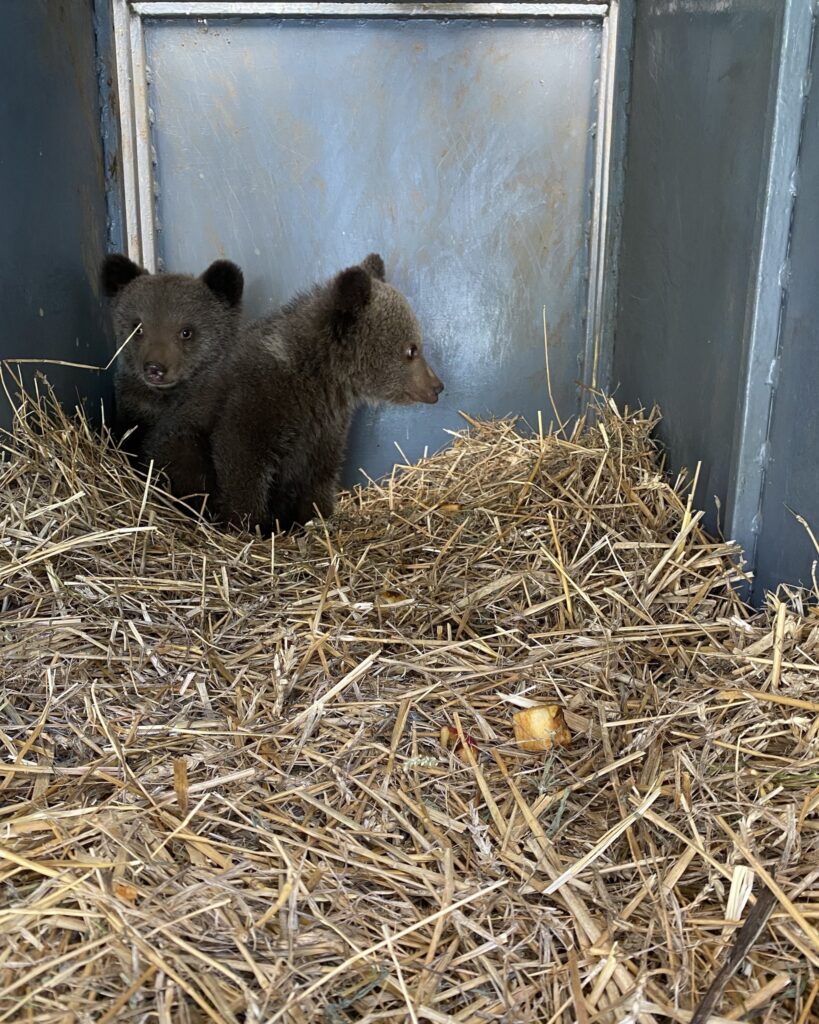
Last April, in the remote wilderness of Ukraine, two tiny brown bear cubs were found alone.
The Emergency Rescue: A Narrow Window for Survival
Brown bear cubs at just a few weeks old are entirely dependent on their mother. Without her, survival rates plummet rapidly due to:
- Inability to thermoregulate effectively
- Lack of foraging skills
- High predation risk
- Rapid dehydration and malnutrition
When the mother did not return, immediate intervention became the only humane option.
Runa and Kodi were rushed to safety and transported to BEAR SANCTUARY Domazhyr, a specialized facility operated by FOUR PAWS International in Ukraine.
This was not a symbolic rescue. It was a logistical, veterinary, and ecological response designed to stabilize two critically vulnerable animals under urgent conditions.
Why Rewilding Was Not Possible
In an ideal conservation framework, orphaned wildlife—especially apex mammals like brown bears—would undergo structured rehabilitation and eventual reintroduction into their natural habitat.
However, Ukraine currently does not have dedicated facilities equipped for brown bear rehabilitation and rewilding.
Rewilding requires:
- Minimal human imprinting protocols
- Specialized forest enclosures
- Gradual exposure to natural food sourcing
- Long-term monitoring post-release
- Wildlife corridor protections
Without these structural elements, release into the wild can result in starvation, human conflict, or recapture.
Faced with this reality, FOUR PAWS made a critical decision: provide lifelong sanctuary care rather than risk failed reintroduction.
This decision underscores a broader conservation truth—sanctuaries are not second-best options. In many geopolitical and infrastructural contexts, they are the only viable humane outcome.
Then vs. Now: A Transformation Rooted in Care
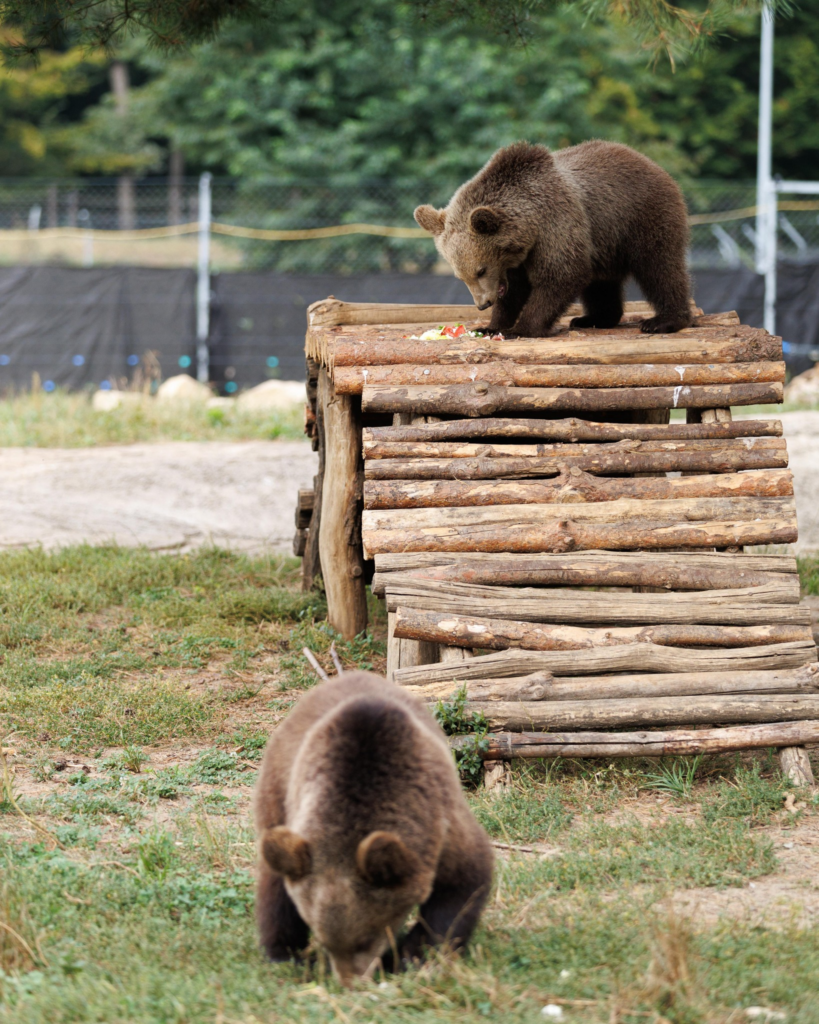
When Runa and Kodi arrived, they were underweight, fragile, and distressed.
Today?
They are thriving.
The transformation includes:
- Healthy weight gain
- Strength development
- Natural play behavior
- Social bonding
- Increased confidence in their habitat
Play is not trivial in bear development. For cubs, play builds muscle coordination, social skills, and behavioral enrichment. It signals recovery—not just physically, but psychologically.
Thanks to the tireless work of sanctuary caretakers, Runa and Kodi now live in an environment designed to replicate key elements of their natural ecosystem while ensuring safety and stability.
The Role of BEAR SANCTUARY Domazhyr
Located in western Ukraine, BEAR SANCTUARY Domazhyr was established to provide species-appropriate habitats for bears rescued from:
- Illegal captivity
- Former baiting stations
- Abusive private ownership
- Substandard zoo conditions
The sanctuary offers:
- Expansive forest enclosures
- Natural vegetation
- Enrichment structures
- Veterinary oversight
- Behavioral monitoring
For Runa and Kodi, Domazhyr is not a cage—it is a managed wilderness designed to allow them to grow into strong, confident adult brown bears.
In a region facing political instability and infrastructure strain, the continued operation of wildlife sanctuaries is a testament to international cooperation and resilience.
The Broader Wildlife Crisis: Orphaned Animals in Conflict Zones
Ukraine’s ongoing challenges extend beyond human displacement. Wildlife populations are also affected by:
- Habitat disruption
- Increased human-wildlife encounters
- Infrastructure damage
- Reduced conservation funding
Orphaned animals like Runa and Kodi represent a growing reality in areas experiencing ecological stress.
Sanctuary networks serve as emergency infrastructure when traditional wildlife management systems are compromised.
Without them, survival rates drop dramatically.
SanctuarySaturdays: Celebrating Rescue Success
The story of Runa and Kodi is part of FOUR PAWS’ #SanctuarySaturdays initiative—spotlighting successful rescue and rehabilitation stories from sanctuaries and cooperation partners worldwide.
These stories matter for several reasons:
- They counter compassion fatigue with visible outcomes.
- They demonstrate measurable conservation impact.
- They encourage sustained donor engagement.
- They remind the public that rescue is possible—even in crisis conditions.
In a media landscape saturated with environmental loss narratives, successful wildlife interventions provide both accountability and hope.
Why Wildlife Sanctuaries Matter in the Climate Era
Climate change compounds wildlife vulnerability.
Brown bears are already adapting to:
- Altered food availability
- Shortened hibernation cycles
- Shifting territorial ranges
When young cubs lose maternal protection, climate instability increases survival risk even further.
Sanctuaries provide controlled environments where rescued animals can:
- Stabilize health
- Avoid human conflict
- Receive appropriate nutrition
- Develop species-specific behaviors
In a warming world, wildlife rescue and climate resilience are increasingly intertwined.
Supporting Global Rescue Networks
FOUR PAWS International operates through a global network of sanctuaries, veterinary missions, and advocacy initiatives.
Support mechanisms include:
- Direct donations
- Adoption sponsorship programs
- Local office contributions to maximize tax benefits
For those looking to contribute, options include visiting FOUR PAWS Donation Portal or exploring their Adoption Programme.
Financial contributions directly fund:
- Veterinary care
- Habitat maintenance
- Staff salaries
- Emergency transport logistics
- Long-term sanctuary infrastructure
Wildlife rescue is resource-intensive. Sustained funding determines capacity.
The Ethical Imperative
Runa and Kodi’s story forces a simple but powerful reflection:
When wildlife loses its safety net, who steps in?
Governments often lack infrastructure. Conflict complicates conservation. Habitat degradation accelerates vulnerability.
Organizations like FOUR PAWS fill that gap.
Rescue is not charity—it is corrective action in response to systemic disruption.
From Vulnerable Cubs to Confident Bears
The “Then vs. Now” arc is not sentimental storytelling. It is measurable recovery:
Then:
- Orphaned
- Malnourished
- Alone
Now:
- Thriving
- Strong
- Social and playful
Every sanctuary success story reinforces the argument for expanding rescue networks globally.
Sustainable Action Now: Expanding the Rescue Conversation
Through our Rescue Network platform, SAN is committed to elevating wildlife rescue initiatives that demonstrate tangible outcomes.
Runa and Kodi’s journey represents:
- International collaboration
- Ethical wildlife intervention
- Long-term sanctuary commitment
- Conservation resilience under pressure
Their survival is not accidental. It is the result of structured care, strategic funding, and unwavering dedication from wildlife professionals.
The Future They Deserve
Runa and Kodi will never return to the wild.
But they will live.
They will climb, forage, explore, and play within a protected forest environment built for their species.
That is not a compromise. It is a victory under difficult circumstances.
And in a world where wildlife survival is increasingly uncertain, victories matter.
Support sanctuaries.
Support rescue networks.
Support the systems that make “Then vs. Now” transformations possible.
Because every orphaned cub deserves a future—and every thriving bear proves that intervention works.