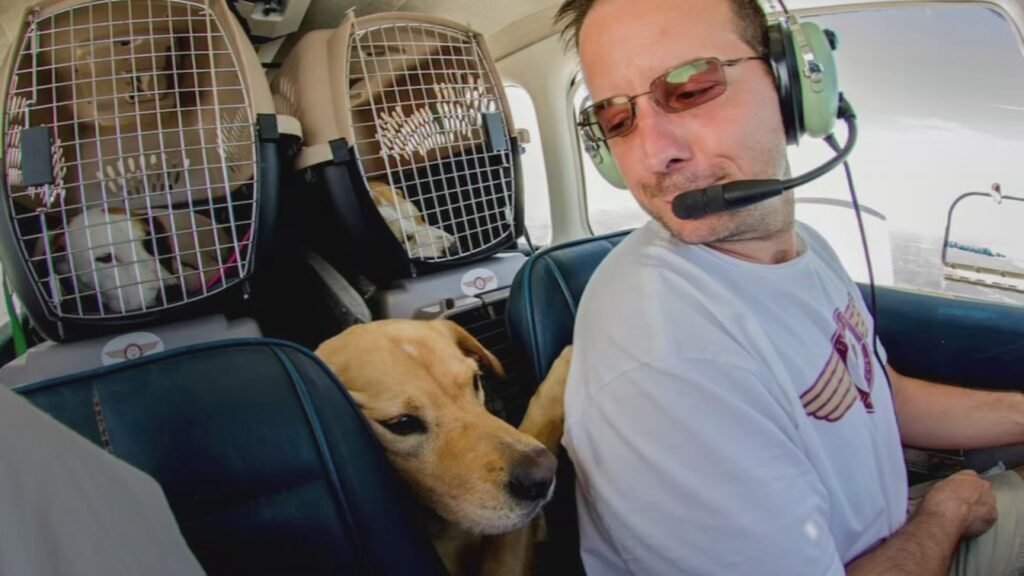
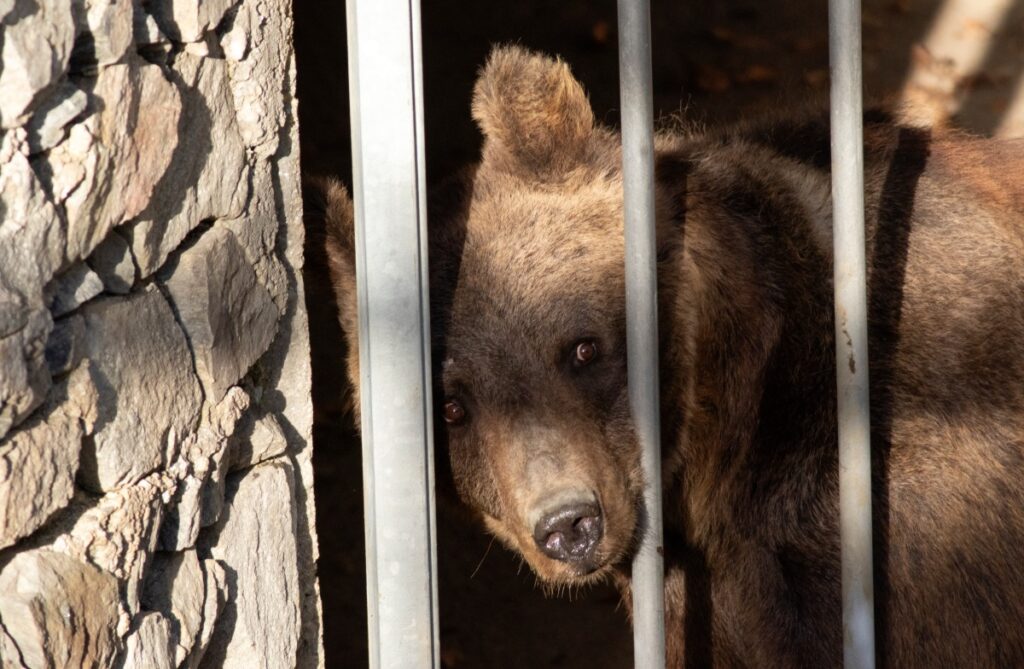
Across the world, a growing movement is redefining how society responds to animals who have endured years of neglect, confinement, and inadequate care. From wildlife sanctuaries to international rescue networks, teams of veterinarians, trainers, transport specialists, and animal welfare advocates are working together to give exploited animals a second chance at life.
One of the most remarkable recent efforts in this global rescue movement centers on two bears—Gordo and Florencia—whose lives have been dramatically transformed through a complex international rescue operation.
Their journey from the former Zoo Luján in Argentina to a sanctuary environment in Europe represents far more than a relocation. It is a powerful example of how coordinated rescue networks, compassionate expertise, and modern animal welfare practices can rewrite the future for animals once trapped in inadequate captive environments.
The mission, part of an ongoing effort by international animal welfare organizations to rescue animals from substandard facilities, required months of preparation, a highly coordinated team effort, and a commitment to humane rescue techniques designed to reduce stress and protect the animals at every step.
The result: two bears who once lived in confinement are now beginning a new chapter in a sanctuary where space, proper nutrition, veterinary care, and natural enrichment define their daily lives.
From Confinement to Hope: The Story Begins in Argentina
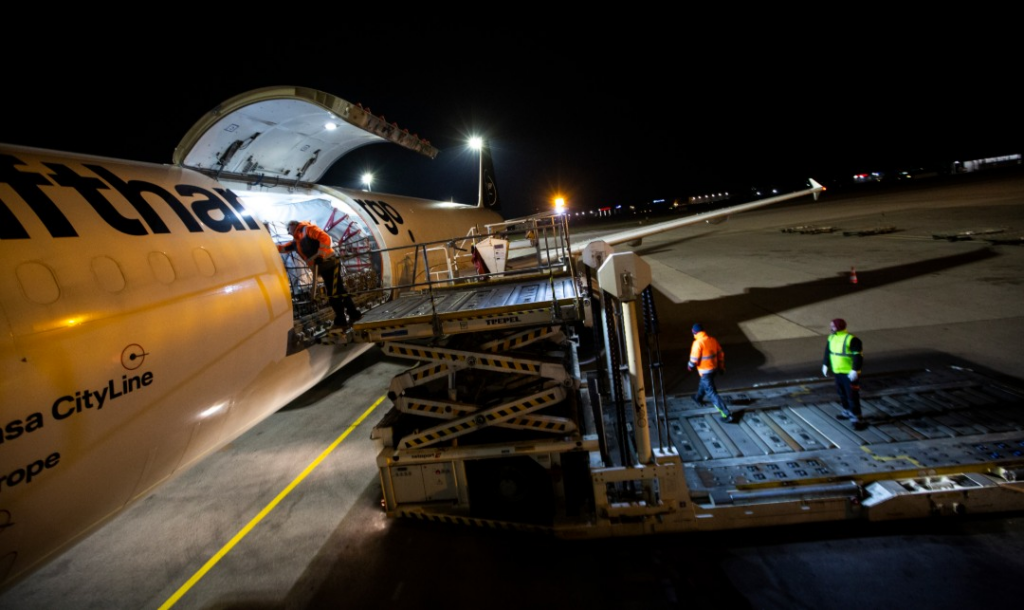
For years, animals housed at the former Zoo Luján were kept in conditions that animal welfare advocates widely criticized as inadequate.
Facilities like these often struggle to provide the level of environmental enrichment, veterinary attention, and habitat space required by large mammals such as bears and big cats. Over time, animals in such environments may experience chronic stress, boredom, and health complications linked to limited movement and poor living conditions.
Gordo and Florencia were among the animals whose circumstances eventually drew the attention of international rescue organizations working to relocate wildlife from under-resourced zoos and roadside attractions.
The goal of these rescue missions is not merely relocation—it is rehabilitation.
Animals who have spent years in confinement frequently require medical evaluation, behavioral assessment, and gradual adaptation to new environments designed to mimic natural habitats.
Before any relocation can occur, veterinarians and animal behavior specialists must determine whether an animal is physically capable of traveling and whether transport can be conducted safely.
For Gordo and Florencia, the path to rescue required careful planning and months of preparation.
The Challenge of Moving a 350-Kilogram Bear
Gordo is a large brown bear weighing approximately 350 kilograms—roughly 770 pounds. Moving an animal of that size safely requires both logistical precision and deep understanding of animal behavior.
In October, the rescue process reached a critical milestone when Gordo was transferred to a medical tent for a comprehensive health examination.
This stage is essential in any wildlife rescue mission. Veterinarians assess everything from cardiovascular health and joint mobility to dental condition and nutritional status. These evaluations help determine whether the animal is fit to travel and what special accommodations may be necessary during transport.
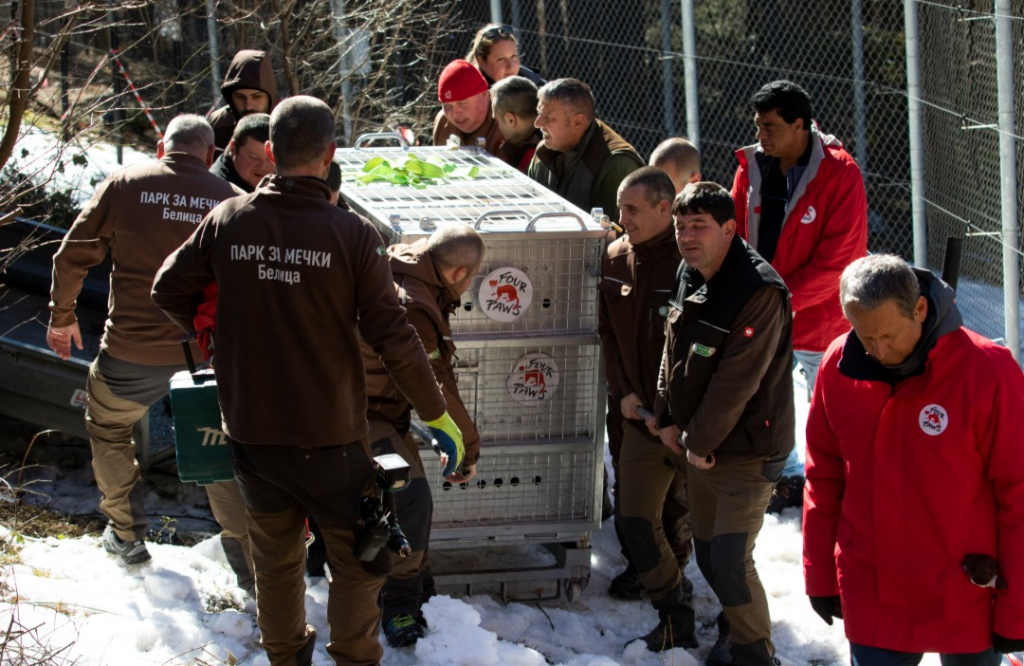
But simply moving Gordo into the medical facility was a major operation.
Due to his size and the limitations of the existing enclosure, it took multiple trained team members working together to carefully lift and guide the bear during the medical check process.
Handling such a large animal without causing stress or injury requires patience, coordination, and careful use of protective equipment and safety protocols.
The experience reinforced just how demanding large-animal rescues can be—and how essential teamwork is to their success.
Positive Reinforcement Training: A Humane Approach
One of the most remarkable aspects of Gordo’s rescue involved the use of positive reinforcement training.
Rather than sedating the bear with anesthesia—a process that carries medical risks, especially for large mammals—trainers worked patiently to teach Gordo to enter his transport crate voluntarily.
Positive reinforcement techniques reward animals for desired behaviors, often using food incentives, verbal cues, or environmental enrichment. Over time, animals learn to associate certain actions with positive outcomes.
For Gordo, this meant gradually building comfort with the transport crate.
Through careful training sessions, he became familiar with the structure and learned that entering it led to rewards rather than stress.
When the day of the rescue finally arrived, Gordo walked calmly and willingly into the crate—an extraordinary moment that eliminated the need for sedation or physical force.
For animal welfare specialists, this type of outcome represents the gold standard of humane rescue methodology.
The Journey to Sanctuary
Once safely inside his transport crate, Gordo began the long journey to his new home at the BEAR SANCTUARY Belitsa.
Transporting wildlife internationally involves complex coordination. Rescue teams must secure permits, coordinate with transportation authorities, and ensure that the animals travel under conditions that minimize stress and maintain stable temperatures.
Upon arrival at the sanctuary, the physical challenge was not yet over.
The sanctuary sits in a mountainous area designed to provide bears with expansive natural environments. While this setting offers enormous benefits for the animals’ quality of life, it also means that equipment and transport crates must sometimes be moved through uneven terrain.
When Gordo arrived, his heavy crate had to be carried carefully up a hill to reach the bear house that would serve as his initial home.
Once again, it took many dedicated individuals working together to ensure the bear’s safe arrival.
Florencia’s Path to Freedom
Florencia, another bear rescued from the same facility, followed a similar journey.
Like Gordo, she had spent years living in conditions that limited her ability to engage in natural behaviors such as foraging, climbing, and exploring.
Her relocation to the sanctuary represents a dramatic change in environment and opportunity.
At BEAR SANCTUARY Belitsa, rescued bears gain access to spacious forested enclosures that allow them to dig, roam, rest in natural dens, and explore terrain that closely resembles wild habitats.
Sanctuary environments prioritize behavioral enrichment—activities and environmental features designed to stimulate animals mentally and physically.
For bears who have spent years in confined enclosures, these experiences can be transformative.
Life at a Modern Bear Sanctuary
Sanctuaries such as Belitsa are designed specifically for animals who cannot be returned to the wild but still deserve a life that reflects their natural instincts.
Unlike traditional zoos, sanctuaries do not breed animals, sell them, or use them for entertainment.
Instead, the focus is on long-term care, rehabilitation, and providing environments where rescued animals can live with dignity.
For bears like Gordo and Florencia, daily life now includes:
- Access to large forested enclosures
- Natural climbing structures and vegetation
- Balanced diets designed by veterinary nutritionists
- Routine health monitoring by wildlife veterinarians
- Seasonal enrichment activities that encourage natural behaviors
Many rescued bears require time to adapt to these environments.
Animals who have spent years pacing in small cages may initially struggle to understand that they can roam freely. Over time, however, most begin to explore, forage, and develop new behavioral patterns reflecting greater well-being.
A Larger Rescue Story Still Unfolding
The rescue of Gordo and Florencia is only part of a larger effort.
Their story is connected to the rescue of tigress Flora, another animal whose life was shaped by inadequate conditions at the same facility.
Although these animals are now living in different sanctuaries suited to their specific species and needs, they share a common history—and a shared future built on care, rehabilitation, and protection.
Animal welfare organizations involved in the mission are currently preparing a longer documentary-style video that will tell the full story of this extraordinary rescue effort.
The upcoming release will explore the challenges, teamwork, and emotional milestones that defined the operation.
For those who follow wildlife rescue efforts, it promises to offer a rare behind-the-scenes look at what it takes to move animals safely from captivity into sanctuary environments.
The Power of Global Rescue Networks
Rescuing large mammals across continents requires more than compassion—it requires an international network of experts and supporters.
Veterinarians, wildlife transport specialists, sanctuary managers, legal advisors, and animal behavior experts must collaborate to ensure each rescue is conducted safely and ethically.
Financial support from donors and advocacy groups also plays a critical role.
Sanctuaries require significant resources to maintain large habitats, provide medical care, and sustain long-term operations for animals who may live decades in sanctuary care.
Programs that allow supporters to symbolically adopt rescued animals or contribute to sanctuary operations help sustain these lifesaving efforts.
Why Rescue Work Matters More Than Ever
Across the globe, thousands of animals remain trapped in facilities that cannot meet modern welfare standards.
From roadside zoos to abandoned attractions, many animals continue to live in environments that lack adequate space, stimulation, and veterinary care.
Rescue networks are working tirelessly to change that reality.
Each successful rescue sends a powerful message: animals who have endured years of neglect still deserve the opportunity to experience safety, enrichment, and compassion.
Gordo and Florencia’s journey stands as a reminder that even the most complex rescue missions are possible when dedicated people work together.
A Future Worth Protecting
Today, Gordo and Florencia are no longer confined to the limitations of their past.
They now live in a sanctuary environment where their needs come first—where space replaces cages, enrichment replaces boredom, and professional care replaces neglect.
Their story reflects the growing global commitment to protecting animals and transforming the systems that once failed them.
And as more rescue missions unfold around the world, their journey reminds us of a powerful truth:
When people choose compassion, cooperation, and action, even the most challenging rescue stories can end with hope.