
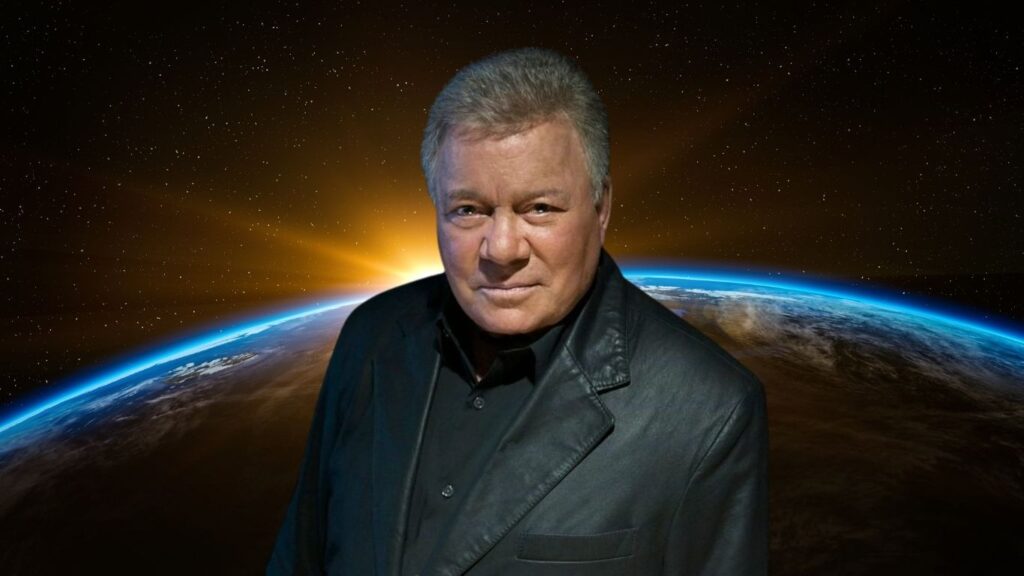
As William Shatner reaches the remarkable milestone of his 95th birthday, the moment carries far more weight than a celebration of longevity. It is, in many ways, a cultural checkpoint—a rare opportunity to reflect on a life that has transcended entertainment and evolved into something far more enduring: a voice for compassion, responsibility, and the urgent protection of animals and the natural world.
For decades, Shatner has occupied a unique space in global consciousness. Known to generations as an iconic performer, his influence has steadily expanded into advocacy that resonates far beyond Hollywood. His enduring relationship with animal welfare organizations and his outspoken support for ethical treatment have positioned him not just as a celebrity ally, but as a credible, consistent advocate in a world that increasingly demands accountability.
Now, at 95, his message carries a sharpened clarity—one rooted not in theory, but in lived experience.
A Life That Evolved Into Advocacy
Shatner’s connection to animals is not a recent pivot or opportunistic alignment. It is deeply embedded in his personal and professional life. From his lifelong passion for horses to his public support for animal welfare campaigns, his advocacy reflects a genuine philosophy: that humanity’s relationship with animals is a defining measure of its moral progress.
Over the years, he has used his platform to amplify critical issues—from the exploitation of animals in entertainment and agriculture to the broader environmental consequences of unchecked human consumption. His voice has consistently aligned with efforts to reduce harm, increase awareness, and push for systemic change.
At 95, he is not slowing down. If anything, his perspective has become more urgent.
The Message: Time Is Not on Our Side
In marking his birthday, Shatner’s reflections center on a simple but powerful truth: the window for meaningful change is closing.
His message is not abstract. It is grounded in the visible realities of today’s world—collapsing ecosystems, endangered wildlife populations, industrial-scale animal suffering, and a climate crisis that is directly tied to how humans treat both animals and the environment.
He urges a shift away from passive awareness toward active responsibility.
This includes:
- Reexamining dietary choices and reducing reliance on industries that contribute to animal suffering
- Supporting cruelty-free innovation and ethical alternatives
- Advocating for stronger protections for wildlife and natural habitats
- Recognizing the direct link between animal exploitation and environmental degradation
For Shatner, these are not separate issues—they are interconnected components of a larger ethical framework.
Why Animal Welfare Is Central to Sustainability
At Sustainable Action Now, the intersection between animal welfare and environmental sustainability is not just a talking point—it is a foundational principle.
The abuse and exploitation of animals, particularly within industrial systems, is one of the most significant yet often overlooked drivers of environmental harm. Deforestation, water depletion, greenhouse gas emissions, and biodiversity loss are all deeply tied to how animals are used at scale.
Shatner’s advocacy reinforces a critical truth: protecting animals is not a niche concern—it is central to the future of the planet.
By addressing animal cruelty, we simultaneously address:
- Climate instability
- Habitat destruction
- Resource inefficiency
- Public health risks tied to industrial farming systems
His message aligns seamlessly with the growing global recognition that sustainability must include ethical treatment of all living beings.
A Cultural Icon Reframing Legacy
There is something uniquely powerful about a figure like William Shatner using his later years not for nostalgia, but for impact.
At 95, he is not revisiting past achievements—he is reframing what legacy means.
Legacy, in this context, is not defined by accolades or cultural influence alone. It is defined by what one chooses to stand for when it matters most. It is about using visibility to elevate causes that cannot advocate for themselves.
In doing so, Shatner joins a growing movement of public figures who are leveraging their platforms to push for systemic change rather than simply maintain relevance.
The Urgency of Now
The significance of this moment extends beyond one individual. It serves as a broader call to action—one that challenges both individuals and institutions to reassess their role in shaping the future.
The reality is clear:
- Wildlife populations are declining at unprecedented rates
- Industrial practices continue to normalize animal suffering
- Environmental tipping points are no longer theoretical—they are unfolding in real time
Shatner’s message cuts through the noise: there is still time to act, but not time to delay.
Turning Awareness Into Action
For readers and advocates, the takeaway is not simply admiration—it is activation.
This moment invites a shift from passive consumption of information to intentional decision-making. Whether through lifestyle changes, advocacy, or support for organizations working on the front lines, the path forward requires participation.
Key areas of impact include:
- Choosing plant-forward or cruelty-free products
- Supporting legislation that protects animals and ecosystems
- Amplifying voices and campaigns that challenge harmful industries
- Educating others on the interconnected nature of animal welfare and environmental health
These actions, while individual in scale, collectively contribute to systemic change.
A Defining Moment for the Movement
As William Shatner marks 95 years, his message arrives at a time when the global conversation around sustainability is evolving. No longer confined to carbon metrics and policy debates, it is expanding to include ethics, compassion, and accountability.
This evolution is necessary.
Because sustainability, at its core, is not just about preserving resources—it is about redefining humanity’s relationship with the world around it.
Shatner’s voice adds weight to that redefinition.
Moving Forward With Purpose
The milestone of 95 is extraordinary. But what makes it truly meaningful is how it is being used—not as a conclusion, but as a catalyst.
His perspective serves as both a reflection and a directive:
- Reflect on how far we’ve come in understanding the impact of human behavior
- Direct our efforts toward meaningful, measurable change
The message is clear, and it resonates beyond any single birthday or celebration.
Protect animals. Protect the planet. Act while there is still time.
That is not just a sentiment—it is a mandate for this moment.