
Across forests, deserts, and tropical ecosystems throughout the Americas, birds represent one of nature’s most dynamic and visually stunning expressions of life. Their colors brighten landscapes, their songs define ecosystems, and their migrations connect continents.
Yet for millions of birds around the world, life does not unfold in open skies or forest canopies. Instead, it takes place inside small cages in human homes.
For decades, birds have been sold and kept as household pets—often admired for their intelligence, vibrant feathers, and ability to mimic sounds. But a growing coalition of animal welfare advocates, avian behavior experts, and conservation organizations is increasingly raising alarm about the fundamental mismatch between birds’ biological needs and the realities of domestic captivity.
In many cases, they argue, birds may be among the most misunderstood and misplaced animals commonly kept as pets.
This growing awareness has sparked international campaigns encouraging people to rethink the bird trade and reconsider whether these animals truly belong in cages at all.
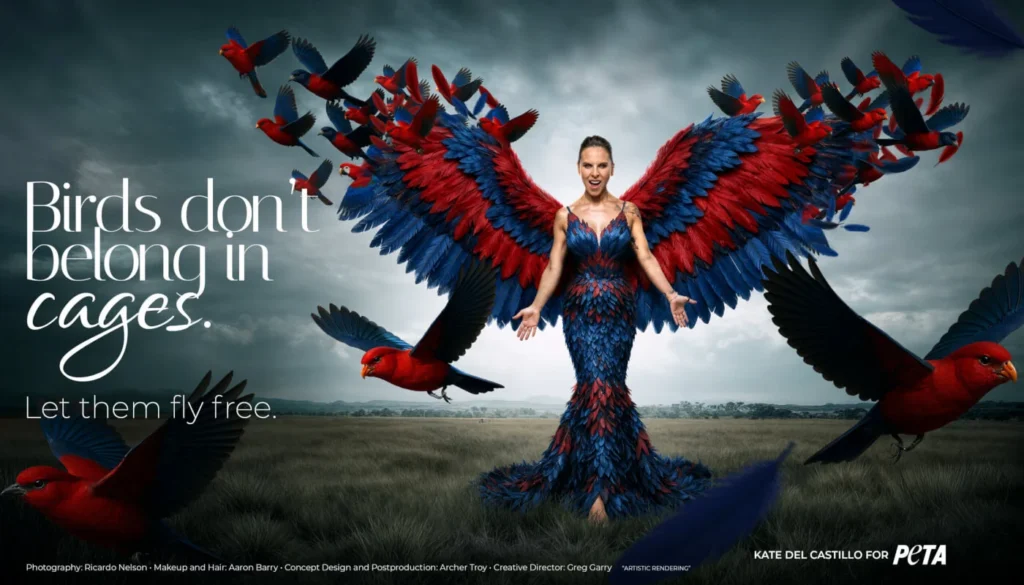
In Mexico, the message has gained powerful momentum as actor and activist Kate del Castillo partnered with animal advocacy organization PETA Latino to encourage people to let birds stay free and never buy them.
The campaign highlights a reality that conservationists have been warning about for years: many of Mexico’s beautiful native birds are captured from the wild and condemned to lives of confinement.
The broader conversation is no longer just about wildlife protection. It is about compassion, ethics, and recognizing the unique needs of animals that evolved to live in the sky.
The Fundamental Problem: Birds Are Built for Flight
At the heart of the debate over keeping birds as pets lies a simple biological truth.
Birds evolved to fly.
For many species, daily flight is not merely a behavior—it is essential for survival and well-being. In the wild, birds may travel miles each day while searching for food, interacting with their flock, exploring territory, and escaping predators.
Their bodies are designed for this lifestyle. Their wings, muscles, bones, and respiratory systems function optimally when they are able to move freely through the air.
Confinement interrupts these natural processes.
When birds are kept inside cages, their ability to fly is drastically reduced or eliminated entirely. Even relatively large cages provide only a fraction of the space required for natural movement.
Animal welfare experts often compare the experience to placing a human in a small room for an entire lifetime.
Without regular flight, birds can experience muscle deterioration, reduced cardiovascular health, and behavioral stress.
The physical effects of captivity are profound—but the psychological effects can be even more troubling.
Intelligence and the Challenge of Captivity
Many bird species—especially parrots, macaws, and cockatoos—rank among the most intelligent animals on Earth.
Scientific studies have demonstrated that some parrots possess cognitive abilities comparable to those of young children.
These birds are capable of complex problem-solving, emotional bonding, and sophisticated communication.
In the wild, their lives are filled with stimulation. They forage for food, build nests, navigate large territories, and maintain intricate social relationships within their flocks.
Captivity removes many of these experiences.
Without constant stimulation and environmental enrichment, intelligent birds can develop behaviors known as stereotypies—repetitive actions associated with stress or psychological distress.
Common signs of captive bird stress include:
- Feather plucking
- Self-mutilation
- Repetitive pacing or head movements
- Excessive screaming
- Aggressive behavior
These behaviors are widely recognized by animal behavior specialists as indicators of frustration and emotional suffering.
For birds that evolved in highly dynamic environments, confinement can create profound mental health challenges.
Lifelong Commitments Few People Understand
Another major issue surrounding pet birds involves their remarkable longevity.
Many species of parrots can live 50 to 80 years—and sometimes even longer.
While this longevity may initially seem appealing, it presents a serious challenge for owners who may not be prepared for such a long-term commitment.
Birds often outlive the people who purchase them.
When owners pass away or can no longer care for their pets, the birds frequently enter a cycle of rehoming, passing from household to household.
For animals that naturally form lifelong pair bonds, this repeated separation from caregivers can be deeply traumatic.
Each transition forces the bird to adapt to unfamiliar environments and new caretakers, disrupting the emotional bonds they rely on.
In many cases, these repeated relocations lead to behavioral problems that make birds even harder to place in new homes.
The Wildlife Trade and Its Hidden Consequences
While some birds sold as pets are bred in captivity, many still originate from wild populations.
In regions rich with biodiversity, including Mexico and parts of Latin America, birds are sometimes captured directly from forests and ecosystems where they play essential ecological roles.
This practice can devastate local wildlife populations.
Removing birds from their habitats disrupts ecosystems that depend on them for seed dispersal, pollination, and insect control.
The process of capture itself is often traumatic. Birds may be trapped using nets or other devices that cause injury and stress.
Many do not survive the journey from forest to marketplace.
Even those bred in captivity retain the instincts and behaviors of wild animals.
Unlike dogs or cats, which have undergone thousands of years of domestication, birds remain fundamentally wild creatures.
The Growing Crisis in Bird Rescues
Across the United States and other countries, bird rescue organizations are facing an overwhelming challenge.
As more people realize the demands of caring for parrots and other birds, many attempt to surrender them to shelters and rescues.
These facilities are often filled to capacity.
Birds require specialized care, experienced handlers, and environments that accommodate their physical and emotional needs.
Unfortunately, the number of displaced birds far exceeds the number of qualified homes able to care for them responsibly.
Rescue centers are increasingly becoming permanent homes for birds who cannot be placed with new caregivers.
For animal welfare advocates, this crisis highlights the need to reduce demand for pet birds in the first place.
Rethinking the Idea of Birds as Pets
As public awareness grows, many animal welfare organizations are encouraging a shift in perspective.
Instead of viewing birds as decorative pets or novelty companions, they advocate recognizing birds as complex wildlife species that belong in natural habitats.
For people who admire birds, there are many ways to enjoy them without confinement.
Birdwatching, wildlife photography, and supporting habitat conservation allow people to appreciate birds in ways that respect their natural behaviors.
Protecting forests and ecosystems also ensures that future generations will continue to experience the beauty of birds in the wild.
Ethical Care for Birds Already in Captivity
While many advocates argue against purchasing birds, there are still millions of birds currently living in human care.
For those who choose to care for them responsibly, experts emphasize the importance of providing environments that prioritize freedom and stimulation.
Ethical bird caretakers often follow practices such as:
- Allowing birds to live outside cages whenever possible
- Creating large indoor aviaries or dedicated bird rooms
- Providing enrichment activities that stimulate natural behaviors
- Ensuring social interaction and mental engagement
Many advocates also encourage adoption from bird rescues rather than purchasing birds from breeders or pet stores.
This approach helps reduce demand for commercial breeding operations sometimes referred to as “bird mills.”
A Growing Call for Compassion
The campaign urging people to let birds remain free reflects a broader cultural shift toward recognizing animals as individuals with complex needs and emotions.
Public figures such as Kate del Castillo are helping amplify this message, encouraging communities to rethink long-standing assumptions about wildlife and captivity.
As awareness spreads, more people are asking difficult but important questions.
Is it ethical to confine animals designed for flight?
Can cages truly meet the needs of intelligent, socially complex birds?
And how can societies better protect the wildlife that enriches our planet?
Protecting the Freedom of the Sky
Birds represent one of the most extraordinary expressions of life on Earth.
Their ability to fly connects ecosystems, continents, and cultures. Their songs mark the rhythms of nature. Their presence signals healthy environments.
Protecting birds means protecting their freedom.
When people choose not to buy caged birds, they help reduce the demand that fuels wildlife capture and breeding operations.
They also help shift the cultural understanding of birds from possessions to partners in the natural world.
The message behind the growing movement is simple but powerful:
Birds belong in the sky—not behind bars.
By choosing compassion and respect for wildlife, communities around the world can help ensure that future generations will continue to hear the songs of birds carried on the wind, exactly where they were meant to be.
The Urgent Movement to End the Capture of Mexico’s Wild Birds for the Pet Trade
Across Mexico’s forests, deserts, and tropical landscapes, a remarkable diversity of bird species fills the skies with color and song. From vibrant parrots and parakeets to delicate songbirds whose calls echo through dense jungles and mountain valleys, these animals are an essential part of the country’s natural heritage.
Yet behind the beauty of these birds lies a troubling reality that conservationists and animal welfare advocates have been working tirelessly to confront.
Each year, thousands of Mexico’s native birds are removed from their natural habitats and forced into a life of captivity. Captured from forests and rural ecosystems, many are sold into the illegal wildlife trade and spend the rest of their lives confined to small cages.
For the birds, the consequences are devastating. For ecosystems, the impact can be profound.
Now, a growing movement is working to bring attention to this issue and inspire people across Mexico and beyond to help protect wild birds by refusing to buy them.
Actor and activist Kate del Castillo has joined forces with the animal advocacy organization PETA Latino to raise awareness about the importance of leaving birds where they belong—in the wild.
Their message is simple, powerful, and urgently needed: birds deserve freedom, not cages.
Mexico’s Extraordinary Bird Diversity
Mexico is one of the most biologically rich countries in the world.
Its unique geography—where deserts, tropical forests, mountains, and coastal ecosystems intersect—creates habitats for an astonishing range of wildlife species.
Birdlife is especially abundant.
Scientists estimate that Mexico is home to more than a thousand bird species, including numerous species found nowhere else on Earth.
Colorful parrots, elegant hummingbirds, and melodious songbirds play vital roles in these ecosystems. They pollinate flowers, disperse seeds, and help maintain ecological balance across landscapes that stretch from the Yucatán Peninsula to the Sierra Madre mountains.
Their presence is not just beautiful—it is essential.
When bird populations decline, entire ecosystems can begin to shift in ways that disrupt plant regeneration, insect populations, and biodiversity.
The Hidden Cost of the Bird Pet Trade
Despite the ecological importance of wild birds, the demand for exotic pets has fueled a persistent market for captured wildlife.
Many people are drawn to birds for their striking plumage, intelligence, and vocal abilities. Parrots in particular are known for their ability to mimic human speech and develop strong bonds with caregivers.
Unfortunately, this fascination has contributed to a long-standing trade in wild-caught birds.
In many cases, birds are taken directly from nests in forests or captured using traps designed to lure them with food or recorded bird calls.
The process is often traumatic for the animals involved.
Chicks may be removed from nests before they are able to fly, leaving them dependent on human care for survival. Adult birds may be separated from their flocks, losing the complex social connections that define their lives in the wild.
For many birds, the journey from forest to cage is extremely dangerous.
Mortality rates during capture and transport can be high due to stress, dehydration, and injury.
By the time a bird reaches a market or private home, the suffering has already begun.
Life in a Cage: A Dramatic Loss of Freedom
Birds are among the most mobile creatures in the animal kingdom.
Many species travel vast distances in search of food, mates, and seasonal habitats. Even species that remain within relatively small territories rely on daily flight to forage, socialize, and maintain physical health.
Captivity removes all of these natural behaviors.
A bird confined to a cage loses the ability to fly freely, explore its environment, or interact with its flock.
For intelligent species such as parrots, the psychological impact can be severe.
Birds in captivity often display signs of chronic stress, including repetitive movements, feather plucking, and abnormal vocalizations.
These behaviors are widely recognized by animal welfare experts as indicators of frustration and psychological distress.
Even when well-intentioned owners attempt to provide enrichment, cages simply cannot replicate the complexity and freedom of natural habitats.
The Legal Landscape in Mexico
Recognizing the threat posed by wildlife trafficking, Mexico has implemented laws designed to protect many native bird species.
In recent years, the country has taken significant steps to restrict the capture and sale of wild parrots and other birds.
These protections aim to reduce pressure on vulnerable populations and prevent the illegal trade that continues to threaten wildlife.
However, enforcement remains a challenge.
Illegal wildlife markets still operate in some regions, and demand from buyers continues to create incentives for poachers to capture birds from the wild.
Advocacy organizations argue that public awareness is one of the most powerful tools available to address the problem.
When people understand the suffering behind the pet trade, many choose not to participate.
A Powerful Voice for Wildlife Protection
Public figures can play an important role in raising awareness about animal welfare issues.
Kate del Castillo, known internationally for her work in film and television, has joined the effort to highlight the plight of Mexico’s wild birds.
Through her partnership with PETA Latino, she is helping spread a message that resonates across communities and cultures.
The campaign encourages people to celebrate birds in their natural environments rather than keeping them as pets.
By speaking out on behalf of wildlife, advocates hope to shift cultural attitudes and encourage greater respect for animals’ natural behaviors and needs.
Why Wild Birds Belong in the Wild
The beauty of birds lies not only in their appearance but in their freedom.
Watching a parrot glide through a rainforest canopy or hearing the intricate song of a wild bird at dawn is an experience that connects people to the natural world.
Captivity transforms that experience into something very different.
Instead of soaring through open skies, a caged bird is reduced to a decorative presence in a human home.
Advocates argue that the true value of wildlife lies in preserving these animals within the ecosystems where they evolved.
Protecting wild birds means protecting the forests, wetlands, and landscapes that sustain them.
It also means recognizing that animals are not commodities.
The Ecological Importance of Birds
Birds perform numerous ecological functions that are essential for healthy ecosystems.
Many species act as seed dispersers, helping plants regenerate across forests and grasslands.
Others serve as pollinators, supporting flowering plants that form the basis of entire food webs.
Birds also help regulate insect populations, preventing outbreaks that can damage crops and vegetation.
When birds are removed from ecosystems, these natural processes can be disrupted.
The consequences may include reduced biodiversity, altered plant communities, and weakened ecosystem resilience.
In this way, protecting birds contributes not only to animal welfare but to environmental sustainability.
A Growing Movement for Bird Freedom
Across Latin America and around the world, awareness about the importance of wildlife protection is growing.
Educational campaigns, community initiatives, and advocacy organizations are working to reduce demand for wild-caught animals.
Social media has also played a powerful role in spreading the message that animals deserve lives free from confinement and exploitation.
Images of birds flying through their natural habitats remind people of what is at stake.
The campaign urging people to “let birds stay free” reflects a broader shift toward compassion and environmental stewardship.
What Individuals Can Do
Protecting wild birds is a responsibility that extends beyond governments and organizations.
Individuals also play a crucial role.
One of the most important steps anyone can take is to refuse to purchase wild-caught birds.
When demand decreases, the incentive for poachers and traffickers declines as well.
Other ways to help include supporting wildlife conservation initiatives, sharing educational information about the impacts of the pet trade, and encouraging responsible tourism that respects wildlife.
Communities that value and protect their natural heritage can create lasting change.
Protecting the Songs of the Forest
Mexico’s birds represent one of the country’s greatest natural treasures.
Their colors, songs, and behaviors are woven into the cultural and ecological fabric of the region.
Ensuring that these animals continue to thrive requires collective action and awareness.
The message being shared by advocates and public figures alike is both simple and profound:
Birds are not meant to spend their lives behind bars.
They belong in the skies, forests, and landscapes that shaped them over millions of years.
By choosing compassion and respecting the freedom of wildlife, people can help ensure that future generations will continue to experience the wonder of birds in their natural homes—where they truly belong.