

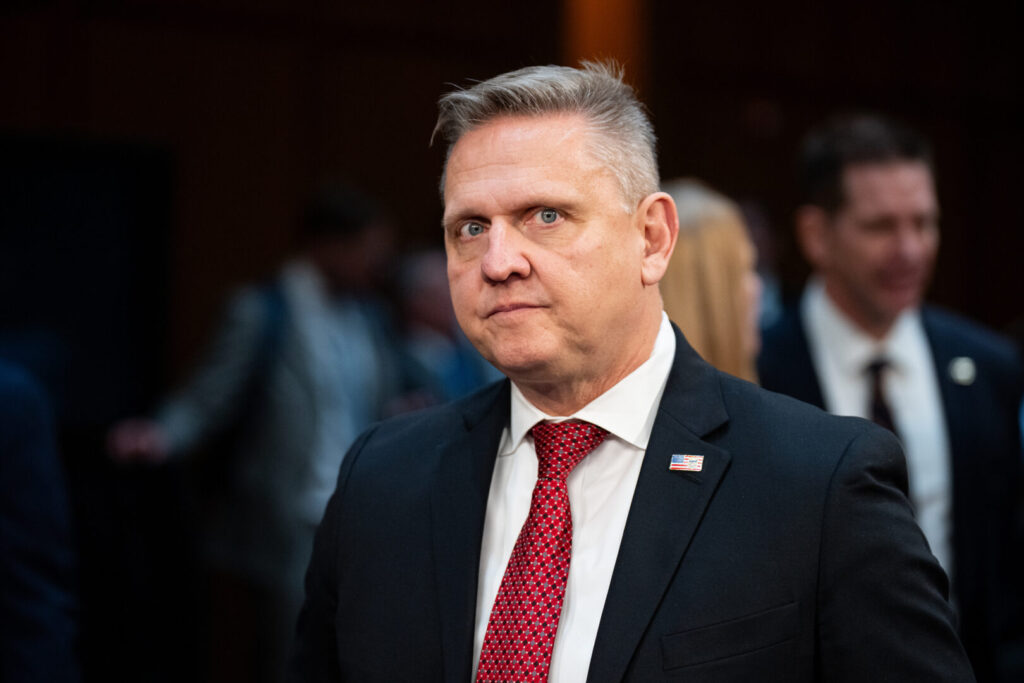
The confirmation of Robert Cekada as Director of the Bureau of Alcohol, Tobacco, Firearms and Explosives marks a consequential shift in the trajectory of federal gun safety enforcement at a time when the national conversation around firearms regulation, public safety, and community protection remains both urgent and deeply contested. Approved by the United States Senate following the resignation of Steven M. Dettelbach, Cekada’s appointment introduces a new leadership era for the agency responsible for overseeing firearms licensing, trafficking enforcement, and the regulatory framework that underpins gun safety efforts across the country.
This transition is more than a routine change in personnel. It represents a recalibration point for how federal authorities approach one of the most complex and high-stakes policy areas in modern American governance. The ATF occupies a uniquely sensitive position within the broader law enforcement ecosystem, tasked with balancing constitutional considerations, public safety imperatives, and the operational realities of combating illegal firearms distribution. Under new leadership, the agency’s direction will carry significant implications not only for enforcement strategy but also for the broader national framework of gun safety.
Cekada’s confirmation arrives at a moment when the scale and scope of gun-related challenges demand both precision and innovation. Illegal firearm trafficking networks continue to exploit regulatory gaps, moving weapons across state lines and into communities already facing disproportionate risks. The ATF’s ability to disrupt these networks hinges on its capacity to modernize investigative techniques, strengthen interagency coordination, and enforce compliance among licensed dealers without overextending its resources or authority. Leadership at the director level plays a decisive role in shaping these priorities, determining how aggressively the agency pursues enforcement actions and how effectively it integrates intelligence across jurisdictions.
At the same time, the national dialogue surrounding gun safety has evolved beyond traditional legislative debates, encompassing a broader understanding of prevention, accountability, and systemic risk reduction. Safe storage practices, responsible ownership standards, and community-based intervention strategies have become integral components of a more comprehensive approach to reducing gun-related harm. The ATF’s regulatory oversight intersects with each of these elements, particularly through its authority to license dealers, inspect facilities, and revoke permissions in cases of noncompliance. The consistency and rigor of these actions directly influence the integrity of the legal firearms market and the extent to which it can be insulated from misuse.
The confirmation process itself underscores the political and social weight carried by this role. Senate approval signals a level of institutional backing, but it also reflects the broader tensions that define gun policy in the United States. Differing perspectives on regulation, enforcement, and individual rights ensure that any ATF director operates within a landscape shaped by competing priorities and intense public scrutiny. Navigating this environment requires not only administrative competence but also strategic clarity—an ability to align enforcement actions with clearly articulated goals that resonate across political and community lines.
From a sustainable action perspective, gun safety is increasingly recognized as part of a larger framework of community resilience and long-term societal wellbeing. The concept extends beyond immediate incident prevention to encompass the structural conditions that influence safety outcomes over time. Effective enforcement reduces the circulation of illegal firearms, which in turn lowers the baseline risk within communities. This creates space for complementary initiatives—education, mental health support, and local engagement—to operate more effectively. In this sense, leadership at the ATF contributes not only to law enforcement outcomes but also to the broader ecosystem of prevention and stability.
Cekada’s tenure will likely be defined by how the agency responds to several critical challenges that have persisted across administrations. Among them is the need to enhance data transparency and traceability, ensuring that firearms used in crimes can be tracked efficiently back to their sources. This capability is central to identifying patterns in illegal distribution and holding accountable those who enable it. Additionally, the ATF faces ongoing pressure to address the proliferation of unregulated or difficult-to-trace firearms, an issue that complicates enforcement efforts and raises questions about the adequacy of existing regulatory frameworks.
Another defining factor will be the agency’s relationship with state and local partners. Gun safety enforcement in the United States operates within a decentralized system, where federal, state, and municipal authorities must coordinate to achieve meaningful results. The ATF’s ability to support and amplify local efforts—through intelligence sharing, joint operations, and resource allocation—will be a key determinant of its effectiveness under new leadership. Building and maintaining these partnerships requires a deliberate strategy that prioritizes collaboration over fragmentation.
The broader implications of this confirmation extend into the realm of public trust. Confidence in federal institutions plays a crucial role in the success of any enforcement initiative, particularly in areas as sensitive as firearms regulation. Transparent decision-making, consistent application of rules, and measurable outcomes all contribute to building that trust. As Director, Cekada will be tasked with reinforcing the credibility of the ATF at a time when institutional confidence is under sustained pressure.
For Sustainable Action Now, this development represents a pivotal moment to reinforce the importance of comprehensive, forward-looking approaches to gun safety. The confirmation of a new ATF director is not an endpoint; it is a starting point for renewed focus on the policies, practices, and partnerships that define effective enforcement. It is also an opportunity to elevate the conversation, moving beyond reactive measures toward a proactive framework that addresses the root causes of risk while strengthening the systems designed to mitigate it.
The path ahead will require alignment across multiple dimensions—policy, enforcement, community engagement, and innovation. Success will depend on the ability to integrate these elements into a cohesive strategy that delivers tangible improvements in safety outcomes. As the ATF enters this new chapter under Robert Cekada’s leadership, the expectations are clear and the stakes are high. What unfolds next will shape not only the agency’s legacy but also the broader trajectory of gun safety in the United States.