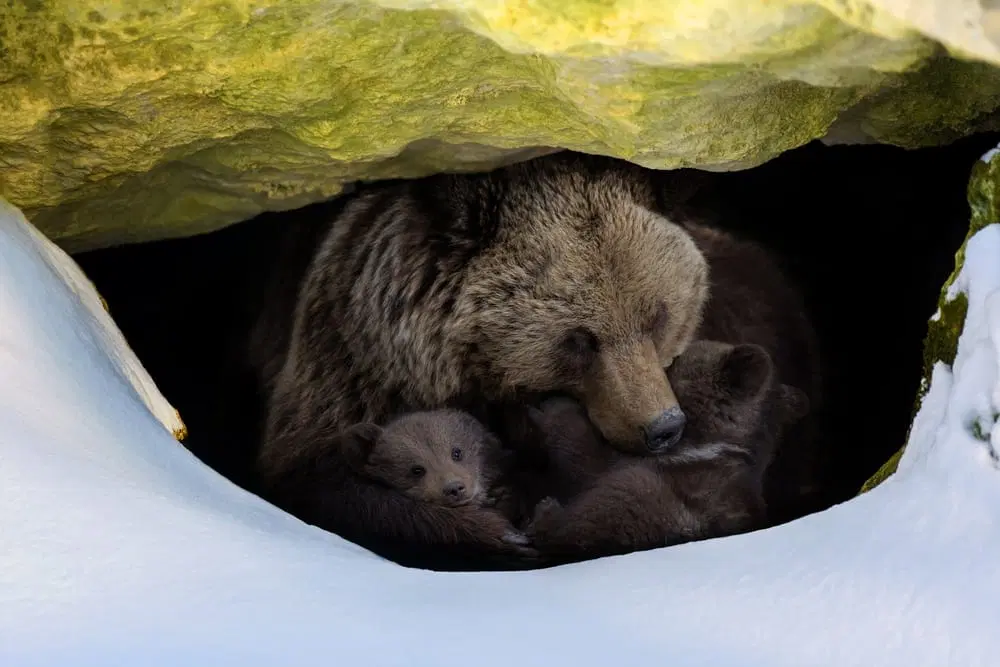

Winter is not simply a season inside our sanctuaries—it is a carefully managed transition rooted in biology, behavioral science, and long-term wildlife welfare planning. At Sustainable Action Now (SAN), the arrival of colder temperatures signals the beginning of one of the most important periods in a brown bear’s annual life cycle: hibernation.
Across our protected forest environments, brown bears enter a state of deep winter rest supported by meticulous preparation, individualized care plans, and habitat design built around natural instinct. This is not passive observation. It is active, ethical stewardship designed to ensure every bear receives the safest and most peaceful winter possible.
For readers following our ongoing wildlife protection work, this latest update from our Bears initiative highlights the science, strategy, and compassion that define SAN’s sanctuary operations.
Understanding Brown Bear Hibernation: Biology Meets Welfare
Hibernation in brown bears is often misunderstood. Unlike smaller mammals that enter true torpor with dramatic drops in body temperature, brown bears experience a lighter form of hibernation. Their body temperature lowers modestly, heart rate slows, and metabolic activity decreases significantly—allowing them to conserve energy during months when food is scarce.
At SAN, we align our sanctuary protocols with these biological realities.
Key Hibernation Principles We Support:
- Metabolic Slowdown, Not Shutdown – Bears can wake, reposition, or briefly exit dens.
- Energy Conservation Through Fat Stores – Autumn nutrition is critical.
- Minimal Disturbance Environment – Stress reduction is central to success.
- Individual Variation – Not all bears follow identical timelines or behaviors.
Every bear is different. Some remain in dens for extended stretches. Others emerge occasionally to explore, stretch, or enjoy small supplemental snacks before returning to rest. This variability is normal—and it is respected.
Preparing the Sanctuary for Winter: Infrastructure That Mirrors Nature
One of the most important aspects of ethical bear care is providing choice. In the wild, brown bears dig dens into hillsides, forest floors, or beneath root systems. Within our sanctuaries, we recreate and enhance those natural opportunities.
🌲 Spacious Forest Areas for Natural Den Digging

Our forest enclosures are intentionally expansive, allowing bears to dig their own winter dens if they choose. This behavior:
- Encourages instinct-driven activity
- Reduces stress
- Supports psychological well-being
- Promotes autonomy
Den construction is part of a bear’s natural preparation cycle. Providing space for this instinct honors the animal’s wild heritage.
🪵 Wooden Cabins and Artificial Dens
Not every bear arrives at sanctuary with the same physical abilities or behavioral background. Some rescued bears—especially those previously kept in captivity—may not know how to dig or may prefer alternative shelter options.
That’s why SAN provides:
- Insulated wooden cabins
- Artificial dens designed to replicate underground environments
- Specially constructed bear houses for aging or mobility-limited individuals
Each structure is strategically placed to reduce wind exposure and maximize warmth retention.
Personalized Care Plans: Individualized Winter Management
Animal welfare is never one-size-fits-all.
At Sustainable Action Now, each bear receives a personalized care plan developed by on-site wildlife professionals. These plans account for:
- Age
- Medical history
- Behavioral background
- Nutritional requirements
- Previous trauma or captivity experience
- Seasonal activity patterns
Young bears, such as Runa and Kodi, are still learning the rhythms of winter. For them, hibernation is a developmental milestone. They may experiment—entering and exiting dens, adjusting routines, exploring briefly before committing to longer rest periods.
Older bears may enter hibernation earlier and remain more consistently inside their dens.
Our team monitors discreetly—never intrusively—to ensure safety without disrupting natural cycles.
The Autumn Diet: Building Energy for Winter Survival
Hibernation success begins months before the first snowfall.
During autumn, our sanctuary teams implement a nutrient-rich feeding program designed to help bears build adequate fat reserves. This process, known as hyperphagia, is a natural biological phase in which bears significantly increase food intake.
The autumn diet includes:
- Seasonal fruits and berries
- Nuts and plant-based proteins
- Supplemental nutrition tailored to medical needs
- Natural forage enrichment to stimulate instinctual feeding behaviors
This energy reserve becomes the metabolic fuel that sustains them through winter.
Careful balance is essential. Overfeeding can cause complications; underfeeding compromises winter resilience. Our approach is rooted in veterinary science and wildlife nutrition expertise.
Behavioral Diversity: Why Not All Bears Hibernate the Same Way
Hibernation is often portrayed as months of uninterrupted sleep. In reality, brown bears exhibit a spectrum of winter behaviors.
At SAN, we observe:
- Bears that remain inside dens for long stretches
- Bears that periodically emerge for brief exploration
- Juveniles that are still adjusting to routine
- Individuals with unique behavioral adaptations based on rescue history
Some may step out on milder winter days. Others prefer near-total seclusion.
This diversity is expected. Respecting it is essential to ethical sanctuary management.
Why Winter Bear Care Matters for Global Conservation
Brown bears face numerous threats worldwide, including habitat loss, human-wildlife conflict, climate change disruption of seasonal cycles, and exploitation.
By protecting rescued bears and demonstrating high-standard sanctuary care, Sustainable Action Now contributes to:
- Public education on bear biology
- Ethical wildlife rehabilitation practices
- Conservation advocacy
- Climate awareness connected to seasonal disruption
- Long-term species protection messaging
Warmer winters in some regions are already altering hibernation timing. Bears may emerge earlier or experience disrupted food cycles. Sanctuaries serve as living educational environments where these shifts can be studied responsibly.
A Peaceful Winter, Earned Through Preparation
When snow blankets the forest and silence settles across the sanctuary grounds, it is the result of months of preparation.
The dens are ready.
The nutrition plans have been executed.
The individualized care strategies are in place.
And most importantly—each bear has the freedom to choose how they rest.
At Sustainable Action Now, winter is not downtime. It is a critical chapter in our year-round mission to protect, rehabilitate, and advocate for wildlife with integrity.
Runa and Kodi are learning. Older bears are settling into familiar rhythms. Some wander briefly before retreating. Others disappear into quiet stillness for weeks.
Every path is respected.
Every bear is protected.
Follow the Bears at Sustainable Action Now
To explore more updates from our Bears initiative and learn how SAN is advancing wildlife protection, habitat preservation, and ethical sanctuary management, visit the Bears section at Sustainable Action Now and follow our ongoing conservation work.
Winter may be cold—but within our sanctuaries, it is a season defined by care, preparation, and the promise of renewal.
#Hibernation #BrownBears #WildlifeSanctuary #AnimalWelfare #SustainableActionNow