
Across the United States, criminal justice reform has evolved into one of the defining public policy debates of the modern era. Over the past two decades, reform movements have gained traction in cities, states, and federal institutions alike, fueled by growing awareness of mass incarceration, racial disparities in sentencing, and the social and economic costs associated with punitive justice policies.
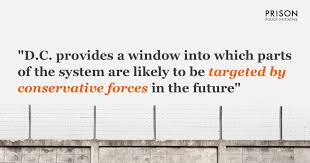
Yet today, reform advocates are increasingly sounding the alarm about a new and troubling trend emerging in Washington, D.C. Legislative proposals circulating in Congress threaten to reverse years of progress in criminal justice reform by weakening bail reform efforts, expanding mandatory minimum sentencing, and intensifying the criminalization of young people.
For organizations, policy leaders, and community advocates working to advance equitable justice systems, the developments unfolding in the nation’s capital are being viewed not simply as a localized policy shift, but as a national warning sign. If enacted, these federal proposals could create ripple effects across state legislatures, embolden tougher sentencing policies, and reinvigorate the political momentum behind incarceration-based approaches to public safety.
At a moment when communities across the country are exploring more balanced and evidence-based justice strategies, the push for reform rollbacks in Washington, D.C. represents a pivotal turning point with far-reaching implications.
A Crossroads for Criminal Justice Reform
The District of Columbia has long served as a unique testing ground for criminal justice policy. As the seat of federal government yet governed through its own local institutions, D.C.’s criminal legal system often becomes a focal point for national political debates about crime, public safety, and accountability.
In recent years, policymakers and advocates in the District have worked to implement reforms designed to reduce unnecessary incarceration, modernize sentencing policies, and focus resources on rehabilitation and community safety.
These efforts reflect broader national trends. Over the last decade, numerous states have implemented measures intended to reduce reliance on cash bail, reexamine mandatory sentencing laws, and expand diversion programs for youth and nonviolent offenders.
Supporters of these reforms argue that the traditional model of mass incarceration has proven both economically unsustainable and socially damaging. Incarceration disrupts families, limits economic mobility, and disproportionately affects communities already facing systemic inequalities.
Despite these concerns, a new wave of legislative proposals in Congress is attempting to move policy in the opposite direction.
Congressional Proposals Threatening Reform Progress
Several bills under consideration in Congress seek to roll back or undermine key reform measures that have been implemented in Washington, D.C.’s criminal legal system.
Among the most concerning elements cited by reform advocates are proposals that would:
• Repeal or weaken bail reform policies designed to reduce reliance on pretrial detention
• Expand mandatory minimum sentencing provisions that limit judicial discretion
• Increase criminal penalties affecting young people and youth-related offenses
Taken together, these measures could significantly expand the use of incarceration while restricting the flexibility judges and courts have in tailoring outcomes based on individual circumstances.
Critics of the proposed legislation argue that such changes risk reintroducing many of the systemic issues that reform efforts were intended to address.
Mandatory minimum sentencing laws, for example, have historically been criticized for removing judicial discretion and producing disproportionately harsh outcomes for nonviolent offenses. These laws became a central feature of federal criminal policy during the late twentieth century and played a major role in the dramatic rise of incarceration rates across the United States.
Similarly, the rollback of bail reform policies could lead to increased reliance on pretrial detention—meaning individuals who have not been convicted of a crime could spend extended periods in jail simply because they cannot afford bail.
The Bail Reform Debate
Few aspects of the criminal legal system have generated as much debate as cash bail.
Under traditional bail systems, individuals arrested for certain offenses must pay a financial bond in order to be released while awaiting trial. Critics argue that this model effectively creates a two-tiered system of justice in which wealth determines freedom.
Those who can afford bail can return home, maintain employment, and prepare their legal defense. Those who cannot afford bail often remain incarcerated for weeks or months prior to trial—even when accused of relatively minor offenses.
Reform advocates have long argued that this system punishes poverty rather than addressing actual public safety risks.
Bail reform initiatives seek to address this issue by replacing cash bail requirements with risk-based assessments that determine whether individuals should be released while awaiting trial.
Proposals currently under discussion in Congress could dismantle or weaken these reforms, potentially restoring a system in which financial resources play a central role in determining pretrial freedom.
Mandatory Minimum Sentencing: A Return to Rigid Policies
Another major concern surrounding the proposed legislation involves the expansion of mandatory minimum sentencing laws.
Mandatory minimums require judges to impose fixed sentences for certain offenses, regardless of mitigating circumstances or the specific details of a case.
While originally introduced as a tool to deter serious crime, mandatory minimums have been widely criticized for producing overly harsh penalties and contributing to overcrowded prison systems.
Research and policy analysis over the past two decades have shown that mandatory minimum sentencing laws often fail to deter crime while dramatically increasing incarceration costs.
As a result, many states have moved to reduce or eliminate mandatory minimum requirements in favor of more flexible sentencing frameworks.
The push to expand mandatory minimums in Washington, D.C. represents a potential return to policies that many experts believe contributed significantly to the era of mass incarceration.
Youth Criminalization and the Long-Term Impact
Perhaps one of the most troubling aspects of the proposed legislative changes involves policies that could increase the criminalization of young people.
Youth justice reform has become a major focus of criminal justice advocacy in recent years. Policymakers across the country have increasingly recognized that young people require different legal frameworks than adults.
Adolescents are still developing neurologically, socially, and emotionally. For that reason, many reform efforts emphasize diversion programs, restorative justice models, and educational support rather than punitive incarceration.
Proposals that increase criminal penalties for youth-related offenses risk undermining these efforts and placing more young people into the criminal legal system at earlier stages of life.
Early contact with the justice system is strongly associated with long-term negative outcomes, including reduced educational attainment, limited employment opportunities, and increased likelihood of future justice system involvement.
For communities already struggling with systemic inequalities, these consequences can have generational effects.
The Private Prison Connection
The potential rollback of criminal justice reforms also raises broader questions about the role of incarceration within the American justice system.
As incarceration rates increase, so too does the demand for prison capacity. Historically, this dynamic has contributed to the expansion of privately operated detention facilities.
Private prisons operate under contracts with government agencies, receiving payments based on the number of individuals housed within their facilities. Critics argue that this financial model creates incentives that are fundamentally incompatible with efforts to reduce incarceration rates.
Although the role of private prisons varies across jurisdictions, the expansion of incarceration-based policies could indirectly support the continued growth of privatized detention systems.
For advocates working to reduce reliance on private prisons and promote more humane justice systems, the legislative developments in Washington, D.C. are therefore particularly concerning.
Why State-Level Advocates Are Watching Closely
While the legislative proposals currently under discussion focus on the District of Columbia, their potential impact extends far beyond the nation’s capital.
Federal criminal justice debates often shape policy discussions at the state level. When Congress signals support for tougher sentencing laws or expanded incarceration policies, state legislatures frequently follow with similar proposals.
This dynamic has been observed repeatedly throughout American history, particularly during periods of heightened political attention to crime and public safety.
Advocates for criminal justice reform therefore view the current situation as a critical inflection point. If reform rollbacks gain traction in Washington, similar efforts could emerge in state legislatures across the country.
Conversely, strong resistance from community organizations, policymakers, and justice advocates could reinforce the momentum behind reform initiatives that seek to reduce incarceration and promote more equitable legal systems.
The Role of Public Engagement and Policy Advocacy
Criminal justice policy does not exist in a vacuum. Legislative decisions are shaped by public awareness, community advocacy, and sustained engagement from organizations working to promote systemic change.
Across the country, advocacy groups are mobilizing to ensure that the progress made over the past decade is not reversed. These organizations are emphasizing data-driven approaches to public safety that focus on prevention, rehabilitation, and community investment.
Public education campaigns, policy research, and grassroots organizing have all played key roles in advancing criminal justice reform in recent years.
As debates continue in Washington, D.C., these efforts will likely intensify as advocates seek to ensure that reform momentum continues rather than being dismantled.
A Defining Moment for the Future of Criminal Justice
The conversation surrounding criminal justice reform in the United States is far from settled. The nation continues to grapple with complex questions about public safety, accountability, fairness, and the role of incarceration in addressing crime.
The legislative proposals emerging in Washington, D.C. highlight how fragile reform progress can be. Policies that took years of advocacy, research, and coalition-building to achieve can be challenged or reversed through shifting political priorities.
For advocates committed to building more equitable justice systems, the developments unfolding in the nation’s capital serve as a reminder that reform is not a destination but an ongoing process.
State leaders, community organizations, legal scholars, and policymakers must remain vigilant in protecting the progress that has been made while continuing to push for policies grounded in fairness, accountability, and long-term public safety.
The debate now underway in Washington, D.C. will not only shape the future of criminal justice in the District—it may also determine the direction of reform efforts across the entire nation.