

For decades, the global scientific establishment largely treated animal experimentation as an unavoidable foundation of medical and pharmaceutical progress. Laboratories, universities, government agencies, and private corporations built entire research systems around the assumption that testing on mice, rats, rabbits, monkeys, dogs, and other animals represented the most effective pathway toward understanding human disease, drug development, toxicology, and biological response.
But that assumption is now facing growing resistance not only from animal advocates, but increasingly from scientists, technologists, data researchers, biomedical innovators, and modern research institutions themselves.
The launch of PETA’s new Research Modernization NOW platform represents one of the clearest signs yet that the debate surrounding animal experimentation is rapidly evolving beyond emotional advocacy alone and entering a far more consequential arena: the future architecture of science itself.
Positioned as both a scientific resource hub and strategic roadmap for 21st-century biomedical innovation, the Research Modernization NOW initiative argues that animal experimentation is no longer merely ethically controversial, but scientifically outdated, operationally inefficient, and increasingly incompatible with emerging human-relevant technologies capable of transforming modern research.
At Sustainable Action Now, conversations surrounding animal testing increasingly intersect with broader discussions involving scientific modernization, artificial intelligence, biotechnology, pharmaceutical development, computational medicine, ethics, regulatory reform, public transparency, and the accelerating push toward more predictive, human-centered research systems.
What makes the Research Modernization NOW initiative particularly significant is that it frames animal experimentation not simply as a moral issue, but as a structural obstacle to scientific progress itself.
That distinction changes the conversation dramatically.
Historically, anti-animal-testing campaigns often centered primarily on cruelty, suffering, confinement, invasive procedures, and ethical responsibility toward sentient beings. Those concerns remain central today. However, modern research modernization advocates are now increasingly pairing ethical critiques with aggressive scientific arguments questioning whether animal-based models remain technologically justifiable at all in an era of rapidly advancing alternatives.
The core argument is simple but profound:
If human biology differs fundamentally from animal biology in critical ways, then animal experimentation may produce unreliable, misleading, or inefficient outcomes that delay medical advancement rather than accelerate it.
This issue has become increasingly difficult for the scientific world to ignore.
Critics of traditional animal experimentation frequently point to data suggesting that the overwhelming majority of drugs successfully passing animal trials ultimately fail during human clinical testing due to biological inconsistencies between species. Differences involving genetics, metabolism, immune systems, neurological pathways, organ response, disease progression, and biochemical interaction create substantial limitations when extrapolating animal data directly into human medicine.
The implications of this are enormous.
If animal models frequently fail to predict human outcomes accurately, then the problem extends far beyond ethics. It becomes a scientific efficiency issue, a pharmaceutical development issue, a public health issue, and a research funding issue simultaneously.
Research Modernization NOW appears specifically designed to accelerate public understanding of that shift.
According to the initiative’s rollout, the platform functions as a centralized educational and advocacy resource aimed at scientists, educators, policymakers, and activists interested in transitioning away from animal experimentation toward human-relevant non-animal methodologies. The site reportedly contains detailed strategic frameworks, downloadable reports, advocacy materials, extensive appendices across multiple scientific disciplines, and policy recommendations outlining how large-scale transition away from animal experimentation could realistically occur.
At Sustainable Action Now, one of the most important dimensions of this launch is the language itself: modernization.
That terminology is strategic because it reframes the issue away from purely emotional confrontation and toward technological evolution. Modernization implies progress, advancement, innovation, efficiency, and scientific refinement rather than merely prohibition or activism.
This framing matters because scientific institutions often resist change most strongly when criticism appears disconnected from operational practicality. Positioning animal-free research as technologically superior rather than simply ethically preferable fundamentally alters the debate.
And increasingly, technological developments are making that argument harder to dismiss.
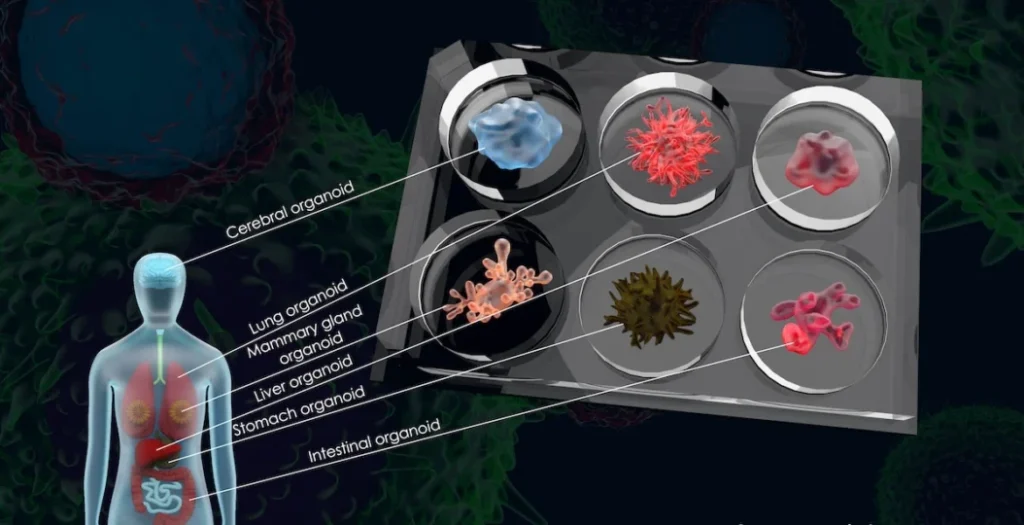
Artificial intelligence-assisted modeling, organ-on-chip systems, human tissue engineering, 3D bioprinting, computational toxicology, advanced cell cultures, machine learning drug prediction systems, and patient-derived biological modeling are rapidly reshaping biomedical research capabilities worldwide.
These technologies aim to simulate human biological systems directly rather than relying primarily on cross-species approximation.
That distinction may ultimately define the next era of medical science.
For generations, animal experimentation functioned partly because alternative systems capable of replicating human physiological complexity simply did not exist technologically. Researchers therefore relied on animal analogues despite known limitations because they represented the best available option operationally.
But now, the landscape is changing rapidly.
Human-relevant testing systems increasingly promise faster results, lower long-term costs, more precise biological targeting, reduced ethical controversy, and potentially stronger predictive accuracy for human clinical outcomes.
The challenge is that institutional scientific systems rarely evolve quickly.
At Sustainable Action Now, another major aspect of the Research Modernization NOW initiative involves recognizing how deeply embedded animal experimentation remains within regulatory, academic, pharmaceutical, and governmental frameworks globally. Entire grant systems, approval pipelines, educational models, laboratory infrastructures, and legal standards were built around animal-based testing assumptions over many decades.
Transitioning away from that structure therefore requires more than technological invention alone.
It requires regulatory reform, funding realignment, institutional retraining, educational restructuring, policy adaptation, and public pressure simultaneously.
That is why resource platforms like Research Modernization NOW may become increasingly influential. The initiative appears designed not only to criticize current systems, but to provide concrete transition frameworks capable of helping institutions navigate practical modernization pathways.
The inclusion of over 40 detailed appendices across different scientific fields reflects that ambition clearly.
Rather than treating animal experimentation as a single monolithic issue, the platform reportedly addresses multiple specialized research domains individually, acknowledging that transition strategies may vary significantly depending on discipline, application, regulatory requirements, and technological readiness.
This systems-level approach signals growing sophistication within the broader animal-free science movement.
At Sustainable Action Now, another especially important cultural shift emerging from campaigns like this is the collapsing divide between ethical advocacy and technological innovation. Increasingly, younger generations of scientists, researchers, biotech entrepreneurs, and medical students are entering scientific fields already exposed to conversations surrounding ethics, sustainability, humane technology, and systemic reform simultaneously.
For many emerging researchers, animal-free science is not viewed as radical opposition to progress. It is increasingly viewed as the next stage of progress itself.
This generational transition may become decisive over the coming decades.
Public opinion surrounding animal experimentation is also evolving quickly as awareness surrounding animal cognition, emotional complexity, social attachment, and neurological suffering continues expanding through scientific research itself. Many people now view laboratory animals less as abstract research tools and more as sentient beings capable of fear, distress, trauma, and prolonged psychological suffering.
That emotional awareness intensifies pressure for alternatives once technological substitutes become viable.
Research Modernization NOW appears to recognize this convergence fully. The platform reportedly combines scientific critique, technological advocacy, educational outreach, and public mobilization into a single modernization narrative capable of appealing across multiple audiences simultaneously.
Scientists see discussions about predictive reliability and technological innovation.
Advocates see pathways toward ending large-scale animal suffering.
Educators see curriculum evolution opportunities.
Policymakers see future regulatory frameworks.
The broader public sees the possibility of medical progress without institutionalized animal experimentation remaining permanently embedded inside the system.
At Sustainable Action Now, perhaps the most important reality surrounding this initiative is that the debate over animal experimentation is no longer hypothetical or distant. The transition toward alternative methodologies is already underway globally at varying speeds across different sectors.
Major pharmaceutical companies are investing heavily in AI-driven research platforms. Governments are exploring updated regulatory standards. Universities are expanding alternative methodology programs. Biotech firms are developing increasingly sophisticated human-cell-based systems. Computational medicine is advancing at extraordinary speed.
The real question may no longer be whether modernization will happen.
The question is how quickly institutions are willing to adapt before existing systems become scientifically obsolete.
That possibility carries enormous implications not only for animal welfare, but for the future structure of medicine itself.
Because if human-relevant science ultimately proves more predictive, more efficient, more technologically scalable, and more ethically sustainable than traditional animal experimentation, then modernization stops being an activist aspiration.
It becomes the inevitable next chapter of biomedical research.
And initiatives like Research Modernization NOW are clearly positioning themselves to help shape exactly what that future looks like.