As climate urgency intensifies and the future of America’s public lands faces mounting pressure, one of the nation’s most enduring conservation storytellers is being honored in a profoundly symbolic way.
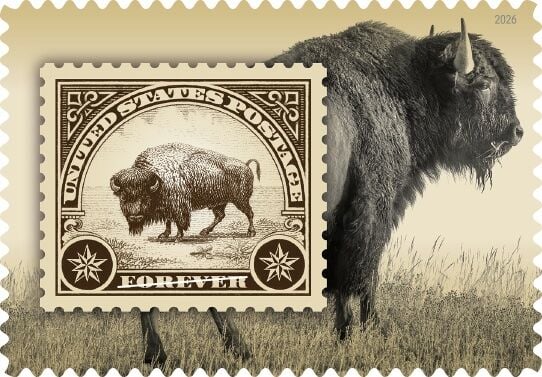
Legendary wildlife photographer Tom Murphy has been selected for a new U.S. postage stamp featuring his powerful American bison imagery — a tribute that bridges past and present, conservation and culture, wilderness and identity.
At Sustainable Action Now (SAN), we recognize moments like this as more than artistic recognition. They are cultural inflection points. When conservation photography reaches millions of mailboxes nationwide, climate awareness and public land preservation enter daily life — literally carried in the hands of the American public.
This is not just about a stamp.
It is about legacy, biodiversity, national identity, and the climate resilience of Yellowstone’s wildlife ecosystems.
A Modern Bison Meets 1923: A Symbol Reborn


Murphy’s selected image features a modern American bison superimposed with a historic 1923 bison stamp counterpart — visually linking a century of conservation consciousness.
The American bison is not merely wildlife. It is a keystone species, a climate resilience indicator, and a living emblem of ecological recovery. Once driven to near extinction through industrial expansion and unregulated hunting, bison survival became one of the earliest large-scale conservation victories in U.S. history.
The setting for Murphy’s life work — Yellowstone National Park — remains the only place in the continental United States where bison have continuously roamed since prehistoric times.
To place that animal on a national postage stamp in 2026 is to signal something larger: America is remembering what sustains it.
Five Decades in the Wild: A Life Embedded in Yellowstone
Tom Murphy is not a visiting photographer. He is a living archive of Yellowstone’s ecological shifts.
Raised on a 7,500-acre cattle ranch, Murphy understood both domesticated landscapes and wild frontiers from an early age. By the 1970s, he had committed fully to professional photography — anchoring his life’s work in Yellowstone’s backcountry.
His dedication is operational, not romanticized:
- More than 2,000 miles skied through Yellowstone wilderness
- Multiple full winter crossings, including a 175-mile solo expedition over 14 days
- Thousands of backcountry hiking miles
- Decades of observing free-roaming wolves, bison, elk, and grizzlies
These journeys were not aesthetic pursuits alone. They were ecological documentation missions.
Murphy’s photography captures not spectacle, but relationship — predator and prey, snow and silence, migration and survival.
Climate Context: Why Yellowstone Matters Now
Yellowstone is a climate sentinel.
As one of the largest intact temperate ecosystems in the world, it offers measurable insight into:
- Wildlife migration pattern shifts
- Snowpack variability
- Drought cycles
- Wildfire intensity
- Predator-prey balance
Murphy’s images become longitudinal climate records — visual evidence of ecological transformation across decades.
In an era defined by accelerated warming and biodiversity decline, long-term documentation is as critical as policy.
His bison photography is particularly timely. Bison are ecosystem engineers: they aerate soil, distribute seeds, and influence vegetation growth patterns. Their survival and population dynamics are tied directly to grassland resilience and winter severity patterns.
Honoring a bison image on a national stamp is not nostalgic. It is forward-looking.
National Recognition and Cultural Reach
Murphy’s work has appeared in:
- National Geographic
- Audubon
- Time
- Newsweek
- The New York Times Magazine
- Esquire
His photography has also been featured in documentary film and broadcast, including the PBS Nature production Christmas in Yellowstone.
His 2002 book Silence and Solitude received the Montana Book Award, and its companion Montana PBS film earned an Emmy nomination for photography and videography.
These recognitions affirm artistic excellence. But at SAN, we emphasize impact.
Murphy’s work has educated generations about wildlife stewardship, habitat preservation, and the sacred stillness of protected lands.
Wilderness as Cathedral: Conservation Through Experience
Beyond publication and exhibition, Murphy has built a conservation ecosystem through immersive engagement.
He leads Wilderness Photography Expeditions into what he describes as “natural cathedrals” — remote backcountry spaces where participants witness ecological systems without human distortion.
Proceeds from these expeditions support environmental organizations, reinforcing a circular sustainability model: experience fuels funding, funding supports protection.
Murphy has also served on the National Advisory Council of Yellowstone Forever and the Park County Environmental Council, and co-founded the Park County Search and Rescue Team in 1982 — a civic contribution that underscores his long-term commitment to the region.
This is conservation beyond imagery. It is structural participation.
Upcoming Release: Yellowstone Bison – The Return of the Last Wild Herd
Scheduled for release in May 2026, Murphy’s forthcoming book, Yellowstone Bison: The Return of the Last Wild Herd, promises an expansive visual and historical tribute to the species that shaped the American West.
The timing is strategic.
As debates over public land management, climate mitigation policy, and wildlife corridors intensify, a comprehensive visual chronicle of Yellowstone’s bison resurgence adds narrative depth to contemporary climate discussions.
Bison restoration represents one of the rare conservation success stories — but it remains fragile.
Habitat fragmentation, disease management disputes, and political pressure continue to challenge herd stability.
Murphy’s upcoming work reframes the conversation: conservation is not a finished chapter. It is ongoing stewardship.
Why This Stamp Matters in 2026
A postage stamp is intimate. It travels through communities, across generations, into archives.
Placing Yellowstone’s bison — through Murphy’s lens — into national circulation accomplishes three things:
- It re-centers wildlife in American identity.
- It amplifies conservation in everyday life.
- It embeds climate awareness in cultural memory.
In an era dominated by digital distraction, a physical stamp becomes a tactile reminder of enduring landscapes.
Murphy’s work asks us to slow down.
To observe.
To recognize that wilderness is not a backdrop — it is infrastructure.
Sustainable Action Now: The Climate Imperative
At SAN, climate coverage is not episodic. It is systemic.
The Yellowstone ecosystem connects directly to broader sustainability frameworks:
- Biodiversity preservation
- Carbon sequestration through intact grasslands
- Wildlife corridor protection
- Responsible tourism management
- Federal land stewardship
When we elevate voices like Tom Murphy’s, we reinforce the truth that environmental protection requires cultural investment as much as legislative reform.
Art influences policy.
Imagery shapes public will.
Public will drives sustainable systems.
A Call to Action
Explore Yellowstone responsibly.
Support public land protections.
Invest in conservation education.
Engage with climate-informed storytelling.
Advocate for biodiversity resilience policies.
Learn more about Tom Murphy’s work and his upcoming projects through his official platform.
The American bison once nearly vanished from this continent.
Today, it stands — powerful, resilient, and enduring — on a U.S. postage stamp.
That is not coincidence.
That is conservation.
And sustainable action ensures it continues.