
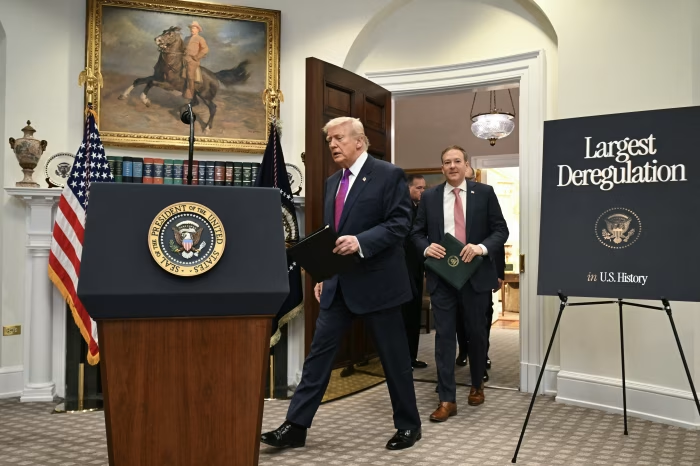
A sweeping reversal of U.S. climate policy is setting the stage for one of the most consequential environmental legal battles in modern history. The Trump administration has moved to overturn a foundational federal determination that greenhouse gas emissions endanger public health and drive climate change — a decision that could reshape environmental regulation, energy markets, and global climate governance.
The Environmental Protection Agency’s action represents a dramatic shift in federal climate policy, prompting immediate promises of legal challenges from environmental organizations, policymakers, and climate advocates. The decision raises fundamental questions about the future of U.S. climate leadership, scientific governance, and the regulatory framework guiding emissions control.
For Sustainable Action Now, this development represents a defining moment in the global sustainability conversation — one that will influence environmental protection, economic policy, and the trajectory of climate action for years to come.
A Foundational Climate Policy Under Review
At the center of the controversy is the federal government’s long-standing “endangerment finding,” a scientific determination that greenhouse gas emissions threaten human health and the environment. This finding has historically served as the legal basis for regulating carbon emissions under U.S. environmental law.
By discarding this determination, federal regulators are challenging a central pillar of modern climate policy — a move that could weaken emissions standards for power plants, transportation systems, and industrial sectors.
The rollback signals a shift toward reduced federal oversight of carbon pollution and increased reliance on market-driven energy development.
The Legal Stakes: A Courtroom Battle Ahead
Environmental organizations and political leaders have indicated they will challenge the policy in court, setting up a high-profile legal confrontation over scientific evidence, administrative authority, and environmental responsibility.
Legal experts expect the dispute to address several critical issues:
- The federal government’s authority to reinterpret established scientific findings
- The role of science in regulatory decision-making
- The legal basis for emissions regulation
- Public health protections tied to environmental policy
- The future scope of federal climate action
The outcome could establish precedents affecting environmental law, regulatory governance, and scientific oversight for decades.
Science, Policy, and Political Strategy
Despite public rhetoric questioning climate science, the administration’s strategy avoided directly litigating broader claims about global warming itself. Instead, regulators focused on dismantling the legal framework supporting emissions controls.
This approach reflects a strategic effort to reshape policy through administrative reinterpretation rather than direct scientific confrontation — a distinction that may prove critical in court.
The decision also raises questions about how scientific expertise is incorporated into public policy and the role of evidence in environmental governance.
Implications for Global Climate Action
The policy shift extends beyond domestic regulation. As one of the world’s largest greenhouse gas emitters, U.S. climate policy influences global environmental progress, international agreements, and emissions reduction efforts.
Potential global consequences include:
- Slower international climate cooperation
- Shifts in global energy markets
- Increased pressure on other nations to lead emissions reduction
- Uncertainty in global climate commitments
- Potential increases in global carbon output
For sustainability advocates, the development highlights the interconnected nature of climate governance and international environmental responsibility.
The Energy Policy Dimension
The rollback aligns with broader energy policies prioritizing expanded fossil fuel production and reduced regulatory barriers for traditional energy industries.
Supporters argue that reduced regulation can strengthen economic growth, energy independence, and industrial competitiveness. Critics contend that weakening emissions controls risks accelerating climate change and undermining long-term environmental stability.
This tension reflects a central challenge in modern policy: balancing economic priorities with environmental sustainability.
Environmental and Public Health Concerns
The endangerment finding has historically linked greenhouse gas emissions to public health risks, including extreme heat, air pollution, and environmental degradation.
Critics of the rollback warn that reducing regulatory oversight could:
- Increase air pollution exposure
- Intensify climate-related health risks
- Accelerate ecosystem damage
- Heighten vulnerability to extreme weather
- Undermine environmental justice initiatives
The legal battle may ultimately determine how environmental protections evolve in response to these concerns.
Climate Governance at a Crossroads
The policy reversal highlights a broader global debate about climate governance, regulatory authority, and the pace of environmental transition.
Key questions shaping the future include:
- What role should government play in emissions regulation?
- How should scientific evidence guide policy decisions?
- Can economic growth and climate protection coexist?
- How should nations balance short-term interests with long-term sustainability?
The answers will shape the next generation of climate policy frameworks.
The Role of Public Engagement and Sustainable Action
As legal challenges unfold, public awareness and civic engagement will play a significant role in shaping the policy landscape. Climate governance increasingly depends on informed participation, community advocacy, and institutional accountability.
Individuals and organizations seeking to engage in climate discussions and sustainability initiatives can explore ongoing environmental efforts through <a href=”https://sustainableactionnow.org/category/climate/”>Sustainable Action Now’s climate initiatives</a>.
Collective action remains a critical driver of environmental progress.
A Defining Moment for Climate Policy
The EPA’s decision to reverse a central climate finding marks a pivotal moment in U.S. environmental policy. The resulting legal battles will influence regulatory authority, scientific governance, and the future direction of climate action.
For the global sustainability movement, the development underscores the importance of strong environmental frameworks, evidence-based policy, and long-term climate planning.
As the courtroom clash unfolds, the world will be watching — because the outcome may determine not only the future of U.S. climate regulation, but the trajectory of global environmental protection itself.
The debate now moves from policy chambers to the judicial arena, where the future of climate governance will be tested, challenged, and ultimately defined.