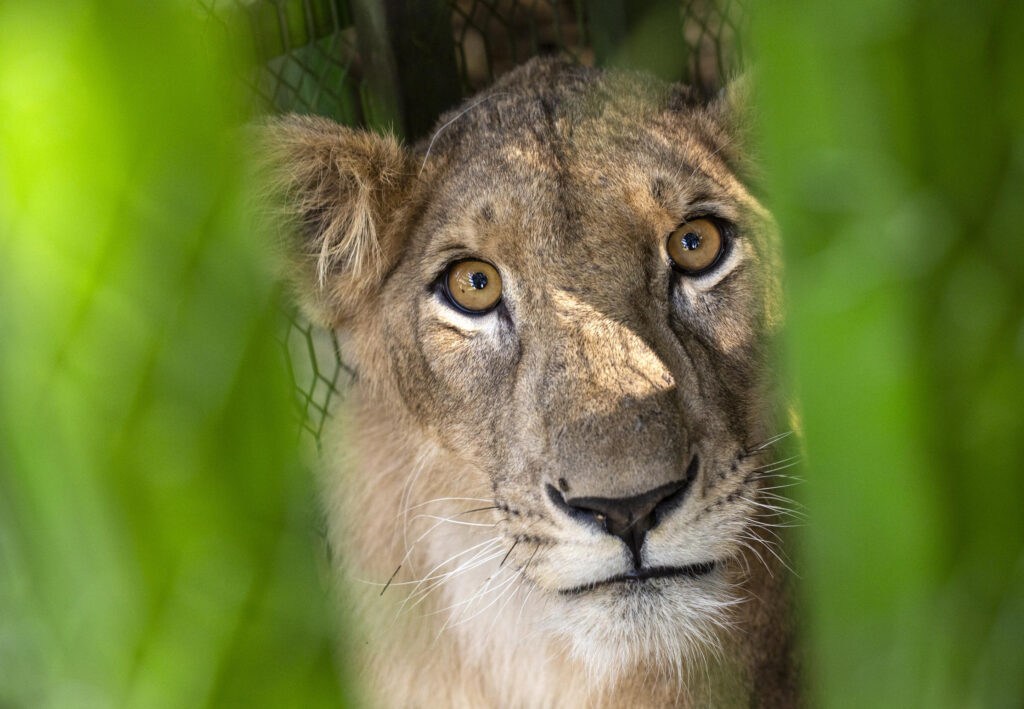
Two years ago, in the midst of armed conflict and systemic collapse, eleven lions faced an uncertain fate in war-torn Sudan. Their captivity conditions had deteriorated as violence escalated, infrastructure fractured, and access to food, veterinary care, and oversight vanished.
Today, those same lions are alive, thriving, and protected — living in dignity at FOUR PAWS’ flagship sanctuary, LIONSROCK Big Cat Sanctuary in South Africa.
This is not just an anniversary. It is a case study in coordinated rescue, international animal welfare logistics, trauma-informed rehabilitation, and the long-term sustainability of wildlife protection systems.
At Sustainable Action Now (SAN), we recognize that sustainability includes the ethical stewardship of animals displaced by conflict, neglect, and exploitation. The Sudan lions’ story demonstrates what happens when compassion is operationalized at scale.
From Conflict Zone to Conservation Haven. When war destabilized Sudan, the eleven lions were trapped in deteriorating facilities. Access to adequate nutrition, clean water, and medical treatment became inconsistent or nonexistent. In conflict zones, captive wildlife is often overlooked — collateral damage in humanitarian crises.
FOUR PAWS mobilized.
The rescue operation required:
- International coordination across unstable borders
- Veterinary stabilization prior to transport
- Specialized transport logistics for large carnivores
- Compliance with wildlife transfer regulations
- Post-arrival quarantine and medical evaluation
Relocating apex predators across continents during wartime is not symbolic activism. It is a highly technical, risk-managed, welfare-centered intervention.
The lions were transferred to LIONSROCK Big Cat Sanctuary in South Africa — a permanent home designed specifically for rescued big cats from crisis situations, circuses, private ownership, zoos in distress, and conflict environments.
Two years later, the outcome is measurable.
Trauma Recovery for Big Cats: What Rehabilitation Actually Looks Like
Sustainable rescue does not end at relocation. For animals subjected to prolonged stress, malnutrition, confinement, and environmental instability, recovery is layered and long-term.
At LIONSROCK, the Sudan lions now receive:
- Species-appropriate nutrition tailored to individual health profiles
- Enrichment programs designed to stimulate natural behaviors
- Ongoing veterinary oversight and preventative medicine
- Expansive enclosures that allow territorial movement
- Climate-appropriate habitats in a protected ecosystem
Behavioral indicators show improved stress responses, healthier body conditions, and social stabilization among compatible individuals.
Trauma in wildlife manifests physiologically and behaviorally. Elevated cortisol levels, stereotypic pacing, aggression, lethargy, and weakened immune systems are common in chronically stressed captive animals. Rehabilitation requires consistent environmental security and predictable care routines.
The sanctuary model works because it removes exploitation incentives and replaces them with welfare-first protocols.
Why This Rescue Matters Globally
The Sudan lions rescue underscores three systemic realities:
1. Conflict and Climate Crises Compound Animal Suffering
War disrupts food supply chains, veterinary access, electricity, water systems, and oversight mechanisms. Wildlife in captivity becomes dangerously vulnerable.
2. Wildlife Exploitation Is Often Hidden Until Crisis Hits
Private ownership, poorly regulated facilities, and underfunded zoos create fragile ecosystems for captive animals. Conflict merely exposes the structural weakness.
3. Sanctuary Infrastructure Is a Sustainability Investment
Permanent sanctuaries like LIONSROCK are not temporary holding spaces — they are long-term, welfare-centered conservation assets that absorb animals from global crises.
Sustainability must account for displaced wildlife. Just as climate refugees demand coordinated international frameworks, so do animals trapped in failing systems.
LIONSROCK Big Cat Sanctuary: A Model of Ethical Refuge
Located in South Africa, LIONSROCK is designed as a lifelong refuge. It does not breed animals. It does not trade animals. It does not commercialize suffering.
Instead, it provides:
- Large naturalistic habitats
- Individualized care plans
- Ethical management without public exploitation
- Ongoing monitoring and reporting
Sanctuary-based conservation differs fundamentally from exhibition-based captivity. The focus is not on entertainment or profit, but on stabilization and dignity.
The Sudan lions now wake each day in open terrain under African skies — a stark contrast to the instability and deprivation they once endured.
The Broader Rescue Network: Scaling Compassion
FOUR PAWS operates globally, intervening in cases involving bears, big cats, dogs, farm animals, and wildlife impacted by disaster or neglect. Their rescue network demonstrates that:
- International animal welfare law can be operationalized
- Veterinary science can support cross-border relocation
- Public awareness fuels funding and policy change
- Ethical sanctuaries can be integrated into conservation strategy
Rescue is not reactive charity — it is structural correction.
When organizations invest in long-term sanctuary models, they create a safety net for animals displaced by conflict, tourism exploitation, trafficking, or collapse of private facilities.
Measuring Two Years of Freedom
Two years after their rescue, the Sudan lions exhibit:
- Improved weight and muscle condition
- Stable social dynamics
- Reduced stress behaviors
- Healthy coat condition and mobility
- Positive responses to environmental enrichment
These are quantifiable welfare markers.
But beyond data, there is something more fundamental: predictability. Safety. Routine. Peace.
For animals who survived war conditions, stability is the most powerful medicine.
Sustainable Action Now: Why Animal Welfare Is a Sustainability Issue
At SAN, sustainability is holistic. It includes environmental justice, systemic reform, climate resilience — and animal welfare infrastructure.
Wildlife displacement is a byproduct of:
- Armed conflict
- Habitat destruction
- Climate change
- Illegal trade
- Poor regulatory oversight
Rescue operations like the Sudan lions intervention show that proactive infrastructure — sanctuaries, veterinary networks, international partnerships — can mitigate suffering even in the most destabilized environments.
Sustainable systems protect the vulnerable, human and non-human alike.
Celebrating the Onsite Team
Behind every successful rescue is a team of veterinarians, caregivers, transport specialists, and welfare professionals whose expertise often goes unseen.
The LIONSROCK team provides:
- Daily monitoring
- Behavioral enrichment design
- Nutritional planning
- Medical assessments
- Habitat maintenance
Compassion without structure is sentiment. Compassion with structure becomes systemic impact.
Two years later, that structure continues to hold.
Looking Ahead: Building a Future Where Rescue Is the Exception, Not the Rule
The ultimate goal is not more rescues. It is fewer crises.
This requires:
- Stronger international wildlife regulations
- Enforcement against private ownership abuse
- Climate resilience planning for captive facilities
- Conflict-zone contingency frameworks
- Funding for sanctuary expansion
Until then, rescue networks remain essential.
The Sudan lions’ second anniversary is a milestone — but it is also a reminder of ongoing global vulnerability.
Take Action
Support ethical sanctuaries.
Advocate for stronger wildlife protection laws.
Raise awareness about animals trapped in conflict zones.
Promote responsible conservation models.
Two years ago, eleven lions faced extinction in captivity.
Today, they live under open skies in South Africa — nourished, enriched, and protected.
That is not luck. That is coordinated action.
And sustainable action, when done right, changes lives — even for the most majestic among us.