
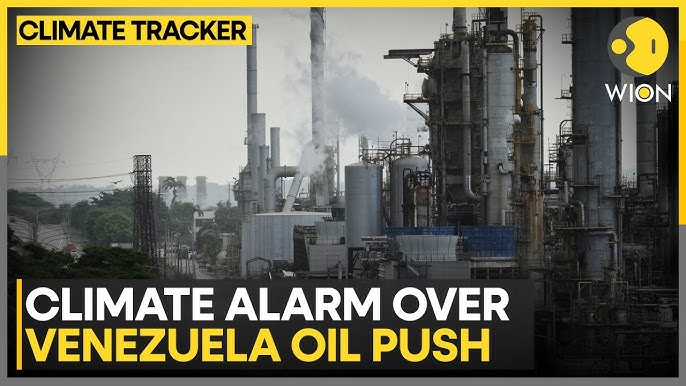
A Defining Moment for Global Energy and Climate Policy
A major shift in global energy policy is unfolding as the United States moves closer to reopening Venezuela’s vast oil reserves to American and European producers — a development carrying profound implications for climate action, sustainability policy, geopolitical energy markets, and the future of fossil fuel dependence.
At the center of this unfolding story is a sweeping policy shift by the Trump administration that significantly eases sanctions on Venezuela’s oil sector, allowing foreign companies to resume operations, repair infrastructure, and reestablish production capacity in one of the world’s most resource-rich petroleum regions.
For the global climate movement and sustainability advocates, the decision raises urgent questions: What does expanded fossil fuel production mean for climate goals? How does energy security intersect with environmental responsibility? And what long-term impacts could this policy shift have on the transition to renewable energy?
This Sustainable Action Now feature explores the policy changes, corporate implications, geopolitical context, and climate consequences shaping one of the most consequential energy developments of 2026.
A Dramatic Policy Shift Reshapes Venezuela’s Oil Industry
The U.S. Treasury Department’s Office of Foreign Assets Control issued a series of general licenses authorizing new activity in Venezuela’s oil and gas sector, marking the most significant easing of sanctions in years and opening pathways for Western energy companies to return.
These licenses authorize major oil producers to engage in exploration, development, and production activities while enabling U.S. companies to supply equipment, technology, and operational services to restore Venezuela’s deteriorating energy infrastructure.
The policy shift follows major political changes inside Venezuela, including the capture of former President Nicolás Maduro in January 2026 and the installation of interim leadership seeking foreign investment and economic recovery.
The move signals a strategic realignment in U.S. foreign policy — positioning Venezuela as a renewed energy partner while reshaping global oil supply chains.
Key Licenses and Policy Mechanisms Driving the Expansion
Authorization for Major Energy Companies
New regulatory permissions allow major international oil firms to resume or expand operations in Venezuela’s energy sector. Government-issued general licenses authorize activities involving Venezuelan-origin oil and allow negotiations for investment contracts under strict compliance frameworks.
These measures facilitate production-related activities that were previously prohibited under U.S. sanctions, representing a structural shift in how Venezuela’s oil industry may be developed moving forward.
Infrastructure Rehabilitation and Equipment Restoration
A central focus of the policy is the rehabilitation of Venezuela’s aging oil infrastructure. Years of sanctions, underinvestment, and economic instability left drilling equipment, pipelines, and production systems in severe disrepair.
The new framework allows companies to provide materials and services necessary to repair facilities, restore production capacity, and modernize operational systems — a process expected to require significant capital investment and long-term development.
Controlled Financial Flows
The policy includes financial safeguards designed to prevent oil revenues from reaching sanctioned entities. Payments and transactions must follow strict regulatory channels and oversight mechanisms, reflecting continued geopolitical tensions and compliance concerns.
Strategic Exclusions
The framework also restricts involvement by companies linked to geopolitical rivals, excluding entities connected to countries such as Russia, Iran, North Korea, and China from participating in authorized transactions.
Together, these mechanisms position the policy as both an economic initiative and a strategic geopolitical instrument.
Why Venezuela’s Oil Matters Globally
Venezuela possesses the world’s largest proven oil reserves — estimated at hundreds of billions of barrels — much of it located in the Orinoco Oil Belt, a region known for ultra-heavy crude that requires specialized refining processes.
These reserves represent a powerful influence on global energy markets:
- They can reshape global oil supply and pricing dynamics.
- They provide a strategic alternative to energy sources from other geopolitical regions.
- They offer long-term revenue potential for energy companies.
- They influence global carbon emissions trajectories.
For sustainability advocates, however, these reserves represent a climate paradox: vast energy resources that conflict with global decarbonization goals.
Climate Implications: A Critical Sustainability Crossroads
From a climate perspective, the reopening of Venezuela’s oil sector raises serious concerns about long-term emissions growth and delayed energy transition timelines.
Expansion of Fossil Fuel Production
Rehabilitating oil fields and increasing production capacity directly expands global fossil fuel supply. Increased oil extraction typically leads to higher downstream emissions through refining, transportation, and consumption.
Infrastructure Lock-In
Large-scale investments in oil infrastructure can create long-term dependency on fossil fuel systems, making rapid transition to renewable energy more difficult.
Carbon Budget Pressure
Global climate targets depend on limiting fossil fuel expansion. Expanding production in one of the world’s largest reserves could intensify pressure on global carbon reduction efforts.
Energy Transition Tensions
The policy highlights a fundamental tension between energy security priorities and climate commitments — a challenge increasingly shaping international policy decisions.
For environmental organizations and sustainability leaders, the development represents a critical test of global climate governance.
The Economic and Geopolitical Calculus
Despite climate concerns, economic and geopolitical motivations remain central to the policy shift.
Energy Security Strategy
Reopening Venezuelan production provides an alternative oil supply for global markets and may reduce dependence on other regions experiencing geopolitical instability.
Economic Reconstruction in Venezuela
The initiative also aims to revive Venezuela’s economy, attract foreign investment, and rebuild a collapsed energy sector that once drove national prosperity.
Global Market Stabilization
Increased production capacity could help stabilize oil prices and influence international energy flows.
These competing priorities highlight the complex policy environment where sustainability goals intersect with economic and security interests.
Industry Challenges and Investment Reality
Even with regulatory approval, significant obstacles remain.
Venezuela’s oil infrastructure requires massive reconstruction after years of decline, with estimates suggesting that tens of billions of dollars may be needed to restore production capacity and modernize facilities.
Legal uncertainty, political risk, and financial challenges continue to shape corporate investment decisions. Some industry leaders have expressed caution about the country’s investment environment despite policy changes.
These challenges suggest that any expansion will be gradual and uncertain.
The Sustainability Debate Intensifies
The reopening of Venezuela’s oil sector has intensified debate among policymakers, environmental advocates, and energy leaders.
Key questions shaping the discussion include:
- Can fossil fuel expansion coexist with global climate commitments?
- Should energy security outweigh decarbonization goals?
- How can governments balance economic recovery with environmental responsibility?
- What role should renewable energy investment play alongside fossil fuel development?
The answers will shape global climate policy for years to come.
A Turning Point for Climate Policy and Global Energy
The United States’ move to expand oil operations in Venezuela represents more than a geopolitical development — it is a defining moment in the global conversation about sustainability, climate responsibility, and the future of energy.
The policy underscores a critical reality: the world’s transition to sustainable energy remains deeply entangled with political, economic, and security considerations.
For the climate movement, this moment reinforces the urgency of accelerating renewable energy investment, strengthening climate policy frameworks, and ensuring that short-term energy decisions do not undermine long-term environmental goals.
What Comes Next for Sustainable Action
As the policy unfolds, sustainability leaders, environmental organizations, and climate advocates will closely monitor its impacts on emissions, global energy markets, and international climate commitments.
The outcome may shape the pace of the global energy transition — determining whether the future tilts toward expanded fossil fuel dependence or accelerated climate action.
For Sustainable Action Now, the development represents a pivotal issue at the intersection of policy, energy, and environmental responsibility — one that demands continued scrutiny, informed debate, and global engagement.