
Last week in Los Angeles, the wind outside a young woman’s home reached nearly 60 miles per hour. Rain pounded the roof. Thunder cracked overhead. These are not typical late-winter conditions for Southern California. Just weeks earlier, temperatures were unseasonably cold. Soon, the region will swing toward extreme heat.
For 19-year-old Genesis—Afro-Indigenous and Mexican—this instability is not an abstract climate chart. It is daily life.
At Sustainable Action Now, through our Our Youth coverage, we spotlight the young leaders who are not waiting for political cycles to catch up with science. They are stepping into courtrooms, filing constitutional claims, and demanding that the law recognize what their lived experience already proves: climate change is not a future threat. It is a present condition shaping education, health, housing, and opportunity.
And this week, that reality enters two courtrooms—one in California and one in Alaska.
Climate Change in the Lungs, Not Just the Headlines
Genesis describes growing up in a home built long before air conditioning was standard. During intense summer heat, she takes online classes at night, opening every window to circulate air. But wildfire ash and pollen drift inside. Severe allergies trigger coughing fits. She faces a daily choice between overheating and breathing irritants.
That is climate change in lived form.
It interrupts sleep.
It complicates education.
It affects respiratory health.
It dictates routine.
For young people across California, wildfire smoke, extended heat waves, and volatile seasonal swings are no longer exceptional events. They are recurring patterns.
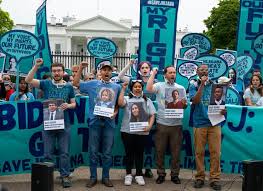
This is the context behind Genesis v. Environmental Protection Agency, a constitutional lawsuit brought by 18 young Californians challenging federal climate decision-making. The plaintiffs argue that the federal government has discounted the value of their lives and futures by permitting dangerous levels of fossil fuel pollution.
They contend that this failure violates their constitutional rights to equal protection and to life itself.
On March 5, the case will be heard by the Ninth Circuit Court of Appeals in San Francisco.
What Genesis v. EPA Represents
Youth climate litigation is no longer fringe legal theory. It is a growing constitutional strategy. Young plaintiffs argue that government agencies, by knowingly enabling pollution that accelerates climate harm, are violating fundamental rights.
In Genesis v. EPA, the plaintiffs assert that federal climate policy disproportionately burdens young people—who will inherit the longest timeline of climate consequences—while offering them little recourse in policy formation.
The argument is not merely moral. It is constitutional.
The plaintiffs claim that by allowing escalating fossil fuel emissions, the government is discriminating against children and future generations, effectively valuing short-term economic interests over youth survival and stability.
The Ninth Circuit’s review will determine whether this argument proceeds or stalls.
For Genesis, walking into that courthouse carries both uncertainty and resolve. As a young Afro-Indigenous Mexican woman, she frames her advocacy through intergenerational resilience. Her Black identity, she explains, has instilled empathy and endurance rooted in ancestral struggle. Her Mexican heritage reinforces a belief that silence in the face of injustice is not an option.
Her connection to the legacy of Cesar Chavez underscores that organizing is not a new tradition. It is inherited.
Sagoonick v. State of Alaska II: Youth in Anchorage Step Forward
On March 4—one day before Genesis and her fellow plaintiffs appear in San Francisco—youth plaintiffs in Alaska will stand before the Alaska Supreme Court in Sagoonick v. State of Alaska II.
In this case, Alaska Native and non-Native youth challenge the Alaska LNG Project, a massive fossil fuel development proposal that could triple Alaska’s greenhouse gas emissions for decades.
Alaska is warming faster than most regions of the United States. Youth plaintiffs describe firsthand impacts including flooding, coastal erosion, wildfire smoke, and land loss. These environmental changes threaten not only infrastructure but cultural continuity—subsistence practices, traditional knowledge, and community survival.
The Alaska case emphasizes a core reality: climate change is not evenly distributed. Indigenous and rural communities often face amplified consequences.
By advancing constitutional claims, youth plaintiffs are reframing climate harm as a rights issue rather than a policy preference.
The Constitutional Frontier of Youth Climate Litigation
Youth climate lawsuits are built on an emerging legal theory: that government inaction or affirmative support of fossil fuel expansion can constitute a violation of fundamental rights.
Courts have historically been cautious in recognizing environmental claims as constitutional violations. However, recent cases—including successful youth litigation abroad—demonstrate growing judicial willingness to examine the intersection of climate policy and rights protections.
The core legal questions often center on standing, causation, and whether courts can order meaningful relief without overstepping separation-of-powers boundaries.
Genesis v. EPA and Sagoonick II test these limits.
They ask whether children, who will disproportionately experience climate disruption, are entitled to greater judicial protection when executive and legislative branches fail to safeguard long-term stability.
Why Youth Voices Are Reshaping Climate Advocacy
Young people experience climate change differently than older generations. For them, instability is formative rather than episodic. Their educational paths, housing security, health trajectories, and economic prospects are shaped by environmental volatility.
Unlike prior environmental movements, youth climate advocacy is grounded in lived immediacy.
Wildfire smoke enters classrooms.
Heat waves alter study schedules.
Flooding disrupts transportation.
Food systems fluctuate.
This lived experience fuels litigation that is both personal and structural.
Youth plaintiffs are not abstract policy commentators. They are directly affected stakeholders demanding constitutional recognition.
Two Courtrooms, One Generation
The symbolic resonance of March 4 and March 5 is profound.
In Anchorage, youth plaintiffs will argue that Alaska’s fossil fuel megaproject threatens their constitutional protections.
In San Francisco, youth plaintiffs will argue that federal environmental policy violates their rights to equal protection and life.
Two courtrooms. One generation.
The geographic distance between Alaska and California underscores the universality of youth climate concern. Coastal erosion in the Arctic and wildfire smoke in Los Angeles are distinct manifestations of a shared crisis.
The legal strategy, however, is unified: constitutional accountability.
The Broader Implications for Climate Governance
If courts recognize youth climate claims as legally cognizable constitutional injuries, the implications could reshape regulatory frameworks nationwide.
Agencies might be compelled to weigh long-term generational impact more heavily in decision-making. Fossil fuel permitting processes could face enhanced scrutiny. Youth plaintiffs could gain formal standing in climate governance disputes.
Even if courts decline to grant sweeping relief, the litigation itself forces judicial acknowledgment of generational harm.
Legal visibility matters.
Bearing Witness
Genesis has invited the public to attend oral arguments, to stand outside courthouses, to sit in courtrooms, and to bear witness. Public presence communicates that youth constitutional claims are not fringe activism but a generational demand for accountability.
Courtrooms are not just legal spaces. They are civic arenas where constitutional values are tested.
Youth climate plaintiffs are asserting that environmental stability is not optional infrastructure—it is foundational to life, liberty, and equality.
A Defining Moment
The outcome of Genesis v. EPA and Sagoonick II remains uncertain. Appellate courts operate within complex doctrinal constraints. But the act of filing, appearing, and arguing carries transformative significance.
Young people are no longer asking politely for climate consideration. They are asserting constitutional injury.
At Sustainable Action Now, we recognize that youth leadership is not symbolic. It is substantive. It is reshaping climate discourse from protest to jurisprudence.
The storms outside Genesis’s home may not follow historical patterns. But the pattern emerging in courtrooms is unmistakable: a generation unwilling to accept instability as inevitable.
The wind is rising. So are they.