

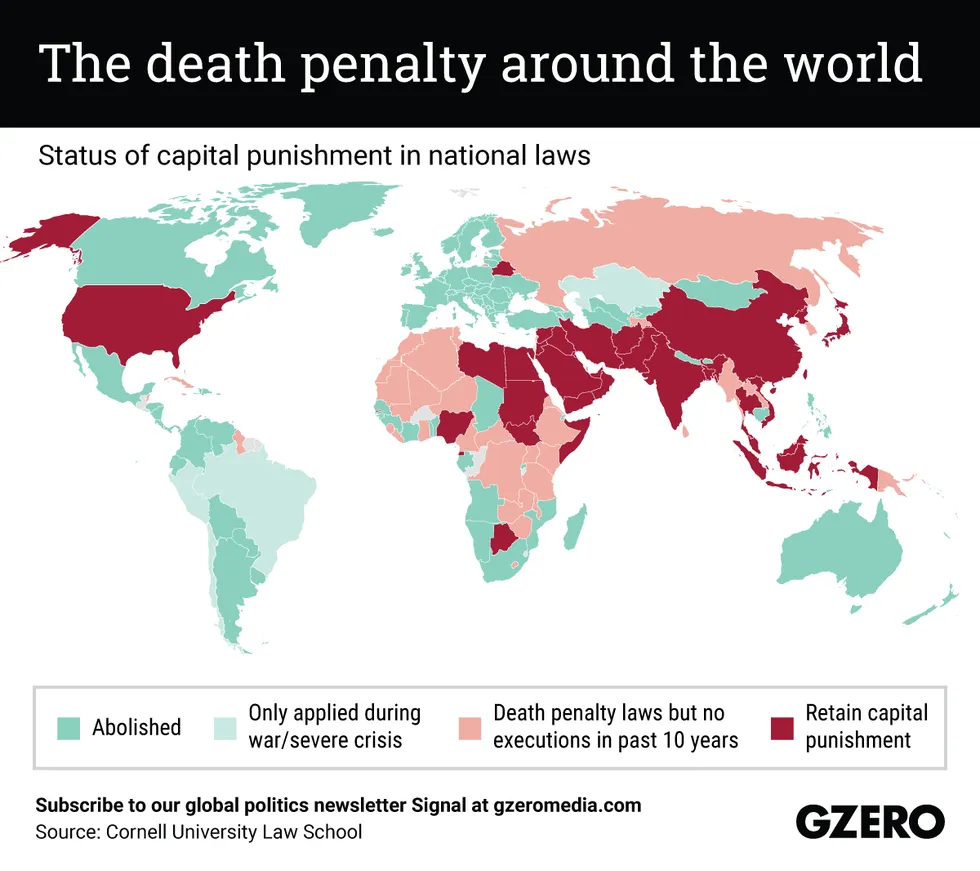
The international movement to end capital punishment has entered a decisive new phase, driven by a convergence of moral leadership, legal scrutiny, and mounting evidence of systemic failure. In a powerful and timely intervention, Pope Leo IV issued a video message reaffirming the Catholic Church’s unequivocal opposition to the death penalty, offering explicit support to those advocating for its abolition across the United States and around the world. His message, delivered in recognition of the anniversary of Illinois’ landmark abolition, did more than restate doctrine—it reframed the global conversation by placing human dignity, fallibility, and justice at the center of the debate.
“The right to life is the very foundation of every other human right,” the Pope emphasized, articulating a principle that resonates far beyond religious boundaries. This is not merely theological positioning; it is a moral assertion with profound legal and societal implications. By linking the sanctity of life to the broader stability and flourishing of society, the message underscores a critical reality: systems of justice that permit irreversible punishment in the presence of demonstrable error risk undermining their own legitimacy.
The timing of this statement is especially consequential. On the same day that this message of restraint, redemption, and human worth was broadcast, the U.S. Department of Justice signaled a markedly different direction—announcing an expansion of federal death penalty protocols and pursuing new capital charges against dozens of defendants. This juxtaposition reveals a widening fault line in the American justice system, where moral appeals for abolition are colliding with institutional efforts to sustain and, in some cases, intensify capital punishment.
Across multiple states, recent developments illustrate the depth of the crisis. In Texas, the case of James Broadnax has emerged as a stark example of the risks inherent in capital punishment. Despite another individual’s admission to the crime, the state has continued to pursue execution, raising urgent questions about evidentiary standards, prosecutorial discretion, and the threshold for irreversible punishment. The situation is not isolated—it reflects a broader pattern in which new testimony, recantations, or alternative confessions often struggle to penetrate procedural barriers once a death sentence is imposed.
Simultaneously, courts are being forced to grapple with the consequences of outdated or discredited forensic science. The case of Robert Roberson hinges on evolving judicial recognition that the once widely accepted “Shaken Baby Syndrome” hypothesis lacks the scientific reliability necessary to support a murder conviction. As legal standards adapt to contemporary scientific understanding, they expose the fragility of past verdicts that relied on now-contested evidence. The question is no longer whether the system can make mistakes—it is how many convictions remain vulnerable to reversal under modern scrutiny.
The fragility of capital sentencing is further underscored by the recent ruling of the Texas Court of Criminal Appeals, which overturned the death sentence of Clarence Curtis Jordan, a man who spent nearly half a century on death row. Found ineligible for execution due to intellectual disability, Jordan’s prolonged incarceration without consistent legal representation reveals a system that not only risks wrongful execution but also permits extended legal limbo under the harshest possible conditions. Cases like this challenge the notion that the death penalty operates with the precision and safeguards its proponents often claim.
These individual cases, while deeply personal, are not anomalies—they are indicators of structural deficiencies. Legal scholars and practitioners have increasingly drawn attention to the ways in which jury decision-making can be compromised by incomplete understanding, implicit bias, or procedural constraints. Research highlighting non-unanimous sentencing practices in certain jurisdictions, alongside critiques of how courts handle claims of innocence, points to a system that is uneven in application and inconsistent in outcomes. When the stakes involve life and death, such inconsistencies become indefensible.
Perhaps the most urgent dimension of this issue is the documented risk of executing innocent individuals. In Florida, the case of James “Erny” Hitchcock encapsulates this danger with devastating clarity. After decades on death row and multiple overturned sentences, Hitchcock faces execution despite significant evidence suggesting another individual committed the crime. Witness testimony, delayed by fear and intimidation, has surfaced over time, painting a markedly different narrative than the one presented at trial. The state’s willingness to proceed in the face of such uncertainty highlights the central paradox of capital punishment: it demands absolute certainty in a system that repeatedly proves itself incapable of delivering it.
The broader statistical context reinforces this concern. Florida leads the nation in death row exonerations, a fact that should function as a systemic alarm rather than a footnote. Each exoneration represents not only an individual injustice but also a collective failure—a reminder that the mechanisms designed to ensure accuracy are not infallible. When these failures intersect with the irreversible nature of execution, the consequences are uniquely catastrophic.
Beyond legal and moral considerations, the persistence of the death penalty carries significant social and economic costs. Maintaining capital punishment infrastructure requires extensive financial resources, from prolonged appeals to specialized incarceration conditions. These expenditures often yield no demonstrable improvement in public safety, raising critical questions about policy priorities and the efficient use of taxpayer funds. In an era where sustainability is increasingly defined not only in environmental terms but also in social and institutional resilience, the continued investment in a flawed and costly system appears increasingly difficult to justify.
The momentum for change, however, is unmistakable. Legislative efforts in states like Pennsylvania, combined with evolving judicial standards and growing public awareness, suggest that the death penalty is no longer insulated from meaningful reform. The intersection of advocacy, evidence, and moral leadership is reshaping the narrative, transforming what was once considered a fixed component of the justice system into a subject of urgent reconsideration.
At the center of this transformation is a fundamental question: what does a just and sustainable society require of its legal institutions? If justice is to be measured not only by punishment but by fairness, accuracy, and respect for human dignity, then the case against capital punishment becomes increasingly compelling. The inability to eliminate wrongful convictions, the persistence of inequitable application, and the immense financial burden collectively point toward a system that is out of alignment with contemporary standards of justice.
The message delivered by Pope Leo IV serves as both a moral anchor and a call to action. It challenges policymakers, legal professionals, and citizens to reconsider long-held assumptions and to confront the realities that have emerged through decades of experience and analysis. It invites a shift from retribution to accountability, from certainty to humility, and from permanence to the possibility of correction.
As the United States continues to navigate this complex and consequential issue, the path forward will be shaped by the willingness to acknowledge imperfection and to prioritize systems that can adapt, learn, and evolve. The debate over the death penalty is no longer confined to legal doctrine or political ideology—it is a test of whether society can reconcile its commitment to justice with its recognition of human fallibility. In that reconciliation lies the potential for a more equitable, humane, and sustainable future.