

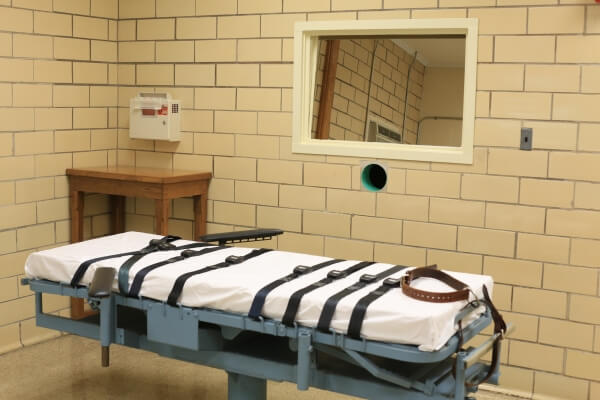
In a development that signals a consequential shift in the national conversation around criminal justice and human rights, Pennsylvania has taken a decisive step toward potentially abolishing the death penalty. With a narrow but impactful 14–12 vote, the Pennsylvania House Judiciary Committee advanced two parallel pieces of legislation—HB 99 and HB 888—bringing the issue out of prolonged policy stagnation and into a new phase of active legislative debate. The bills now proceed to the full House, where the outcome could reshape the Commonwealth’s legal framework and position it at the forefront of a broader reevaluation of capital punishment in the United States.
What distinguishes this moment is not simply the legislative action itself, but the rare bipartisan alignment that has propelled it forward. Sponsored respectively by Chris Rabb, a Democrat, and Russ Diamond, a Republican, the identical bills reflect a convergence of perspectives that transcends traditional political divides. In an era often defined by polarization, the collaboration underscores a growing recognition—across ideological lines—that the death penalty, as currently administered, raises profound concerns about fairness, efficacy, and moral legitimacy.
At the core of the proposed legislation is a targeted but significant reform: eliminating capital punishment for defendants who have not yet been sentenced. While this does not immediately dismantle the entire death row system, it effectively halts the pipeline that feeds it, marking a critical structural shift. If enacted, the legislation would represent a phased approach to abolition—one that prioritizes immediate harm reduction while setting the stage for broader systemic transformation.
Driving this legislative momentum is sustained advocacy from organizations such as Pennsylvanians Against the Death Penalty, which has worked in coordination with a diverse coalition of stakeholders, including Conservatives Concerned, the Faith Leaders of Color Coalition, and the Death Penalty Policy Project. This coalition has emphasized that the issue extends far beyond ideology; it is rooted in documented systemic failures that have persisted for decades without meaningful correction.
Testimony presented before the Judiciary Committee laid bare the depth of those failures. Robert Dunham, director of the Death Penalty Policy Project and a veteran defense attorney, delivered a stark assessment grounded in years of direct legal experience. His remarks articulated a system that remains fundamentally compromised—geographically inconsistent in its application, racially disparate in its outcomes, and structurally vulnerable to inadequate defense representation and prosecutorial misconduct. These are not isolated concerns; they represent entrenched patterns that call into question the reliability of the ultimate punishment.
Perhaps most consequential is the issue of wrongful convictions. Dunham’s testimony underscored what many advocates and legal scholars have long argued: the death penalty carries an irreducible risk of irreversible error. His involvement in the exoneration of multiple former death row inmates across counties in Pennsylvania is not an abstract data point—it is evidence of a systemic vulnerability that has already produced devastating consequences. The assertion that innocent individuals have not only been sentenced to death but, in some cases, executed, reframes the debate in stark moral terms. It shifts the question from whether the system can be improved to whether it can ever be rendered infallible.
The economic dimension further complicates the case for capital punishment. According to analyses presented during the hearings, the financial burden associated with maintaining the death penalty infrastructure has escalated dramatically, with costs approaching approximately one billion dollars. This figure reflects not only the expenses of prosecution and incarceration but also the prolonged appeals process required to mitigate the very risks of wrongful execution that critics highlight. For policymakers, this raises a fundamental question of resource allocation: whether public funds are being directed toward a system that delivers measurable public safety benefits or sustaining a mechanism whose efficacy remains widely disputed.
From a sustainability and social justice perspective, the implications are substantial. The movement toward abolition aligns with a broader redefinition of what constitutes a just and sustainable society—one that prioritizes equity, accountability, and the responsible use of public resources. Within this framework, the death penalty is increasingly viewed not as a deterrent or a solution, but as a legacy system that perpetuates inequity and undermines institutional trust.
The legislative trajectory in Pennsylvania is also part of a larger national pattern. Across the United States, states have been reassessing capital punishment through legislative reform, executive action, or judicial review. Some have imposed moratoriums; others have abolished the practice outright. Pennsylvania’s current effort, distinguished by its bipartisan sponsorship and evidence-driven foundation, adds momentum to this evolving landscape and may influence similar initiatives in other jurisdictions.
As the bills move to the full House for debate, the stakes extend well beyond a single state. The outcome will serve as a bellwether for how legislatures balance tradition against reform, and how they respond to mounting evidence that challenges long-standing assumptions about justice and punishment. It will also test the durability of the bipartisan coalition that has brought the issue to this point—an alignment that suggests the conversation around the death penalty is entering a new, more pragmatic phase.
For Sustainable Action Now, this moment represents more than a policy update; it is a reflection of a shifting societal paradigm. The question is no longer confined to whether capital punishment should exist, but whether systems that carry irreversible consequences can be justified in the face of demonstrable imperfection. As Pennsylvania stands on the threshold of potential abolition, it offers a case study in how evidence, advocacy, and political will can converge to challenge even the most entrenched elements of the justice system.