
In an era where environmental awareness is increasingly shaped by immediacy, authenticity, and global accessibility, few digital experiences have redefined the intersection of conservation, storytelling, and live broadcasting quite like SafariLIVE. With its latest programming cycle—anchored by SafariLIVE Sunset – 30 April 2026: Giants in Motion and complemented by the immersive SafariLIVE Sunrise – 29 April 2026: Web of the Wild—the platform continues to elevate what it means to witness the natural world in real time while deepening its role as a powerful environmental education engine.
This latest release is not just another entry in a streaming lineup; it represents a refined evolution of digital eco-broadcasting, where narrative, science, and conservation advocacy converge seamlessly. Delivered in an ad-free format and supported by both live and on-demand viewing options, SafariLIVE’s current slate underscores a critical shift in how audiences engage with biodiversity—not as passive viewers, but as active participants in a shared global ecosystem.
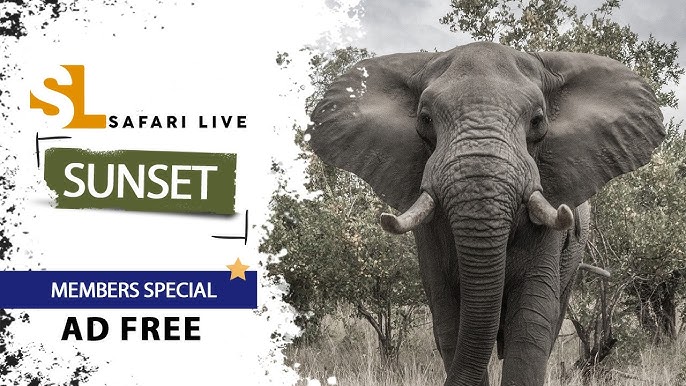
At the center of this moment is Giants in Motion, a sunset broadcast that places emphasis on some of the most iconic and ecologically significant species roaming the African wilderness. The framing is deliberate. “Giants” does not simply refer to physical scale—it speaks to ecological impact, keystone species behavior, and the intricate balance these animals maintain within their habitats. Elephants, for instance, are not just subjects of visual awe; they are architects of their environment, shaping landscapes through migration patterns and feeding behavior. Observing them in motion, unfiltered and uninterrupted, provides audiences with an unvarnished perspective on the realities of wildlife movement in a changing climate.
The genius of SafariLIVE’s format lies in its refusal to overproduce. There is no artificial scripting, no contrived drama—only the raw cadence of the wild, guided by expert hosts who translate behavior into understanding. This approach transforms each broadcast into both a cinematic experience and a field lesson in ecology. The result is a hybrid format that resonates equally with casual viewers, conservationists, educators, and policymakers seeking a deeper connection to environmental realities.
Running in parallel is Web of the Wild, a sunrise session that pivots from large-scale movement to intricate ecological interdependence. Where sunset focuses on dominance and presence, sunrise explores connectivity. Predator-prey dynamics, insect activity, avian signaling, and micro-habitat interactions all come into sharper focus during these early hours, reinforcing the concept that no organism exists in isolation. The “web” becomes both a literal and metaphorical framework, illustrating how even the smallest behavioral shifts can ripple through an ecosystem.
From a sustainability perspective, this dual-programming structure is remarkably effective. It captures the full diurnal cycle of the environment, offering a holistic view of wildlife activity while reinforcing the urgency of conservation across time scales. Viewers are not just seeing animals—they are witnessing systems in motion, cycles unfolding, and the subtle indicators of ecological health or stress that often go unnoticed in traditional media formats.
Equally important is the platform’s accessibility model. By offering ad-free viewing and flexible on-demand replays, SafariLIVE removes barriers that often dilute educational content. This is not passive streaming; it is intentional engagement. Audiences can revisit key moments, analyze behaviors, and integrate what they’ve seen into broader environmental awareness. For educators, this creates a living archive of real-world ecological case studies. For conservation advocates, it provides compelling, visual evidence that strengthens messaging around habitat protection, climate resilience, and biodiversity preservation.
The timing of these releases is also strategic. As global conversations around sustainability intensify—particularly in the lead-up to major environmental summits and policy discussions—platforms like SafariLIVE serve as both inspiration and evidence. They demonstrate that technology, when applied thoughtfully, can bridge the gap between remote ecosystems and global audiences without compromising authenticity or ecological integrity.
There is also a deeper cultural implication at play. In a digital landscape saturated with curated content and algorithm-driven narratives, SafariLIVE offers something increasingly rare: unpredictability grounded in reality. The outcome of each broadcast is unknown. A herd may move unexpectedly. A predator may emerge or remain hidden. Weather patterns may shift. This uncertainty is not a flaw—it is the essence of the experience. It mirrors the complexity of nature itself and reinforces the importance of adaptability, patience, and respect for natural systems.
For Sustainable Action Now, the significance of this release extends beyond entertainment or even education. It represents a model for how media can actively contribute to sustainability goals. By fostering a deeper emotional and intellectual connection between viewers and the natural world, SafariLIVE is helping to cultivate a more informed, engaged, and environmentally conscious global audience. This is where awareness transforms into action—where seeing leads to understanding, and understanding leads to advocacy.
As Giants in Motion prepares to unfold on April 30, 2026, and Web of the Wild continues to offer its intricate morning narratives, the message is clear: the future of environmental storytelling is live, immersive, and rooted in authenticity. The wild is no longer distant or abstract—it is present, immediate, and accessible to anyone willing to tune in.
For those seeking to experience this next chapter firsthand, the opportunity is immediate. Watch tomorrow live. Revisit today on demand. Step into a world where every movement matters, every connection counts, and every moment brings us closer to understanding the fragile, extraordinary systems that sustain life on this planet.