

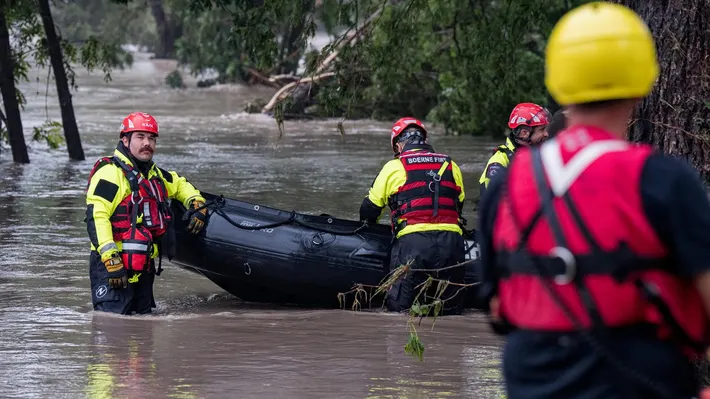
As climate-fueled disasters grow larger, faster, and more unpredictable across the United States, one reality is becoming increasingly impossible to ignore: the strength of emergency response systems may now determine whether survivors receive life-saving assistance quickly enough to recover at all. In the aftermath of the catastrophic Central Texas floods that killed more than 130 people and displaced thousands during the summer of 2026, a deeply troubling picture has emerged surrounding the Federal Emergency Management Agency and the federal government’s ability to function effectively during large-scale climate emergencies.
At the center of the controversy is a newly released Government Accountability Office report confirming that FEMA failed to answer the majority of emergency assistance calls made during the peak of the disaster response. The findings not only exposed a severe operational collapse at one of the nation’s most critical emergency agencies, but also ignited a broader national debate over political oversight, administrative bottlenecks, disaster preparedness, transparency, and whether federal systems are adequately equipped for the intensifying era of climate disruption now unfolding across America.
The numbers themselves are staggering.
During the height of the Central Texas flooding crisis, FEMA’s disaster assistance helpline effectively broke down under pressure. On July 7, the busiest day of the emergency, the agency received 16,419 calls from survivors desperately seeking assistance for food, clothing, temporary shelter, emergency aid, and disaster recovery support. According to the GAO findings, FEMA failed to answer 84.1 percent of those calls. Only approximately 2,613 people successfully connected with an operator.
For those fortunate enough to get through, average wait times climbed to more than an hour.
Behind every unanswered call stood a family attempting to locate emergency shelter, a displaced resident searching for financial assistance, a parent trying to secure food or clothing after losing everything in rising floodwaters, or survivors desperately seeking information while entire communities struggled through one of the deadliest natural disasters Texas has experienced in recent memory.
The crisis quickly evolved from a natural disaster into a political and administrative scandal.
What makes the situation especially explosive is that FEMA officials previously testified before Congress that the agency had largely handled the disaster effectively. Acting FEMA Administrator David Richardson publicly dismissed early reporting regarding unanswered calls as inaccurate and misleading, describing criticism as “fake news” during sworn testimony before the House Transportation and Infrastructure Committee only weeks after the floods. Richardson assured lawmakers that the vast majority of calls had been answered within minutes.
The newly released federal oversight data tells an entirely different story.
According to the Government Accountability Office, FEMA’s internal reporting practices excluded tens of thousands of desperate follow-up calls from survivors attempting to check on aid already requested or approved. Instead, agency officials reportedly focused only on initial intake registrations when calculating performance metrics, creating what critics now describe as an intentionally misleading statistical picture designed to shield the agency from scrutiny during a politically sensitive disaster response failure.
The revelation has intensified accusations of institutional deception at precisely the moment public trust in emergency preparedness systems is already under enormous pressure nationwide.
Yet the operational collapse itself may be even more alarming than the political fallout.
At the core of the disaster response failure was not a cyberattack, infrastructure collapse, or overwhelming technological malfunction. It was bureaucracy.
The call center contracts supporting FEMA’s emergency response system reportedly expired on July 5 — directly in the middle of the unfolding flood disaster — and were not renewed in time. Four external companies staffing the federal disaster hotline suddenly lost authorization to continue operations, resulting in the layoff of hundreds of operators exactly as floodwaters reached their most devastating levels and survivor calls surged across the state.
The administrative delay lasted five critical days before funding authorization was finally restored.
That lapse proved catastrophic.
The delay itself reportedly stemmed from a broader restructuring initiative implemented under the Department of Homeland Security during the Trump administration. DHS Secretary Kristi Noem had instituted strict approval policies requiring her direct personal authorization for federal expenditures exceeding $100,000 as part of a wider effort aimed at identifying government “waste and fraud.” While supporters defended the oversight measures as fiscally responsible management reforms, critics argue the rigid approval process created dangerous operational paralysis inside agencies responsible for time-sensitive emergency response.
In Texas, the consequences became devastatingly visible.
The controversy now unfolding reaches far beyond one flood event or one failed contract renewal. Instead, it has become a national case study illustrating the growing tension between cost-cutting governance models and the realities of modern climate disasters. Extreme weather events are no longer isolated incidents occurring occasionally across manageable geographic regions. Floods, hurricanes, heat waves, wildfires, tornado outbreaks, and climate-driven infrastructure emergencies are becoming larger, more frequent, and more operationally demanding every year.
Emergency response systems built decades ago are increasingly being tested under conditions they were never fully designed to handle.
The Texas floods exposed how quickly those systems can fail when bureaucratic processes collide with rapidly escalating climate emergencies. In many ways, the disaster demonstrated that modern emergency management is no longer solely about physical logistics like rescue vehicles, shelters, or supply chains. It is equally dependent on administrative flexibility, staffing continuity, digital infrastructure, communication systems, and the ability to make rapid funding decisions without procedural paralysis.
A missed signature or delayed authorization now carries consequences measured not in paperwork delays, but in human suffering.
The timing of the scandal also arrives during a period of intensifying national anxiety surrounding climate resilience and government readiness. Across the United States, cities and states are confronting mounting pressure to modernize aging infrastructure, improve flood mitigation systems, strengthen emergency communication networks, and prepare for disasters increasing in both frequency and financial cost.
Texas itself has experienced repeated extreme weather catastrophes over the past decade, including deadly winter storms, heat emergencies, hurricanes, drought conditions, and catastrophic flash flooding events. Scientists, emergency planners, and climate analysts continue warning that warming atmospheric conditions contribute to more volatile precipitation patterns capable of producing sudden, high-intensity rainfall events like those witnessed during the July floods.
That reality fundamentally changes the demands placed on agencies like FEMA.
Historically, federal emergency management systems were often structured around more geographically isolated disasters with clearer timelines for escalation and recovery. Today’s climate conditions increasingly generate overlapping crises that unfold rapidly, strain communications infrastructure, and create surges in assistance demand almost immediately after impact.
Under those circumstances, emergency call systems become more than customer service centers. They become lifelines.
When those lifelines fail, public confidence deteriorates quickly.
The fallout from the Texas disaster has already triggered major political consequences. Following mounting scrutiny over the data discrepancies and operational breakdown, Acting FEMA Administrator David Richardson resigned from his position. Kristi Noem was later removed from her post amid escalating criticism surrounding the administrative spending caps and their role in delaying emergency response operations.
Yet the broader questions remain unresolved.
How should emergency agencies balance financial oversight with operational speed during disasters? What safeguards should exist to prevent essential emergency contracts from lapsing during active crises? How can federal systems modernize to accommodate the scale and complexity of climate-driven emergencies expected in coming decades? And perhaps most critically, how much redundancy and flexibility should governments build into disaster response infrastructure before catastrophe strikes?
These questions are no longer theoretical policy exercises.
They now sit at the center of America’s climate resilience debate.
For many observers, the Texas floods also symbolize a larger shift occurring in how climate change discussions are framed nationally. Increasingly, the conversation is moving beyond abstract debates over future emissions targets and entering the realm of immediate governance realities. Climate change is no longer solely an environmental issue. It is becoming a systems-management issue affecting housing, insurance markets, infrastructure investment, emergency response, healthcare capacity, migration patterns, energy grids, food security, and public administration itself.
In Texas, the floodwaters exposed not just environmental vulnerability, but institutional vulnerability.
The disaster illustrated how even one of the world’s wealthiest nations can experience severe operational failures when emergency systems are stretched by climate intensity combined with bureaucratic rigidity. It also demonstrated the growing importance of transparency during crises. Public trust erodes rapidly when official narratives diverge from documented outcomes, especially when survivors themselves experienced the consequences firsthand.
For climate advocates, emergency planners, and public policy experts, the implications are profound.
The future of disaster preparedness may depend not only on stronger levees, upgraded drainage systems, or expanded forecasting technology, but also on administrative systems capable of responding with flexibility, speed, and accountability under extreme pressure. Climate adaptation requires operational resilience as much as physical resilience.
The Texas floods are now likely to become a defining reference point in future debates over federal emergency management reform.
Not simply because of the tragedy itself, but because the disaster exposed how climate emergencies increasingly reveal the strengths and weaknesses of entire governance systems in real time.
And as climate-driven disasters continue intensifying nationwide, the lessons from Texas may ultimately shape how America prepares for the next emergency long before the next storm ever arrives.
For more climate reporting, environmental policy analysis, and sustainability coverage, visit the SAN Climate section.