
Across the sweeping landscapes of South Africa, where lions have long stood as symbols of strength, majesty, and survival, another story is quietly unfolding behind the scenes of the global wildlife tourism industry. It is a story many travelers never see when posing for photographs beside lion cubs, booking walk-with-predator experiences, or visiting roadside attractions promising close encounters with exotic animals. Beneath the surface of those carefully marketed encounters exists a far more troubling reality — one built on exploitation, captivity, commercial breeding, and a system that often treats some of the world’s most iconic animals as commodities instead of living beings deserving dignity and protection.
That is why the story of Samson matters.
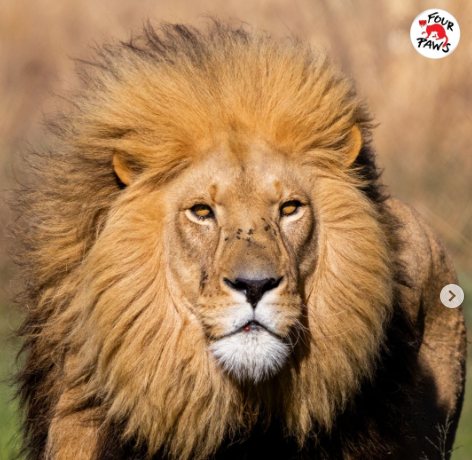
Today, Samson stands not as a spectacle for entertainment, but as a survivor.
A lion once born into captivity and destined for an uncertain future has now become part of a growing global conversation surrounding ethical wildlife treatment, sanctuary protection, and the urgent need to challenge industries that profit from the exploitation of big cats. His arrival at LIONSROCK Big Cat Sanctuary represents more than a rescue.
It represents a second chance at life, a transformation from confinement to care, and a reminder that sustainable action must include compassion for animals as much as it includes protecting ecosystems and habitats.
Born in 2016 at Seaview Predator Park in Port Elizabeth, South Africa, Samson entered a world shaped entirely by captivity. Unlike wild lions roaming protected landscapes, lions bred within tourism-driven systems often experience lives controlled by commercial demand rather than natural behavior.
Many are raised in environments where human interaction is encouraged from birth because cub encounters generate profit.
Tourists are invited to pet, hold, photograph, and interact with young animals under the illusion of conservation, while the long-term fate of those animals frequently remains hidden from public view.
For years, animal welfare organizations and conservation advocates have warned that industries built around cub petting and predator tourism can create pipelines leading to deeper exploitation. Once cubs become too large or dangerous for tourist interaction, many lose their perceived commercial value within those facilities. Some are transferred between attractions. Others enter breeding programs. Many eventually become entangled in trophy hunting operations or the illegal wildlife trade, where lions are killed for bones, skins, claws, teeth, and body parts sold into international markets.
Samson’s story could easily have followed that same devastating path.
Instead, a turning point arrived in 2021 when Seaview Predator Park permanently closed its doors. In a decision that would alter the course of two lions’ lives forever, the owners surrendered Samson along with his uncle, Tom. What could have become another tragic chapter instead became the beginning of rehabilitation, sanctuary care, and stability thanks to the work being carried out by the team at SAN Lions and the dedicated professionals at LIONSROCK Big Cat Sanctuary.
Located in South Africa, LIONSROCK has become internationally recognized for providing rescued big cats with environments designed around species-appropriate care rather than entertainment. Unlike commercial attractions, sanctuaries operate with an entirely different philosophy. The goal is not public interaction or profit-driven spectacle. The goal is recovery, safety, lifelong protection, and creating conditions that allow animals to live with dignity after enduring exploitation, neglect, or displacement.
For Samson, that change meant entering a habitat built around his wellbeing rather than his commercial value.
Inside LIONSROCK, the focus shifts toward allowing lions to express natural behaviors in secure, spacious surroundings. Large enclosures, environmental enrichment, veterinary oversight, proper nutrition, and reduced human intrusion all contribute to restoring a level of comfort and stability many rescued animals have never fully experienced. While captive-born lions like Samson cannot simply be released into the wild due to survival limitations and ecosystem complexities, sanctuaries provide something equally important: a life no longer centered on exploitation.
That distinction matters enormously in today’s evolving global conversation surrounding ethical tourism and wildlife welfare.
Over the past decade, awareness surrounding exploitative animal tourism has grown significantly. Travelers increasingly question attractions that encourage direct contact with predators, elephants, marine mammals, or other wildlife. Social media, documentaries, conservation campaigns, and animal welfare reporting have helped expose the hidden realities behind many seemingly harmless experiences. What once appeared educational or conservation-focused is now being reevaluated through a more informed lens.
Lions, in particular, have become central figures within this debate because of how frequently they are used within commercial wildlife entertainment systems. South Africa has long faced scrutiny regarding captive lion breeding industries tied to tourism and trophy hunting operations. Animal welfare groups continue advocating for stronger protections, ethical reforms, and the dismantling of exploitative breeding pipelines that prioritize profit over animal wellbeing.
Samson’s journey now stands as a powerful example of why sanctuary work remains critically important during this transitional period.
Every rescued lion represents years of care, resources, veterinary support, habitat management, and ongoing commitment. Sanctuaries like LIONSROCK are not temporary holding facilities. They become permanent homes where animals can finally exist outside cycles of forced interaction and commercial exploitation. That long-term responsibility reflects the true meaning of animal welfare — not simply rescuing an animal from harm, but ensuring quality of life for the years that follow.
For visitors and supporters observing Samson today, there is also something profoundly symbolic about seeing a lion reclaim space, security, and stability after surviving an industry designed around human consumption. Lions have always occupied a mythical place within human imagination. They symbolize courage, leadership, power, and resilience across cultures and generations. Yet modern industries often reduce them to props for photographs or transactional tourist experiences. Sanctuary care restores part of what captivity takes away: the recognition that these are sentient, emotionally complex beings deserving respect rather than exploitation.
The broader implications extend far beyond one lion.
Stories like Samson’s force larger questions about humanity’s relationship with wildlife. What responsibilities accompany tourism? How should conservation actually function? What ethical boundaries should exist when interacting with animals? And how can consumers make more informed choices that support genuine welfare efforts instead of harmful industries disguised as education or conservation?
These are increasingly urgent conversations as sustainable living expands beyond recycling programs, renewable energy discussions, and climate policy alone. Sustainability must also include how humans coexist with living creatures and how industries impact vulnerable species behind the scenes. Ethical wildlife protection is environmental protection. Habitat preservation, anti-poaching efforts, sanctuary support, and ending exploitative breeding practices all contribute to healthier ecosystems and more humane global systems.
At Sustainable Action Now, stories like Samson’s matter because they illuminate how interconnected sustainability truly is. Environmental stewardship cannot be separated from compassion, ethics, and responsible action. Protecting biodiversity requires protecting the animals themselves — not only in the wild, but also from industries that capitalize on their captivity.
Samson’s transformation from captive attraction to sanctuary resident is ultimately a story about hope emerging from systems too often defined by exploitation. It demonstrates the impact rescue organizations, sanctuaries, and animal welfare advocates can have when resources, commitment, and public awareness align. It also highlights the growing role consumers and travelers play in shaping demand. Every decision to avoid exploitative wildlife attractions helps shift the market toward more ethical models of conservation and sanctuary support.
Today, Samson lives within an environment designed around care rather than commerce. He shares space with others rescued from similarly difficult circumstances, each carrying histories shaped by captivity but futures now grounded in protection and stability. At LIONSROCK, the focus is no longer on performance or profit margins. The focus is on quality of life.
And perhaps that is the most important lesson Samson offers.
Real conservation is not performative. Real animal welfare is not built around selfies, staged encounters, or entertainment. It is patient, resource-intensive, often emotionally difficult work rooted in respect for life itself. It is the daily commitment to giving animals safety, space, medical care, nourishment, and dignity after systems failed them.
For Samson, the runway ahead finally leads somewhere different. Not toward another attraction, another transaction, or another exploitative chapter, but toward a life defined by sanctuary, security, and the possibility of peace.
His story may begin in captivity, but it no longer ends there.