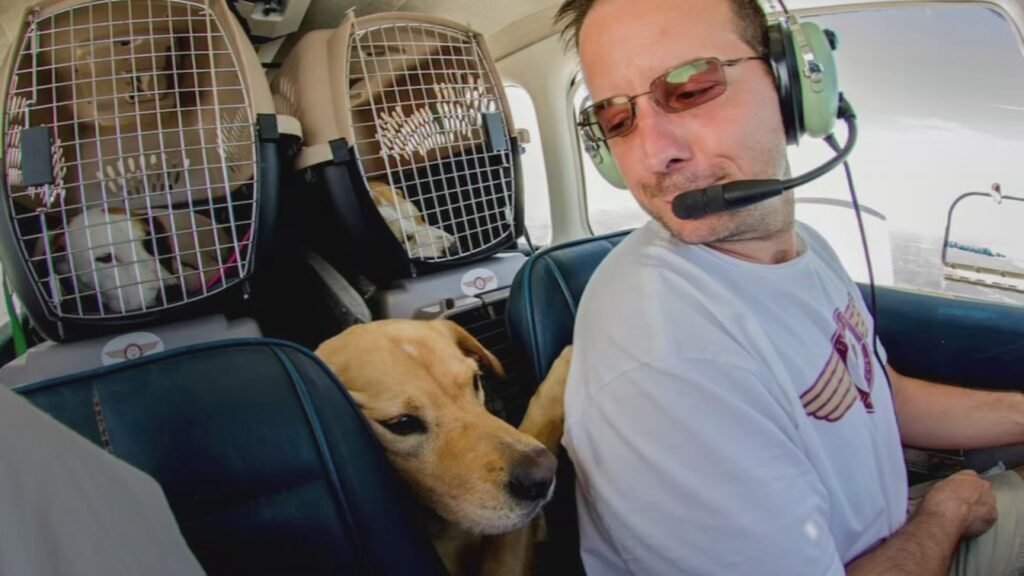

As conflict intensifies across Lebanon and families flee bombardment zones with only seconds to spare, another humanitarian crisis is unfolding quietly in the shadows of war — one measured not only in damaged buildings and displaced civilians, but in the terrified cries of abandoned animals trapped beneath shattered concrete, sealed inside empty apartments, wandering bombed streets, or waiting days for owners who may never return.
Across Beirut and southern Lebanon, an extraordinary underground rescue effort is now operating in real time under conditions so dangerous that many volunteers acknowledge every mission could become their last. While military escalations dominate international headlines, local animal welfare organizations, independent rescuers, and emergency feeding networks are risking their lives daily to retrieve cats, dogs, agricultural animals, and even exotic wildlife from active conflict zones where airstrikes, collapsing infrastructure, drone activity, and unpredictable shelling have transformed entire neighborhoods into survival corridors.
The rescue operations now underway represent far more than isolated acts of compassion. They reveal the often-overlooked reality that war devastates entire ecosystems of life simultaneously. Families are displaced. Communities fracture. Infrastructure collapses. And countless animals — deeply bonded companions, working animals, livestock, rescues, and strays already surviving on fragile margins — become trapped inside the chaos.
For many Lebanese families fleeing bombardment zones, leaving pets behind was not a choice born from indifference. It was the result of impossible circumstances.
As evacuation waves accelerated throughout spring 2026, residents faced severe transportation bottlenecks, collapsing road access, limited shelter availability, and rapidly expanding strike zones. Entire families fled with whatever they could physically carry. In many cases, landlords prohibited animals from emergency relocation sites. Public transportation options disappeared. Vehicles became overloaded. Bombardment windows narrowed escape routes to minutes rather than hours.
Thousands of domestic animals were left inside locked apartments, damaged buildings, abandoned villages, or isolated compounds as civilians escaped for survival.
What happened next triggered one of the most intense civilian-led animal rescue efforts the region has seen in years.
Throughout Beirut and southern Lebanon, local organizations rapidly mobilized improvised extraction networks operating under extraordinary conditions. Without stable infrastructure or reliable emergency systems, volunteers created highly adaptive field strategies capable of functioning inside partially destroyed urban environments.
One of the most striking developments has been the emergence of moped extraction squads.
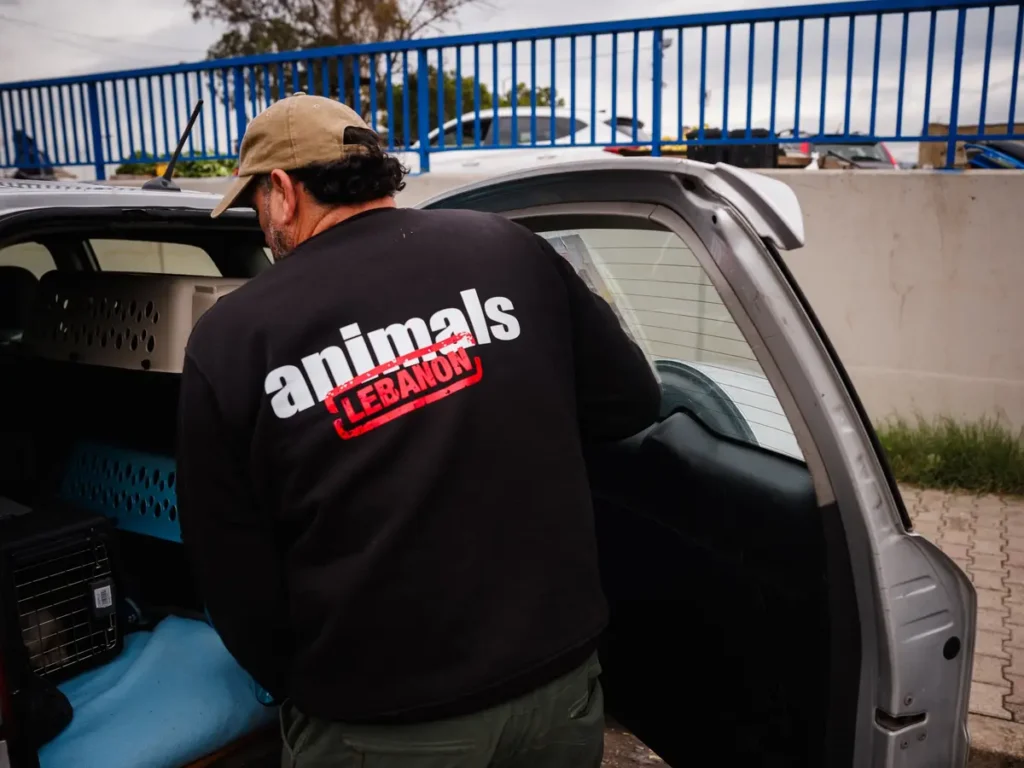
Groups such as Animals Lebanon began deploying fleets of lightweight two-wheel vehicles capable of navigating streets impassable to larger rescue vans. Crushed concrete, collapsed roadways, destroyed intersections, and debris-filled alleys often make traditional transportation nearly impossible. Mopeds and motorcycles became critical survival tools because they allow rescuers to move quickly through narrow openings while also enabling rapid evacuation if shelling intensifies or warning shots signal imminent strikes nearby.
The strategy reflects how urban rescue operations evolve during modern conflict.
Speed matters. Flexibility matters. Silence matters. Rescue windows can disappear instantly.
Volunteers routinely cross into some of the most heavily damaged areas of southern Lebanon, including villages south of the Litani River and densely bombed sections of Beirut’s Dahieh suburbs. Many of these neighborhoods remain operationally unstable, with shifting combat zones creating unpredictable conditions throughout the day. Areas considered temporarily accessible can rapidly become active strike corridors within minutes.
Yet rescue teams continue entering them anyway.
Operational coordinators describe overwhelming volumes of desperate requests arriving daily through WhatsApp, social media platforms, emails, and emergency messaging systems. Families displaced across Lebanon and beyond are begging organizations to retrieve trapped pets from apartments they can no longer safely reach themselves. Many provide apartment keys remotely. Others send detailed building diagrams, feeding instructions, medication schedules, or photos of hidden access points rescuers can use if front entrances have collapsed.
Some requests arrive from refugees who have already crossed international borders and now have no way to return.
Every message carries urgency.
Inside many abandoned buildings, animals survive for days without food or water, often disoriented by explosions, collapsing walls, shattered glass, and continuous bombardment. Cats hide deep within debris. Dogs become trapped on balconies or behind damaged doors. Some animals wander streets searching for owners while others remain frozen in apartments overwhelmed by smoke, dust, and silence.
Rescuers entering these spaces face extraordinary psychological and physical dangers.
The threat does not come solely from airstrikes or artillery activity. Animals themselves frequently become unpredictable after enduring trauma. Concussed, injured, terrified, or dehydrated cats and dogs often lash out blindly from panic. Volunteers regularly suffer severe bites, deep scratches, and lacerations while attempting to retrieve frightened animals from unstable buildings. Thick protective gloves help reduce injuries, but field teams acknowledge the psychological stress affecting animals can make even routine rescues highly volatile.
Yet the rescuers continue.
Groups like Animals Lebanon, led operationally by figures including Reem Sadek, have now carried out hundreds of highly complex extractions directly from conflict environments. Working alongside international partners such as the International Fund for Animal Welfare, the organization coordinates emergency medical triage, temporary shelter placement, veterinary care, and relocation support under conditions that frequently resemble battlefield logistics more than conventional rescue work.
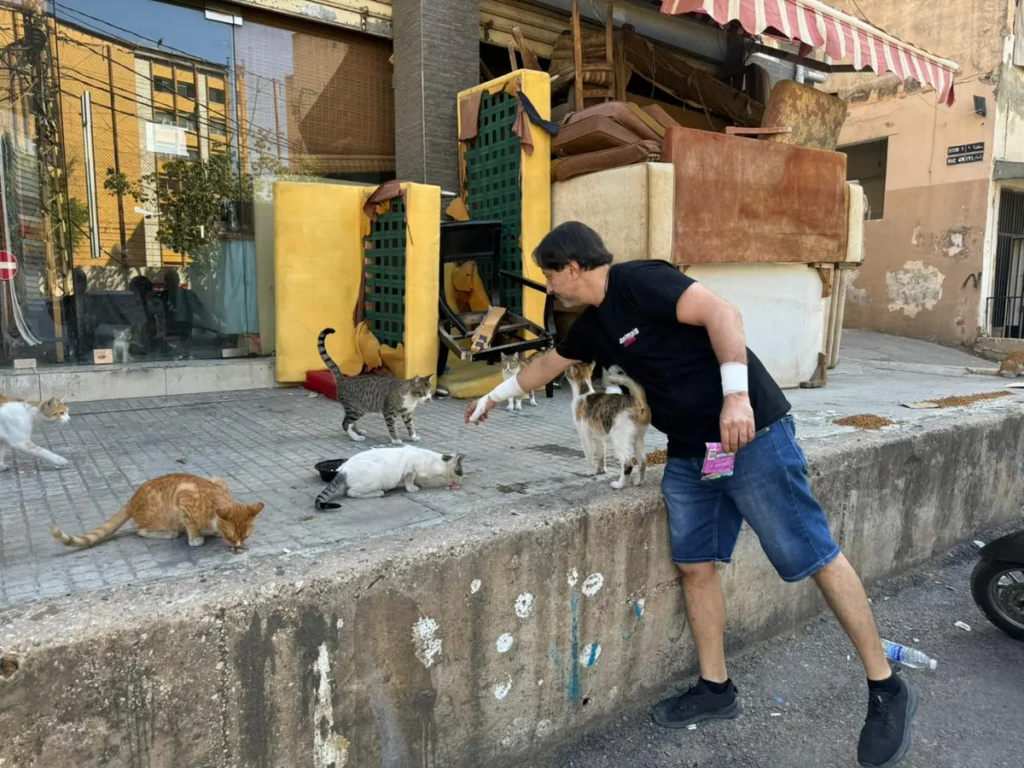
Meanwhile, BETA — Beirut for the Ethical Treatment of Animals — has expanded operations focused not only on household pets, but also abandoned agricultural animals and stray populations left behind in hollowed-out villages and semi-deserted towns. Their work depends heavily on distributed local feeding networks composed of residents who refused evacuation and continue maintaining feeding routes despite escalating danger.
These volunteers are often known locally as “brave feeders.”
Many remain inside damaged hometowns specifically to care for animals unable to evacuate. Every day they navigate partially destroyed streets delivering food and water while monitoring injured strays, trapped pets, and vulnerable livestock. Their work rarely receives international attention, yet without them, animal mortality rates would likely increase dramatically across conflict-affected areas.
The logistics required to sustain these operations are becoming increasingly difficult.
Commercial flights out of Beirut have been heavily disrupted, complicating the importation of veterinary supplies, medications, animal food, and specialized care equipment. Rescue organizations are now forced to establish alternative supply routes using land transportation from Europe and maritime corridors through Cyprus. Some groups reportedly spend tens of thousands of dollars monthly simply maintaining adequate animal feed supplies capable of supporting growing shelter populations.
The crisis extends beyond cats and dogs.
The collapse of normal enforcement systems during conflict has also disrupted illegal wildlife trafficking operations throughout parts of the region. Rescue organizations have found themselves unexpectedly caring for confiscated exotic animals, including partially grown lion cubs intercepted from smuggling pipelines destabilized by the fighting. Housing these animals inside already overwhelmed facilities creates enormous challenges involving food sourcing, safety protocols, veterinary treatment, and specialized containment.
Yet even amid those complications, rescuers continue adapting.
Independent activists have emerged as particularly powerful symbols of the movement’s determination. Figures such as Kassem Haydar have gained widespread attention for repeatedly returning to frontline animal compounds despite severe personal risk. In one widely discussed incident, Haydar reportedly resumed feeding operations shortly after receiving treatment for white phosphorus inhalation caused by nearby strikes.
Stories like these are forcing broader conversations surrounding humanitarian response itself.
Too often during conflict, animal welfare becomes treated as secondary or optional despite the profound emotional bonds connecting displaced civilians to their pets and working animals. For many families, abandoning an animal during evacuation creates lasting psychological trauma layered on top of displacement itself. Rescue organizations increasingly argue that protecting animals during humanitarian crises is not separate from human recovery — it is deeply interconnected.
Animals provide emotional stability, companionship, familiarity, and psychological comfort during periods of extreme upheaval. Preserving those bonds matters profoundly, especially for children, elderly civilians, and families already enduring catastrophic loss.
The situation in Lebanon also underscores a larger global reality becoming increasingly visible during modern crises: local volunteer networks often become the true first responders when institutional systems collapse under pressure. While governments and international agencies navigate diplomacy, logistics, and security coordination, grassroots rescue teams are frequently the ones entering dangerous streets immediately, improvising solutions in real time with limited resources and overwhelming emotional burden.
Their work exists at the intersection of compassion and survival.
At Sustainable Action Now, stories like these matter because sustainability and humanitarian responsibility cannot be separated from animal welfare. Climate disasters, armed conflict, displacement crises, and collapsing infrastructure all affect interconnected systems of life simultaneously. Protecting vulnerable populations means recognizing that ecosystems include both humans and animals, and that compassion during catastrophe often reveals the deepest truths about resilience itself.
The rescue operations unfolding across Lebanon are not simply stories about abandoned pets. They are stories about humanity persisting under extraordinary pressure. About volunteers refusing to surrender compassion even while navigating destruction. About people risking everything to preserve life in whatever form they can.
Inside bombed apartment buildings, shattered villages, collapsed streets, and overcrowded shelters, that commitment continues every day.
And for thousands of animals trapped within the chaos of war, those rescuers remain the only reason survival is still possible.
For more humanitarian rescue coverage, animal welfare reporting, and global response stories, visit the SAN Rescue Network section.