

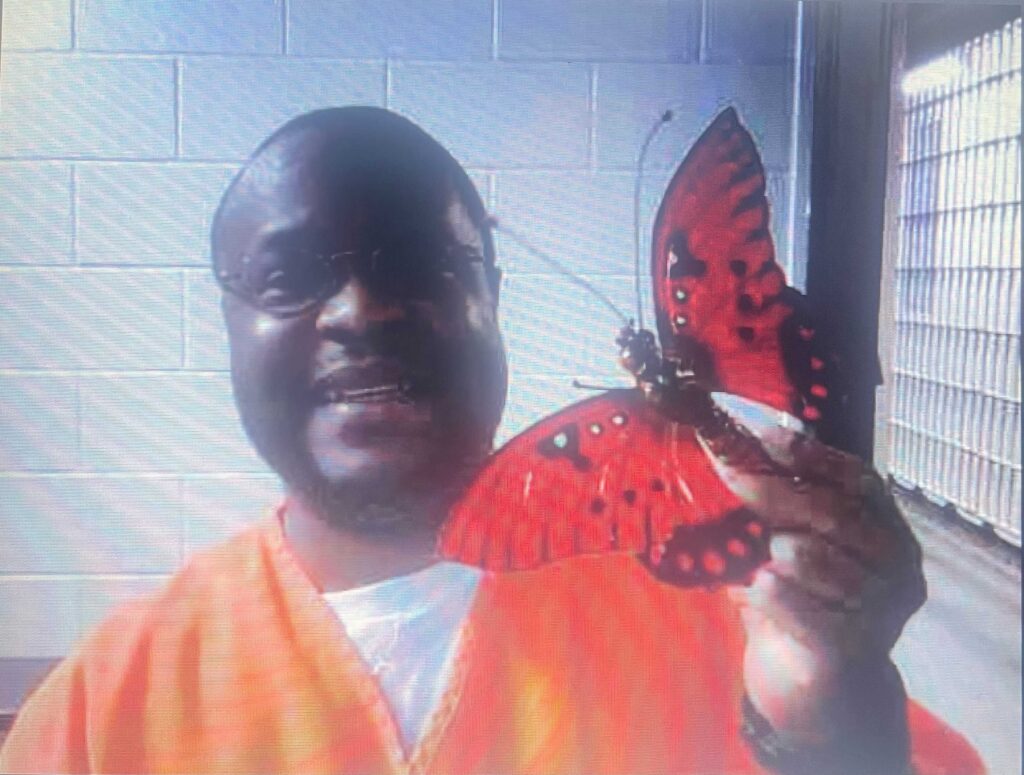
There are moments when the death penalty stops feeling like an abstract political argument and instead becomes something brutally immediate, deeply human, and profoundly unsettling. Not because people suddenly forget the horrific crimes at the center of a case, but because the mechanics of state execution expose uncomfortable realities about power, certainty, constitutional integrity, and the willingness of government systems to proceed with irreversible punishment even when critical questions remain unresolved.
The execution of Richard Knight in Florida has become one of those moments.
His death unfolded under extraordinary circumstances — circumstances that have intensified national scrutiny surrounding modern execution protocols, constitutional fairness, forensic uncertainty, and the increasingly politicized machinery of capital punishment itself. Just hours before Florida executed Knight, the State of Tennessee halted the execution of Tony Carruthers after prison personnel reportedly failed to establish intravenous access, triggering fears of a potentially torturous execution process. Attorneys representing Richard Knight urgently warned Florida courts that the same scenario could occur under Florida’s own lethal injection procedures, which allegedly permit invasive venous access procedures by prison personnel without formal medical qualifications and without anesthesia if traditional IV access fails.
Despite those warnings, Florida proceeded.
At Sustainable Action Now, stories like this cannot be examined solely through simplistic ideological framing. The death penalty exists at the intersection of law, morality, political power, constitutional procedure, trauma, forensic science, race, human psychology, and state authority. Richard Knight’s execution now stands as a case study in how those systems collide under the most irreversible circumstances imaginable.
None of this erases the devastating reality at the center of the original crime. Odessia Stephens and her young daughter Hanessia Mullings lost their lives in a tragedy that permanently shattered families and left irreversible pain behind. Their deaths deserve acknowledgment, remembrance, and human dignity independent of any later debate surrounding the death penalty itself. The grief endured by their loved ones did not disappear with court proceedings, appeals, or executions. It remains.
But the modern death penalty debate increasingly revolves around another difficult question entirely: whether governments can truly guarantee the level of certainty, procedural fairness, transparency, and humanity required before deliberately taking a life in the name of justice.
Richard Knight’s execution raises that question forcefully.
At the center of the legal controversy were unresolved forensic disputes involving fingerprints connected to the murder weapon. Critics argued that the State resisted additional testing that might have clarified lingering questions about the evidence. Supporters of further review maintained that systems claiming absolute certainty should never fear additional forensic analysis, especially in cases involving irreversible punishment.
That principle matters enormously because the modern death penalty increasingly exists under the shadow of exonerations, wrongful convictions, flawed forensic methods, racial disparities, prosecutorial misconduct allegations, inconsistent sentencing standards, and evolving constitutional interpretations.
Florida’s capital punishment system has itself faced repeated scrutiny over sentencing procedures. Knight was originally sentenced under a framework later ruled unconstitutional by the United States Supreme Court because it permitted judges rather than unanimous juries to impose death sentences. Although subsequent legal rulings complicated how those constitutional decisions applied retroactively, critics argue the broader ethical concern remains unresolved.
Can a state legitimately execute someone whose sentencing emerged from a process later determined constitutionally defective?
That question now hangs over multiple death penalty cases nationwide.
At Sustainable Action Now, another deeply disturbing dimension surrounding Richard Knight’s execution involves the growing national concern over lethal injection procedures themselves. For decades, lethal injection was publicly marketed as a humane technological advancement compared to earlier execution methods. But repeated botched executions, pharmaceutical controversies, failed IV insertions, prolonged deaths, secrecy laws, and medical ethics disputes have steadily eroded public confidence in that narrative.
The failed Tennessee execution attempt involving Tony Carruthers intensified those concerns dramatically because it occurred mere hours before Florida moved forward with Knight’s execution despite warnings that similar complications could emerge.
The symbolism surrounding that timing is impossible to ignore.
One state paused.
Another continued.
That contrast has become central to the public reaction now unfolding.
At Sustainable Action Now, the Richard Knight case also forces broader examination of how childhood trauma, abandonment, abuse, neurological injury, and instability intersect with criminal justice systems overall.
Court records reportedly described an extraordinarily traumatic early life. Abandonment as a child. Institutional placement. Identity uncertainty. Sexual abuse. Neurological disorders. Seizure conditions. Chronic instability. None of these factors excuse violence or erase accountability. But modern neuroscience and trauma research increasingly demonstrate how profound early-life trauma can shape neurological development, emotional regulation, impulse control, attachment systems, and long-term psychological functioning.
The death penalty debate increasingly asks whether societies genuinely account for those realities when imposing ultimate punishment.
Can justice systems meaningfully separate individual responsibility from catastrophic developmental trauma?
How should mitigation function inside capital cases?
And what does accountability look like in systems increasingly informed by modern psychological science?
These are not easy questions. But they are unavoidable ones.
At Sustainable Action Now, another aspect drawing national attention is the testimony and reflections of Herman Lindsey, one of Florida’s death row exonerees, who personally knew Richard Knight and publicly questioned the fairness of the proceedings surrounding the case. Exonerees occupy a uniquely powerful position inside death penalty discourse because they embody the system’s greatest existential vulnerability: proof that irreversible errors are possible.
The existence of death row exonerees fundamentally transforms every execution into a confrontation with uncertainty itself.
A justice system can apologize for wrongful imprisonment.
It cannot apologize after execution.
That distinction remains one of the central moral fault lines within modern capital punishment debates.
At Sustainable Action Now, perhaps the most politically explosive aspect of the current controversy involves growing accusations that executions are increasingly treated as instruments of political identity and ideological signaling rather than solemn acts of extraordinary governmental responsibility.
Critics focused intensely on the optics surrounding Governor Ron DeSantis’ public appearances and political engagements while the execution proceeded. Opponents argue that the normalization and acceleration of executions within modern political culture risks transforming state killing into background administrative routine rather than a grave constitutional responsibility deserving profound public scrutiny.
This concern reflects a broader transformation in the death penalty conversation nationally.
Historically, executions were often framed as rare and solemn state actions. Increasingly, critics argue some political environments now treat executions as demonstrations of ideological toughness, executive authority, or partisan identity.
That cultural shift deeply alarms many legal scholars, religious leaders, civil rights advocates, exonerees, and anti-death penalty organizations.
Because once executions become politically normalized, the threshold for public discomfort may continue eroding.
At Sustainable Action Now, the emotional imagery surrounding Richard Knight’s final hours has also become central to the public response. Thunderstorms surrounding Florida State Prison. Vigils held in heavy rain. Protesters gathering outside prison walls. Exonerees standing beside advocates. Prison officials carrying out tightly controlled protocols inside sterile execution chambers while activists described moral catastrophe unfolding outside.
These images matter because death penalty debates are never purely legal.
They are cultural.
Symbolic.
Psychological.
Spiritual.
And increasingly generational.
Younger Americans, in particular, continue showing declining support for capital punishment compared to earlier decades. Growing skepticism surrounding wrongful convictions, racial disparities, mental illness, execution methods, prosecutorial misconduct, and incarceration systems overall has reshaped national attitudes toward state executions.
At Sustainable Action Now, another important dimension emerging from the Richard Knight case involves how activism surrounding executions is evolving operationally. Modern anti-death penalty advocacy increasingly combines legal strategy, digital mobilization, social media storytelling, forensic analysis, public demonstrations, clemency campaigns, faith-based activism, exoneree testimony, and grassroots organizing into coordinated national pressure efforts.
Organizations opposing executions now function not merely as protest movements, but as highly sophisticated legal and public education infrastructures attempting to reshape public understanding of punishment itself.
The rapid mobilization surrounding Andrew Lukehart’s upcoming execution demonstrates that this movement is intensifying rather than fading.
At its core, the Richard Knight case forces society to confront a deeply uncomfortable contradiction: governments claim executions represent justice carried out with certainty, fairness, and constitutional legitimacy, yet many executions unfold amid unresolved evidence disputes, evolving legal standards, contested forensic questions, procedural controversies, psychological trauma histories, and growing concerns about execution protocols themselves.
That contradiction continues destabilizing public confidence in the death penalty nationally.
Because the ultimate problem with irreversible punishment is not merely whether some people deserve severe accountability.
It is whether human systems can ever reliably administer irreversible punishment without error, bias, politics, inconsistency, or moral compromise.
The execution of Richard Knight will not end the death penalty debate in America.
If anything, it may intensify it.
Because what unfolded in Florida was not simply another execution.
It became a national confrontation with the unsettling reality that modern capital punishment still demands extraordinary public faith in systems increasingly struggling to convince many people they deserve it.