

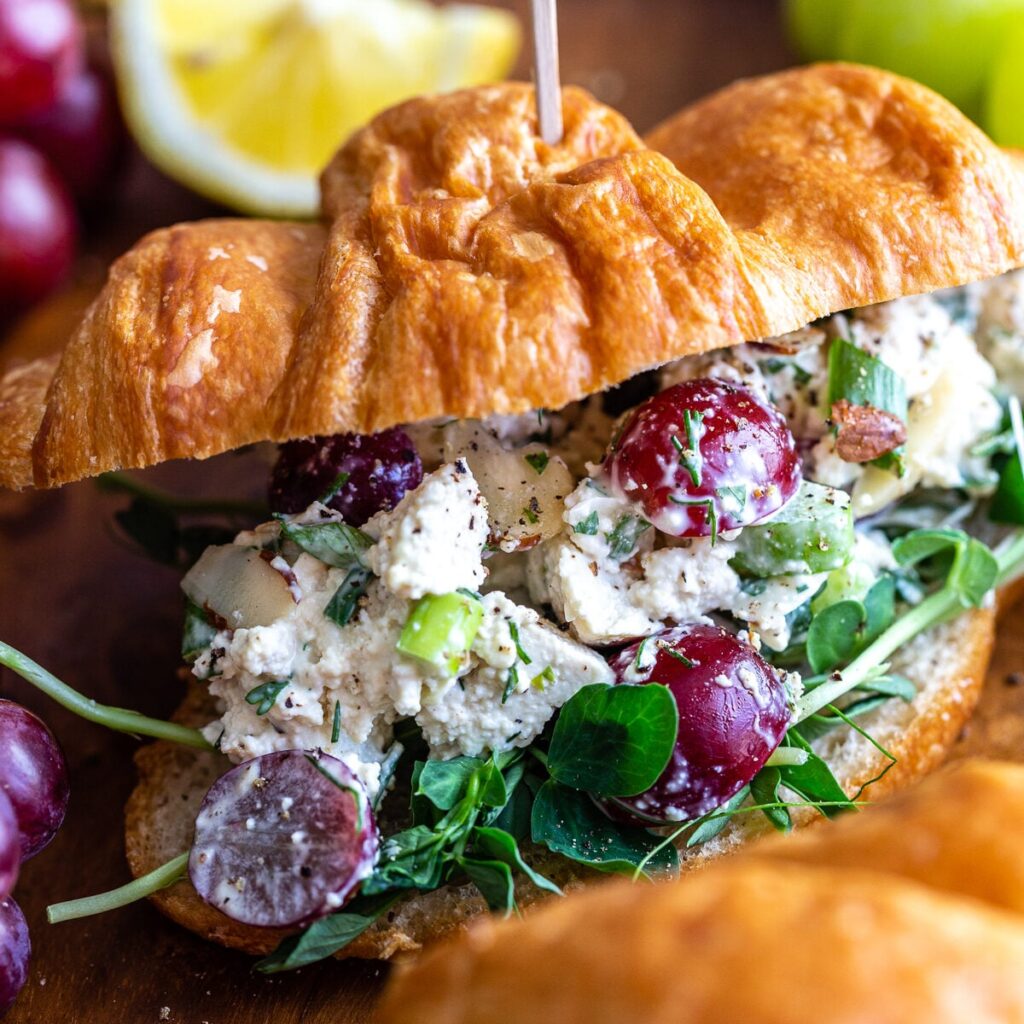
For years, plant-based eating carried an unfair stereotype that still lingers in certain corners of food culture — the idea that choosing vegan meals somehow meant sacrificing comfort, texture, familiarity, or the deeply nostalgic flavors people grew up loving. But the modern evolution of plant-based cooking has completely shattered that outdated perception, and nowhere is that transformation more obvious than in the growing popularity of vegan recreations of classic deli staples, comfort foods, and traditional lunch favorites.
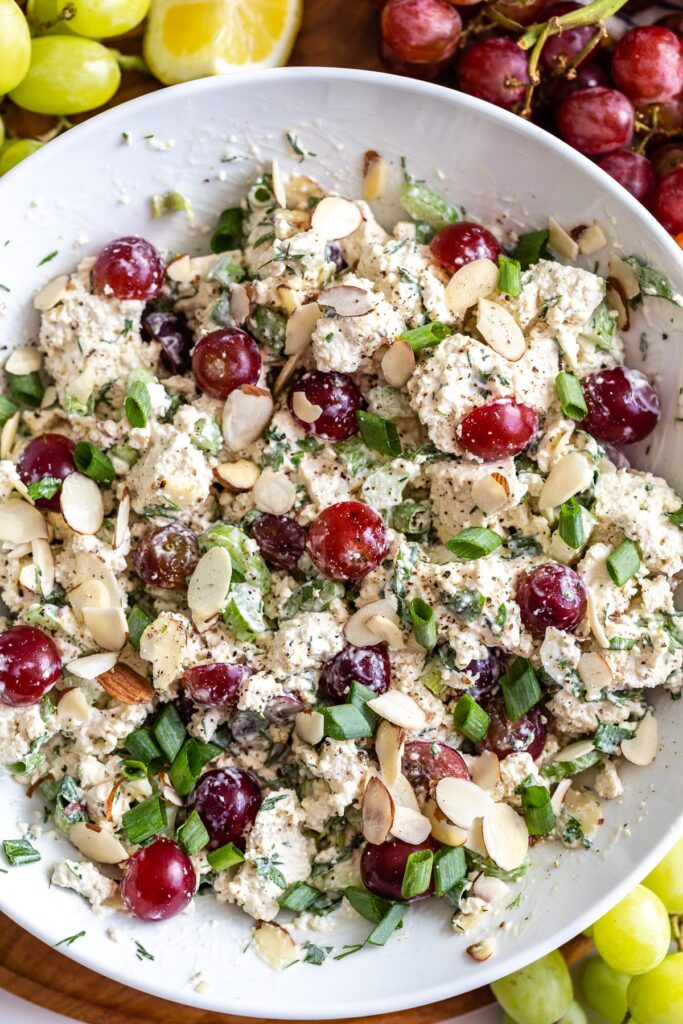
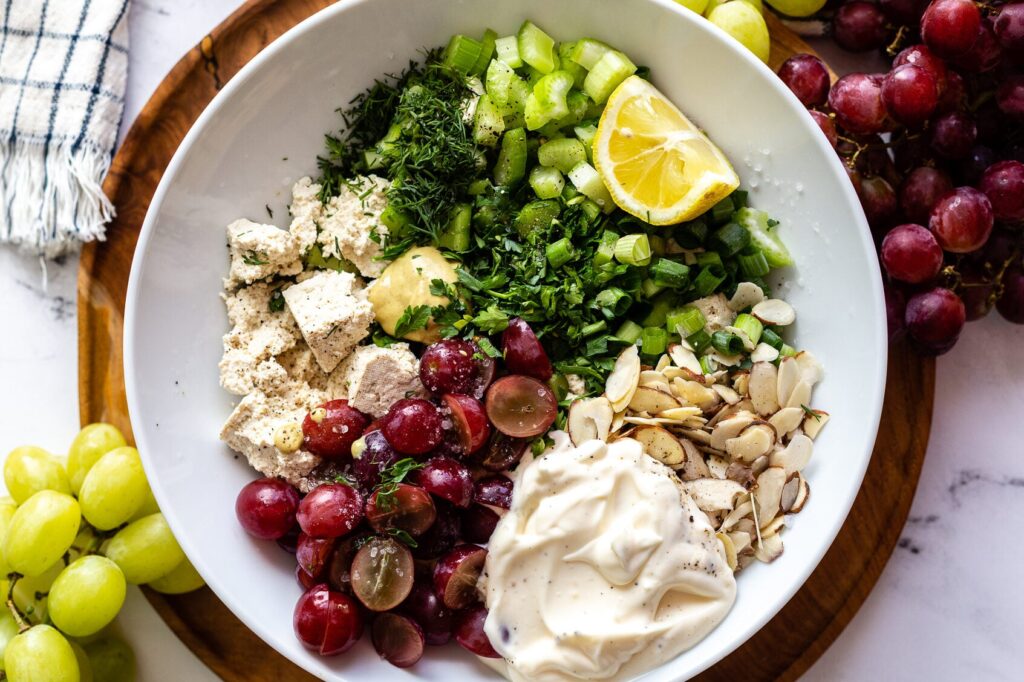
The latest standout example arriving in kitchens everywhere is a rich, creamy, flavor-packed Vegan “Chicken” Salad that manages to deliver the same satisfying experience people expect from traditional chicken salad while using entirely plant-based ingredients built around tofu, fresh herbs, crunchy vegetables, bright citrus, creamy dressing, and a surprising secret ingredient that elevates the entire dish into something far more sophisticated than many people would expect from a simple lunch recipe.
At Sustainable Action Now, recipes like this represent far more than another viral social media food trend. They reflect a much larger shift happening throughout modern food culture — one where sustainability, affordability, convenience, health-conscious cooking, ethical food choices, and elevated flavor are finally beginning to coexist instead of competing against each other.
This Vegan Chicken Salad recipe comes together in just 10 minutes with hearty chunks of tofu, creamy vegan mayo, grapes, fresh herbs, and a secret ingredient that takes it to the next level. It’s the perfect easy lunch or meal prep recipe! The Easy Vegan Chicken Salad is a Food with Feeling Recipe.
Course lunch
Cuisine American
Diet Gluten Free, Vegan, Vegetarian
Prep Time 10 minutes minutes
Total Time 10 minutes minutes
Servings 4 servings
Calories 321kcal
Author Brita Britnell
Ingredients
- 1 block firm or extra firm tofu roughly 15 ounces, pressed*
- ½ cup vegan mayonnaise
- 1 tablespoon dijon mustard
- ½ teaspoon almond extract optional but SO GOOD!
- Juice from 1/2 of a lemon about 1 1/2 tablespoons
- ⅔ cup red grapes halved
- ¼ cup sliced almonds
- 2 stalks of celery diced
- 2 green onions sliced
- 2 tablespoons parsley chopped
- 1 tablespoon fresh dill chopped (can dub for dried)
- salt and pepper to taste
Instructions
- Into a large bowl, crumble you pressed block of tofu into chunks about the size of quarters. Really any size will work here so go with what you’d prefer for your salad.
- Make the dressing by whisking together the mayo, mustard, almond extract, and lemon juice.
- Add in the remaining ingredients and stir to combine. Drizzle on the dressing and stir to coat everything.
- Serve on your favorite bread or eat as is! Store in an air tight container for up to 3 days.
Notes
*See my guide HERE on how to press tofu with or without a tofu press
Storage – Store in an airtight container in the fridge for up to 3 days. Give it a good stir before serving since the dressing can settle. Not recommended for freezing.
Nutrition
Calories: 321kcal | Carbohydrates: 11g | Protein: 11g | Fat: 25g | Saturated Fat: 3g | Polyunsaturated Fat: 3g | Monounsaturated Fat: 3g | Sodium: 209mg | Potassium: 130mg | Fiber: 2g | Sugar: 5g | Vitamin A: 264IU | Vitamin C: 5mg | Calcium: 152mg | Iron: 2mg
The Easy Vegan Chicken Salad is a Food with Feeling Recipe.
The modern plant-based movement is no longer centered solely around substitution.
It is centered around reinvention.
And this Vegan “Chicken” Salad captures that evolution perfectly.
What makes this recipe especially compelling is how effectively it recreates the texture and heartiness traditionally associated with classic chicken salad while simultaneously building a fresher, brighter, and more layered flavor profile that many people may ultimately prefer over the original. Instead of relying on processed imitation meats, the recipe uses firm or extra-firm tofu as its foundation — not merely as a substitute, but as a genuinely functional culinary ingredient capable of absorbing flavor while creating substantial texture and satisfying bite.
That distinction matters enormously in the current plant-based food landscape.
Many early vegan recipes attempted to replicate meat products through heavy processing, artificial additives, or complicated ingredient lists. Today’s most successful plant-based cooking increasingly moves in the opposite direction, relying on accessible whole-food ingredients combined intelligently to create meals that feel indulgent, nostalgic, and deeply satisfying without excessive processing.
This recipe embodies that philosophy beautifully.
At Sustainable Action Now, one of the most fascinating aspects of modern vegan comfort food is how chefs and recipe developers are learning to manipulate texture with extraordinary precision. In traditional chicken salad, the texture itself is a major part of the experience. People expect density, chew, creaminess, crunch, freshness, and richness simultaneously.
Achieving that balance without chicken requires technique rather than gimmicks.
That is why the tofu preparation becomes so important here.
Instead of slicing tofu into neat cubes, the recipe recommends tearing it into rough irregular chunks. That small detail dramatically changes how the salad behaves because uneven edges absorb dressing differently, creating a more natural texture that better mimics traditional chunked chicken salad. It is an example of how plant-based cooking has matured from simplistic substitution into genuinely thoughtful culinary engineering.
The supporting ingredients then build layer upon layer of complexity.
Creamy vegan mayonnaise creates richness while Dijon mustard adds sharpness and acidity. Celery contributes crunch and freshness. Green onions brighten the overall profile without overpowering the dish. Fresh parsley and dill introduce herbal depth that gives the salad a fresher, lighter finish than many heavier traditional deli-style versions.
Then comes the ingredient that surprises nearly everyone the first time they encounter it: almond extract.
At first glance, almond extract sounds completely out of place inside a savory salad recipe. But this is exactly the kind of unexpected detail that separates ordinary recipes from memorable ones. Used sparingly, almond extract creates subtle aromatic warmth that quietly transforms the overall flavor profile into something more layered, more restaurant-quality, and more addictive.
It is not overpowering.
It is atmospheric.
And that subtle sophistication is exactly why recipes like this are spreading so rapidly across social media, meal prep communities, plant-based food blogs, and modern home kitchens.
At Sustainable Action Now, another reason this recipe resonates so strongly right now is because it aligns perfectly with broader consumer shifts toward practical, affordable, protein-rich meals that can function across multiple eating occasions. Americans are increasingly searching for recipes that are fast, flexible, meal-prep friendly, nutritionally balanced, and adaptable to changing schedules.
This Vegan “Chicken” Salad checks every one of those boxes.
It takes roughly ten minutes to prepare.
It stores well for several days.
It works as a sandwich filling, wrap filling, lettuce cup, croissant topping, grain bowl addition, or standalone lunch.
And unlike many expensive prepared vegan products now flooding grocery stores, it relies primarily on affordable pantry staples that remain accessible to ordinary households.
That affordability component is becoming increasingly important as food prices continue fluctuating nationwide.
At Sustainable Action Now, the rise of recipes like this also reflects another major transformation happening within modern veganism itself. Earlier generations of plant-based advocacy often emphasized restriction, elimination, or moral framing. Today’s plant-based cooking culture increasingly focuses instead on abundance, creativity, indulgence, convenience, and flavor-first experiences.
The messaging has shifted dramatically.
Instead of telling people what they cannot eat, modern vegan cooking increasingly shows people how much they can enjoy.
That psychological shift matters.
Comfort food remains emotionally powerful because it is tied to memory, nostalgia, family traditions, routine, and emotional reassurance. The most successful plant-based recipes today do not reject those emotional connections. They reinterpret them in ways that feel accessible rather than confrontational.
This Vegan “Chicken” Salad succeeds precisely because it does not feel like compromise.
It feels like comfort.
At Sustainable Action Now, the versatility built into this recipe also speaks directly to how modern home cooking continues evolving. The base formula can easily expand in multiple directions depending on personal preference, dietary needs, seasonal ingredients, or regional flavor influences.
Red grapes introduce sweetness and brightness, but dried cranberries or chopped apples can create entirely different seasonal profiles. Sliced almonds add crunch, but sunflower seeds, walnuts, or pecans can shift the texture dramatically. Fresh dill gives the salad classic deli energy, while parsley, chives, or tarragon can push it into entirely different culinary territory.
That adaptability is one of the greatest strengths of modern plant-based cooking overall.
Rather than rigid replication, the best vegan recipes function as customizable frameworks.
At Sustainable Action Now, another fascinating element driving the popularity of recipes like this is the growing mainstream acceptance of tofu itself. For decades, tofu occupied a strange cultural position in American food conversations — often stereotyped, misunderstood, or dismissed as bland health food.
That perception has changed radically.
Today, tofu is increasingly recognized as one of the most versatile proteins available in modern cooking. It absorbs flavor efficiently, adapts across cuisines, delivers excellent protein density, works hot or cold, and remains one of the most sustainable protein options available at scale.
In recipes like this, tofu’s neutral flavor becomes an advantage rather than a weakness because it allows herbs, acidity, texture, and aromatics to dominate the final experience.
The result is something that feels remarkably familiar while still tasting fresh and modern.
At Sustainable Action Now, recipes like this also represent the broader cultural convergence now happening between wellness culture, sustainability awareness, convenience-focused meal prep, and elevated comfort food aesthetics. Consumers increasingly want meals that feel indulgent without feeling heavy, environmentally conscious without feeling restrictive, and nutritionally balanced without sacrificing pleasure.
This salad fits squarely inside that emerging food identity.
It is hearty without being overwhelming.
Creamy without feeling excessively rich.
Protein-forward without relying on processed imitation meat.
Fast without tasting rushed.
And perhaps most importantly, it reflects where modern food culture is clearly heading.
The future of sustainable cooking will not be built on deprivation.
It will be built on recipes that people genuinely crave.
Recipes that simplify busy lives.
Recipes that recreate emotional familiarity while quietly improving nutrition, sustainability, and accessibility.
And recipes like this Vegan “Chicken” Salad demonstrate exactly why plant-based comfort food is no longer niche.
It is becoming part of the new American kitchen itself.