
When an animal enters a research laboratory, everything that defined its existence before that moment is taken away. The family it was part of — or the family it would have had, if it had not been bred into captivity specifically for this purpose. The freedom to move, to choose, to follow its instincts, to experience the full range of sensations and social interactions its biology is designed around. The body it inhabits, which becomes, in the laboratory context, the property of the institution that paid for it and the experiment it has been designated to serve. Animals who enter laboratories lose all of it — and the overwhelming majority of them do so in service of research that will never produce a human benefit, because the biological differences between species mean that what happens in a mouse, a beagle, a macaque, or a rabbit rarely predicts what will happen in a human body with the reliability that would justify what was taken.
This is the animal testing debate at its core — and it is a debate that has shifted more dramatically in the past three years than in the previous three decades. The legislative record is changing. The scientific consensus is moving. The regulatory framework that required animal testing for more than a century has been formally amended. The argument that animal experimentation is a scientific necessity is being challenged, with increasing rigor, by the scientists themselves. And the case for an absolute ban — grounded not in sentiment but in biology, in failure rates, in the economics of research, and in the moral arithmetic of subjecting millions of sentient beings to suffering that does not reliably produce the benefits used to justify it — has never been stronger or more credible than it is right now.
At Sustainable Action Now, we are not interested in softening this argument for the sake of appearing balanced about something that is not, at its foundations, a close call. The case against animal experimentation is the stronger case. Here is why.
The Sentience Argument: What We Know About What Animals Experience
The starting point for any honest conversation about animal experimentation is the question of what animals are — specifically, what they are capable of experiencing. This is not a philosophical abstraction. It is an empirical question, and the scientific evidence that has accumulated over the past several decades is unambiguous: the animals most commonly used in research, including mice, rats, rabbits, dogs, pigs, and nonhuman primates, are sentient beings capable of experiencing pain, fear, distress, and complex psychological states that the scientific community now broadly recognizes as forms of suffering.
The Cambridge Declaration on Consciousness, signed in 2012 by a prominent international group of cognitive neuroscientists, neuropharmacologists, neurophysiologists, and computational neuroscientists, stated the conclusion directly: the neurological substrates that generate conscious experiences and the capacity to exhibit intentional behaviors are not unique to human beings. They are shared by all mammals, all birds, and many other creatures including octopuses. The animals being held in laboratory cages and subjected to painful procedures are not biological machines processing stimuli without inner experience. They are conscious beings who know, in ways their biology makes impossible to deny, what is being done to them.
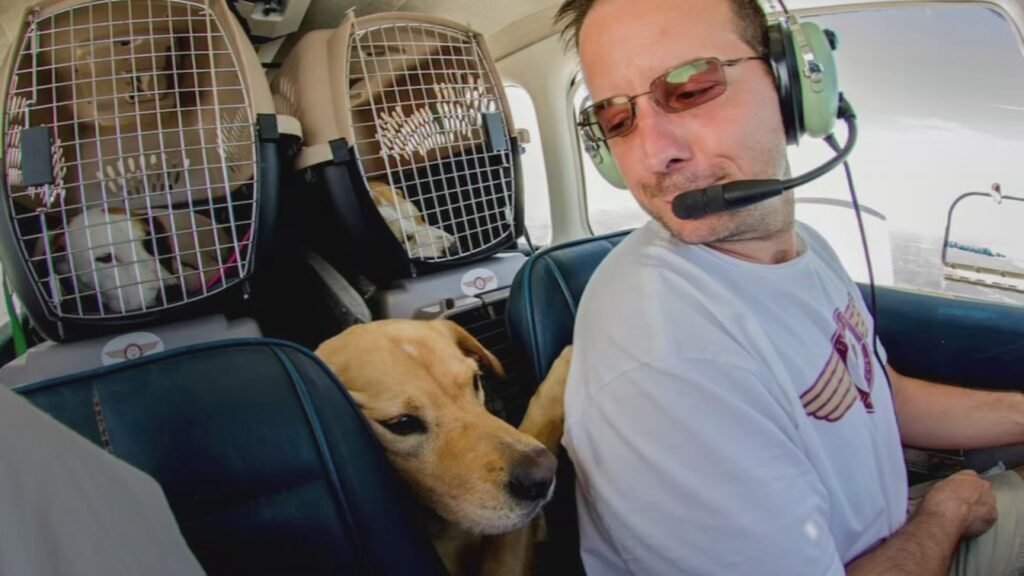
The sourcing of laboratory animals adds another layer of ethical weight to this foundation. The common perception that research animals are purpose-bred and arrive at laboratories from controlled facilities is accurate in many cases but not all. Class B dealers — USDA-licensed brokers who supply research facilities with animals obtained from random sources — have been documented acquiring dogs, cats, and other animals through methods that include purchasing from shelters, responding to “free to a good home” advertisements, and in documented instances, outright theft from communities. Animals with tags, microchips, and evidence of prior pet ownership have been found inside research facilities obtained through Class B dealer networks. The Animal Welfare Act’s provisions attempting to regulate this pipeline have been enforced inconsistently at best. The pipeline between a family’s missing pet and a research laboratory has existed and continues to exist in forms that most people who use household products and take medications have never been asked to confront.
The Scientific Validity Problem: A 92% Failure Rate Is Not a Foundation for Medical Progress
The strongest argument for abolishing animal testing is not ethical. It is scientific. And it is built around a number that the research community has been unable to meaningfully dispute: 92 percent of drugs that successfully pass animal trials fail when they reach human clinical testing — either because they prove ineffective in human biology or because they produce toxic effects that animal trials failed to predict.
This failure rate is not a minor statistical inconvenience. It is a fundamental indictment of the predictive validity of the animal model as a tool for drug development. The premise of animal testing — that the biological similarity between species is sufficient to make animal responses predictive of human responses — is contradicted by the outcomes data of the industry that most depends on that premise being true. Pharmaceutical companies, which have the strongest possible incentive to get drug development right, have spent decades compiling the evidence that their most common pre-clinical testing methodology is failing them nine times out of ten.
The biological reasons for this failure rate are well understood. Human and animal metabolic pathways differ in ways that affect how drugs are processed and what metabolites they produce. Genetic variations between species determine receptor sensitivities and toxicity thresholds in ways that cannot be directly extrapolated. Immune system architecture varies significantly between species, which matters enormously for drugs targeting immune-mediated diseases. The gut microbiome — increasingly recognized as central to systemic health and to how drugs behave after ingestion — differs between species in ways that animal models cannot account for. These are not edge-case differences. They are systematic, species-level biological distinctions that the animal model is structurally incapable of bridging.
The consequences of this failure rate are not only the waste of the hundreds of billions of dollars spent annually on animal-based pre-clinical research. They are the abandonment of potentially effective human treatments because they produced adverse effects in an animal whose biology does not mirror the human biology they were designed to treat. Drugs that would have worked in humans, that would have saved lives, have been abandoned because they failed in a mouse or a rat or a beagle — and because the regulatory and scientific infrastructure around drug development was built around the animal model before anyone had accumulated the data to know how poor a predictor it was. The animal testing paradigm has not only failed to reliably identify safe and effective drugs. It has actively obscured which drugs deserved further development.
The argument that this failure rate justifies ending animal testing rather than improving it is not a radical position. It is the logical conclusion of the data. If a diagnostic tool fails 92 percent of the time, you do not refine it. You replace it.
The Alternatives: Superior Science Already Exists
The most common response to the case against animal testing — from regulatory bodies, from pharmaceutical industry trade groups, from research institutions — is that alternatives are not yet ready to replace the animal model for all purposes. This response was more defensible ten years ago than it is today, and less defensible today than it will be five years from now. The technology of human-relevant research alternatives has been advancing at a pace that the regulatory framework governing research requirements has consistently failed to keep up with.
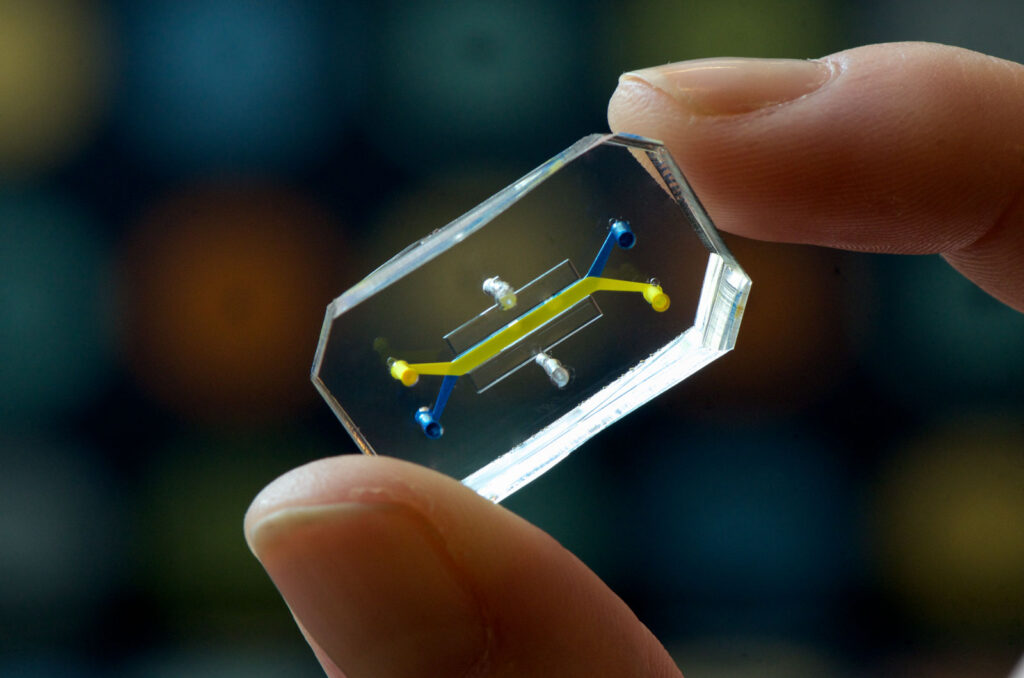
In vitro testing using human cell cultures — testing directly on human cells in controlled laboratory environments — provides species-accurate data about how a substance interacts with human biology in ways that animal trials cannot. Organoids — miniature three-dimensional tissue structures grown from human stem cells that replicate the architecture and function of specific organs — allow researchers to study disease processes and drug effects in human tissue without involving a living human subject. Organs-on-chips — microfluidic devices lined with living human cells that replicate the mechanical and biochemical environment of human organs — have demonstrated the ability to model organ-level drug responses with a fidelity that animal models rarely achieve. Artificial intelligence and computational modeling allow researchers to predict the behavior of chemical compounds in human biology based on existing molecular data at speeds and scales that no biological testing system can match.
These are not speculative future technologies. They are operational, commercially available, and being used in research settings right now. The question is not whether they exist but whether the regulatory and institutional systems governing drug development and safety testing will move with sufficient urgency to make them the default rather than the supplement. That shift is happening — but the pace is measured in years and regulatory cycles, while animals are dying in laboratories today.
The Legislative Victories: What 2025 and 2026 Have Changed
The past two years have produced the most significant shifts in the legal framework governing animal testing in the United States in the history of the regulatory system. These changes do not yet constitute the comprehensive ban that the ethical and scientific case supports. They are, however, unambiguous evidence that the tide has turned — and that the political system is beginning to catch up with what the science and the ethics have been demanding for years.
The FDA Modernization Act 2.0, signed into law in 2022, formally ended the regulatory requirement that had governed American drug development since 1938: the mandate that all new drug applications include animal testing data before human trials could proceed. For the first time in the history of the American pharmaceutical regulatory system, animal testing became optional rather than required for drug approval applications. The FDA followed this landmark legislative change with draft guidance issued in 2025 directing drug developers toward human-relevant testing approaches — organoids, organs-on-chips, computational modeling — as alternatives to the animal default that the agency now officially acknowledges is not optimal for predicting human outcomes.
The 2026 National Defense Authorization Act added another category to the list of prohibited animal research. The bill permanently banned the United States military from using taxpayer funds to conduct painful research on domestic dogs and cats, and explicitly ended live-fire trauma testing on animals — a practice in which animals were subjected to battlefield-simulating injuries to train military medical personnel. Congresswoman Nancy Mace, who led the effort to include these provisions in the NDAA, described the outcome directly: no animal should be subjected to cruel, painful experiments when better alternatives exist. The legislation passed with bipartisan support, reflecting how broadly the political consensus against at least the most visible categories of animal research has shifted.
The cosmetic testing precedent provides the clearest evidence that industry adaptation to animal testing bans is not only possible but achievable without disruption to product safety or commercial viability. More than 40 countries — including the United Kingdom, the entire European Union, India, South Korea, Australia, and a growing number of U.S. states including California, Nevada, Illinois, and New York — have enacted full bans on the sale or manufacture of cosmetics tested on animals. The cosmetic industry operating in these jurisdictions did not collapse. Products did not become unsafe. The same consumer goods that previously required animal testing to bring to market are now being developed, tested, and sold entirely through non-animal methodologies, because the industry was required to develop those methodologies and did. The lesson for pharmaceutical and chemical testing is direct and unavoidable: industries adapt to requirements, and when requirements change, so does the science.
The Absolute Ban Argument: Why Reform Is Not Enough
The incremental approach to animal testing reform — reduce numbers, refine methods, replace where possible — is the framework that has governed the debate for the past several decades. It is embodied in the “Three Rs” model that most regulatory systems reference: Replacement of animal tests with alternatives where possible, Reduction of animal numbers where replacement is not yet possible, and Refinement of testing methods to minimize suffering where reduction has not yet been achieved. This framework has produced genuine improvements in the conditions of laboratory animals and genuine reductions in the numbers of animals used in some categories of research. It has not produced the kind of fundamental change that the ethical and scientific arguments actually demand.
The case for an absolute ban rather than continued incremental reform rests on two foundations. The first is the ethical argument that no level of animal suffering in research is morally defensible when the predictive validity of the animal model is as poor as the data demonstrates. Refinement of a method that fails 92 percent of the time does not address the fundamental problem. Reduction of animal numbers in service of research that is not reliably producing the benefits used to justify it is a marginal improvement to a fundamentally flawed system. The moral logic of the Three Rs assumes that the animal testing enterprise, at some level, produces benefits sufficient to justify the cost in animal suffering. The failure rate data fundamentally challenges that assumption.
The second foundation is the economic and scientific incentive argument: the animal testing industry — the breeding facilities, the equipment manufacturers, the contract research organizations, the institutional infrastructure built around animal-based research — has a powerful financial interest in the continuation of the animal model, and that interest has consistently lobbied against the regulatory changes and funding redirections that would accelerate the transition to alternatives. An absolute ban, rather than a continued reform trajectory, removes the financial incentive to slow the transition and forces the reallocation of resources toward the superior technologies that the science already supports. Innovation follows necessity. If animal testing is prohibited, the scientific community will develop the human-relevant alternatives that are needed — and it will develop them faster and more completely than it will under a voluntary replacement framework that allows institutions to continue defaulting to the familiar animal model as long as regulations permit.
What Needs to Happen Next
The legislative progress of 2025 and 2026 represents a genuine shift in the political environment around animal testing, and it should be recognized as such. The FDA Modernization Act 2.0, the NDAA provisions, and the expanding map of cosmetic testing bans demonstrate that the arguments against animal testing have achieved a level of political and scientific credibility that was not present a decade ago. Each victory creates the foundation for the next, and the trajectory is clearly toward further restriction.
What advocates and informed citizens can do to accelerate that trajectory is specific and concrete. Supporting federal and state legislation that extends the testing ban framework beyond cosmetics and military research to pharmaceutical and chemical testing more broadly. Demanding that federal research funding agencies — the National Institutes of Health, in particular — redirect funds toward human-relevant research alternatives at a pace that reflects the urgency the evidence demands. Choosing cruelty-free certified products in every consumer category where that choice is available, sending the market signal that builds the commercial infrastructure for non-animal testing. Supporting the organizations — PETA, the Physicians Committee for Responsible Medicine, Cruelty Free International, and others — doing the legislative advocacy, the scientific research on alternatives, and the public education that moves the political environment.
And naming what is happening in laboratories without the euphemistic language that the research industry has always preferred. Animals are not “sacrificed” in laboratories. They are killed, after lives spent in cages, subjected to procedures they did not consent to and could not escape, in service of a methodology that the data demonstrates is not reliable enough to justify the cost. The language matters because the language shapes the public’s understanding of what is actually happening — and the public’s understanding, when it encounters the full reality, consistently supports change.
The animals in laboratories right now cannot wait for the political timeline of incremental reform. The case for ending their confinement is not primarily one of sentiment. It is the case that the best available science has been making, with increasing clarity and force, for years. It is time the systems governing research caught up with what the science already knows.
Sustainable Action Now will continue covering federal and state legislation on animal testing, the development of human-relevant research alternatives, and the advocacy organizations working to end animal experimentation.