
The national conversation around the death penalty is often framed in stark terms—crime, punishment, justice, and retribution. Yet sometimes a single moment forces the country to confront a deeper and more complicated truth about the people whose lives exist behind the walls of death row.
That moment arrived this week in two very different places.
On Tuesday, the state of Florida carried out the execution of Billy “Pyth” Kearse, a man who had been sentenced to death for a crime committed when he was just 18 years old. Thirty-five years later, at the age of 53, his life ended inside a prison execution chamber.
Three days later, something unexpected happened.
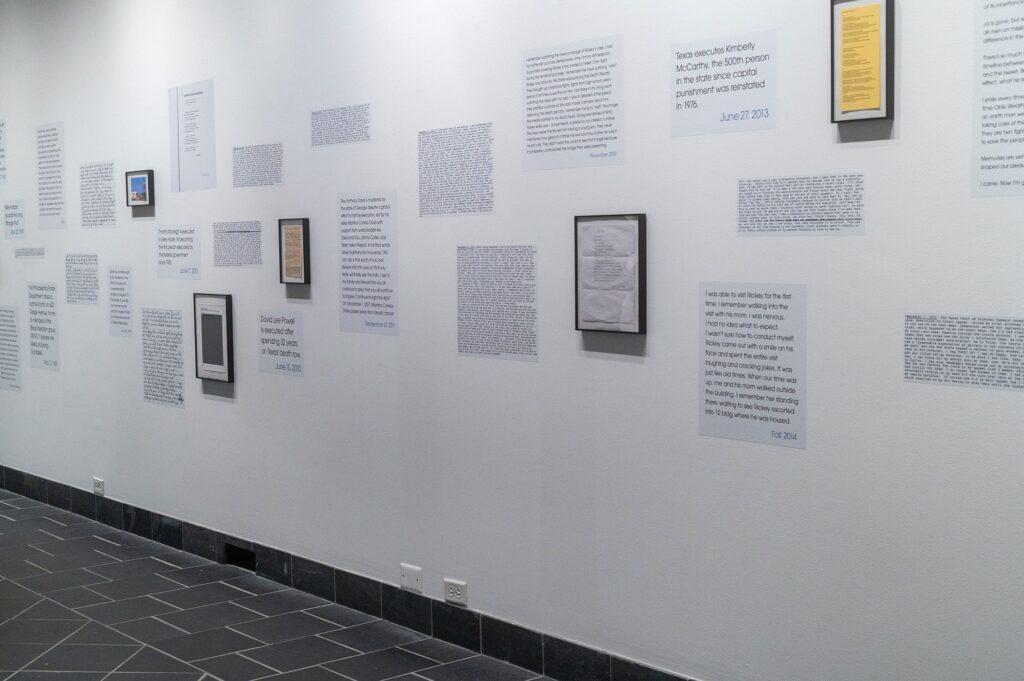
In a small town outside Seattle, an art show opened featuring work created by Kearse during his years on death row.
Visitors gathered quietly to view paintings and pieces created inside a prison cell. Some knew the story behind the artist. Others did not. But the reality of the moment carried extraordinary weight: just days after the state carried out his execution, the creative work of a man who had spent decades awaiting death was being experienced, discussed, and contemplated by strangers.
The juxtaposition was impossible to ignore. A human life had been extinguished by the machinery of the justice system, while the art created during that life continued to exist, inviting reflection long after the final sentence had been carried out.
For many observers, it was a powerful reminder that conversations about the death penalty cannot be reduced to legal arguments alone. They also touch on deeper questions about redemption, transformation, accountability, and the complicated humanity of people whose lives are defined by a single act committed decades earlier.
The Human Reality Behind Death Row
For those who have spent time working with people on death row—lawyers, advocates, clergy, artists, and volunteers—the experience often challenges assumptions about what life inside the system actually looks like.
The public narrative tends to freeze individuals at the moment of their crime. Yet the reality inside long-term incarceration is something very different. Many people spend decades reflecting on their past, participating in educational programs, mentoring other prisoners, creating art, writing, studying, and attempting to construct meaning within the limited world available to them.
That does not erase the harm that victims and families have suffered. The pain caused by violent crime is real and enduring, and the families of victims carry that grief for the rest of their lives.
But what often becomes clear when examining the death penalty system closely is that human beings are far more complex than the moment that brought them into prison.
Over the course of decades, people change. They grow older. They confront the consequences of their actions. They seek purpose within an environment defined by confinement.
For some, that process takes the form of artistic expression.
Kearse’s own artist statement captured this tension between regret, legacy, and the desire to leave behind something meaningful.
He wrote that knowing he could leave behind a piece of beauty—something that others once believed he could never create—was itself a form of validation. His work, he explained, was simply a way of saying that his life had existed, that it had produced something, and that his presence in the world had mattered in some small way.
That sentiment resonates with a broader question facing the American justice system: what role should redemption play in punishment that lasts a lifetime?
The Ongoing Debate Over Capital Punishment
The United States remains one of the few developed democracies that continues to carry out executions. While the use of the death penalty has declined significantly over the past two decades, it remains legal in several states and continues to generate intense debate.
Supporters of capital punishment often argue that it serves as the ultimate form of accountability for the most severe crimes. They contend that certain acts are so devastating that the justice system must retain the authority to impose the most severe penalty available.
Opponents, however, raise a number of concerns about the fairness, effectiveness, and moral implications of the system.
Among the most frequently cited issues are:
• The risk of executing innocent people
• Evidence of racial and socioeconomic disparities in death penalty cases
• The extraordinarily high cost of capital punishment litigation
• The psychological toll on victims’ families and prison staff
• Questions about whether executions deter crime more effectively than life imprisonment
For many critics, the most troubling aspect is the possibility that the justice system can make irreversible mistakes.
Over the past several decades, advances in forensic science—particularly DNA testing—have led to the exoneration of numerous individuals who had been sentenced to death.
Those cases have profoundly reshaped public understanding of the risks involved in a system where the ultimate punishment cannot be undone.
Cases That Continue to Raise Urgent Questions
Several cases currently moving through the legal system highlight the ongoing complexity of capital punishment in America.
Michael King, who is currently scheduled for execution in Florida, is challenging the state’s lethal injection procedures based on evidence suggesting that previous executions may not have been administered properly. Legal filings argue that the protocol may have resulted in incomplete doses of medication for certain prisoners, raising the possibility that some executions were botched.
Because King’s case involves the same circumstances, his attorneys argue that his execution could carry the same risk.
Another case drawing national attention involves James Duckett, who is scheduled for execution later this month. A recent court ruling has allowed updated DNA testing on key evidence in his case—technology that did not exist when he was originally convicted.
Duckett has maintained his innocence for years, and the new testing could potentially provide critical information that was previously unavailable.
Meanwhile in Alabama, Sonny Burton faces execution under the state’s felony murder statute. Under this law, individuals can be sentenced to death even if they did not personally commit the killing, as long as they were involved in a crime during which a death occurred.
Critics argue that applying the death penalty in such cases stretches the concept of capital punishment far beyond its intended scope.
In Florida, the case of Tommy Zeigler continues to raise questions about the limits of forensic evidence and the challenges of revisiting convictions decades later. Zeigler, now 80 years old, has spent nearly half a century on death row. A recent court ruling determined that newly presented DNA evidence was insufficient to overturn his conviction, though his legal team has indicated that appeals will continue.
Each of these cases illustrates a broader truth about the death penalty system: capital punishment is not simply a matter of guilt or innocence, but a complex legal process that unfolds over many years and often raises unresolved questions about fairness, evidence, and procedure.
The Movement for Reform
Across the country, a growing coalition of advocates, legal scholars, faith leaders, and community organizations continues to push for reforms to the death penalty system.
Some states have abolished capital punishment entirely, replacing it with sentences of life imprisonment without parole. Others have imposed moratoriums while reviewing the fairness and effectiveness of their systems.
At the same time, grassroots movements have emerged to support victims’ families who believe that healing does not necessarily require executions.
These families often argue that lengthy capital punishment cases prolong trauma rather than bringing closure. Some have become advocates for restorative justice approaches that emphasize accountability, reconciliation, and community healing.
The movement is far from unified in its perspectives, but it reflects a broader national reexamination of how justice should function in the most serious criminal cases.
Art, Memory, and the Possibility of Redemption
Against this backdrop, the opening of Billy Kearse’s art show only days after his execution has taken on symbolic significance.
Art created inside prison walls occupies a unique space in the cultural landscape. It reflects both confinement and imagination, both limitation and expression. For incarcerated artists, creative work often becomes a rare avenue for identity beyond their crime and sentence.
For viewers, encountering that work can provoke a complex emotional response. It forces people to grapple with uncomfortable questions: Can someone who committed serious harm also create beauty? Can a life defined by violence also contain transformation?
And what does it mean when the state ends a life while the human expression produced during that life continues to exist in the world?
These questions do not produce simple answers. But they invite reflection on a justice system that must balance accountability, safety, compassion, and the possibility of change.
A Nation Still Wrestling With the Meaning of Justice
The debate over the death penalty has evolved dramatically over the past generation, yet it remains one of the most emotionally charged issues in American public life.
For some, the death penalty represents a necessary response to the most devastating crimes. For others, it represents a system too flawed and irreversible to justify its continued use.
What remains clear is that the conversation is far from over.
As legal challenges continue, new evidence emerges, and individual stories capture the public imagination, the nation continues to wrestle with fundamental questions about punishment, redemption, and the value of human life.
Moments like the opening of Billy Kearse’s art exhibition remind us that the individuals at the center of this debate are not abstract legal concepts. They are human beings whose lives unfold across decades, often in ways that challenge the simple narratives society prefers.
The work of justice reform advocates, attorneys, victims’ families, and community supporters continues precisely because these questions matter.
History has shown that meaningful change rarely arrives quickly. It emerges through persistent effort, difficult conversations, and a willingness to confront uncomfortable truths.
And for many working within the movement today, that effort carries a quiet conviction about the future.
One day, they believe, the death penalty will exist only in history books.
When that day arrives, those who spent years advocating for change will be able to look back and say something simple and powerful:
They were here.
And they helped make a more humane path possible.