
The world of big cat rescue rarely offers moments of uncomplicated joy. Most of the stories that animal welfare organizations follow across years of field work, legal battles, and diplomatic negotiations are defined by what was taken from these animals before they arrived at safety — by the decades of confinement, the trauma of isolation, the physical damage of lives lived in spaces no big cat should ever inhabit. Progress, when it comes, tends to be slow, nonlinear, and hard-won. Which is what makes the updates we have to share today feel genuinely significant.
Two developments in the global big cat rescue world deserve the full attention of everyone who follows this work. The first is the remarkable transformation of Mero — a young lion rescued from illegal private captivity in the Czech Republic who arrived at FELIDA Big Cat Sanctuary in the Netherlands in August 2025 and has been quietly, steadily becoming the animal he was always meant to be. The second is the completion of a three-day veterinary mission in Malta conducted in early June 2026, which sterilized tigers and a leopard at a commercial facility, formally ending that operation’s role in the captive big cat breeding cycle. Together, these two stories illustrate the full range of what meaningful big cat welfare work actually looks like — from the long, patient process of helping a traumatized individual animal rebuild trust and confidence, to the complex field operations that change the structural conditions in which captive big cats live and breed across entire countries.
At Sustainable Action Now, we believe both kinds of work matter. This is the update they deserve.
Mero at FELIDA: Almost a Year Later, Almost Unrecognizable
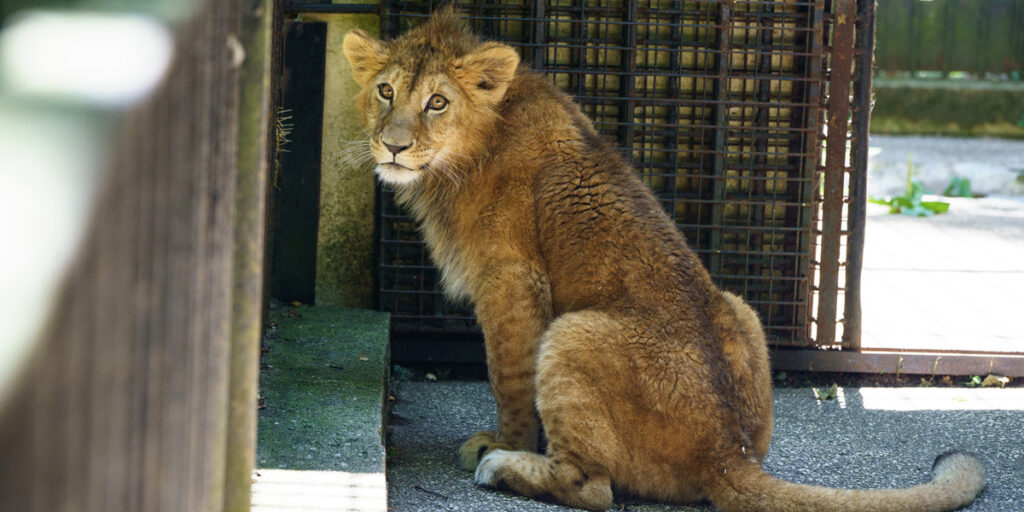
When Mero arrived at FELIDA Big Cat Sanctuary in Nijeberkoop, Netherlands in August 2025, he arrived carrying everything his first year of life had taught him about the world: that humans were unpredictable, that environments were threatening, that the right response to almost anything unfamiliar was fear.
He had been discovered in illegal private captivity in the Czech Republic — a young lion cub kept by a private owner who had no business possessing him, in conditions that no developing animal should endure. Czech authorities intervened and confiscated him.
He spent a period in temporary care at a zoo while FOUR PAWS coordinated his permanent transfer.
And then he made the journey to FELIDA, accompanied by a wildlife veterinarian for the entirety of the trip, to begin something that had never been available to him before: a life with a genuine future.
FOUR PAWS describes Mero on arrival as a sensitive soul who had already seen too much fear at a very young age. He was cautious and easily startled. Sudden changes in his environment threw him. The caretakers at FELIDA understood that his path forward would not be measured in weeks but in the slow accumulation of positive experiences, consistent care, and the patient building of trust — trust in his environment, trust in the humans around him, and ultimately trust in himself. That understanding shaped everything about how his first months at the sanctuary were managed.
The work was methodical and deeply attentive. Every stage of his growth was supported with species-appropriate care built around his individual needs — nutrition calibrated to his development, enrichment designed to engage his natural instincts rather than overwhelm a still-wary young lion, behavioral observation that tracked his emotional state as closely as his physical health. After eight months of this careful, personalized approach, Mero took a significant step: he moved into a much larger enclosure, a transition made smooth by the crate-training sessions his caretakers had worked on with him over the preceding months. The move went cleanly. Once inside his new space, he wasted no time — he began exploring every corner, scenting every surface, taking in everything with the curiosity of an animal who is learning, gradually, that his world is safe enough to investigate.
Now, approaching the one-year mark since his arrival, the transformation is visible in ways that go beyond what the FELIDA team’s careful progress reports could fully prepare observers for. Mero is stronger. He is calmer. He is exploring his territory with a confidence that was entirely absent from the frightened cub who arrived in August 2025. His mane — that most distinctively lion symbol of maturity and growing power — has been coming in magnificently, an outward sign of an inward process of becoming that his first year of life never allowed to begin.
FOUR PAWS and the FELIDA team have been clear that past traumas still shape Mero’s confidence at times. He is not a completed story. He is a young animal in the middle of a recovery process that will continue to unfold across years, not months, and that will require the same consistent, expert attention that has brought him this far. But the direction is unmistakable. The animal responding today to the calm, caring voices of his caretakers; discovering enrichment that activates the instincts evolution gave him; choosing to explore rather than retreat from the unfamiliar — that animal would not have been recognizable in the frightened cub of a year ago.
That is what real rescue looks like. Not a dramatic moment of liberation followed by an easy transition to happiness, but a sustained, expert, deeply individualized process of rehabilitation that takes as long as it takes and requires every bit of the skill and dedication that the FELIDA team brings to it every day.
Understanding Why Private Captivity of Big Cats Exists — and Why It Must End
Mero’s story is not unusual in its broad outlines, which is the most troubling thing about it. Across Europe, private ownership of big cats has operated in a legal and regulatory environment that is, to put it generously, inconsistent. Countries have varying rules about which species can be kept privately, what conditions are required, and what oversight is applied to ensure those conditions are maintained. The result is a patchwork of regulation that well-intentioned owners sometimes navigate inadequately and that bad actors exploit deliberately.
Lion cubs are particularly vulnerable to this market. They are appealing as young animals — photogenic, exotic, seemingly manageable at a small size — and the pipeline that produces them for private owners runs through breeding operations that profit from that appeal without bearing any responsibility for what happens to the animals after sale. A lion cub purchased for private keeping may initially seem like a manageable exotic pet. Within months, it is a growing predator with species-specific needs that no private home can meet. Within a year, it is an animal that requires specialized facilities, professional care, and the company of its own species. The vast majority of people who acquire big cats as private pets are not equipped to provide any of those things, and the animals pay the price.
The Czech Republic, where Mero was found, has taken steps toward stricter oversight of private big cat ownership, including requirements for veterinary approval. These steps represent genuine progress but, as Mero’s story illustrates, are not yet sufficient to prevent cases where cubs end up in private hands before the legal framework catches up. FOUR PAWS has used Mero’s case as an example of why comprehensive, species-specific legislation — not just licensing requirements but genuine protections that account for the lifetime needs of these animals — is necessary across the European Union and beyond.
Malta: A Veterinary Mission That Changes the Breeding Equation
On the other end of the big cat welfare spectrum from Mero’s individual story sits the kind of structural, systemic intervention that prevents the next generation of Meros from entering the cycle of exploitation in the first place. The FOUR PAWS veterinary mission to Malta, completed in early June 2026, is exactly that kind of intervention.
The three-day mission was conducted at a commercial facility called L-Arka ta’ Noè. The team was led by experienced wildlife veterinarians from the University of Veterinary Medicine Vienna and operated in conditions that tested everyone involved: high Mediterranean summer temperatures, a temporary field setting, limited infrastructure, and the inherent complexity of managing the sedation, surgical procedures, and post-operative care of large, wild animals outside the controlled environment of a dedicated veterinary facility. Every aspect of the operation required careful advance planning, real-time adaptability, and the kind of creative problem-solving that distinguishes experienced field veterinarians from those who have only practiced in clinic settings.
The results were substantial. Two male tigers were sterilized. One male spotted leopard was sterilized and vaccinated. A female tiger underwent a comprehensive veterinary examination — including physical assessment, blood sampling, ultrasound imaging, and radiography — while being relocated together with her partner to a larger enclosure, an improvement in their living conditions that was incorporated into the mission’s logistics. The leopard’s enclosure partner was also vaccinated. Every planned procedure was completed successfully. Post-operative care and recovery monitoring continued in the days following the team’s departure.
The significance of this mission extends beyond the individual animals treated. Prior to the mission, L-Arka ta’ Noè was a commercial facility engaged in big cat keeping in a country where, until recently, the regulatory framework was insufficient to prevent breeding and trade. Malta has now updated its legislation to require private keepers of big cats to sterilize their animals, with commercial and zoological facilities permitted to breed only under special licensing. That legal change creates a new landscape — one in which sterilization is not just the right thing to do but a legal requirement for a growing category of owners.
What makes the L-Arka ta’ Noè mission particularly noteworthy is that the facility’s owner was not legally obligated to sterilize his commercially held animals under the new rules — his facility category fell outside the mandatory requirement. He chose to do so voluntarily. He accepted FOUR PAWS’ offer of support to exit the big cat breeding industry despite not being required to. FOUR PAWS spokesperson Patricia Tiplea welcomed that decision directly, calling Malta’s legislative improvements a major step forward for animal welfare and expressing the hope that other facilities, both commercial and private, will follow the L-Arka ta’ Noè example by sterilizing their animals and gradually ending their participation in big cat breeding and keeping.
The practical effect of sterilizing all male big cats at a facility is straightforward and permanent: no more breeding. The chain of captive reproduction that produces young animals for sale, for exhibition, for cub petting operations, or for private owners who cannot responsibly manage them — that chain is broken, at that facility, for the duration of those animals’ lives. It is one of the most direct and irreversible interventions available to animal welfare organizations working to reduce the captive big cat population over time.
The Broader Picture: A Global Fight With Local Victories
The stories of Mero at FELIDA and the Malta veterinary mission exist within a global context of big cat welfare advocacy and intervention that FOUR PAWS and partner organizations have been advancing across multiple continents for decades.
The scale of the captive big cat problem worldwide is difficult to fully comprehend. Estimates of the number of tigers alone held in captivity globally range into the thousands, with populations in the United States, China, and across Southeast Asia that dwarf the remaining wild tiger population. Lions, leopards, cheetahs, and other big cat species are similarly held in commercial facilities, roadside attractions, private collections, and breeding operations that operate with wildly varying standards and, in many jurisdictions, virtually no meaningful oversight.
The pipeline that feeds this captive population runs through multiple industries simultaneously: the entertainment industry, where cub petting operations and photo opportunity businesses require a continuous supply of young animals; the exotic pet trade, where cubs are sold to private buyers who will eventually be unable to manage them; trophy hunting operations in some countries; and commercial breeding facilities that serve all of these markets at once. Breaking that pipeline requires intervention at multiple points — in the legislation that governs private keeping, in the commercial practices of facilities that breed for profit, in the public awareness that drives demand for cub experiences, and in the individual rescue and rehabilitation operations that give existing captive animals a path to better lives.
FOUR PAWS operates across all of these dimensions. FELIDA Big Cat Sanctuary specializes in intensive, trauma-focused care for individual animals whose histories require the most careful and sustained rehabilitation work. LIONSROCK Big Cat Sanctuary in South Africa provides the larger, more naturalistic environment to which animals can graduate when their physical and psychological recovery is sufficient for the transition. Field veterinary missions like the Malta operation address the structural conditions that produce the next generation of animals in need of rescue. Legislative advocacy campaigns push governments toward the regulatory frameworks that reduce the flow of animals into harmful conditions in the first place.
It is the combination of all of these approaches — the individual animal care, the structural intervention, the legal reform, the public education — that constitutes a genuine strategy for improving big cat welfare at scale. Any single element in isolation is insufficient. Together, they represent the kind of comprehensive, long-term commitment that this problem actually requires.
What the Rescue Network Means — and Why It Needs Your Support
The work described in this article — Mero’s rehabilitation at FELIDA, the Malta sterilization mission, the broader FOUR PAWS network of sanctuaries and field operations — does not happen without sustained financial and organizational support from a global community of people who care about these animals and the systems that harm them.
FELIDA Big Cat Sanctuary is not open to the general public. It is a specialized care facility where the animals’ welfare takes absolute priority over any visitor or exhibition function. The 12 indoor and 8 outdoor enclosures completed in September 2024 were specifically designed for the intensive care of traumatized big cats, providing the controlled environment that animals like Mero need during the fragile early stages of their recovery. Operating this facility, staffing it with the behavioral experts and veterinary professionals who know how to read an elephant’s body language and respond to a lion’s particular fears, providing the enrichment and the nutrition and the individualized attention that each animal’s recovery requires — all of this costs money, continuously, year after year, for animals who will live at FELIDA for the rest of their lives.
The Malta mission required mobilizing a team of specialized wildlife veterinarians from the University of Veterinary Medicine Vienna, transporting equipment capable of safely sedating large wild cats in a field setting, coordinating with local veterinary professionals including Dr. Catherine Portelli and the facility at Vući Ghall-Annimali, and managing the post-operative care and monitoring that follow any complex surgical procedure conducted under field conditions. That kind of expertise and logistics capacity does not exist without organizational infrastructure and the funding to maintain it.
At Sustainable Action Now, we share FOUR PAWS’ commitment to the proposition that the rescue network — the web of sanctuaries, field teams, veterinary experts, and advocacy organizations working on behalf of big cats and other animals in need — is something worth supporting, consistently and substantially, because the animals it serves cannot wait for perfect conditions or sufficient resources to materialize on their own.
Mero is growing into his mane. The tigers in Malta will not produce another generation of captive-born cubs to inherit their circumstances. These are real victories for real animals, made possible by real people doing difficult, skilled, necessary work. The network that makes those victories possible deserves recognition, support, and the continued expansion of the public awareness that connects more people to this cause.
The rescue network is working. Help us help it work better.
Sustainable Action Now will continue covering big cat rescue operations, sanctuary updates, and the global campaign for legislative reform in the captive big cat industry.