
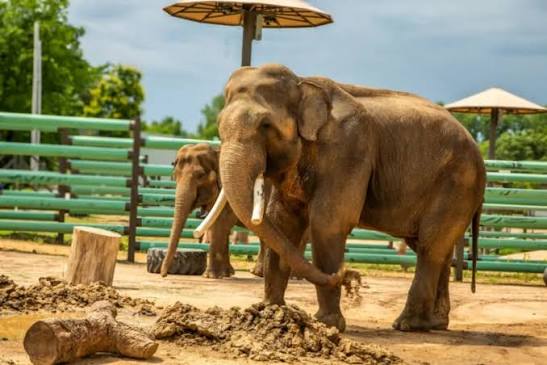
In the early morning hours of May 20, 2025, while Los Angeles was still dark, zoo staff loaded two Asian elephants into transport containers and drove them out of the city before anyone could stop it. Billy, a 40-year-old male who had lived at the Los Angeles Zoo since arriving from Malaysia as a four-year-old calf in 1989, and Tina, a 59-year-old geriatric female and former circus performer, were gone — shipped to the Tulsa Zoo in Oklahoma without public notice, without City Council approval, and in direct defiance of a pending motion by Los Angeles City Councilmember Bob Blumenfield that would have given elected officials the opportunity to consider sanctuary options before any transfer occurred.
The Los Angeles Zoo’s decision to move under cover of darkness was not incidental. It was a choice. A choice that tells you everything you need to know about how the institution viewed the years of advocacy, legal action, celebrity activism, and public pressure that had built around these two animals — as obstacles to be outmaneuvered, not concerns to be addressed.
The move did not end the campaign to free Billy and Tina. It accelerated it.
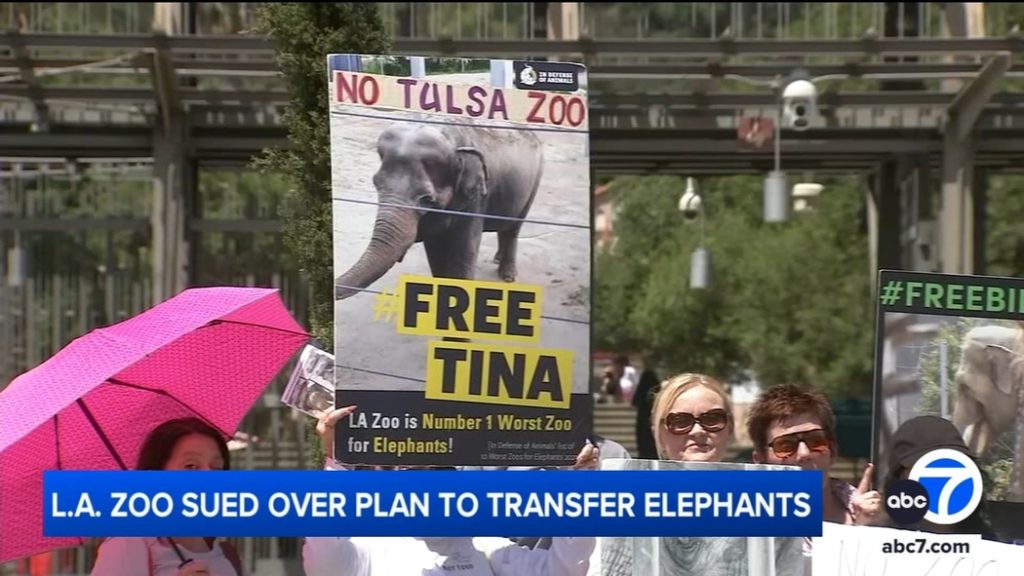
At Sustainable Action Now, the story of Billy and Tina is one of the most vivid illustrations available of the core argument against keeping elephants in zoos: that no zoo enclosure — regardless of its acreage, regardless of the sincerity of its keepers, regardless of how the institution describes its own standards — can provide what an elephant actually needs to live without the chronic, cumulative, brain-damaging suffering that captivity inflicts on an animal whose cognitive, social, and physical requirements are simply incompatible with confinement. Billy and Tina have been living that argument for decades. They are living it right now, in Tulsa.
Thirty-Six Years in the Making: Who Billy and Tina Are
Billy arrived at the Los Angeles Zoo in 1989. He was four years old, freshly separated from his wild herd in Malaysia, shipped across the world to a city he could not have conceived of, to begin a life in a concrete-and-metal enclosure surrounded by people he had no context for. He is now 40 years old. The Los Angeles Zoo has been his entire adult life. In those 36 years, he has never walked on open land. He has never chosen his own path through a landscape. He has been subjected to more than 50 sperm extractions as part of the zoo’s breeding program — procedures that elephant welfare experts describe as invasive, stressful, and medically unnecessary for an animal whose welfare, rather than his reproductive utility, should be the organizing principle of his care.
Tina’s history is, if anything, more layered. She is 59 years old — elderly by any measure for a species whose natural lifespan in the wild extends to 60 to 70 years and whose final decades should be lived in the company of a herd, in familiar terrain, moving at her own pace across a landscape her body is designed to traverse. Instead, Tina spent years as a circus performer before entering the zoo system, carrying into captive life the full weight of a history in which she was trained through pain and compliance to do things no elephant should ever be made to do. At the Los Angeles Zoo, she watched both of her female companions die. She was left as the only female in the facility. Her companionship there, for the final years of her time in Los Angeles, was a male elephant who is not her family and not her choice.
The people who knew Billy and Tina best at the Los Angeles Zoo were not the administrators who made the decision to ship them to Oklahoma. They were the keepers — among them Cara Ganat-Wilson, who was present when Billy arrived from Malaysia as a calf and who has described him not as a headline or an advocacy symbol but as a living being she knew personally, whose individual personality and needs she understood from years of direct relationship. Cara’s grandson, Nicholas Wilson, is ten years old. He learned about Billy from his grandmother. In March 2026, he wrote a letter to Tulsa Zoo leadership that was shared by In Defense of Animals: “If Billy could talk, I think he would say, ‘Get me out of this crazy place.’ Listen to everybody else; they think that he should be in a sanctuary, EVEN FAMOUS PEOPLE. If Billy doesn’t go in a sanctuary like RIGHT NOW, then he will die depressed. SAVE THAT CUTE ELEPHANT.” Nicholas Jackson Wilson, age 10. March 15, 2026.
That letter, from a child with a personal connection to the animal at the center of this campaign, sits alongside the statement of Samuel L. Jackson — one of the highest-grossing actors in the history of cinema — in the same advocacy coalition, both of them saying the same thing to the same Tulsa Zoo CEO. The range of people who have concluded that Billy and Tina deserve sanctuary, spanning a ten-year-old boy with a grandmother who loved an elephant and a legendary film star who has visited Kenya’s Reteti Elephant Sanctuary and narrated African Cats, captures the breadth of the consensus that has formed around this case.
The LA Zoo’s Betrayal: What the Night Move Actually Represented
The Los Angeles Zoo justified the transfer to Tulsa on accreditation grounds — specifically, that the Association of Zoos and Aquariums requires member institutions to maintain more than two Asian elephants in their exhibits, and that the LA Zoo’s two-elephant arrangement no longer met that standard. The zoo stated publicly that it had “evaluated all available options, including AZA-accredited sanctuaries.” What it did not do was share that evaluation with the public, with the City Council, or with the advocates and elected officials who had been fighting for years to have the animals sent to a true sanctuary.
Councilmember Blumenfield’s motion, introduced in direct response to the April 2025 announcement of the planned Tulsa transfer, was a democratic mechanism designed to give elected officials — who are accountable to the public that funds the zoo — the opportunity to review what “all available options” actually meant and to vote on whether sanctuary was possible before the animals were moved. The Los Angeles Zoo responded to that democratic mechanism by loading Billy and Tina into transport containers before dawn on May 20, 2025 and removing them from the city before any review could occur.
The legal challenge filed by an LA resident to halt the transfer failed to stop the move in time. The Council motion was rendered moot by the physical removal of the animals. The institutions that were supposed to be accountable to the public had simply moved faster than accountability could catch them.
The financial context of the LA Zoo’s decision-making is also worth naming. Zoo Director Denise Verret — who sits on the AZA Board, the same body whose accreditation standards were cited as the justification for the Tulsa transfer — has faced scrutiny over the use of public funds at the institution. According to Social Compassion in Legislation, $1.7 million was diverted from the zoo, including approximately $450,000 to the AZA, alongside expenditures on office renovations, international travel, and a private party thrown in Verret’s honor. These are not allegations that have been adjudicated, but they are the financial and governance context in which a zoo director who sits on an AZA board cited AZA accreditation requirements as the reason to send elephants to another AZA-member zoo rather than to a sanctuary.
The Toronto precedent was invoked by Verret at a City Council budget hearing as a warning: the Toronto Zoo lost its AZA accreditation in 2012 when the Toronto City Council directed it to send its elephants to a sanctuary over the objection of zoo management. The warning was real in a narrow institutional sense — the AZA does not accredit sanctuaries, which means sending elephants to a sanctuary is, by definition, an act that removes the institution from AZA’s orbit. What the warning omitted was the obvious question: if the AZA’s accreditation standards are the obstacle between captive elephants and sanctuary, what does that tell us about whose interests those standards serve?
Tulsa: A Different Enclosure, the Same Suffering
The Tulsa Zoo’s elephant complex spans 17 acres, which sounds substantial until you understand that the smallest natural range of a wild Asian elephant herd covers thousands of acres and involves daily movement patterns across distances that no zoo acreage can approximate. The 17 acres include a wooded preserve not open to public viewing and a 36,650-square-foot barn — real physical space, more than what was available at the LA Zoo, and genuinely insufficient for what elephants need. Adding Billy and Tina brought the Tulsa facility’s elephant population to seven animals in an enclosure that In Defense of Animals characterizes as less than one percent the size of their smallest natural range.
The behavioral evidence from Tulsa tells the story more clearly than any square footage calculation. Video footage captured by Elephant Guardians of Los Angeles documents Billy and Tina displaying the same stereotypic behaviors — head bobbing, swaying, pacing — that they were exhibiting in Los Angeles. These behaviors are not quirks or individual habits. They are clinical indicators of a neurological condition that elephant welfare researchers and veterinarians call zoochosis: the chronic, cumulative psychological damage caused by years of captivity that produces repetitive, purposeless behaviors as the animal’s nervous system responds to an environment it cannot process or adapt to. The behaviors at Tulsa are not new developments caused by the stress of relocation. They are the continuation of a condition that has been building in both animals for decades and that no zoo transfer can reverse — because the cause of the condition is captivity itself, not the specific enclosure.
Another Tulsa resident elephant, Sneezy, was documented on video attempting what observers described as a breakout — pressing against and testing enclosure barriers in a way consistent with the sustained, frustrated intelligence of an animal that knows it is constrained and cannot accept that constraint. Hank, a male who had already been moved between four different facilities before arriving at Tulsa, is being positioned as a sperm donor for the zoo’s artificial insemination program. Billy, who was subjected to more than 50 sperm extractions in Los Angeles, faces the prospect of the same procedures continuing in Oklahoma.
Tina’s health situation has become the most urgent focus of current advocacy. In 2026, the Tulsa Zoo acknowledged that Tina is suffering from a uterine infection and abnormal accumulation of fluid in her uterus — a condition the zoo describes as a side effect of reproductive tract disease she had a history of before arriving at Tulsa, and which is common in aging female elephants. The zoo’s characterization of the condition as manageable is disputed by elephant welfare experts. Courtney Scott, a veteran elephant consultant with In Defense of Animals, has stated directly that Tina’s health is failing and that a large, stress-free sanctuary environment is not just preferable but medically necessary for her remaining years: “Living in a large, stress-free environment is the best medicine for Tina. In fact, it’s the best medicine for all captive elephants.”
The timeline concern is not abstract. Tina is 59 years old. Every month that passes in a stressful captive environment with a serious ongoing medical condition is a month that cannot be recovered. Two sanctuaries — one in Georgia and one in Cambodia — have already expressed willingness to take Billy and Tina. The Performing Animal Welfare Society in Northern California has indicated it would accept Billy and likely Tina as well. The sanctuaries are available. The animals need them. The only obstacle is the Tulsa Zoo’s refusal to release them.
The Coalition Demanding Freedom: From Hollywood to a Ten-Year-Old Boy
The campaign to free Billy and Tina did not begin with Samuel L. Jackson, and it will not end with him. But his involvement in March 2026 — joining more than 10,000 people who have signed a letter to Tulsa Zoo President and CEO Lindsay Hutchison — brought national and international attention to a campaign that had been building for years and that the Tulsa Zoo has so far been able to ignore.
The celebrity engagement with this specific case has a long history. Cher, Kim Basinger, Lily Tomlin, and the late Bob Barker all signed a letter to then-Los Angeles Mayor Karen Bass urging her to order the zoo to send Billy and Tina to a sanctuary rather than to Tulsa. Alicia Silverstone publicly mobilized her platform, tweeting directly at the mayor and the LA Zoo. None of it prevented the transfer. The question now is whether the same level of sustained, public pressure — directed at Tulsa Zoo leadership rather than at an LA political apparatus that had already made its decision — produces a different outcome.
Miss World Chile, Ignacia Fernández, has joined the coalition, framing the issue with clarity that deserves quotation: “Zoos breed elephants into lives of impoverishment. Born as prisoners, treated as playthings and profit-drivers, they fade away without ever truly living.” The global dimension of that statement is relevant — the captive elephant welfare debate is not an American issue, and the attention it receives from international advocates and public figures like Fernández reflects a global consensus that is increasingly unwilling to accept zoo industry framing of captive breeding and exhibition as conservation.
In Defense of Animals’ supporters have sent over 21,000 emails to former LA Mayor Bass and the City Council, and more than 18,000 messages to Zoo Director Verret and AZA President Dan Ashe. The Nonhuman Rights Project has worked on the legal dimensions of Billy’s case, pursuing the concept of legal personhood for elephants in the courts as a mechanism for asserting rights-based protections rather than relying on welfare standards that the zoo industry has consistently managed to define in its own favor. None of these efforts has yet produced Billy and Tina’s transfer to sanctuary. All of them have contributed to a public record of sustained, organized, expert opposition to their continued captivity that the Tulsa Zoo cannot claim ignorance of.
The Broader Case Against Zoo Elephant Keeping
Billy and Tina’s story is the most prominent current example of a pattern that is becoming impossible for the zoo industry to obscure: the systematic failure of zoo environments to meet the complex needs of elephants, and the growing exodus of elephants from zoo settings to sanctuaries that is happening as individual institutions reach the same conclusion that the evidence has been pointing toward for years.
Elephants in captivity suffer from a documented constellation of physical and psychological conditions that do not occur in wild populations at comparable rates. Arthritis and foot disease — both products of walking on hard substrates rather than varied natural terrain — are endemic in captive elephants and a leading cause of premature death. Dental disease, digestive disorders, heart disease, and skin conditions occur at elevated rates. The psychological damage expressed as zoochosis — the swaying, head bobbing, pacing, and other stereotypic behaviors documented in Billy, Tina, Sneezy, and elephants at zoos across the country — represents neurological changes caused by chronic stress and deprivation that welfare researchers now understand to be, in severe and prolonged cases, a form of brain damage.
The zoo industry’s response to these documented harms has been twofold: investment in larger enclosures described as “preserves” or “reserves,” and insistence that captive breeding programs serve conservation purposes that justify the conditions. The Tulsa Zoo’s 17-acre complex was presented as evidence of a meaningful improvement. In Defense of Animals placed Tulsa on its annual list of the Ten Worst Zoos for Elephants in 2022 specifically for making that claim about a facility that remains, by every welfare standard that matters, inadequate for the animals it holds.
The conservation argument for zoo elephant keeping deserves direct engagement because it is the most sympathetic available defense of the practice. Captive breeding programs for Asian elephants, which are classified as endangered, can in principle contribute to genetic diversity management for a species under severe pressure from habitat loss and human-wildlife conflict. In practice, the contribution of AZA-member zoo breeding programs to the conservation of wild Asian elephant populations is negligible — the animals produced in these programs do not return to the wild, they are integrated into other zoo populations, and the 50-plus sperm extractions from Billy that the LA Zoo participated in were in service of a captive breeding program that produces more zoo elephants, not wild elephants.
The Nonhuman Rights Project has articulated the legal dimension of this situation with precision: the question is whether elephants, as beings with sufficient cognitive complexity, social sophistication, and capacity for suffering to warrant rights-based protections, should be categorized under existing law as property — objects that institutions can own, move, breed, and retain regardless of the welfare consequences — or whether the courts should recognize their interests as deserving independent legal weight. That legal argument has not yet succeeded in any American court. It is the right argument, and it will eventually succeed, because the scientific foundation for it has become unassailable.
What the Kids 4 Elephants Campaign Wants
The Kids 4 Elephants campaign — a grassroots advocacy movement that frames the fight for Billy and Tina around the voices of young people who have the most to lose from a world that treats elephant welfare as an acceptable casualty of zoo industry economics — is built on a simple demand: release Billy, Tina, and all seven elephants currently held at the Tulsa Zoo to accredited, open-space sanctuaries.
Not a larger enclosure. Not a new barn. Not a “preserve” that is still, in every meaningful sense, a captive environment managed for public exhibition and institutional accreditation. A true sanctuary: a protected landscape of hundreds of acres, professionally managed for the animals’ welfare rather than for public revenue, where the elephants can move freely, choose their own associations, receive expert veterinary care without the compounding stress of public display, and live out their remaining years in conditions that reflect some functional approximation of what their lives were supposed to be.
Two sanctuaries have already offered to take Billy and Tina. The Performing Animal Welfare Society in Northern California has indicated it would accept them. The path from Tulsa to sanctuary exists. It requires one decision from one institution.
Lindsay Hutchison is the President and CEO of the Tulsa Zoo. Her contact information is publicly available. More than 10,000 people have already signed the letter calling on her to release these elephants. The petition continues to grow. If you have not added your name, the time to do so is now. If you have already signed, share it. The campaign’s momentum has never been more visible or more urgent, and Tina’s deteriorating health means that urgency is not rhetorical — it is medical.
Tina is 59 years old and fighting a life-threatening infection in a zoo that named itself one of the ten worst facilities for elephant welfare in North America before doing anything meaningful to change the conditions that earned that designation. Billy is 40 years old and has been in captivity since before most of the people reading this article were born. Both sanctuaries that have offered to take them are ready.
What is the Tulsa Zoo waiting for?
Sustainable Action Now will continue covering the campaign for Billy, Tina, and all captive elephants — including updates on the Kids 4 Elephants advocacy effort, legal proceedings, and any movement toward sanctuary transfer by the Tulsa Zoo.