
There are moments in animal welfare advocacy when years of investigations, documentation, public pressure, and relentless activism finally collide with government enforcement strongly enough to force an institution to close its doors permanently.
For many advocates fighting against animal experimentation, the reported shutdown of Red Beast Enterprises represents one of those moments.
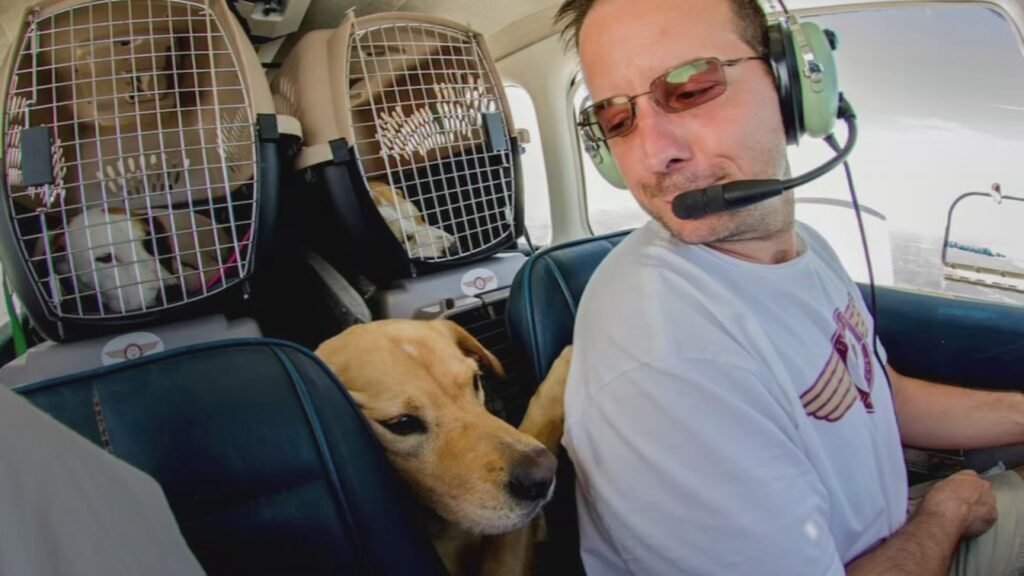
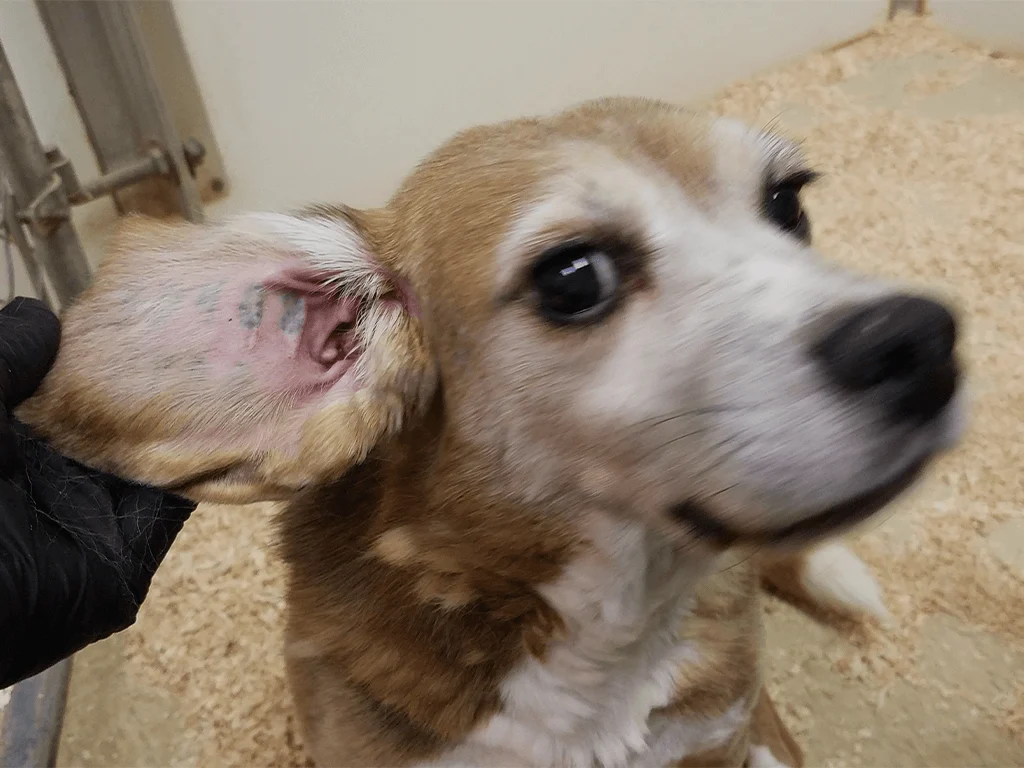
According to PETA, the Colorado-based laboratory — accused of operating with extreme neglect and systemic abuse involving dogs and cats — has permanently closed following an undercover investigation that allegedly uncovered more than 200 violations of federal animal welfare regulations. The fallout reportedly resulted in the United States Department of Agriculture cancelling the laboratory’s license, while nearly 70 surviving animals were ultimately transferred out of the facility and relocated to sanctuary care.
For animal welfare advocates, the closure represents both a victory and a grim reminder of how much suffering can remain hidden behind laboratory walls long before intervention finally occurs.
At Sustainable Action Now, stories like this matter because they expose one of the most emotionally difficult contradictions inside modern scientific and commercial research systems: the continued use of companion animals — species humans overwhelmingly consider family members — inside experimental environments many people would find morally intolerable if directly witnessed.
Dogs and cats occupy uniquely intimate emotional positions within human society.
They sleep in homes.
They comfort children.
They provide emotional support.
They accompany families through grief, illness, aging, and loneliness.
Yet inside portions of the animal testing industry, those same species may be bred, confined, restrained, experimented upon, or euthanized within systems largely invisible to the public.
That emotional contradiction is precisely why allegations surrounding facilities like Red Beast Enterprises generate such intense public reaction.
Because the issue is not abstract.
The animals involved are not emotionally distant from human experience.
People immediately imagine their own pets.
And once that connection happens, the ethical discomfort becomes impossible to compartmentalize easily.
At Sustainable Action Now, the reported scale of regulatory violations attached to the Red Beast investigation is especially significant. More than 200 alleged federal animal welfare violations suggests not isolated procedural mistakes, but what critics argue was systemic operational collapse involving oversight, humane care, sanitation, veterinary standards, containment protocols, or basic welfare obligations simultaneously.
The exact nature of every alleged violation may vary, but investigations of this magnitude typically trigger deeper questions surrounding how such facilities remain operational for extended periods before enforcement escalates strongly enough to force closure.
That issue sits at the center of broader criticism directed toward animal experimentation oversight systems globally.
Animal welfare advocates have long argued that regulatory structures surrounding laboratory animal use frequently rely too heavily on self-reporting, inconsistent inspection schedules, reactive enforcement, and minimum compliance standards that may fail to adequately protect animal wellbeing in practice.
The Red Beast case appears to intensify those concerns dramatically.
At Sustainable Action Now, one of the most important aspects of this story is the role undercover investigations continue playing in exposing conditions the public would otherwise never see.
Laboratories involved in animal testing typically operate with extremely limited visibility. Public access is restricted. Footage is rare. Operational details remain shielded behind institutional privacy, proprietary protections, research confidentiality, or security restrictions.
As a result, undercover investigations often become one of the only mechanisms through which internal conditions enter public consciousness at all.
This visibility changes everything.
Once images, testimony, or documented allegations emerge publicly, abstract ethical debates suddenly become emotionally tangible.
The animals are no longer statistics.
They become individuals.
Living beings confined within systems many people never realized existed at such scale.
At Sustainable Action Now, another especially important dimension of this case involves the sanctuary transfers reportedly arranged for nearly 70 surviving animals after the laboratory’s closure.
For advocates, rescue itself is not simply symbolic. It represents a profound shift in the animals’ lived reality.
Many laboratory animals spend years inside highly controlled, artificial environments defined by confinement, procedural handling, limited enrichment, restricted socialization, and experimental intervention. Sanctuary relocation often introduces entirely new experiences for the first time: grass, sunlight, toys, emotional bonding, open space, species-appropriate stimulation, and freedom from invasive procedures.
For dogs and cats especially, that transition can carry enormous emotional significance because these are species evolutionarily adapted for social connection, environmental interaction, and emotional attachment.
Stories of rescued laboratory animals frequently resonate so strongly publicly because they force audiences to confront how radically different life can become once exploitation ends.
At Sustainable Action Now, the Red Beast Enterprises closure also intersects with a much larger global debate surrounding the future of animal experimentation itself.
Critics increasingly argue that many traditional animal testing models are scientifically outdated, ethically indefensible, and increasingly replaceable through emerging technologies involving organoids, computer modeling, AI-driven biological simulations, cell-based research, tissue engineering, and other human-relevant scientific methods.
Animal welfare organizations frequently cite statistics suggesting high failure rates for drugs that initially succeed in animal testing but later fail during human clinical trials due to biological differences between species.
This has intensified calls for research modernization — a growing movement arguing that transitioning away from animal experimentation is not only ethically preferable, but scientifically superior in many contexts as well.
The closure of a laboratory like Red Beast therefore becomes symbolically larger than one enforcement action alone.
It becomes evidence, for advocates, that public tolerance for outdated research systems may be weakening.
At Sustainable Action Now, another deeply important aspect of this case is the language many advocates use surrounding facilities accused of severe abuse.
Terms like “hellhole laboratory” are emotionally charged intentionally because activists argue the public has historically been shielded from the emotional and physical realities experienced by animals inside some research environments.
Critics of activist rhetoric sometimes argue such language oversimplifies complex scientific debates. Advocates counter that sanitized terminology has historically allowed suffering to remain psychologically distant from public consciousness.
This tension — between institutional scientific framing and activist moral framing — defines much of the contemporary animal experimentation debate.
One side emphasizes medical research necessity, regulatory oversight, and scientific advancement.
The other emphasizes suffering, confinement, species exploitation, psychological distress, and emerging alternatives capable of replacing live-animal models.
The Red Beast investigation has now inserted itself directly into that larger conflict.
At Sustainable Action Now, perhaps the most haunting aspect of stories like this is recognizing how many facilities worldwide continue operating largely outside public awareness altogether.
For every closure celebrated publicly, advocates argue countless other animals remain inside laboratories, breeding facilities, or research systems most consumers will never see directly.
That reality explains why organizations continue using investigations not merely to expose individual facilities, but to challenge the legitimacy of broader systems surrounding animal experimentation itself.
Because once people see companion animals confined inside alleged abuse environments, public trust changes rapidly.
Questions emerge immediately:
How widespread are these conditions?
How effective is oversight really?
Are current laws sufficient?
How many animals remain inside similar facilities?
How many experiments could already be replaced with modern alternatives?
And perhaps most importantly: how much suffering continues simply because the public rarely sees it?
At Sustainable Action Now, the permanent closure of Red Beast Enterprises therefore represents more than the end of one laboratory operation.
It represents the collision between public visibility, investigative activism, federal enforcement, evolving scientific ethics, and rapidly changing societal attitudes toward animal experimentation overall.
For advocates, the rescue of nearly 70 surviving animals stands as proof that intervention can succeed.
But the celebration remains tempered by a larger reality.
Because while one facility may now be closed, the broader global debate over animal experimentation — and the suffering still occurring inside laboratories elsewhere — is far from over.