
There are few realities more heartbreaking in animal rescue than the moment rescuers realize an abandoned animal was only hours — or perhaps minutes — away from disappearing forever into the brutal mathematics of survival outdoors.
No shelter. No protection. No food security. No understanding of predators. No ability to navigate the dangers surrounding them. Just fear, exposure, confusion, and the constant risk of becoming prey in an environment where survival depends entirely on instinct and experience.
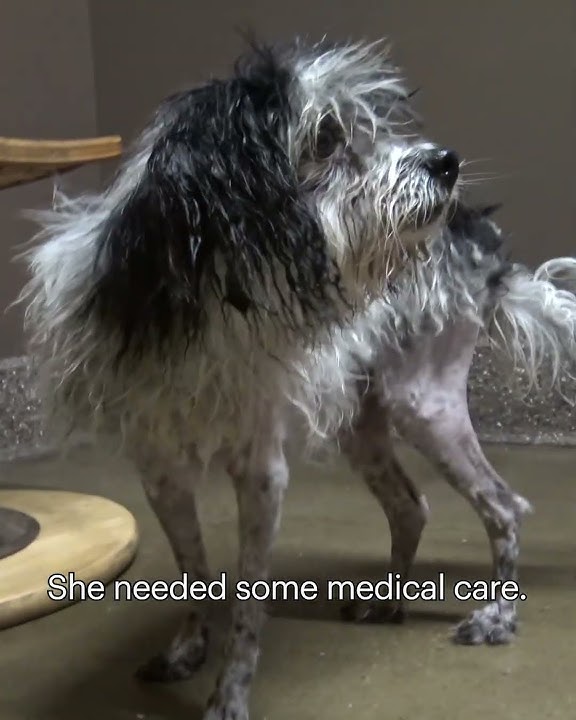
Fergie’s rescue highlights that reality with painful clarity.
According to rescuers, she had effectively been left behind in what many rescuers informally call “coyote land” — areas where wild predators have adapted successfully to human expansion and where abandoned pets quickly become extraordinarily vulnerable. Coyotes are intelligent, highly adaptable predators now living throughout urban, suburban, and rural regions across North America. As habitat fragmentation and development continue reshaping landscapes, human communities and coyote territories increasingly overlap.
This overlap creates an especially dangerous situation for abandoned pets.
Domesticated dogs and cats often lack the survival instincts necessary to navigate predator-heavy environments safely. Many were raised entirely indoors or within protected homes. They do not understand territorial behavior, hunting patterns, escape routes, or nocturnal danger cycles. Some continue approaching humans hopefully even after abandonment, further reducing their chances of survival outdoors.
Small animals like Fergie often become especially vulnerable because predators view weakened, isolated, frightened domesticated animals as easy targets.
This is why rescue timing matters so enormously.
The statement from Hope For Paws acknowledging that “Fergie had no chance to survive out there” is not emotional exaggeration. Rescue workers regularly witness the devastating consequences when abandoned animals remain exposed too long in predator-active regions. Coyotes, traffic, dehydration, starvation, illness, weather extremes, injury, and territorial conflicts all create escalating survival risks.
Yet what transformed Fergie’s story from tragedy into survival was one critically important factor: someone noticed.
Someone recognized vulnerability instead of looking away. Someone understood the danger. Someone knew who to call.
At Sustainable Action Now, that human intervention point is one of the most important themes within modern rescue culture. Countless rescue operations begin not with organizations themselves, but with ordinary people choosing awareness over indifference. A passerby. A resident. A worker. A neighbor. Someone paying attention long enough to recognize that an animal is not “just wandering,” but actively in crisis.
That awareness saves lives.
The emotional tension surrounding coyotes themselves also reflects a more complicated environmental reality increasingly shaping urban wildlife discussions. The rescue message itself acknowledges something important honestly: coyotes have to survive too.
This distinction matters because sustainable animal welfare conversations cannot simply demonize wildlife behaving naturally within ecosystems altered heavily by human development. Coyotes are not villains. They are opportunistic predators adapting remarkably well to landscapes humans continue fragmenting through suburban expansion, industrial development, and habitat disruption.
The real tragedy is not that coyotes exist. It is that domesticated animals continue being abandoned into environments where they are unequipped to survive alongside them.
This creates an emotionally complex intersection between rescue work, wildlife coexistence, urban expansion, and human responsibility.
Rescue organizations like Hope For Paws operate constantly within that tension. Their goal is not eliminating wildlife predators. It is preventing vulnerable domesticated animals from being placed into lethal situations through abandonment, neglect, or irresponsible ownership.
Fergie’s story also highlights another important reality many people underestimate: rescue work often functions as emergency intervention against time itself.
Once an abandoned animal enters predator territory, every hour matters. Fear can drive animals deeper into unsafe areas. Hunger weakens judgment. Injury compounds vulnerability. Weather exposure escalates rapidly. Predator activity often increases overnight. Rescue teams therefore frequently operate under extraordinary pressure knowing delays can permanently change outcomes.
That urgency becomes even more emotionally intense when dealing with animals clearly accustomed to human care.
Unlike wild animals born into survival conditions, abandoned pets often remain emotionally attached to human connection even after trauma. Many continue seeking help despite fear. Some wait near roads, homes, parking lots, or familiar areas long after being abandoned because they still expect someone to return for them.
That emotional vulnerability is one of the most devastating aspects of abandonment itself.
At Sustainable Action Now, stories like Fergie’s matter because they reveal how profoundly dependent domesticated animals remain on human ethical responsibility. Dogs and cats did not create domestication systems themselves. Humans selectively bred animals over centuries for companionship, dependence, and integration into human households. Abandonment therefore becomes more than neglect. It represents the collapse of a relationship animals were biologically conditioned to trust.
This betrayal becomes especially dangerous in environments dominated by survival pressures they were never prepared to navigate alone.
The role of rescue organizations in these situations has become increasingly important as shelters and nonprofits nationwide face overwhelming intake pressures. Economic instability, housing insecurity, rising veterinary costs, overcrowded shelter systems, and post-pandemic surrender increases have created enormous strain throughout animal welfare networks.
Yet despite those pressures, rescue groups continue responding because stories like Fergie’s remain deeply urgent.
The emotional resonance of these rescues also reflects broader cultural changes surrounding how society perceives animals themselves. Increasingly, people no longer view abandoned pets merely as unfortunate stray populations existing separately from community responsibility. Instead, they recognize individual emotional lives, trauma, fear, attachment, and suffering more clearly.
This shift matters because compassion itself often drives policy, funding, foster recruitment, spay and neuter initiatives, and long-term rescue infrastructure development.
The statement from Hope For Paws about not wanting coyotes to “eat my rescues” also captures something deeply human within rescue culture: emotional attachment develops quickly. Rescuers do not approach animals as anonymous cases. They become emotionally invested almost immediately because every rescue represents a race against suffering, fear, and often death itself.
This emotional labor remains one of the least understood aspects of rescue work publicly.
Rescuers regularly witness abandonment, injury, starvation, abuse, and preventable suffering while simultaneously maintaining enough hope and determination to continue responding daily. The psychological toll can be enormous. Yet moments like Fergie’s successful rescue provide something equally powerful in return: proof that intervention still matters.
Proof that compassion can interrupt tragedy before it becomes irreversible.
The environmental dimensions of the story also deserve attention because human-wildlife overlap is intensifying nationwide. Coyotes increasingly inhabit suburban neighborhoods, golf courses, industrial edges, parks, and residential developments because traditional habitat boundaries continue disappearing. As climate pressures and urbanization accelerate, these overlaps will likely increase further.
Communities therefore face growing responsibility not only regarding wildlife coexistence, but also preventing domesticated animals from entering dangerous situations unnecessarily.
This includes responsible pet ownership, secure containment, spay and neuter efforts, abandonment prevention, and public education surrounding predator activity in developing regions.
Fergie’s rescue ultimately represents something larger than one animal saved successfully. It represents the invisible network of awareness, compassion, timing, donations, transportation, veterinary care, and organizational coordination required to pull vulnerable animals back from the edge of survival collapse.
Every successful rescue story often masks how close the outcome came to being different entirely.
Had no one noticed. Had no one called. Had rescuers arrived later. Had fear driven the animal farther away. Had predators arrived first.
These variables shape rescue work constantly.
At Sustainable Action Now, one of the most important truths stories like this reveal is how fragile survival can become once domesticated animals are abandoned into hostile environments. The outdoors is not a neutral space for animals bred for human companionship. It is often an active emergency unfolding invisibly until someone intervenes.
And perhaps that is why Fergie’s story resonates so deeply.
Because underneath the rescue itself is a stark reminder of how quickly vulnerability becomes life-threatening once trust, safety, and protection disappear.
But it is also a reminder of something else equally important.
Sometimes survival comes down to one person paying attention long enough to make the call that changes everything.