


The most powerful shift anyone can make toward a more sustainable way of eating does not require expensive specialty ingredients, a complicated meal plan, or a dramatic overhaul of the way you cook. It requires a head of cauliflower, a handful of spices from your pantry shelf, and about thirty-five minutes. Roasted curried cauliflower is one of those recipes that punches far above its weight — nutritionally, environmentally, and in terms of the sheer pleasure it delivers at the table — and it has earned its place as a staple dish in the sustainable kitchen for reasons that go well beyond convenience.
At Sustainable Action Now, we talk a lot about the intersection of food choices and environmental impact, and the case for plant-forward eating sits at the center of that conversation. Cauliflower is a genuinely sustainable crop: it is water-efficient relative to most protein sources, it produces a fraction of the greenhouse gas emissions associated with animal agriculture, and it is available through local and regional farms across a broad growing season. When you build a meal around a vegetable like cauliflower rather than around a conventional protein, the environmental math changes in meaningful ways. And when that vegetable comes out of the oven looking and tasting the way roasted curried cauliflower does — golden, caramelized at the edges, deeply aromatic, and satisfying enough to anchor a meal — the sustainable choice stops feeling like a compromise and starts feeling like the obvious one.
The Case for Cauliflower as a Sustainable Staple


Cauliflower has had a remarkable decade in the food world, graduating from overlooked side dish to one of the most versatile and widely embraced vegetables in plant-based cooking. Its rise makes sense from a sustainability standpoint. Cauliflower is a cool-season brassica that grows well in a range of climates, supports regional farming networks, and delivers a nutritional profile — high in fiber, vitamin C, vitamin K, and a range of antioxidants — that makes it a genuine contributor to a health-conscious diet rather than simply a low-calorie filler.
Unlike many trendy “superfood” ingredients that require extensive global supply chains, refrigerated shipping, or significant water consumption to produce, cauliflower is available from domestic and regional farms for much of the year. Choosing a locally grown head of cauliflower from a farmers market or a farm-to-table grocery source connects your cooking directly to the kind of regional food system that sustainable agriculture advocates have long championed. The carbon footprint of a locally sourced cauliflower is a fraction of what it would be for imported or heavily processed protein alternatives, and the quality — in terms of freshness, flavor, and nutritional density — is almost always superior.
What Makes This Roasted Curried Cauliflower Recipe Worth Making
The recipe itself is elegantly simple, which is part of what makes it so effective as a regular rotation dish rather than an occasional project. The ingredient list is short, the technique is straightforward, and the result is consistently excellent. More importantly for anyone cooking with sustainability in mind, almost every ingredient in this recipe can be sourced responsibly and kept in long-term pantry rotation without waste.
The foundation is a single medium to large head of cauliflower cut into bite-sized florets. From there, the recipe calls for extra-virgin olive oil, curry powder, garlic powder, fine sea salt, and freshly cracked black pepper — a combination of pantry staples that most home cooks already have on hand. Optional finishing touches include fresh cilantro or parsley and a squeeze of lemon juice, both of which make a real difference to the final dish and are worth including when available.
The curry powder deserves a specific mention because it is doing considerable work here. A good curry powder brings warmth, earthiness, and complexity to the cauliflower while also lending the dish its characteristic golden color as the florets roast and caramelize. Different curry powder blends vary significantly in intensity and composition, so using a blend you already know and enjoy is the right approach. Garam masala is an excellent substitute if that is what you have available, and sweet curry powder works beautifully for those who prefer a milder, more aromatic result.
Garlic powder provides the savory backbone that makes the spice blend feel complete rather than one-dimensional. Onion powder can step in as a substitute without significantly altering the final flavor profile. The olive oil serves a dual purpose — it helps the spices adhere evenly to the florets and it facilitates the caramelization process in the oven that gives roasted cauliflower its signature texture and depth. Avocado oil or any neutral high-heat cooking oil works equally well.
How to Make It: The Method That Gets It Right
Preheat the oven to 400 degrees Fahrenheit while you prepare the cauliflower. After washing the head of cauliflower thoroughly — as you should do with all vegetables before cooking — the most important step before anything else is drying it completely. Moisture is the enemy of crispy roasted vegetables. Pat the florets dry with a clean kitchen towel or paper towels until there is no visible surface moisture remaining. This single step makes the difference between cauliflower that roasts into golden, caramelized bites and cauliflower that steams into softness without developing the texture that makes this dish so satisfying.
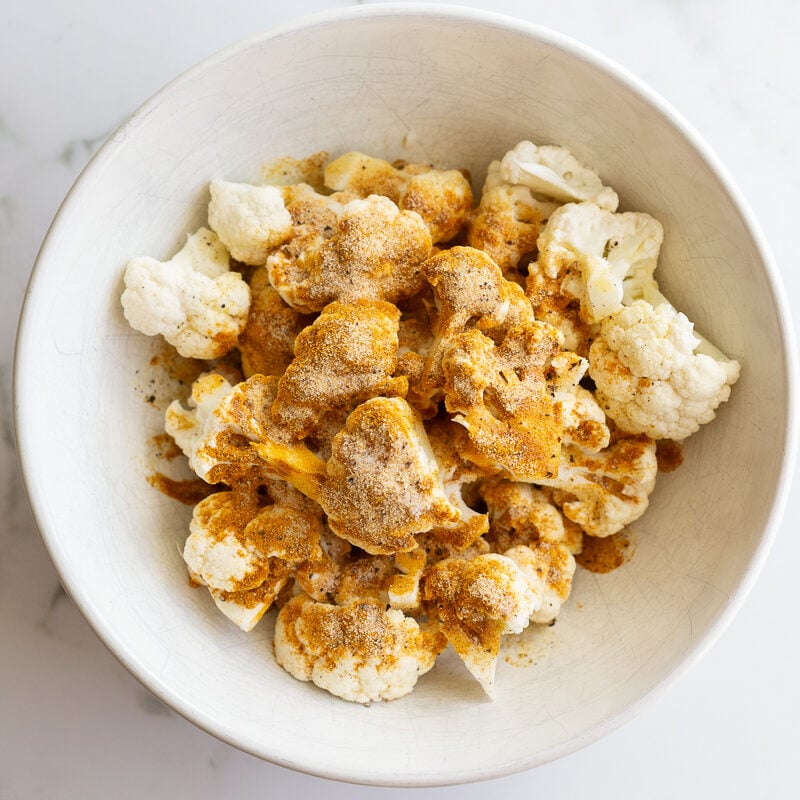
In a large bowl, toss the dried cauliflower florets with 2½ tablespoons of olive oil, 1 tablespoon of curry powder, 1½ teaspoons of garlic powder, ¼ teaspoon of fine sea salt, and freshly cracked black pepper to taste. Mix until the florets are evenly and thoroughly coated. The goal is consistent coverage so that every piece gets the full benefit of the spice mixture during roasting.
Spread the seasoned florets across a large baking sheet in a single layer, making sure that no pieces are overlapping and that there is a small amount of space between each floret. This is the second critical technique point: overcrowding the pan causes the cauliflower to steam rather than roast, producing soft, pale florets instead of the golden, crispy-edged result you are after. If your cauliflower head is large, it is worth using two baking sheets rather than cramming everything onto one.
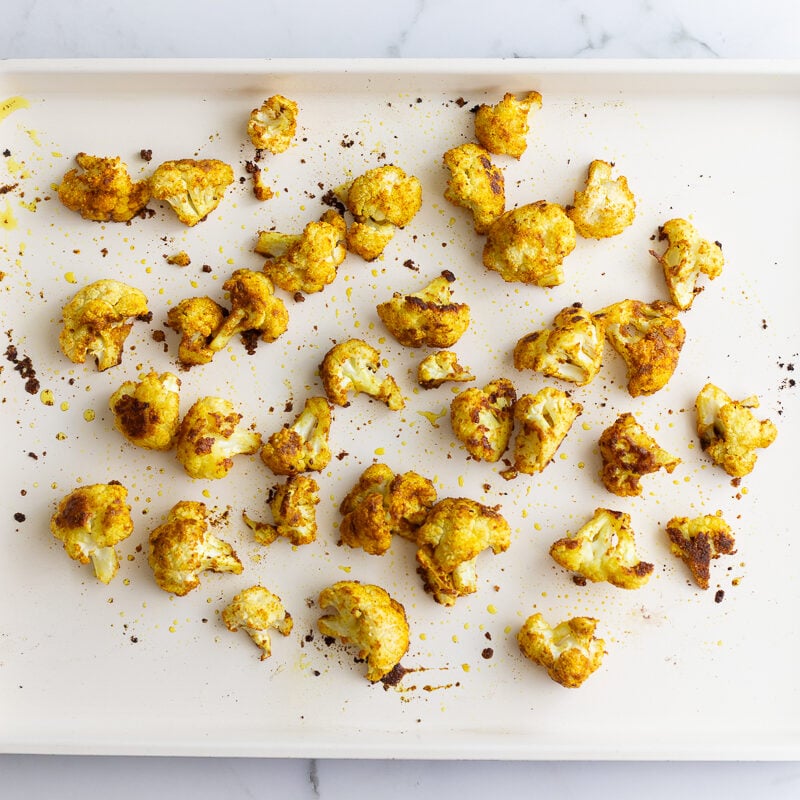
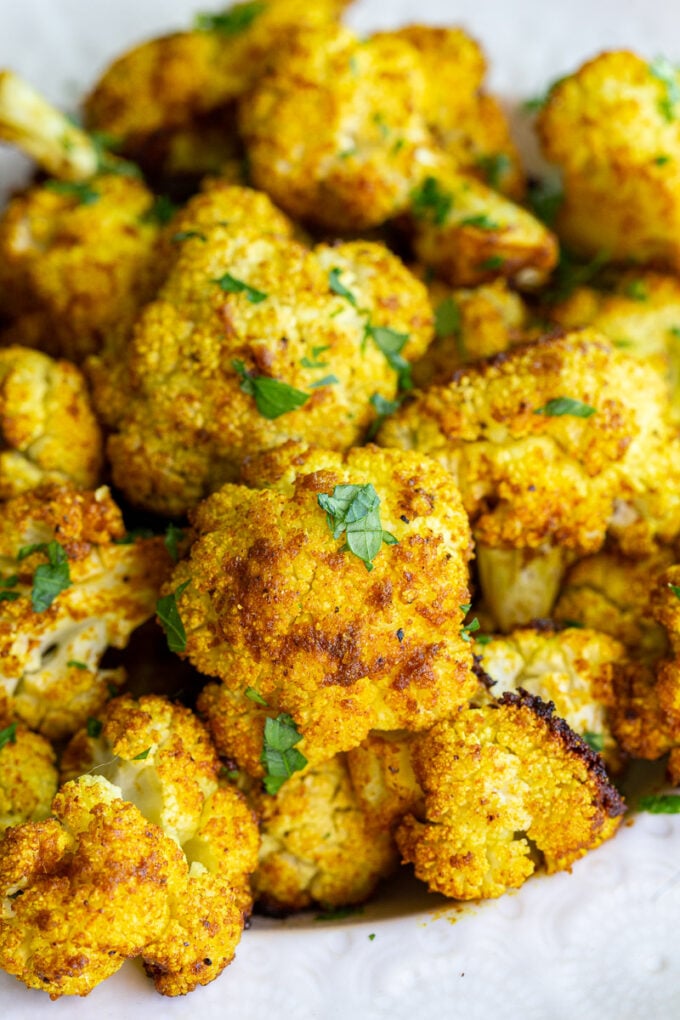
Roast for 15 minutes, then remove the pan from the oven and toss the florets to expose the other sides to the heat. Return the pan to the oven for an additional 10 to 15 minutes, watching for the cauliflower to develop caramelized, slightly charred edges while remaining tender in the center. The total roasting time of 25 to 30 minutes is where this dish finds its character — those darker, charred edges are not a problem to avoid but a feature to pursue. They concentrate the flavor of the curry spices and add a textural contrast to the tender interior that makes the dish genuinely compelling rather than simply acceptable.
Serve immediately with a scattering of fresh cilantro or parsley and a squeeze of lemon juice over the top. The lemon does important work at the finish, brightening the warm, earthy spice notes and adding a dimension of freshness that makes the whole dish feel alive rather than heavy.
Nutrition, Sustainability, and Why This Dish Checks Every Box
A serving of this roasted curried cauliflower comes in at approximately 81 calories, with 6 grams of carbohydrates, 2 grams of protein, 6 grams of fat, and 2 grams of fiber. It is naturally vegan, gluten-free, dairy-free, and low in carbohydrates — which means it fits into an extraordinarily wide range of dietary frameworks without modification. For households that include people with varying dietary needs or restrictions, it is the kind of dish that simply works for everyone at the table.
From a nutritional standpoint, cauliflower is an excellent source of vitamin C — a single serving of this recipe provides 46 milligrams, a meaningful contribution toward daily needs — along with potassium, fiber, and a range of antioxidants associated with reduced inflammation and long-term health benefits. The curry spices add their own nutritional dimension: turmeric, a core component of most curry powder blends, has been studied extensively for its anti-inflammatory properties, and the combination of warming spices in a good curry blend adds both flavor and functional value to the dish.
The broader sustainability picture is equally compelling. A meal built around a single head of cauliflower and a handful of pantry spices generates minimal food waste, requires no specialized or imported ingredients, costs a fraction of what a comparable meat-centered meal would, and can be prepared in a standard home kitchen without special equipment. The ingredients are stable and long-lasting — dried spices and olive oil keep for months — which means that the pantry footprint of maintaining the ability to make this dish at any time is extremely small.
Serving Ideas That Expand This Dish Into a Full Meal
Roasted curried cauliflower is versatile enough to function as a side dish, a component in a larger meal, or — with the right additions — the centerpiece of a satisfying plant-based dinner. As a side, it pairs naturally with any grain-based dish, from simple brown rice or quinoa to more elaborate grain bowls built with roasted vegetables, legumes, and tahini dressing. It works equally well alongside a warming lentil soup or dal, where the crispy cauliflower florets add textural contrast to the smooth, spiced broth.
In wraps or flatbreads, roasted curried cauliflower becomes a filling protein-forward component when combined with chickpeas, a smear of hummus, and fresh greens. In salads, the warm florets can be served over a bed of arugula or spinach with a lemon-tahini dressing, turning a simple green salad into a substantial and satisfying meal. The dish also holds up well as a topping for roasted sweet potatoes, where the sweet earthiness of the potato and the warm spice of the cauliflower create a combination that is nutritionally complete and genuinely delicious.
Storing and Reheating Without Waste
Leftover roasted curried cauliflower keeps well in an airtight container in the refrigerator for up to four days, which makes it an excellent candidate for batch cooking and meal prep. The key to maintaining quality through storage and reheating is to avoid the microwave if texture matters to you — microwaving will warm the cauliflower but will not restore the crispy edges that make the fresh version so enjoyable. For best results, reheat in a 400-degree oven or an air fryer for five to ten minutes, which brings back the caramelized edges and revives the dish close to its original form.
Frozen leftovers will keep for up to two months, though the texture after thawing will be noticeably softer than the fresh-roasted result. For those who prioritize texture, refrigerator storage and reheating within four days is the better approach. A skillet reheat with a small amount of oil over medium-high heat is another excellent option that produces crispy, warmed-through florets with minimal effort.
A Recipe That Reflects What Sustainable Eating Can Be
Ingredients
- 1 medium/ large head of cauliflower cut into bite sized pieces
- 2 ½ tablespoons olive oil
- 1 tablespoon curry powder
- 1 ½ teaspoons garlic powder
- ¼ teaspoon fine sea salt
- Freshly cracked black pepper to taste
- Optional for garnish: fresh herbs and a lemon wedge
Instructions
- Preheat the oven to 400 degrees F.
- In a large bowl, toss the cauliflower together with the olive oil, curry powder, garlic powder, sea salt and black pepper. Mix until fully combined and the cauliflower is pretty evenly coated.
- Spread the cauliflower out evenly on a large baking tray so that it’s not overlapping at all. Bake for 15 minutes, toss, and bake for an additional 10-15 minutes or until the cauliflower is beginning to char a little and is tender in the middle.
- Serve with a sprinkle of fresh herbs (cilantro is delicious on this!) and a squeeze of lemon juice. ENJOY!
Video
Notes
Storage Instructions – Store leftover curried cauliflower in an airtight container in the refrigerator for up to 4 days. Reheat in a 400°F oven or air fryer for 5-10 minutes to help restore its crispy edges. While you can freeze leftovers for up to 2 months, the texture will be softer after thawing.
To reheat – Simply heat a bit of oil in a skillet, add the cauliflower, and cook over medium high heat until warmed through and crisp. You can also warm back in the oven at 350 degrees until warmed through, or crisp up in the air fryer for 5-10 minutes. Microwaving is always an option, but will only heat it up, not re-crisp it.
Nutrition
Calories: 81kcal | Carbohydrates: 6g | Protein: 2g | Fat: 6g | Saturated Fat: 1g | Polyunsaturated Fat: 1g | Monounsaturated Fat: 4g | Sodium: 127mg | Potassium: 311mg | Fiber: 2g | Sugar: 2g | Vitamin A: 10IU | Vitamin C: 46mg | Calcium: 27mg | Iron: 1mg
The Roasted Curried Cauliflower is a Food with Feeling Recipe.
The goal at Sustainable Action Now has never been to make sustainable eating feel difficult, expensive, or joyless. The goal is to demonstrate, consistently and with real recipes and real information, that the most environmentally responsible food choices are also often the most delicious, the most economical, and the most nourishing. Roasted curried cauliflower is a near-perfect illustration of that argument. It costs very little to make, it produces almost no waste, it fits into a plant-forward diet that carries genuine environmental benefits, and it tastes good enough that people who have no particular interest in sustainability will want to make it again regardless.
That is what sustainable cooking looks like when it is done right — not a sacrifice, not a statement, but simply a great dish that happens to be good for the planet too.