When heavy rain pounds Los Angeles, most headlines focus on flash floods, traffic paralysis, mudslides, and overwhelmed infrastructure. But beneath the sirens and storm warnings, a quieter crisis unfolds inside one of the city’s most dangerous corridors: the L.A. River.
or animals trapped in its steep concrete channels, rising stormwater is not just a hazard—it is often a death sentence.
At Sustainable Action Now, we believe environmental stewardship includes protecting the most vulnerable lives caught in human-made systems.
That is why today’s feature in our Rescue Network spotlight is dedicated to the relentless, life-saving work of Hope For Paws—a frontline animal rescue organization operating in one of the most treacherous urban environments in America.
And right now, during another season of heavy rain in Los Angeles, their mission could not be more urgent.
The Hidden Danger of the Los Angeles River
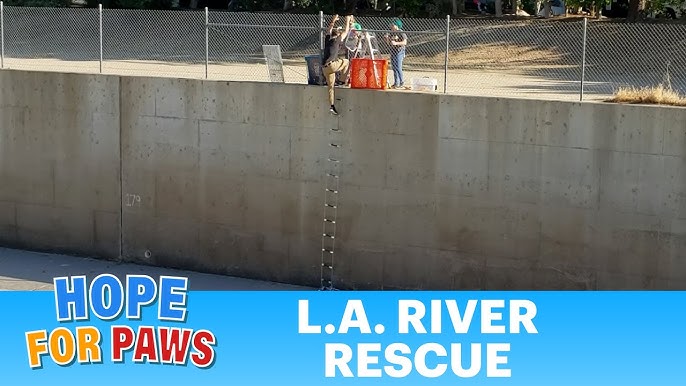
The Los Angeles River is an engineered flood-control channel—lined with concrete, steep embankments, and fast-moving water when storms hit. It was designed to move water quickly out of the city.
It was not designed for wildlife survival.
Yet animals end up there constantly:
- Stray and abandoned dogs
- Feral and displaced cats
- Raccoons and squirrels navigating urban corridors
- Injured wildlife seeking water
- Even turtles and other reptiles washed in during storms
During dry periods, animals may climb down searching for shelter or water. But once rain arrives, the river transforms into a rushing torrent with virtually no escape routes. The walls are too steep. The currents are too strong. Debris becomes deadly projectiles.
What looks like a drainage system to us becomes a trap.
And this is where Hope For Paws steps in.
Rescue in the Most Dangerous Conditions
Thanks to your support of Hope For Paws, animals who would otherwise drown are being pulled to safety.
Their teams descend into the river channel during and after storms—often navigating slippery embankments, unstable debris, and fast-moving water. They rescue:
- Dogs clinging to concrete ledges
- Cats trapped behind fencing or in storm drains
- A raccoon stranded without an exit
- A squirrel unable to scale the vertical walls
- Even a turtle swept into a deadly flow
Each rescue requires tactical planning, calm precision, and deep compassion.
This is not simple animal control work. It is technical rescue.
The organization’s work in the L.A. River represents a broader environmental truth: when we reshape ecosystems for human infrastructure, we inherit responsibility for the unintended consequences.
Why Urban Rivers Become Wildlife Death Traps
Urban waterways like the L.A. River are engineered for speed, not ecological balance. Key structural risks include:
- Sheer concrete embankments that prevent animals from climbing out
- High-velocity stormwater surges that sweep animals downstream
- Debris accumulation that causes injury and entrapment
- Limited vegetation for refuge or stabilization
- Noise and human disturbance that disorients wildlife
Climate change intensifies the problem. Stronger storm systems and unpredictable rainfall patterns increase flash flood events, meaning rescue teams face escalating urgency.
The intersection of infrastructure, climate volatility, and urban wildlife displacement creates a perfect storm.
And it is happening repeatedly.
The Rescue Network: Why Organizations Like Hope For Paws Matter
Sustainable Action Now’s Rescue Network category exists for this very reason—to elevate organizations that operate where systems fail.
Hope For Paws is more than a rescue group. It is:
- A rapid-response emergency team
- A wildlife triage unit
- A rehabilitation connector
- A foster and adoption facilitator
- A public awareness engine
Their rescues from the L.A. River are only one piece of a much larger mission: saving animals from abandonment, neglect, and environmental danger across Los Angeles County.
And during heavy rains, their role becomes critical infrastructure in its own right.
The Environmental Ethics of Rescue
Animal rescue is often framed as compassion work. It is that—but it is also environmental justice.
When animals are displaced into human-built danger zones like the L.A. River, it raises larger systemic questions:
- How do cities integrate wildlife corridors into flood infrastructure?
- Can river revitalization projects include escape pathways for animals?
- What role does community awareness play in preventing abandonment?
- How can emergency preparedness plans incorporate animal response?
Urban sustainability cannot be separated from animal welfare.
Protecting ecosystems means protecting every life forced to survive within them.
Real Impact: Dogs, Cats, Wildlife, and More
Because of your support, rescues from the L.A. River have included:
- Frightened dogs abandoned and left to fend for themselves
- Cats trapped with no vertical escape
- A raccoon immobilized by exhaustion
- A squirrel unable to scale concrete
- Even a turtle caught in flood flow
Each animal represents a story that did not end in tragedy.
Each rescue is proof that intervention works.
Each donation, membership, and share fuels the next lifesaving mission.
Why Membership Matters Now
If you are not yet a member of Hope For Paws, this is the moment to act.
Membership funding directly supports:
- Emergency rescue deployments
- Veterinary treatment and rehabilitation
- Transportation and recovery equipment
- Foster coordination and adoption placement
- Public education campaigns
Storm season does not pause. Neither does abandonment. Neither do emergencies.
But with sustained community support, rescue teams can respond immediately—before rising water turns survivable situations into irreversible loss.
From Concrete Channels to Second Chances
The most powerful image is not the flooded river.
It is the aftermath:
- A soaked dog wrapped in a blanket
- A rescued cat cradled safely in a volunteer’s arms
- A rehabilitated animal released into a secure environment
- A once-abandoned life now heading toward adoption
This is what sustainable compassion looks like.
It is not abstract. It is immediate, tangible, and measurable.
Sustainable Action Now Call to Action
The heavy rains in Los Angeles are a reminder that environmental crises do not always look like melting ice caps or distant wildfires.
Sometimes they look like a concrete channel filling with water.
Sometimes they look like a terrified animal with nowhere to climb.
Today, we extend our deepest gratitude to those who already support Hope For Paws. Your commitment is saving lives in real time.
If you have not yet joined, now is the time.
Stand with the rescuers.
Stand with the animals.
Stand for a future where infrastructure and compassion can coexist.
Because when the rain falls in Los Angeles, rescue is not optional.
It is urgent.