
The fashion industry is undergoing a profound ethical reset. Once considered symbols of luxury and status, fur coats, leather jackets, and shearling-lined outerwear are now at the center of a global debate about animal welfare, environmental sustainability, and consumer responsibility.
At Sustainable Action Now (SAN), we believe informed choices drive meaningful change. From closet clean-outs to conscious purchasing, this moment represents more than a trend shift—it marks a cultural transformation.
What to Do With an Old Fur Coat
Have a fur coat sitting in your closet?
With fur rapidly falling out of favor across major fashion houses, retailers, and consumers, thousands of people are confronting the same question: what now?
On Brief Recess, PETA’s Ashley Byrne from People for the Ethical Treatment of Animals (PETA) explains that donating unused fur garments can provide warmth to refugees and comfort to orphaned wildlife—rather than allowing those garments to gather dust or head to landfills.
For decades, fur coats were marketed as heirlooms. But investigations into the fur industry have revealed a darker reality: animals confined to cramped wire cages, pacing from stress, and ultimately killed solely for their pelts. Foxes, minks, raccoon dogs, and other species are treated as inventory—commodities measured in yield and profit.
Donating an old fur coat does not erase the suffering tied to its origin. However, it does redirect its use toward humanitarian and wildlife support efforts rather than sustaining demand for new production. Repurposing existing materials aligns with circular economy principles—extending product life and minimizing waste.
With luxury brands increasingly going fur-free and public sentiment shifting decisively against animal-derived fashion, cleaning out that closet may be both a symbolic and practical step toward ethical alignment.
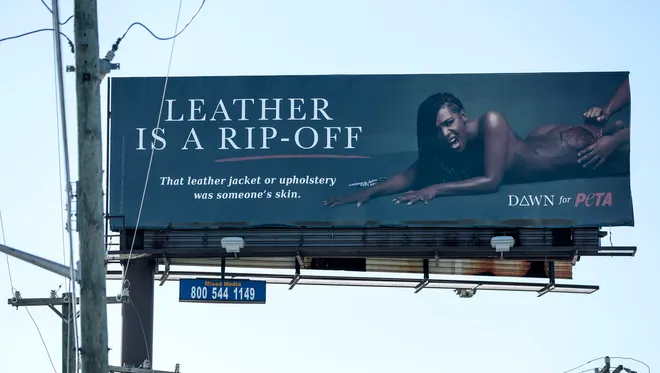
Was Your Leather Jacket Worth This?
A recent street demonstration amplified that very question.
@JamiesCornershow partnered with PETA India for a public awareness action confronting passersby with a powerful truth: leather does not come from a product—it comes from someone.
The demonstration emphasized the often-sanitized language surrounding leather. Industry marketing frames it as a “byproduct,” but leather production is financially significant in its own right. Globally, the hide trade contributes substantial revenue to animal agriculture systems.
Without demand for leather, the economics of industrial livestock operations would look markedly different.
The protest’s core message was simple: if the reality of slaughter makes you uncomfortable, alternatives exist.
Modern vegan leather options—ranging from plant-based materials like pineapple fiber and mushroom mycelium to innovative bio-fabricated textiles—are redefining performance, durability, and style. While synthetic materials carry their own environmental challenges, technological advances are rapidly improving sustainability metrics.The choice facing consumers is no longer one of aesthetics. It is one of values.
What Happens to Animals in the Fur Industry
Investigations into fur farms across multiple countries have consistently documented severe welfare concerns:
- Confinement in small wire cages
- Repetitive stress behaviors such as pacing and self-mutilation
- Inhumane killing methods designed to preserve pelts
- Lack of environmental enrichment for semi-aquatic and wide-ranging species
Behind every fur trim is a life taken for clothing.
To the fur industry, animals are production units. Their biology is optimized for yield; their suffering is externalized from the final retail experience. This systemic commodification stands in direct conflict with growing public awareness around animal sentience and welfare.
If that reality does not sit right, the market already offers alternatives. Faux fur, plant-based textiles, and high-performance insulated fabrics deliver warmth without perpetuating confinement and slaughter.
Shearling: The Ethical Fault Line in Animal Fashion
Few materials illustrate the ethical complexity of fashion more starkly than shearling.
Shearling is not simply wool. It is the hide of a recently shorn lamb or yearling sheep that has been tanned with the wool still attached. One side is sueded leather; the other remains dense fleece. Unlike standard wool—which involves shearing—shearling production requires slaughter because the skin itself becomes the garment.
The Animal Welfare Perspective
From an animal rights standpoint, the concerns are clear:
- Direct slaughter is required for production
- Genuine shearling is often sourced from young lambs
- Industrial sheep farming has documented instances of overcrowding, rough handling, and painful procedures such as mulesing
Organizations such as People for the Ethical Treatment of Animals (PETA) argue that labeling shearling as “natural” obscures the reality that it is a skin-on product derived from an animal’s death.
For critics, the ethical calculation is straightforward: if the material requires killing a young animal for fashion, it fails the moral test.
The Sustainability Argument
Proponents counter with environmental and durability arguments:
- Many shearling hides are considered byproducts of the meat industry
- As a natural fiber, shearling is biodegradable
- High-quality shearling coats can last 15 to 30 years
- Longevity may reduce the fast-fashion replacement cycle
This perspective prioritizes lifecycle analysis. Synthetic “faux shearling,” typically made from polyester or acrylic (often called Sherpa), relies on petroleum-based plastics. These materials shed microplastics during washing and can persist in landfills for centuries.
Here, the ethical debate shifts from animal welfare to environmental footprint. Methane emissions from sheep farming, chemical-intensive tanning processes, and water pollution complicate claims of sustainability. Meanwhile, fossil-fuel-derived synthetics carry climate and pollution burdens of their own.
The result is not a simple binary but a tension between two value systems: harm to animals versus harm to ecosystems.
Real vs. Faux Shearling: A Clear Comparison
Real Shearling
- Source: Lamb or sheep hide
- Warmth: Excellent natural insulation and breathability
- Ethics: Requires animal slaughter
- Environmental Impact: Biodegradable but associated with methane emissions and tanning chemicals
Faux Shearling (Sherpa)
- Source: Polyester or acrylic
- Warmth: Moderate; can trap heat
- Ethics: Animal-free
- Environmental Impact: Fossil-fuel-based, sheds microplastics, non-biodegradable
There is no perfect material in a resource-intensive global economy. But transparency allows consumers to align purchases with their ethical priorities.
How to Choose More Responsibly
For those navigating these complexities, several pathways reduce harm:
1. Buy Secondhand
Vintage shearling or leather is widely considered the most ethically defensible option within animal-derived categories. It utilizes existing materials without generating new demand.
2. Look for Certifications
- Responsible Wool Standard (RWS)
- Leather Working Group (LWG) gold ratings
These certifications aim to verify improved animal welfare practices and lower-impact tanning methods.
3. Seek Vegetable Tanning
Vegetable-tanned leather uses plant-based tannins rather than chromium, reducing toxic runoff and water contamination.
4. Explore Plant-Based Innovation
Materials derived from mushrooms, apples, cactus, and other plant sources are advancing rapidly in durability and aesthetics. Supporting these alternatives accelerates industry transition.
The Cultural Shift Is Already Underway
Fashion does not exist in isolation. It reflects social consciousness. Just as the fur industry has seen significant contraction due to public pressure and brand commitments, leather and shearling are now entering deeper scrutiny.
Consumers are asking harder questions:
- Who was harmed for this garment?
- What ecosystems were affected?
- How long will this item truly last?
- What message does my purchase send?
At SAN, we recognize that sustainable action is not about perfection. It is about trajectory. Each decision—donating an old fur coat, choosing a vegan jacket, buying vintage, or researching certifications—moves the needle.
The next time you see “shearling” on a tag, remember what it represents: the skin of a young animal with their wool still attached.
The next time you consider a leather purchase, ask whether innovation has already provided a better path.
And if there is a fur coat sitting in your closet, consider giving it a second life that serves compassion rather than fashion.
The industry is changing. The question is whether we change with it.