

There is a major difference between wanting to live more sustainably and actually being able to sustain it in everyday life. That gap is where most people give up. The reality is that climate-conscious living often collapses under the pressure of time, exhaustion, grocery costs, decision fatigue, and the constant feeling that healthy eating requires a level of preparation most people simply do not have during a busy week.
That is exactly why practical, approachable plant-based meal planning matters right now more than ever.
This week’s lineup from Sustainable Action Now Recipes is not built around unrealistic wellness culture, expensive specialty ingredients, or complicated chef-level techniques. Instead, it delivers something far more valuable: a genuinely achievable blueprint for eating sustainably during a real workweek while still making meals that feel comforting, flavorful, satisfying, and exciting.
The growing shift toward plant-forward cooking is no longer a niche movement confined to wellness influencers or environmental activists. It has become part of a broader cultural reevaluation surrounding food systems, grocery spending, sustainability, public health, and climate impact. Consumers are increasingly recognizing that the meals they prepare every day carry enormous implications beyond the dinner table. Food production remains one of the largest contributors to global emissions, land use pressure, water consumption, and resource depletion. At the same time, people are also searching for affordability, convenience, and healthier long-term eating habits.
The challenge has always been accessibility.
Most people are not looking to spend four hours meal prepping every Sunday. They are looking for meals that work after a long day. They want recipes that can survive leftovers, adapt to changing schedules, and help reduce food waste rather than create more of it. They want ingredients that can stretch across multiple meals instead of sitting unused in the back of the refrigerator until they are thrown away a week later.
This week’s Sustainable Action Now meal plan succeeds because it understands all of those realities.
The lineup combines comfort food, globally inspired flavors, efficient preparation strategies, and highly adaptable ingredients into a weeklong structure that actually feels manageable. More importantly, it demonstrates how sustainable cooking can still feel indulgent, hearty, and deeply satisfying without relying on excessive processing or waste-heavy meal construction.
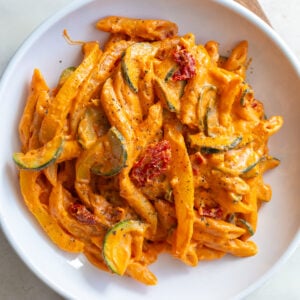
Monday begins with a Creamy Tomato Pasta that immediately establishes the tone for the week: accessible comfort food elevated through smart plant-based cooking techniques. Vegan pasta recipes have evolved dramatically in recent years, moving beyond simple substitutions and into entirely new territory where texture and depth are developed through whole-food ingredients rather than imitation products. In this case, soaked cashews create a rich, velvety sauce capable of delivering the kind of creaminess typically associated with dairy-heavy pasta dishes.
What makes this recipe especially effective from a sustainability standpoint is its flexibility. Bell peppers, zucchini, frozen vegetables, leftover greens, or nearly any extra produce lingering in the refrigerator can be incorporated without compromising the dish itself. That adaptability is one of the most overlooked aspects of sustainable cooking. Recipes that allow flexibility naturally reduce household food waste because they encourage people to use what they already have instead of buying entirely new ingredient lists every night.
The one-pot structure also matters. Fewer dishes mean lower water use, less cleanup, and a lower barrier to actually cooking at home during the week. These details may seem small individually, but collectively they determine whether people maintain long-term habits or abandon them after a few exhausting attempts.
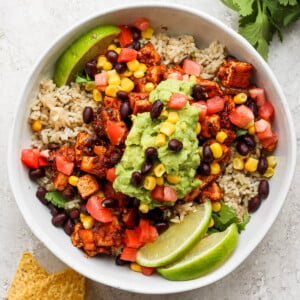
Tuesday’s Chipotle Sofritas Bowls continue the week with one of the strongest examples of modern plant-based meal efficiency currently dominating home cooking culture. Sofritas-style tofu has become increasingly popular because it solves one of the biggest misconceptions surrounding plant-based eating: the idea that it lacks bold flavor or substantial texture.
The smoky chipotle peppers, adobo sauce, tomato paste, spices, and browned tofu create a deeply savory meal capable of functioning across multiple formats throughout the week. Bowls become tacos. Tacos become burritos. Burritos become loaded salads or rice bowls. That kind of versatility is essential in sustainable meal planning because repetition without monotony is one of the keys to reducing unnecessary consumption.
There is also a larger cultural shift happening around tofu itself. Once treated as a niche substitute ingredient, tofu has increasingly become appreciated on its own culinary merits. Its efficiency as a protein source, lower environmental footprint, affordability, and adaptability have made it central to many climate-conscious food conversations. Recipes like this one demonstrate exactly why.
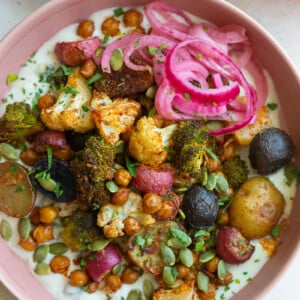
Wednesday’s Roasted Veggie Tzatziki Bowls bring another critical dimension into the weekly structure: balance. Sustainable cooking cannot survive long-term if every meal feels heavy, overly processed, or nutritionally one-dimensional. These bowls introduce brightness, texture, freshness, and Mediterranean-inspired layering while still remaining practical for meal prep.
Roasted cauliflower, broccoli, potatoes, and chickpeas create a hearty base, while tzatziki adds cooling contrast and acidity that completely transforms the dish. The beauty of these bowls lies in how easily they scale. They work for lunches, dinners, side dishes, or grab-and-go weekday meals. They also encourage heavy vegetable consumption without making vegetables feel like an obligation.
That distinction matters.
One of the biggest failures of health-oriented food culture has been its tendency to frame vegetables as punishment or restriction. Successful sustainable eating does the opposite. It makes vegetables craveable. It builds flavor first. The sustainability benefits become a byproduct of genuinely enjoyable cooking rather than a guilt-driven sacrifice.
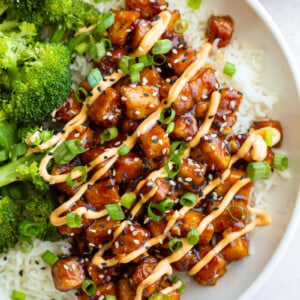
Thursday’s Honey Garlic Tofu with broccoli and grains may ultimately become the sleeper hit of the week because it taps directly into what busy households actually need most: speed.
The combination of crispy tofu, garlic, soy sauce, honey, and rice creates a dinner that feels like takeout while remaining inexpensive and highly meal-prep friendly. The sauce can be prepared ahead of time, tofu can be pressed and cubed in advance, and the entire dinner comes together rapidly during the evening rush.
This is where sustainable eating often wins or loses people permanently.
Convenience drives modern food systems. If climate-conscious meals cannot compete with the speed and comfort of takeout, many households eventually revert back to less sustainable habits simply out of exhaustion. Recipes like this help close that gap by delivering strong flavor payoff with minimal friction.
Friday’s Vegan Meatballs with spaghetti close the week by revisiting one of the most recognizable comfort-food formats in modern home cooking. Plant-based meatballs have improved dramatically over the last several years as cooks move beyond highly processed commercial alternatives and back toward ingredient-driven approaches built around mushrooms, rice, aromatics, legumes, and seasoning depth.
The freezer-friendly nature of this recipe also deserves attention because freezer-based meal prep is one of the most powerful tools in reducing food waste and improving long-term cooking consistency. When meals can be prepared in batches and stored effectively, households waste less food, spend less money, and rely less on emergency convenience purchases throughout the week.
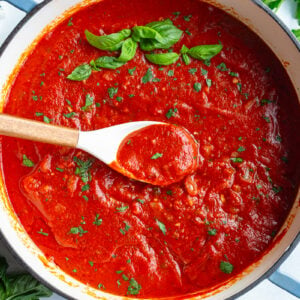
Paired with a quick homemade marinara sauce ready in roughly twenty minutes, the meal reinforces another important reality about sustainable cooking: simplicity is often more effective than complexity. A well-executed tomato sauce built from pantry staples can outperform many overcomplicated recipes while carrying a significantly lower environmental and financial cost.
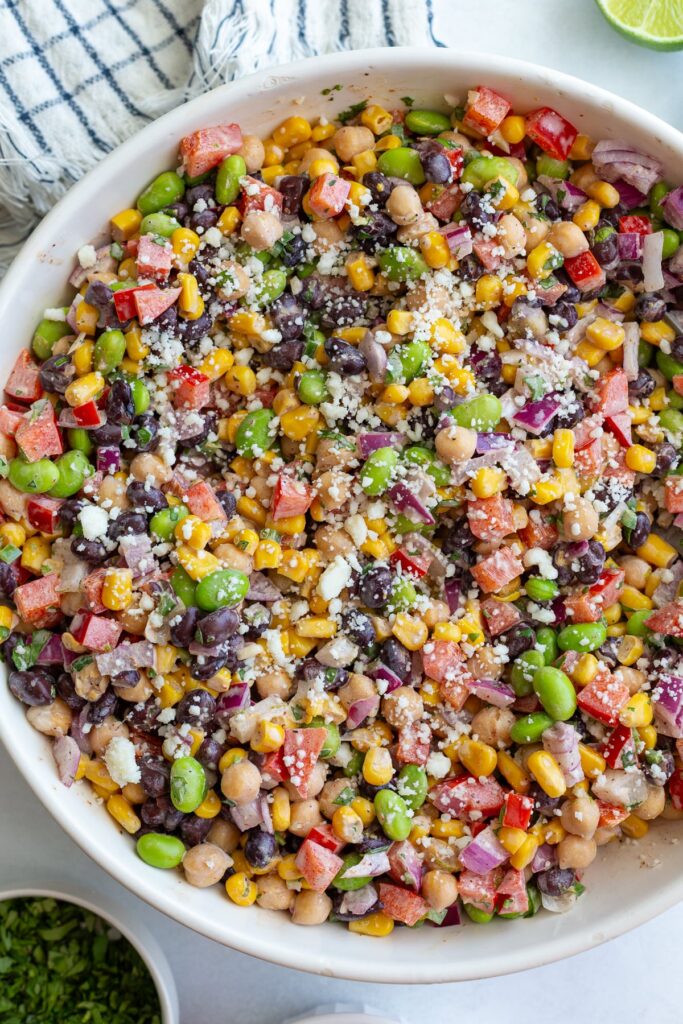
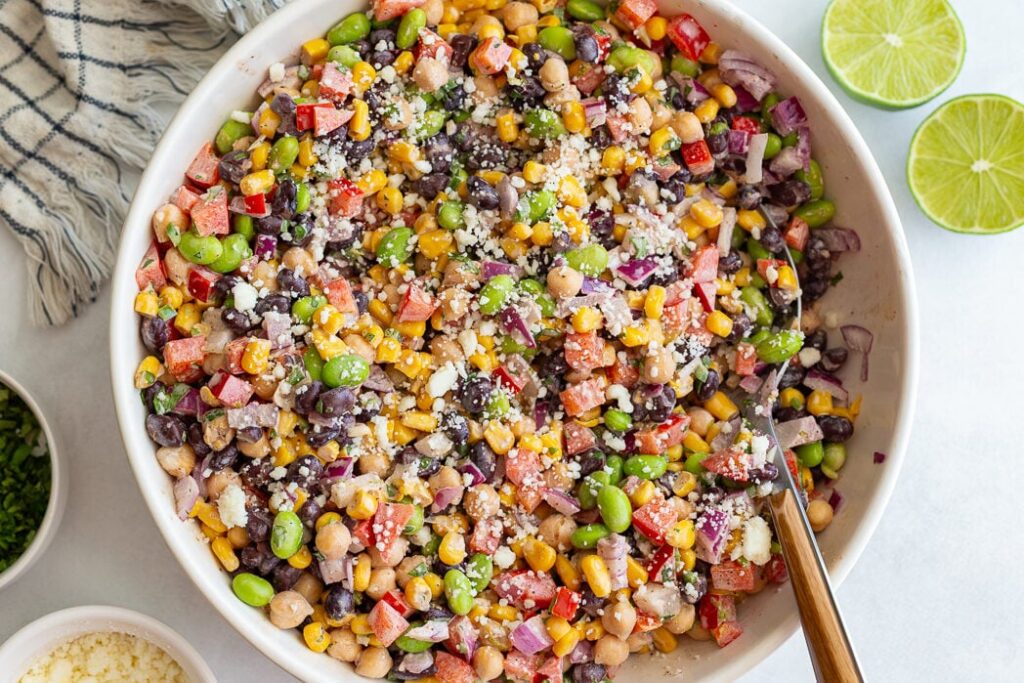
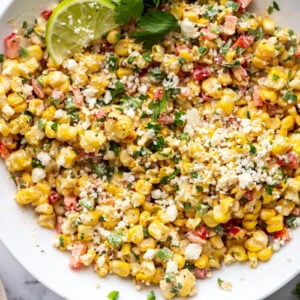
Then comes the bonus addition that may ultimately define the week’s lineup from a seasonal standpoint: Mexican Street Corn Salad.
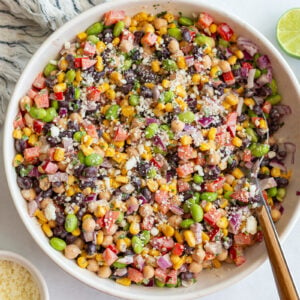
Esquites-style corn salad represents everything strong summer-inspired cooking should be. Smoky, creamy, acidic, bright, salty, and incredibly adaptable, it functions equally well as a side dish, topping, picnic contribution, or standalone lunch. Using canned fire-roasted corn also removes one of the common barriers associated with scratch cooking: prep time.
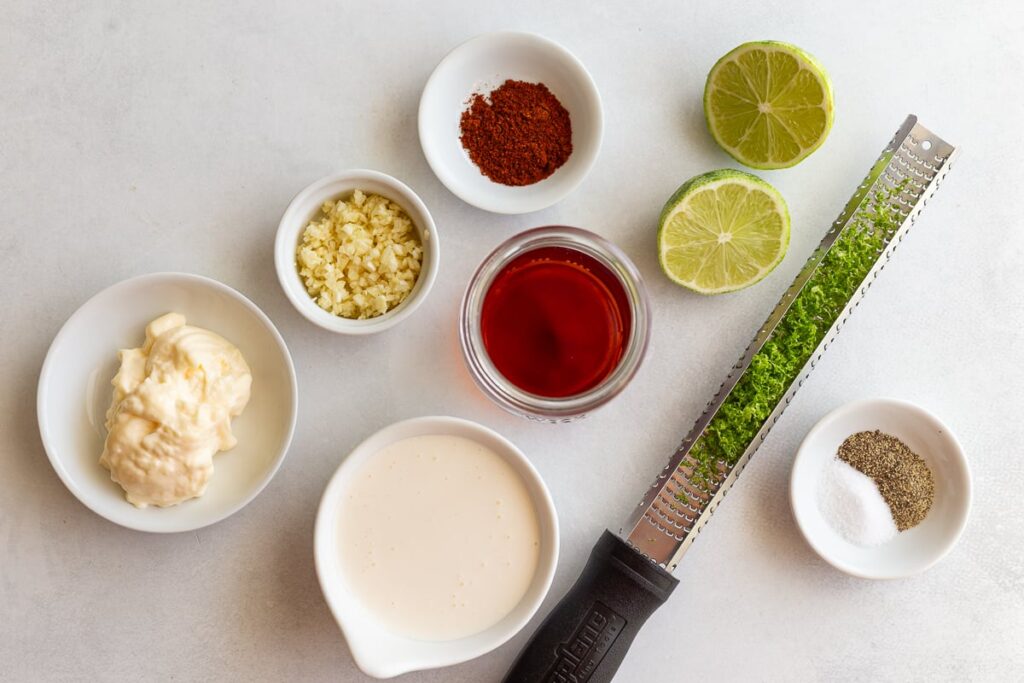
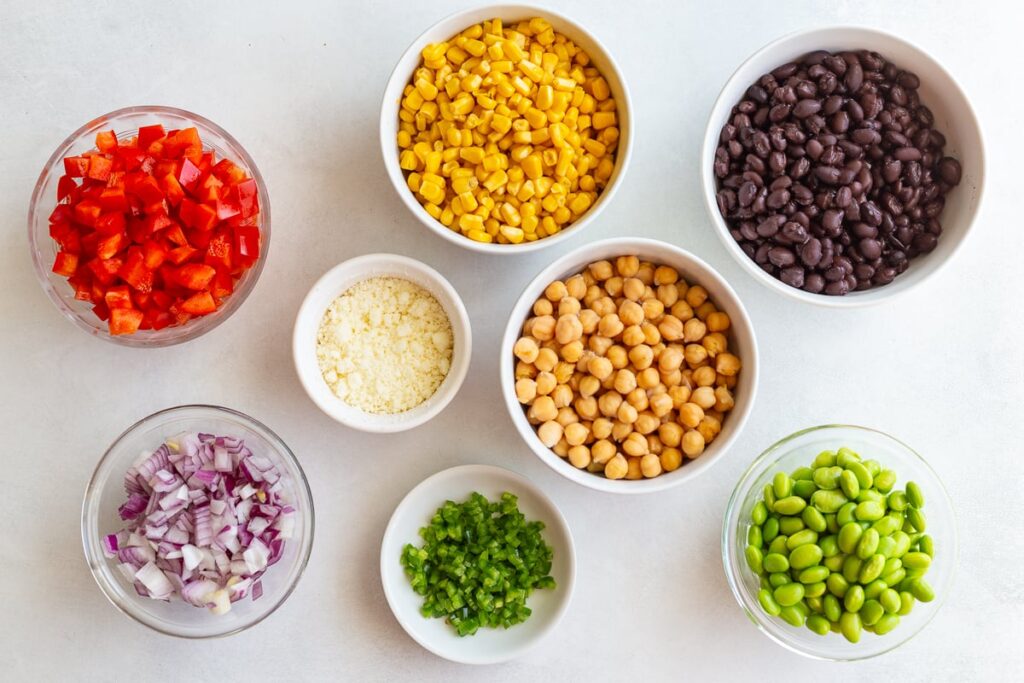
The flavor profile deepens as it sits, making it especially valuable for meal prep and gatherings. Lime, cotija cheese, crema, cilantro, and spice create layers that feel indulgent while remaining remarkably simple to assemble. It is exactly the kind of recipe that proves sustainable food does not need to feel restrictive or joyless.
What makes this entire weekly structure especially compelling is not merely the recipes themselves, but the larger philosophy behind them.
The meal prep notes recognize real-world kitchen behavior. Grocery shopping and prep schedules are addressed honestly. Time-sensitive ingredients are identified clearly. Components are separated in ways that simplify weekday cooking. These are not small details. They are the difference between aspirational content and genuinely useful content.
There is also a deeper sustainability lesson embedded throughout the entire plan: environmental responsibility becomes far more achievable when systems are simplified rather than perfected.
People do not need to become flawless zero-waste chefs overnight. They need frameworks that help them cook more often, waste less food, rely less on excessive packaging and takeout infrastructure, and feel empowered rather than overwhelmed in the kitchen.
That is where this week’s Sustainable Action Now meal plan succeeds most effectively.
It turns climate-conscious cooking into something grounded, practical, flexible, and repeatable.
And that may ultimately be the future of sustainable food culture itself.
Not perfection.
Not purity.
Not performative wellness.
Just better systems, smarter preparation, stronger flavor, and meals people genuinely want to keep making week after week.
The post Meal Plan are Food with Feeling Recipes