
The global animal welfare movement is no longer operating quietly in the background of environmental activism or humanitarian policy discussions. In 2026, it has become one of the defining moral, political, environmental, and cultural conversations of the modern era. What was once dismissed by critics as a niche concern has now evolved into an international reckoning over the treatment of animals across industrial agriculture, fashion supply chains, marine entertainment parks, laboratory testing facilities, commercial breeding operations, and public policy itself.
That reality is exactly why the 2026 State of Animal Welfare Address has emerged as one of the most important global advocacy platforms of the year.
Known internationally through the hashtag #SOAWA, the State of Animal Welfare Address is not structured like a traditional government speech or ceremonial political event. It is something far broader in scope and far more urgent in tone. The annual address serves as a high-level global forum bringing together leaders from government, academia, civil society organizations, environmental advocates, rescue networks, and the animal welfare sector to examine where the world currently stands in its relationship with animals and where humanity must go next.
This year’s theme, “A South Africa that treats animals with respect, empathy and understanding,” reflects a conversation that extends well beyond one country’s borders. The issues being addressed are global in scale and increasingly impossible to separate from larger discussions surrounding climate change, ethics, public health, sustainability, consumer behavior, and legislative accountability.
More importantly, the 2026 address arrives during a period of enormous disruption and upheaval inside the global animal welfare movement itself.
Across multiple industries, systems that operated for decades with minimal scrutiny are now facing unprecedented public pressure. The conversation has shifted away from isolated incidents of cruelty and toward the structures that allow suffering to become normalized at industrial scale.
One of the most emotionally charged issues highlighted during the address centers on marine captivity and the continued confinement of beluga whales.
The message is direct and uncompromising: belugas do not belong in tanks.
These highly intelligent, deeply social animals evolved to travel vast distances through Arctic waters, navigating complex migratory environments and communicating within sophisticated social structures. In captivity, they are reduced to living inside shallow concrete enclosures designed primarily for human entertainment and commercial tourism. The contrast between the natural world and captivity has become increasingly impossible for the public to ignore.
The broader concern extends beyond belugas alone.
Dolphins, orcas, seals, walruses, sea lions, and numerous marine species remain trapped inside entertainment systems built around confinement. The 2026 State of Animal Welfare Address argues that society can no longer justify captivity under the language of education or conservation when the conditions themselves fundamentally strip animals of natural behavior, freedom of movement, and social autonomy.
This marks a major shift in the global conversation surrounding marine parks and animal entertainment venues.
The debate is no longer limited to training practices or isolated incidents. Instead, the legitimacy of captivity itself is being challenged. The address frames the issue not as a matter of improving enclosures, but of redefining humanity’s understanding of what wildlife should and should not be used for in modern society.
That same reevaluation is now reaching industries that once attempted to shield themselves behind sustainability branding and ethical marketing campaigns.
One of the most explosive sections of the 2026 address focuses on recent investigations into the global wool industry, particularly allegations of cruelty connected to supposedly “responsible” wool certification systems. Graphic documentation from supply chains tied to major fashion retailers has intensified scrutiny over how sheep are treated during industrial wool production. Footage and investigative reporting showing animals forcibly restrained, cut during shearing, and left bleeding have shattered the sanitized public image often associated with ethical textile marketing.
The State of Animal Welfare Address challenges the growing contradiction inside modern consumer culture where corporations aggressively promote sustainability while still relying on systems involving pain, fear, and suffering.
The message delivered through #SOAWA is clear: cruelty does not become ethical simply because it is rebranded.
That argument reflects a larger evolution inside the environmental movement itself.
For years, conversations surrounding sustainability often focused primarily on carbon emissions, plastic waste, renewable energy, or packaging reduction. In 2026, the definition of sustainability is expanding rapidly to include the direct treatment of animals inside the systems consumers financially support every day.
This convergence between environmental advocacy and animal welfare may ultimately become one of the defining activist shifts of the decade.
The address also devotes enormous attention to factory farming and industrial livestock production, which remain among the largest drivers of organized animal welfare campaigns worldwide. Intensive confinement systems involving pigs, poultry, dairy cows, and other livestock continue to dominate large-scale food production despite growing public discomfort with the realities behind industrial agriculture.
The 2026 State of Animal Welfare Address frames these practices not only as ethical failures, but also as major contributors to the global climate crisis.
Industrial livestock systems consume extraordinary amounts of land, water, grain, and energy while generating massive environmental pressures involving emissions, deforestation, pollution, and ecological degradation. According to the framework outlined in the address, meaningful climate action cannot fully succeed while industrial animal agriculture continues operating at its current scale.
This connection between diet and climate policy is becoming increasingly central to the broader sustainability movement.
Plant-based food innovation has accelerated dramatically over the past several years not simply because of changing consumer tastes, but because many people increasingly recognize that food systems sit directly at the intersection of environmental stability, public health, and animal suffering. Campaigns promoting plant-based alternatives are no longer being framed purely as lifestyle choices. They are increasingly presented as structural climate solutions.
Even cultural messaging campaigns are being woven into the broader movement.
The “A New Hope for Banthas” initiative released during May the 4th celebrations used humor and pop culture imagery to encourage audiences to reconsider dairy consumption and explore plant-based alternatives. While playful on the surface, the campaign reflects a sophisticated communications strategy emerging throughout the animal welfare movement: making ethical discussions more accessible, culturally relevant, and emotionally resonant for younger generations.
At the same time, the address refuses to soften the severity of ongoing cruelty inside animal testing systems.
One of the major themes throughout #SOAWA 2026 is the accelerating push toward Non-Animal Technologies, often referred to as NATs. These emerging scientific methods include advanced computer modeling, synthetic tissue systems, and organ-on-a-chip technologies designed to reduce or eliminate reliance on animal experimentation.
For decades, mice, dogs, primates, rabbits, and other animals have been subjected to invasive laboratory testing in the name of scientific advancement. The address argues that technological progress now makes many of these practices increasingly unnecessary.
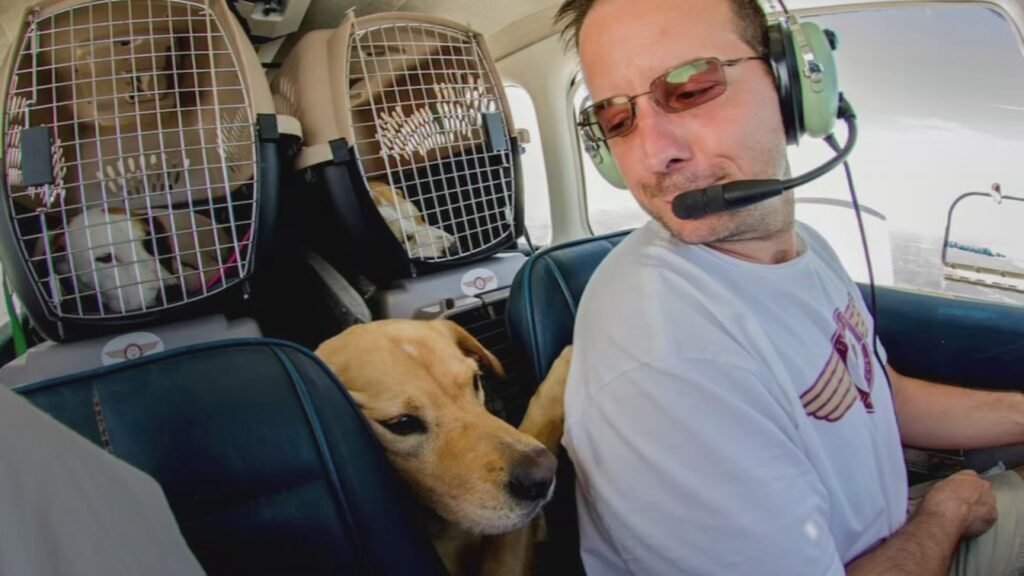
That conversation became especially emotional this year following the rescue of 1,500 beagles from Ridglan Farms, a facility associated with laboratory breeding operations. The rescue effort, supported by multiple organizations, advocates, and public supporters, became one of the defining animal welfare stories of 2026.
The images surrounding the rescue campaign carried enormous symbolic weight.
Beagles are widely recognized as affectionate companion animals in households around the world. Seeing thousands bred specifically for laboratory use forced many people to confront the emotional disconnect between how society categorizes animals based on commercial purpose. The State of Animal Welfare Address uses this moment to challenge that compartmentalization directly.
The argument is no longer merely about individual cruelty cases. It is about questioning the systems that industrialize suffering itself.
The legislative battleground surrounding animal welfare also occupies a major portion of the 2026 address.
Advocates note that more than 500 animal welfare bills were introduced across the United States during the early months of 2026 alone, signaling a dramatic escalation in both public engagement and political conflict surrounding animal protection laws.
Among the most closely watched efforts is New Jersey’s “Chiara’s Law,” legislation aimed at preventing shelters from euthanizing animals for reasons unrelated to severe medical suffering or genuine public safety threats. The proposal has become a symbolic centerpiece for a broader philosophical shift toward ending what advocates describe as “convenience euthanasia.”
Within the framework of the State of Animal Welfare Address, Chiara’s Law represents more than regional legislation. It is presented as a model for what the future of shelter systems could become globally.
The movement toward no-kill standards continues gaining momentum, driven by expanding rescue networks, community adoption programs, foster systems, low-cost veterinary services, and growing public pressure for shelters to prioritize rehabilitation and placement over euthanasia driven by overcrowding.
Organizations across New Jersey, including community-focused groups providing low-cost clinics, adoption services, and outreach programs, are increasingly becoming part of that larger transformation.
Yet the address also warns that many of these gains remain vulnerable.
One of the most politically contentious elements of the 2026 conversation involves provisions tied to the Farm Bill that critics argue could override state-level animal welfare protections. Advocates fear that federal policy changes could allow products originating from states with weaker welfare standards to bypass protections established by voters and lawmakers elsewhere.
This growing conflict between state rights and federal agricultural policy has effectively become a legal war over the future direction of animal welfare in America.
The implications are enormous.
If stronger state protections can be nullified at the federal level, many advocates believe decades of progress involving humane standards, confinement restrictions, and breeding regulations could be undermined almost overnight.
What makes the 2026 State of Animal Welfare Address especially significant is that it refuses to isolate these issues from one another.
Marine captivity, factory farming, laboratory testing, commercial breeding, shelter reform, climate policy, sustainable food systems, and consumer ethics are all presented as interconnected parts of a much larger question: what kind of relationship does humanity intend to have with animals moving forward?
That question increasingly defines the global movement itself.
The address does not present animal welfare as a fringe issue reserved for activists alone. It presents it as a central moral challenge tied directly to the future of sustainability, environmental responsibility, public values, scientific innovation, and cultural evolution.
And in 2026, that conversation is no longer slowing down.
It is accelerating.