
Frozen Bowls, Starving Dogs, and a 40% Death Rate: Inside the Romanian Shelter Crisis Exposing the Collapse of Public Animal Welfare Systems
There are investigations that expose isolated failures, and then there are investigations that force an entire country — and increasingly the international community — to confront the possibility that suffering itself has become institutionalized.
The recent undercover investigation commissioned by FOUR PAWS into Romania’s public animal shelter system appears to fall firmly into the second category.
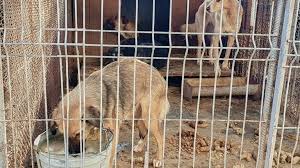
What investigators reportedly documented across multiple public shelters during January 2026 was not merely overcrowding, poor administration, or temporary neglect. The findings instead paint a deeply disturbing portrait of systemic collapse involving starvation, untreated injuries, freezing conditions, behavioral deterioration, violence between desperate animals, and mortality rates so severe they raise urgent questions about whether these facilities are functioning as shelters at all in any meaningful ethical sense.
Dogs reportedly consuming feces to survive.
Water bowls frozen solid while animals endured sub-zero temperatures.
Open untreated wounds.
Severely underweight animals deprived of adequate food and hydration.
Dogs attacking one another inside overcrowded enclosures.
One dog reportedly mutilating parts of his own tail due to extreme psychological distress.
And perhaps most alarming of all, according to the investigation, one public shelter in Brăila City allegedly recorded a staggering 40% death rate during 2024, meaning nearly half the dogs entering the facility never made it out alive.
At Sustainable Action Now, investigations like this force examination of a difficult but increasingly unavoidable global question: what happens when animal welfare systems become overwhelmed, underregulated, underfunded in the wrong ways, structurally broken, or operationally detached from the actual wellbeing of the animals they are supposed to protect?
Because what emerges from the Romanian shelter investigation is not simply a story about one country alone.
It is a warning about how quickly public animal welfare systems can deteriorate when policy failure, inadequate infrastructure, population management crises, and institutional neglect intersect simultaneously.
The emotional shock surrounding these findings stems not only from the suffering itself, but from the realization that many of these facilities are publicly funded. Taxpayer money is reportedly supporting systems where basic welfare standards may not be consistently met despite millions of euros flowing into the shelter infrastructure overall.
That contradiction matters enormously.
At Sustainable Action Now, one of the most disturbing elements of institutional neglect is how suffering can become normalized operationally over time. Once overcrowding becomes chronic, staffing becomes inadequate, resources become strained, and public oversight weakens, conditions that would initially trigger outrage can slowly become treated as routine administrative reality.
Animals stop being perceived individually.
Instead, they become intake numbers, containment problems, logistical burdens, or population statistics.
That process of institutional desensitization is where some of the worst welfare collapses often begin.
The investigation reportedly involved visits to nine public shelters nationwide, suggesting the issue extends beyond isolated local management failures. The consistency of the findings raises broader concerns about national policy structure, enforcement standards, shelter oversight, veterinary access, population management strategy, and long-term governmental commitment to humane animal care.
At Sustainable Action Now, another especially important dimension of this story involves the psychological suffering visible inside overcrowded mass shelter systems themselves.
The public often understands starvation, injury, or freezing temperatures immediately because those conditions produce visible physical distress. But chronic psychological deterioration inside overcrowded shelters may be equally devastating.
Dogs are highly social, emotionally responsive animals. Long-term confinement, overcrowding, stress, fear, territorial instability, sensory deprivation, constant noise exposure, inadequate enrichment, lack of human interaction, and survival competition can trigger profound behavioral breakdown.
That is why stereotypic behaviors, self-harm, aggression escalation, shutdown states, compulsive pacing, and violence between animals frequently emerge in severely compromised environments.
The reported case involving a dog biting parts of his own tail is especially horrifying because it reflects extreme psychological distress rather than simple physical neglect alone. Self-mutilation behaviors in animals often signal prolonged unresolved trauma, chronic anxiety, frustration, or severe environmental stress.
These are not merely “uncomfortable” conditions.
They are conditions capable of psychologically destabilizing living beings over time.
The freezing temperatures described in the investigation also underscore another critical reality: environmental neglect in shelters becomes exponentially more dangerous during winter conditions. Frozen water bowls alone can rapidly create dehydration crises even in cold weather because animals still require constant hydration despite lower temperatures.
Combined with inadequate nutrition, untreated wounds, overcrowding, and stress, freezing exposure dramatically increases mortality risk.
At Sustainable Action Now, one of the most important structural questions raised by the investigation involves shelter philosophy itself.
Mass sheltering without effective population control systems often creates self-perpetuating crises. Facilities continue absorbing incoming animals faster than sustainable adoption, rehabilitation, or care systems can process them. Overcrowding intensifies disease spread, stress, aggression, staffing pressure, sanitation breakdown, and euthanasia or mortality rates.
This is precisely why FOUR PAWS and many international animal welfare advocates are pushing aggressively for comprehensive CNVR programs — Catch, Neuter, Vaccinate, Return — as alternatives to purely containment-based shelter systems.
The CNVR model focuses on reducing stray populations systematically through sterilization, vaccination, medical intervention, and controlled population stabilization rather than relying primarily on indefinite mass impoundment.
This distinction matters enormously.
Traditional large-scale sheltering systems often function reactively, attempting to contain growing stray populations after they already exist. CNVR programs instead target the reproductive cycle itself in hopes of reducing long-term intake pressure humanely over time.
Many animal welfare experts increasingly argue that without aggressive sterilization infrastructure and community-level population management, shelters eventually become mathematically incapable of maintaining humane standards consistently.
Romania’s long-running stray dog crisis has remained internationally controversial for years, particularly after past mass culling policies generated global criticism and public outrage. The current investigation suggests that despite policy shifts, serious structural welfare concerns may still persist throughout portions of the system.
At Sustainable Action Now, another major issue exposed by investigations like this is the enormous gap between legal compliance and actual humane care.
Facilities may technically satisfy minimal operational requirements while still producing environments many modern welfare experts would consider psychologically and physically devastating for animals. Laws frequently lag behind evolving scientific understanding of animal cognition, emotional needs, stress response, and species-appropriate care standards.
This mirrors broader global animal welfare debates unfolding across zoos, industrial farming, breeding operations, laboratories, entertainment industries, and municipal shelter systems worldwide.
Increasingly, the public is no longer satisfied with survival alone as the benchmark for humane treatment.
People are asking deeper questions:
Can the animal express natural behavior?
Does the environment reduce chronic stress?
Is emotional wellbeing considered?
Is psychological suffering being recognized?
Are systems designed around rehabilitation and quality of life rather than containment alone?
These questions fundamentally reshape how shelter systems themselves are evaluated.
At Sustainable Action Now, another reason this investigation carries such emotional impact is because dogs occupy uniquely intimate cultural space within human society. They are not abstract wildlife populations removed from daily emotional experience. They are companion animals many people view as family members, emotional support systems, protectors, and deeply sentient beings.
Watching dogs reduced to starvation, violence, freezing conditions, or psychological collapse therefore triggers profound emotional response because people instinctively compare those conditions to how they would treat animals in their own homes.
That emotional recognition is increasingly driving international pressure surrounding animal welfare reform globally.
The role of undercover investigations themselves also remains critically important. Many systemic abuses or neglected conditions persist precisely because the public never sees them directly. Once visual documentation emerges, institutional narratives become much harder to control.
Visibility changes everything.
Suddenly mortality rates are not abstract.
Frozen bowls are not theoretical.
Self-harm behaviors are not invisible.
Neglect becomes undeniable.
At Sustainable Action Now, perhaps the most consequential aspect of the Romanian shelter investigation is that it reframes the stray animal crisis not simply as an animal problem, but as a governance problem, infrastructure problem, policy problem, and ethical accountability problem simultaneously.
Because systems producing suffering at industrial scale rarely emerge from one bad actor alone.
They emerge when political inertia, inadequate oversight, poor population management, underinvestment in humane solutions, and societal desensitization converge long enough for crisis conditions to become normalized.
And once that normalization happens, entire generations of animals can disappear into suffering most people never witness.
That is ultimately why investigations like this matter.
Not because they shock audiences temporarily.
But because they force societies to confront whether publicly funded systems designed to protect vulnerable animals are actually protecting them at all — or merely warehousing suffering behind closed gates while calling it shelter.