
There are documentaries designed merely to entertain, and then there are documentaries designed to rupture public complacency so completely that viewers can never again look at an everyday system the same way.
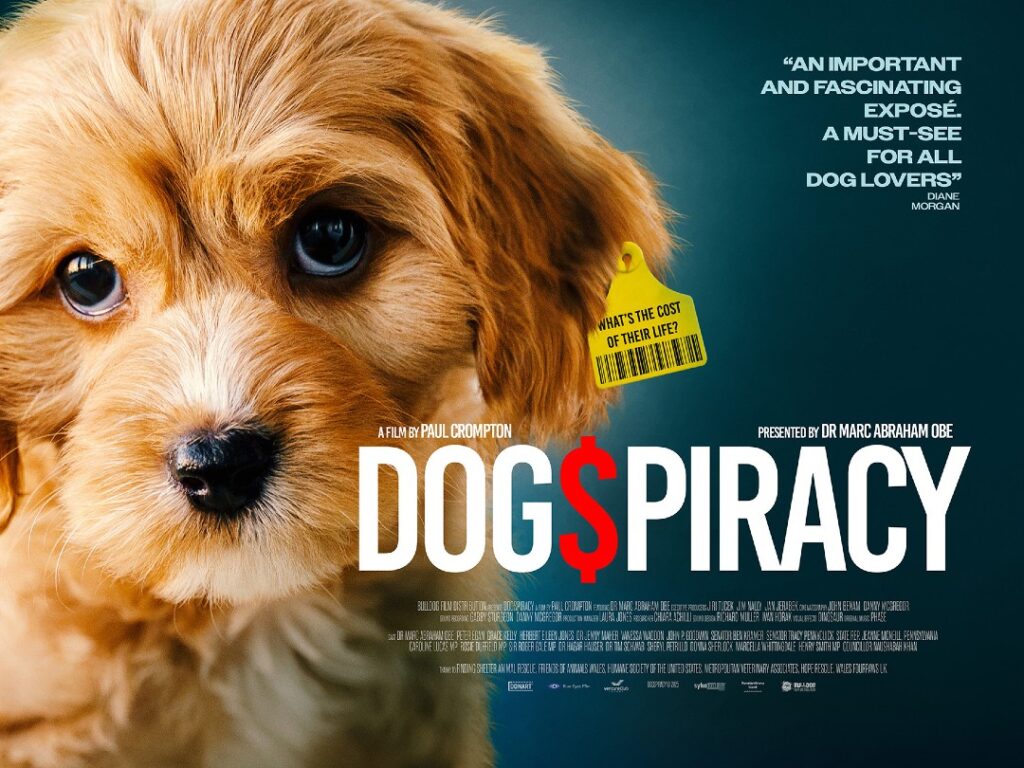
“DOG$PIRACY: Exposing the Dark Truth Behind the Global Dog Industry” appears determined to do exactly that.
The investigative feature documentary dives headfirst into one of the most emotionally charged and economically protected industries in the modern animal marketplace: the global commercial breeding and puppy sales system. What unfolds is not simply a story about irresponsible breeders or isolated neglect cases. Instead, the film reportedly presents a far more disturbing portrait of an international network driven by industrial-scale breeding operations, underground puppy trafficking, political obstruction, legislative paralysis, and the transformation of living animals into endlessly reproducible revenue streams.
At Sustainable Action Now, stories like this matter because they expose the enormous gap between how society emotionally perceives dogs and how significant portions of the commercial breeding industry allegedly treat them operationally behind closed doors.
Publicly, dogs are family.
Emotionally, they are companions, protectors, emotional support systems, best friends, and deeply integrated members of millions of households worldwide.
But inside large-scale commercial breeding systems criticized by animal welfare advocates, dogs are often reduced to production units — bodies valued primarily for reproductive output, resale pricing, and inventory turnover.
That contradiction sits at the heart of the DOG$PIRACY investigation.
Directed by Paul Crompton, the documentary reportedly follows internationally known veterinarian and animal welfare advocate Dr. Marc Abraham OBE, often known publicly as “Marc the Vet,” as he investigates the global commercial dog breeding pipeline stretching across multiple countries and regions. The film reportedly traces how commercial breeding systems, puppy brokers, fertility operations, smuggling networks, and retail pet industries intersect within a larger economic ecosystem capable of generating enormous profits while allegedly operating with dangerously inconsistent welfare oversight.
At Sustainable Action Now, one of the most important aspects of this story is the film’s focus on systemic infrastructure rather than isolated cruelty alone.
Because puppy mills do not persist globally simply because of a few unethical breeders.
They persist because entire economic systems continue supporting demand.
Consumers purchase animals impulsively.
Pet stores stock commercially bred puppies.
Online sales platforms facilitate anonymous transactions.
Weak regulations create loopholes.
Enforcement remains inconsistent.
Political lobbying slows reform efforts.
And emotional consumer desire for specific breeds continues fueling industrial reproduction at massive scale.
The documentary reportedly examines precisely how these systems reinforce one another.
One especially significant element involves the political dimension embedded throughout the investigation. According to descriptions surrounding the film, DOG$PIRACY argues that despite overwhelming public support for stronger animal welfare protections, legislative reform efforts are frequently weakened, delayed, or blocked entirely through industry pressure, lobbying networks, agricultural interests, and political resistance.
That allegation matters enormously because it reframes puppy mills not simply as isolated criminal operations, but as symptoms of broader regulatory and economic failures.
At Sustainable Action Now, the political reality surrounding commercial breeding reform has long been deeply contentious. Animal welfare advocates often argue that modern laws fail to reflect contemporary scientific understanding of canine emotional complexity, social needs, stress response, and psychological wellbeing.
Meanwhile, opponents of stricter breeding restrictions frequently argue concerns surrounding overregulation, agricultural rights, small business economics, consumer choice, and enforcement practicality.
Caught between those competing pressures are the animals themselves.
The documentary’s emphasis on “Victoria’s Law” in Pennsylvania reportedly highlights this conflict directly. Proposed legislation aimed at restricting the sale of commercially mill-bred puppies in pet stores represents one of many growing attempts nationwide to shift consumer demand away from industrial breeding pipelines and toward rescue, adoption, or ethically accountable breeding systems.
At Sustainable Action Now, another especially explosive aspect of the documentary involves its reported focus on highly secretive breeding operations hidden inside isolated rural communities, including allegations involving portions of Amish commercial breeding systems in the Northeastern United States.
This remains one of the most controversial dimensions of the modern puppy mill debate.
Critics allege that certain large-scale breeding operations within isolated agricultural communities have historically operated with limited public visibility, weak oversight, and deeply problematic welfare conditions. Supporters within those communities often reject broad generalizations and argue that not all breeders operate unethically.
The broader issue, however, is not confined to one community alone.
Industrialized breeding systems exist globally across multiple cultural, religious, economic, and geographic environments whenever high consumer demand intersects with weak enforcement and strong financial incentives.
At Sustainable Action Now, one of the most emotionally devastating realities surrounding puppy mills is the suffering endured not only by individual animals, but by generations of dogs trapped inside reproductive exploitation cycles.
Breeding dogs in large-scale commercial operations are often repeatedly impregnated throughout their lives while living inside cramped, barren, or socially deprived conditions according to countless animal welfare investigations over the years. Critics argue many of these animals receive minimal enrichment, limited exercise, inadequate veterinary care, poor socialization, and insufficient emotional stimulation.
Meanwhile, puppies themselves may face disease exposure, transportation trauma, premature separation from mothers, genetic defects caused by irresponsible breeding practices, and behavioral instability stemming from early developmental deprivation.
Consumers frequently encounter the consequences later without realizing the origin.
The energetic puppy purchased from a storefront or online marketplace may have already endured transport stress, illness exposure, poor breeding conditions, and developmental trauma before even arriving in a household.
DOG$PIRACY reportedly attempts to force audiences to confront those hidden realities directly.
At Sustainable Action Now, another critically important dimension of the documentary involves the economics behind commercial breeding itself.
The global pet industry generates hundreds of billions of dollars annually. Dogs have become embedded not only within emotional culture, but within massive commercial ecosystems involving breeding, grooming, veterinary medicine, retail sales, food production, pharmaceuticals, insurance, accessories, social media branding, and luxury lifestyle markets.
Whenever enormous money enters emotionally charged industries, exploitation risks intensify dramatically.
Puppy mills exist because demand remains extremely profitable.
Breed trends emerge through celebrity culture and social media visibility.
Designer dog markets create premium pricing incentives.
Consumer impatience fuels direct purchasing rather than adoption.
And industrial breeding operations scale rapidly to meet those demands.
That financial machinery is what documentaries like DOG$PIRACY attempt to expose.
At Sustainable Action Now, the emotional power of dogs within human society also explains why this issue resonates so intensely. Unlike abstract agricultural debates involving distant food systems, companion dog welfare strikes directly at how humans define empathy, family, loyalty, and emotional responsibility.
Most people cannot emotionally reconcile the image of a beloved household dog with the idea of animals confined inside industrial breeding systems purely for reproductive monetization.
That psychological contradiction creates enormous cultural tension.
And once consumers begin understanding how commercial breeding pipelines operate behind the scenes, many begin reevaluating the entire acquisition system surrounding pets.
This is precisely why the “adopt, don’t shop” movement has expanded so dramatically over the past two decades. Rescue organizations, shelters, and animal advocates increasingly encourage adoption not simply as emotional charity, but as direct resistance against industrialized breeding economies critics argue commodify animal life at mass scale.
At Sustainable Action Now, perhaps the most important contribution documentaries like DOG$PIRACY make is visibility itself.
Systems built around secrecy rely on consumer emotional distance.
They rely on buyers never seeing breeding conditions.
Never witnessing transportation pipelines.
Never understanding reproductive exploitation.
Never questioning where puppies originate before appearing inside polished storefronts or curated online listings.
Investigative filmmaking disrupts that invisibility.
Suddenly the supply chain becomes visible.
The economics become visible.
The suffering becomes visible.
And once visibility enters the equation, public tolerance often changes rapidly.
The documentary’s screenings at iconic venues like the Roxie Theater in San Francisco and the Lumiere Theater in Beverly Hills reportedly transformed the film from simple entertainment into active advocacy infrastructure — gathering veterinarians, rescuers, activists, and lawmakers around broader conversations involving legislative reform, ethical breeding standards, shelter overcrowding, consumer education, and systemic accountability.
At Sustainable Action Now, DOG$PIRACY ultimately represents something larger than one documentary alone.
It represents growing societal willingness to question industries previously protected by emotional marketing, consumer convenience, and limited transparency.
Because once people begin asking where puppies come from, how breeding systems operate, who profits from suffering, and why reform repeatedly stalls despite overwhelming public concern, the conversation stops being about pets alone.
It becomes about ethics.
About commodification.
About political influence.
About consumer responsibility.
And about whether modern society is finally prepared to confront the hidden costs embedded inside one of the most emotionally beloved industries in the world.