
Against All Odds: How One Extraordinary Rescue Story Is Shining a Light on the Expanding Frontlines of Wildlife and Animal Survival
There are rescue stories that make people smile for a moment, and then there are rescue stories that fundamentally reshape how people think about animals, survival, compassion, and the invisible network of people working every single day to save lives most of society never even notices.
The story surrounding Akira and her surviving little family belongs firmly in the second category.
At first glance, it may appear to be another emotional rescue video circulating online through Hope For Paws — an organization that has spent years building a global audience through extraordinary rescue efforts involving abandoned, injured, neglected, and vulnerable animals.
But the deeper significance of this story extends far beyond one dramatic rescue itself. It represents something much larger unfolding across the entire animal welfare landscape: the expanding realization that compassion cannot remain selective.
Because the reality is that rescue work today no longer revolves solely around cats and dogs.
Increasingly, rescue organizations and wildlife advocates are confronting a world where countless species are being displaced, injured, abandoned, orphaned, poisoned, trapped, or pushed into dangerous environments by urban expansion, climate disruption, habitat fragmentation, infrastructure growth, environmental neglect, and human carelessness.
And according to Hope For Paws founder Eldad Hagar, the list of animals rescued through their growing efforts now stretches far beyond traditional domestic animals alone.
Squirrels. Raccoons. Ducks. Geese. Birds of prey. Songbirds. Turtles. Iguanas. A pig. A donkey.
Each species brings completely different rescue challenges, medical needs, behavioral realities, environmental requirements, and rehabilitation pathways. Yet all of them share one thing in common: survival increasingly depends on whether compassionate humans are willing to intervene.
At Sustainable Action Now, stories like Akira’s reveal how modern rescue work has evolved into one of the clearest frontline intersections between environmental collapse, urbanization, wildlife survival, public awareness, and community-driven compassion.
What makes this story especially powerful is not simply that a vulnerable animal family survived.
It is the recognition that survival itself is becoming increasingly fragile for countless animals living in human-dominated environments.
The phrase “against all odds” resonates deeply because so many rescue cases today involve conditions that should have been fatal. Animals trapped near freeways. Orphaned wildlife surviving near industrial zones. Injured creatures hiding beneath homes, inside drainage systems, abandoned lots, construction sites, toxic areas, and high-predator environments.
Many of these animals are discovered only because ordinary people stop, pay attention, and make one critical decision: to call for help instead of looking away.
That cultural shift matters enormously.
For decades, many urban and suburban residents viewed wildlife suffering as unfortunate but unavoidable background reality. Injured birds, displaced raccoons, starving strays, abandoned litters, and frightened wildlife were often treated as isolated incidents rather than symptoms of broader environmental imbalance and human encroachment.
Now, social media and rescue storytelling are changing public perception rapidly.
Videos documenting rescue operations no longer simply entertain audiences emotionally. They educate people about species vulnerability, urban wildlife survival, habitat destruction, abandonment crises, and the enormous logistical complexity involved in modern rescue work itself.
At Sustainable Action Now, another major reason stories like Akira’s resonate so strongly is because they reveal the emotional intelligence and family structures existing across species many people rarely stop to consider deeply.
Animal families fight to stay together.
Mothers protect offspring under impossible conditions.
Young animals experience fear, hunger, vulnerability, confusion, attachment, and dependency.
Wildlife attempts constantly to adapt to environments humans continue reshaping aggressively around them.
The rescue of one family therefore symbolizes much more than individual survival. It represents a temporary interruption of systems that increasingly place enormous stress on both domestic and wild animal populations alike.
The breadth of species mentioned by Hope For Paws also highlights something critically important within modern rescue culture: specialization alone is no longer enough.
Historically, animal rescue often existed in separate silos. Domestic pet rescue operated independently from wildlife rehabilitation. Farm animal sanctuaries functioned separately from urban rescue networks. Bird rescues, reptile rehabilitation, and exotic animal care often remained isolated from mainstream public attention.
Today, however, environmental pressures are forcing these worlds to overlap constantly.
Urban sprawl pushes wildlife into residential neighborhoods. Climate instability alters migration patterns. Heat waves, fires, storms, flooding, and drought disrupt ecosystems. Illegal breeding, abandonment, and exotic pet ownership create additional layers of vulnerability.
Rescue organizations increasingly encounter species diversity requiring broader expertise, expanded partnerships, and complex rehabilitation coordination.
The mention of rescuing everything from songbirds to iguanas to donkeys underscores just how expansive this work has become.
At Sustainable Action Now, another especially important dimension of this story involves public participation itself.
Hope For Paws repeatedly emphasizes that rescues become possible because people know to call.
That may sound simple, but it reflects one of the most important cultural transformations occurring within animal welfare today: awareness.
Many animals die not because help is impossible, but because suffering goes unreported, ignored, or misunderstood. People often assume injured wildlife should automatically be left alone, or they fear involvement, uncertainty, or inconvenience. Others may not know which organizations exist, what services are available, or how rescue systems actually function.
The growth of rescue storytelling online is changing that reality dramatically.
People now witness firsthand how intervention works. They see trapping procedures, medical treatment, rehabilitation, reunification, fostering, and adoption processes unfolding in real time. This visibility creates emotional connection, but it also creates practical public education.
Communities become more likely to recognize distress, report emergencies, and support rescue infrastructure financially once they understand what is actually happening behind the scenes.
That support is crucial because modern rescue work is extraordinarily resource-intensive.
Every rescued animal potentially requires transportation, examination, diagnostics, surgery, medication, rehabilitation space, specialized nutrition, behavioral care, foster placement, environmental enrichment, and long-term housing solutions. Wildlife cases frequently demand additional licensing, species expertise, release planning, and coordination with rehabilitation specialists.
The emotional videos audiences consume online often represent only a fraction of the actual operational effort involved.
At Sustainable Action Now, the deeper environmental implications of these rescue stories also deserve attention.
The growing frequency of urban wildlife rescues reflects broader ecological pressure. Animals are increasingly forced into dangerous proximity with human infrastructure because their natural habitats continue shrinking, fragmenting, or destabilizing. Roads, development, pollution, deforestation, water contamination, and climate disruption alter survival patterns across entire ecosystems.
Rescue organizations therefore increasingly function not only as emergency responders, but as witnesses to larger environmental breakdown occurring gradually across multiple regions.
Each rescued turtle, bird, raccoon, or stray animal often tells part of a much larger ecological story.
The emotional power of Akira’s rescue ultimately stems from something profoundly human: the instinctive recognition that vulnerable beings deserve protection when they cannot protect themselves.
That instinct crosses species boundaries naturally.
People watching rescues rarely calculate biological classifications first. They respond emotionally to fear, fragility, maternal protection, exhaustion, survival, and relief because those experiences feel universally recognizable.
And perhaps that is why these stories resonate so deeply across millions of viewers worldwide.
Not because they offer escapism.
But because they momentarily restore faith in intervention itself.
In a world where environmental destruction, abandonment, exploitation, and neglect often feel overwhelming, rescue work represents tangible proof that action still matters. One call matters. One rescue matters. One foster home matters. One medical procedure matters. One moment of compassion matters.
Akira’s story therefore becomes larger than one rescued family.
It becomes part of a growing global reminder that compassion is not supposed to stop at convenience, species familiarity, or visibility. The animals most people never notice — the frightened squirrel, the injured bird, the abandoned litter, the orphaned raccoon, the exhausted stray surviving near predators — are still living lives shaped by fear, hunger, attachment, and the desire to survive.
And increasingly, their survival depends entirely on whether human beings choose to respond before it is too late.
Brenda by the Freeway: The Invisible Crisis Facing Abandoned Dogs Living Between Homelessness, Traffic, and Survival
Every major city has invisible lives moving quietly beneath the noise of traffic, construction, commerce, and daily routine.
Lives that most people pass without noticing.
Among the most overlooked are the abandoned dogs wandering freeway embankments, industrial corridors, vacant lots, underpasses, and roadside edges where survival becomes a constant negotiation with hunger, exhaustion, fear, weather, predators, disease, and speeding vehicles only feet away.
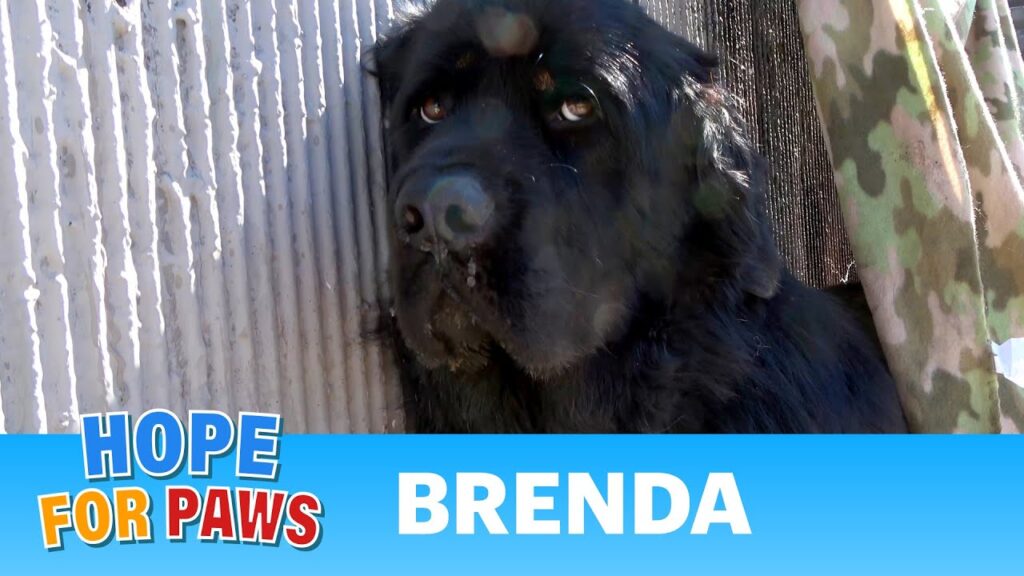
Brenda was one of those dogs.
Her story, recently brought to light through a rescue effort led by Hope For Paws with assistance from LA Animal Rescue, is far more than another emotional rescue video circulating online. It exposes one of the least discussed but increasingly visible realities unfolding across urban America: the growing number of companion animals left behind when vulnerable humans themselves disappear into crisis.
At Sustainable Action Now, rescue stories like Brenda’s reveal how animal welfare cannot be separated from broader conversations surrounding homelessness, healthcare instability, addiction, economic collapse, mental health crises, urban poverty, public infrastructure, and the fragile systems connecting vulnerable people and vulnerable animals alike.
Because many abandoned dogs are not “strays” in the traditional sense.
They once belonged to someone.
According to Hope For Paws founder Eldad Hagar, rescue teams frequently encounter dogs whose homeless guardians suddenly vanished due to hospitalization, incarceration, medical emergencies, institutionalization, displacement, or unknown circumstances. The animals remain behind with no understanding of what happened, often waiting in the same areas for people who never return.
That reality changes how stories like Brenda’s should be understood.
This is not merely abandonment in the simplistic sense people often imagine. It is frequently collateral damage created by social instability itself.
The dog loses everything instantly.
Familiarity disappears. Food disappears. Shelter disappears. Routine disappears. Protection disappears.
What remains is survival.
And for animals stranded near freeway systems or dense urban infrastructure, survival becomes extraordinarily dangerous almost immediately.
Freeway-adjacent rescue operations are among the most complex and high-risk situations rescue organizations encounter regularly. Animals living near highways face constant exposure to speeding traffic, debris, dehydration, heat exhaustion, toxic runoff, injury, territorial conflicts, human hostility, and extreme psychological stress. Many become hypervigilant and deeply fearful after extended exposure to noise and instability.
At Sustainable Action Now, Brenda’s story reflects something much larger happening inside urban rescue work overall: rescue organizations increasingly function as emergency responders operating within the gaps of broader societal failure.
When people lose housing, animals lose stability too.
When healthcare collapses, pets become vulnerable.
When poverty intensifies, veterinary care disappears.
When mental health crises escalate, animals often remain trapped alongside human suffering.
This overlap between homelessness and animal welfare remains profoundly underexamined despite its enormous scale.
Across major cities nationwide, homeless individuals frequently maintain extremely deep emotional bonds with their pets. In many cases, those animals provide companionship, emotional regulation, safety, consistency, and psychological support under extraordinarily difficult conditions. Studies repeatedly show many unhoused individuals prioritize feeding or protecting their animals even when struggling to meet their own basic needs.
But when sudden crises occur — arrests, emergency hospitalizations, psychiatric intervention, displacement sweeps, violence, overdose incidents, or relocation — animals can become abruptly separated from the only person they know.
That is often when rescue organizations receive calls like the one involving Brenda.
Someone notices a frightened dog lingering near dangerous roads. Waiting in parking lots. Hiding beneath overpasses. Returning repeatedly to the same location. Avoiding people while simultaneously searching for familiar human presence.
These behaviors are heartbreakingly common among abandoned companion animals.
Dogs do not understand institutional systems. They do not understand incarceration, hospitalization, eviction, or disappearance. They understand attachment.
And attachment does not simply switch off because circumstances collapse.
At Sustainable Action Now, one of the most emotionally devastating realities surrounding urban rescue work is how frequently animals remain loyal to places connected to lost caregivers long after survival itself becomes dangerous. Rescue teams regularly encounter dogs refusing to leave areas where they last saw their person, even when surrounded by traffic, predators, or unsafe conditions.
Brenda’s rescue therefore becomes about much more than physical safety alone.
It becomes an interruption of trauma.
The involvement of LA Animal Rescue also highlights another critical aspect of modern rescue operations: collaboration. Rescue organizations increasingly rely on interconnected networks involving fosters, veterinary clinics, transport teams, rehabilitation specialists, shelters, sanctuaries, donors, volunteers, and cross-organizational partnerships to handle the overwhelming scale of need emerging across many urban regions.
No single rescue organization can manage these crises alone.
This networked rescue ecosystem has become increasingly essential as economic instability, housing shortages, inflation pressures, and overburdened shelter systems continue escalating nationwide.
At Sustainable Action Now, another especially important dimension of Brenda’s story involves public awareness itself.
Eldad Hagar repeatedly emphasizes that more people now know to call for help.
That matters enormously.
Animal suffering often persists because people assume nothing can be done, or because they fail to recognize how sophisticated modern rescue networks have become. Social media and rescue storytelling have fundamentally transformed public engagement with animal welfare over the past decade. People witnessing rescues online become more likely to recognize distress, report abandoned animals, donate resources, volunteer assistance, or support fostering systems themselves.
The emotional visibility of rescue work therefore creates operational impact far beyond entertainment or awareness alone.
Each rescue video potentially expands the number of future rescues simply by increasing recognition and response.
Brenda’s story also exposes another uncomfortable reality within urban life: countless vulnerable animals exist completely outside public visibility until someone stops long enough to notice them.
Modern cities are extraordinarily effective at making suffering disappear into the background.
Freeway corridors especially create strange psychological blind spots. People moving at high speeds often fail to fully register the existence of animals surviving only yards away from relentless traffic. Yet rescue teams know these corridors are frequently populated by abandoned pets, injured wildlife, and displaced animals attempting to survive within impossible environments.
The contrast between traffic flow and animal vulnerability becomes deeply symbolic.
Thousands of vehicles pass by.
One frightened dog waits alone near the concrete edge of survival itself.
At Sustainable Action Now, the most powerful rescue stories are often not the dramatic medical recoveries or viral transformations, although those matter greatly. The most powerful stories are the ones forcing deeper examination of how interconnected human and animal vulnerability truly are.
Brenda’s story reveals that animal abandonment is not always rooted in cruelty alone. Sometimes it emerges from collapse. From instability. From systems failing people who then unintentionally fail the animals depending on them.
That complexity matters because simplistic narratives rarely solve systemic problems.
The rescue movement increasingly sits at the intersection of multiple overlapping crises: housing instability, economic pressure, mental health breakdown, environmental stress, overcrowded shelters, veterinary access shortages, and growing numbers of vulnerable animals entering rescue pipelines nationwide.
Organizations like Hope For Paws therefore function not merely as rescuers, but as frontline witnesses documenting realities most institutions still struggle fully to confront.
And yet, despite everything, Brenda’s story ultimately ends with something increasingly rare and important: intervention before tragedy.
Someone noticed.
Someone called.
Rescuers responded.
Partnerships mobilized.
A frightened dog living beside a freeway did not disappear anonymously into the machinery of the city.
She survived.
At Sustainable Action Now, that outcome matters because every successful rescue pushes back against a culture increasingly conditioned to move past suffering without stopping. Brenda’s story reminds people that compassion is still operational. That intervention still changes outcomes. That even in environments dominated by speed, noise, concrete, instability, and indifference, vulnerable lives can still be seen.
And sometimes, being seen in time is the difference between survival and becoming another invisible casualty of the modern city.
A Pit Bull, a Coyote, and a Race Through the Park: The Growing Urban Wildlife Collision Reshaping Animal Rescue Across America
There are rescue missions that unfold quietly and predictably, and then there are the ones that expose just how chaotic, unpredictable, and dangerous modern urban animal rescue has truly become.
The recent Hope For Paws rescue involving a frightened Pit Bull, a public park, and an unexpected coyote encounter belongs firmly in the second category.
What began as an attempt to safely rescue a homeless dog quickly transformed into a tense pursuit stretching across miles of terrain, with a wild coyote suddenly entering the middle of the situation and raising the stakes for everyone involved — rescuers, wildlife, and the terrified dog herself.
According to Hope For Paws founder Eldad Hagar, the rescue became physically intense almost immediately. The Pit Bull refused to surrender easily, leading rescuers into a long pursuit through the park while a coyote moved unpredictably through the environment nearby. Eventually, after running for miles and navigating a rapidly escalating situation, Eldad made the split-second decision to physically intervene in order to secure the dog before the situation could spiral into tragedy.
His warning afterward was direct and important:
Do not try this yourself.
At Sustainable Action Now, stories like this reveal something much larger happening beneath the surface of urban life across America. Increasingly, animal rescue organizations are operating at the collision point between domestic abandonment, urban wildlife adaptation, public infrastructure, environmental stress, and rapidly changing ecosystems inside major metropolitan regions.
The rescue itself is emotionally gripping because it combines fear, adrenaline, unpredictability, and survival in real time. But the broader significance lies in what it reveals about how modern cities are evolving into overlapping territories where abandoned domestic animals and displaced wildlife increasingly encounter one another under dangerous circumstances.
Coyotes are no longer occasional sightings confined to remote wilderness edges.
They are now deeply embedded inside urban ecosystems throughout much of North America.
Parks, golf courses, drainage systems, industrial corridors, suburban neighborhoods, freeway embankments, riverbeds, and greenbelts have all become active wildlife corridors supporting adaptable predator populations capable of surviving remarkably close to dense human development.
At the same time, rescue organizations are seeing increasing numbers of abandoned, lost, or displaced dogs attempting to survive within those same environments.
That overlap creates volatile situations.
A frightened dog running loose inside coyote territory faces immense risk. Coyotes may perceive domestic animals as competition, potential prey, territorial intruders, or unpredictable threats depending on circumstance, season, food scarcity, pack dynamics, and environmental conditions. Meanwhile, panicked dogs unfamiliar with survival outside human care often lack the situational awareness necessary to navigate those dangers safely.
The result is a growing number of rescue scenarios unfolding inside ecological gray zones where domestic vulnerability collides directly with urban wildlife survival systems.
At Sustainable Action Now, the emotional complexity of this particular story also stems from the fact that neither animal involved is truly the “villain.”
The coyote is not evil.
The Pit Bull is not dangerous simply because of breed stereotypes.
Both are surviving within systems shaped overwhelmingly by human expansion, environmental fragmentation, abandonment, and urban development itself.
Coyotes adapted because they had to.
Abandoned dogs are vulnerable because people failed them.
Rescue organizations increasingly stand between those realities.
That tension reflects a broader transformation occurring inside wildlife and rescue work nationwide. Modern animal rescue is no longer confined to straightforward shelter intake or stray recovery operations. Rescuers today operate within landscapes shaped by traffic systems, urban predators, encampments, climate pressure, overcrowded shelters, habitat loss, infrastructure sprawl, and increasingly stressed public resources.
Every rescue therefore carries layers of unpredictability far beyond the animal itself.
A frightened dog may run onto freeways.
A coyote may intervene unexpectedly.
Crowds may complicate capture attempts.
Heat exposure may accelerate medical risk.
Wildlife encounters may destabilize already frightened animals.
Public parks, which many people still imagine as controlled recreational environments, have quietly become active ecological overlap zones where these realities collide constantly.
At Sustainable Action Now, another especially important dimension of this story involves risk.
Eldad’s statement acknowledging the danger of physically intervening matters enormously because rescue videos often unintentionally create misleading perceptions regarding how difficult and dangerous field rescue operations truly are. Chasing terrified animals through unpredictable environments carries serious risk of bites, vehicle strikes, wildlife confrontation, falls, heat exhaustion, or escalating panic responses from already traumatized animals.
Professional rescuers develop specialized experience reading animal behavior, managing pursuit dynamics, coordinating timing, and assessing environmental risk under extreme pressure.
Even then, situations can deteriorate rapidly.
That is why organizations repeatedly stress that untrained public intervention may unintentionally worsen outcomes despite good intentions.
The physical intensity described in this rescue — running for miles before finally securing the dog — also reflects how emotionally and physically exhausting rescue work often becomes behind the scenes. Audiences watching condensed videos online may see only the dramatic climax, but many rescues involve hours of tracking, patience, observation, environmental navigation, failed attempts, and rapidly shifting tactical decisions.
Every frightened animal reacts differently.
Trauma changes behavior.
Fear changes movement.
Survival instinct overrides trust.
At Sustainable Action Now, Pit Bulls specifically occupy a uniquely emotional space within rescue culture because they remain among the most misunderstood and overrepresented breeds inside shelters nationwide. Breed stigma, housing restrictions, insurance limitations, abandonment rates, and public fear have contributed to disproportionately high euthanasia and displacement rates involving Pit Bull-type dogs for years.
Stories showing frightened but ultimately vulnerable Pit Bulls surviving dangerous conditions help challenge simplistic stereotypes portraying these animals solely through fear-based narratives.
The reality rescue organizations encounter repeatedly is far more complicated.
Most abandoned dogs are not aggressive monsters. They are frightened, confused, overstimulated animals attempting to survive environments they were never equipped to navigate alone.
The coyote’s presence in this story also reflects something increasingly important environmentally: wildlife adaptation is accelerating faster than public understanding.
Coyotes now thrive inside many major urban centers because they are extraordinarily intelligent, opportunistic, and behaviorally flexible. As development continues reshaping landscapes, wildlife species capable of adapting to fragmented human-dominated environments increasingly occupy spaces once considered purely urban.
This creates emotional contradictions for people.
Many city residents simultaneously fear and admire urban wildlife. Coyotes especially trigger complicated reactions because they embody wildness surviving directly alongside modern civilization. Their growing visibility often forces uncomfortable conversations about habitat loss, ecological imbalance, food systems, and the consequences of urban sprawl itself.
At Sustainable Action Now, one of the most revealing aspects of this rescue is how quickly the emotional tone shifts once wildlife enters the scene.
A standard dog rescue suddenly becomes an ecological confrontation involving predator behavior, territorial uncertainty, and rapidly escalating danger. This unpredictability is becoming increasingly common for rescue organizations operating in urban regions where wildlife and abandoned domestic animals now regularly occupy overlapping survival territory.
The broader rescue infrastructure supporting cases like this also deserves recognition.
Medical treatment, rehabilitation, behavioral stabilization, foster placement, vaccinations, diagnostics, surgeries, nutrition, transportation, and long-term care all require substantial ongoing financial support. Rescue organizations repeatedly emphasize donations not as abstract fundraising language, but because every physically demanding field rescue often initiates an entirely separate chain of expensive medical and rehabilitative care afterward.
The public frequently sees the dramatic capture.
They rarely see the months of recovery that follow.
At Sustainable Action Now, perhaps the deepest reason stories like this resonate so strongly is because they expose how thin the line between safety and catastrophe often becomes for vulnerable animals surviving near human infrastructure.
One frightened movement toward traffic.
One aggressive wildlife encounter.
One missed rescue window.
One injury.
One moment of panic.
That is often all it takes.
And yet despite those odds, rescues still happen because people continue showing up anyway.
They run through parks. They crawl beneath structures. They navigate dangerous terrain. They absorb emotional exhaustion, physical risk, uncertainty, and heartbreak repeatedly for animals who cannot ask for help themselves.
The image of a frightened Pit Bull racing through a park while a coyote moves nearby feels cinematic on the surface.
But underneath that moment exists a far more important reality:
Modern rescue work has become one of the clearest frontlines where urbanization, environmental adaptation, animal abandonment, and compassion now collide every single day.
When a Pet Outlives Its Person: Magic’s Story and the Growing Crisis of Animals Left Behind After Death
There are rescue stories built around urgency, injury, starvation, or survival in dangerous environments. And then there are the stories that reveal a quieter form of suffering — the kind rooted not in immediate violence, but in abandonment, isolation, grief, and the devastating collapse of human responsibility after someone dies.
Magic’s story is one of those cases.
According to Hope For Paws, Magic’s owner passed away, and after that moment everything familiar in her life disappeared almost instantly. There was no transition plan. No trusted caregiver waiting to step in. No coordinated rescue arrangement. No structured support system protecting the dog left behind after the death of the person she depended on entirely.
Instead, Magic reportedly spent nearly 11 months isolated on the property, kept there as a “guard dog” while the world around her moved on.
No real companionship.
No meaningful human interaction.
No emotional support.
No family integration.
No recovery from the trauma of losing the person she knew.
Only confinement and neglect until the property itself was finally being prepared for sale and someone decided they needed to “get rid of the dog.”
At Sustainable Action Now, stories like Magic’s expose one of the most overlooked animal welfare crises quietly unfolding across aging populations, unstable households, and modern society overall: what happens to companion animals when the humans caring for them suddenly disappear.
Because the uncomfortable reality is that millions of people assume their families will “figure it out” if something happens to them.
Many never have explicit conversations.
Many never create legal instructions.
Many never identify trusted guardians.
Many never evaluate whether relatives are emotionally, financially, or practically willing to care for the animals involved.
And when death, illness, hospitalization, dementia, incarceration, or sudden emergency occurs, the animals are often left trapped inside uncertainty with no voice, no advocate, and no understanding of why their person never came home.
Magic’s story forces confrontation with that reality directly.
At Sustainable Action Now, one of the most emotionally devastating aspects of companion animal abandonment after death is the psychological dimension involved. Dogs especially form extremely deep attachment bonds with caregivers. Their understanding of safety, routine, emotional regulation, feeding, affection, and environmental stability revolves around those relationships completely.
When that relationship suddenly disappears without explanation, the emotional consequences can be profound.
Many abandoned animals exhibit depression-like withdrawal, anxiety, pacing, hypervigilance, food refusal, fear responses, or emotional shutdown after losing primary caregivers. Others become reactive, distrustful, or behaviorally unstable after extended isolation.
And unlike humans, they cannot contextualize loss cognitively.
They simply wait.
That is what makes Magic’s reported 11 months of isolation especially heartbreaking.
A dog kept physically alive but emotionally abandoned exists in a form of psychological limbo that many people profoundly underestimate. The phrase “guard dog” in this context becomes especially disturbing because it suggests the animal’s emotional reality was reduced almost entirely to functional property protection after her human companion died.
Not a grieving living being.
Not a traumatized dependent animal.
Just an object left behind on the property.
At Sustainable Action Now, Magic’s story also reflects a much larger demographic reality emerging across modern society: companion animals increasingly outlive the preparedness of the humans caring for them.
As populations age, housing instability rises, healthcare crises intensify, and social isolation increases, rescue organizations are seeing more cases involving pets displaced after death, hospitalization, eviction, cognitive decline, or sudden family collapse.
Many of these animals do not enter rescue systems immediately.
Instead, they linger inside unstable situations for weeks, months, or even years while surviving family members struggle with logistics, legal disputes, property transitions, emotional overwhelm, or simple unwillingness to assume responsibility.
Sometimes the animals are surrendered quickly.
Sometimes they are abandoned outright.
Sometimes they remain confined in shrinking worlds while everyone else delays making decisions.
Magic’s case appears to reflect that final category painfully clearly.
The eventual rescue only reportedly occurred once the property itself needed to be sold. That timing matters because it reveals how frequently animals become secondary considerations during estate transitions and post-death logistics. Homes are processed. Assets are distributed. Legal paperwork moves forward. Meanwhile, the living animal remaining behind often becomes an inconvenient unresolved problem.
At Sustainable Action Now, another critically important aspect of this story is the warning embedded directly within it.
“Please don’t think your family would do the right thing for your pets.”
That statement may sound blunt, but rescue organizations increasingly encounter exactly this issue repeatedly. People assume emotional attachment alone guarantees responsible follow-through after death. In reality, surviving relatives may face financial pressure, allergies, housing restrictions, behavioral concerns, emotional disconnect from the animal, geographic limitations, or simple unwillingness to take on long-term care responsibilities.
Good intentions frequently collapse under practical reality.
That is why structured planning matters enormously.
Pet care planning remains one of the least discussed components of emergency preparedness despite its growing importance. Legal guardianship arrangements, designated caregivers, written veterinary instructions, financial support planning, rescue coordination, emergency contacts, feeding protocols, medical records, behavioral notes, and long-term care agreements can mean the difference between stability and abandonment when crises occur suddenly.
Yet most households never formalize any of it.
At Sustainable Action Now, Magic’s story also highlights how rescue organizations increasingly function not only as emergency responders, but as the final safety net for failures occurring across family systems, healthcare systems, housing systems, and social support systems simultaneously.
Organizations like Hope For Paws are no longer simply rescuing stray animals from streets or dangerous environments. Increasingly, they are intervening after broader societal breakdown leaves animals stranded emotionally and physically.
The emotional burden carried by rescuers in cases like this is significant.
Unlike emergency rescues involving immediate injury or danger, abandonment-after-death cases often involve prolonged emotional neglect layered with grief and confusion. Rescuers encounter animals who spent months waiting for someone who never returned. Animals still emotionally attached to places associated with absent owners. Animals confused by abandonment they cannot comprehend.
These cases often carry profound psychological weight for everyone involved.
At Sustainable Action Now, there is also a larger philosophical question embedded inside Magic’s story: what ethical responsibility do humans carry toward dependent animals after death itself?
Companion animals are entirely human-dependent by design. Humans created these relationships through domestication, selective breeding, emotional integration, and household dependence over thousands of years. Dogs cannot independently navigate legal systems, housing arrangements, inheritance disputes, healthcare transitions, or emergency relocation.
Their survival depends completely on whether humans plan responsibly before crisis arrives.
That creates an ethical obligation many people avoid confronting until it is too late.
Magic’s story therefore becomes larger than one abandoned dog.
It becomes a warning.
Not merely about rescue.
About preparedness.
About responsibility.
About the uncomfortable gap between assuming someone will help and actually guaranteeing protection for vulnerable animals who cannot advocate for themselves.
At Sustainable Action Now, perhaps the most painful part of stories like this is recognizing how preventable much of the suffering actually is. Magic did not need to spend nearly a year isolated after losing her owner. A clear plan, trusted guardian, rescue coordination, or formalized transition arrangement could likely have changed the outcome entirely.
Instead, the rescue came only after abandonment had already hardened into routine.
And yet despite all of that, Magic survived long enough for someone finally to intervene.
That matters.
Because rescue stories are ultimately about interruption — interruption of suffering, neglect, invisibility, and abandonment before those conditions become permanent.
Magic’s story reminds people that responsible pet ownership does not end with affection during life. It also includes preparing for the possibility that one day the animal may outlive the person caring for them.
And in a world where millions of companion animals depend entirely on human stability for survival, that preparation may ultimately become one of the most important forms of love a person can leave behind.