
There was a time when wildlife broadcasting largely revolved around polished documentaries narrated long after the moment itself had already passed. Viewers watched carefully edited scenes compressed into cinematic storytelling designed to package nature into dramatic arcs with clear beginnings and endings. But the modern wildlife audience has changed. Increasingly, people no longer want only curated nature programming. They want immersion. Uncertainty. Real-time encounters. They want to feel the unpredictability of the wilderness as it unfolds naturally, without scripts, staging, or manufactured suspense.
That shift is precisely why SafariLIVE has become one of the most important and culturally significant wildlife broadcasting experiences operating anywhere in the world today.
The May 14, 2026 Sunrise and Sunset broadcasts once again demonstrated why live safari programming continues resonating so deeply with global audiences seeking something increasingly rare in modern media: authentic connection to the natural world unfolding in real time. From the “Cats on the Brain” sunrise drive to the predator-focused evening broadcast titled “Predators’ Path,” the day’s programming captured the exact qualities that continue elevating SafariLIVE far beyond traditional wildlife entertainment.
At Sustainable Action Now, conversations surrounding wildlife media extend far beyond passive viewing. They involve examining how storytelling influences conservation awareness, environmental empathy, ecological literacy, and public understanding of animal behavior. SafariLIVE succeeds because it transforms wildlife observation into an ongoing living narrative where ecosystems themselves become the central characters.
That distinction matters enormously.
Unlike traditional wildlife documentaries that condense months or years of footage into tightly structured episodes, live safari broadcasting embraces uncertainty as part of the experience itself. Nothing is guaranteed. Predators may appear or disappear within seconds. Leopards may emerge silently from dense brush after hours of searching. Elephant herds may unexpectedly cross open roads. Lions may rest for hours before suddenly becoming active. Weather patterns, bird calls, changing light conditions, prey movement, territorial behavior, and countless unseen ecological dynamics all shape what unfolds naturally during every drive.
This unpredictability is exactly what gives SafariLIVE its extraordinary emotional power.
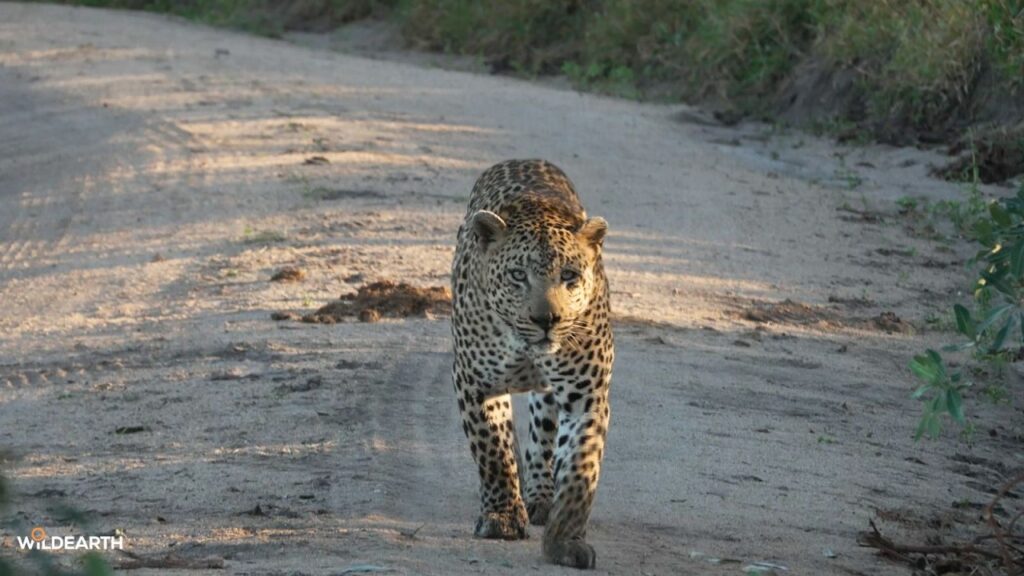
The May 14 sunrise broadcast centered heavily around big cats — always among the most compelling and psychologically captivating animals for audiences worldwide. Few wildlife encounters generate the same intensity as tracking predators across the African bush at dawn. The silence before movement. The anticipation in the vehicle. The interpretation of tracks in the dirt. Alarm calls echoing from unseen animals hidden in vegetation. Every sound and environmental clue becomes part of a larger unfolding puzzle connecting viewers directly to the rhythms of the ecosystem itself.
Big cats occupy a unique position within human imagination because they represent both beauty and primal power simultaneously. Leopards embody stealth and precision. Lions represent social dominance and territorial authority. Cheetahs reflect speed and vulnerability. Watching them live rather than through heavily edited sequences fundamentally changes the emotional experience. Audiences are not simply observing finished narratives. They are participating in the uncertainty of the search itself.
That participation creates something deeper than entertainment. It creates engagement.
Modern audiences increasingly crave authenticity because so much contemporary media feels overproduced, algorithmically optimized, and emotionally manipulated. SafariLIVE operates differently. It allows nature to dictate pacing rather than editorial demands. Some drives explode with dramatic predator interactions while others unfold slowly through landscapes filled with birdlife, smaller mammals, shifting weather, or subtle ecological observations that might never survive the editing room floor in traditional television production.
Ironically, those quieter moments are often what make the experience feel most real.
The “Predators’ Path” sunset drive on May 14 reinforced another defining aspect of live safari broadcasting: the wilderness itself functions as an interconnected system rather than isolated animal encounters. Predators cannot be understood without prey movement. Prey behavior cannot be understood without vegetation patterns, water access, weather shifts, or seasonal migration dynamics. Live broadcasting naturally exposes these relationships because guides and trackers continuously interpret the environment as an active ecological network rather than a collection of disconnected sightings.
This educational dimension has become one of SafariLIVE’s greatest strengths.
Exceptional wildlife broadcasting is not merely about showing animals. It is about teaching audiences how to see ecosystems. Experienced guides decode alarm calls, identify tracks, explain territorial boundaries, interpret behavior patterns, discuss conservation challenges, and reveal the hidden complexity behind seemingly ordinary moments. A leopard crossing a road becomes more than a visual encounter once viewers understand territorial overlap, hunting strategy, reproductive behavior, habitat pressure, or predator-prey interaction patterns shaping that moment.
In this way, SafariLIVE quietly functions as one of the most accessible large-scale environmental education platforms currently operating globally.
That educational value is especially important at a time when direct access to wilderness spaces remains increasingly limited for much of the global population. Urbanization, economic inequality, climate disruption, habitat fragmentation, and geopolitical instability continue distancing millions of people from meaningful interaction with wild ecosystems. Live wildlife broadcasting helps bridge part of that gap by creating immersive access points capable of fostering emotional investment in conservation outcomes.
Emotional connection matters profoundly in conservation work because people protect what they feel connected to. Scientific data alone rarely changes public behavior at scale. Stories do. Repeated exposure does. Emotional familiarity does. Watching individual lions, leopards, elephants, hyenas, wild dogs, or rhinos over extended periods creates relational investment that static documentaries often struggle to replicate. Audiences begin recognizing individual animals, learning personality traits, understanding social structures, and emotionally tracking survival outcomes over time.
This ongoing continuity transforms wildlife from abstract conservation concepts into living communities audiences feel personally connected to.
The timing of these May 14 broadcasts also highlights another important reality about modern wildlife media: live nature programming increasingly serves as psychological refuge from contemporary digital overload and political exhaustion. In a media environment dominated by conflict, crisis, outrage cycles, economic anxiety, and constant algorithmic stimulation, many viewers turn toward wildlife broadcasting seeking something fundamentally different — presence, unpredictability, patience, and grounding.
SafariLIVE succeeds because it slows perception down.
A sunrise drive unfolding gradually across open bushveld terrain forces audiences into observational attention rather than rapid consumption. The pace of nature remains indifferent to human urgency. Animals move when they choose. Light changes incrementally. Silence becomes meaningful. Even long stretches without major sightings often become meditative experiences precisely because viewers remain immersed inside authentic natural environments rather than hyperedited entertainment structures.
This slower pace carries enormous psychological value in contemporary culture.
The predator focus of the May 14 sunset drive also reinforced another critical ecological truth often misunderstood in mainstream discourse: predators are not merely dramatic animals at the top of food chains. They are foundational regulators shaping ecosystem balance itself. Apex predators influence prey populations, movement behavior, vegetation recovery patterns, biodiversity distribution, and overall ecological stability. Observing predators in real time therefore becomes a window into ecosystem health more broadly.
This understanding becomes increasingly urgent as predator populations globally continue facing habitat loss, human encroachment, poaching pressure, retaliatory killing, trophy hunting controversies, climate disruption, and shrinking migration corridors. Wildlife broadcasting that humanizes and contextualizes these animals helps counter narratives historically rooted in fear, domination, or exploitation.
At Sustainable Action Now, wildlife storytelling matters because narrative shapes environmental ethics. The way humans frame predators, wilderness, biodiversity, and conservation directly influences policy, public support, funding priorities, and cultural values surrounding environmental protection. Media capable of fostering awe, curiosity, and empathy plays a powerful role in shaping how societies understand their relationship with the natural world.
SafariLIVE’s greatest achievement may be how effectively it preserves uncertainty itself. Modern entertainment industries often prioritize control, predictability, and narrative closure. Wilderness refuses those structures entirely. A leopard may vanish into dense brush without resolution. A lion hunt may fail repeatedly. Rainstorms may abruptly shift entire tracking plans. Some days deliver extraordinary sightings while others emphasize patience and environmental immersion.
That unpredictability mirrors reality more honestly than heavily constructed wildlife narratives ever could.
It also restores respect for nature as something fundamentally autonomous rather than existing solely for human consumption or spectacle. The animals are not performing. The guides are not scripting outcomes. The ecosystem dictates the experience.
This authenticity has become increasingly valuable precisely because audiences recognize how rare it now feels.
The rise of real-time wildlife broadcasting also intersects with broader sustainability conversations surrounding ecotourism, conservation economics, and global environmental awareness. Wildlife media capable of reaching international audiences helps generate visibility for ecosystems whose long-term protection often depends heavily on public interest and financial support. While digital viewing can never replace direct conservation action, it can dramatically expand awareness and emotional investment at global scale.
There is also something symbolically important about millions of viewers collectively observing wild animals in real time across continents. In an era defined by fragmentation and digital isolation, shared wildlife experiences create rare moments of collective attention centered not on conflict or division but on ecological wonder itself.
The May 14 broadcasts captured that beautifully. “Cats on the Brain” delivered the tension, fascination, and primal magnetism that large predators continue holding over human imagination. “Predators’ Path” expanded those themes into broader ecological storytelling about movement, survival, territory, and balance within the African wilderness.
Together, they represented far more than another day of safari broadcasting.
They represented the continuing evolution of wildlife storytelling itself — away from artificial spectacle and toward immersive ecological presence. Away from disconnected observation and toward emotional participation. Away from viewing nature as scenery and toward understanding it as a living interconnected system deserving not only admiration, but protection.
And perhaps that is why SafariLIVE continues resonating so powerfully worldwide. In a world increasingly disconnected from wildness, it reminds audiences that nature still operates according to rhythms older, more complex, and ultimately more honest than the human systems surrounding it.
For a few hours at sunrise and sunset, viewers are invited back into that world.