
Every March, the frozen wilderness of Alaska becomes the stage for one of the most demanding endurance competitions on Earth. The Iditarod Trail Sled Dog Race, a roughly 1,000-mile journey across snow-covered mountains, rivers, and tundra, has long been celebrated as a symbol of rugged determination, human-animal teamwork, and Alaska’s frontier spirit.
Yet in recent years, the race has become the center of an increasingly intense international debate about animal welfare, ethical sportsmanship, and the responsibilities humans have toward animals used in competition.
Supporters of the race describe sled dogs as elite endurance athletes who thrive on running and pulling across long distances. Critics, however, argue that the extreme physical demands placed on the dogs push them beyond reasonable limits, exposing them to injury, illness, and even death.
As public awareness around animal welfare continues to grow, the Iditarod has become a focal point for broader questions about how society balances tradition, sport, and the well-being of animals.
A Race Forged in History and Survival
The Iditarod is not simply a sporting event. For many Alaskans, it represents a living connection to the region’s history.
The race traces its roots to the historic sled dog routes that once served as vital transportation networks across Alaska’s remote interior. Before the arrival of modern roads and aircraft, sled dogs were essential for delivering mail, supplies, and medicine to isolated communities during the harsh winter months.
The most famous moment in this history occurred during the 1925 Serum Run to Nome, when teams of sled dogs transported lifesaving diphtheria antitoxin across hundreds of miles of frozen terrain to stop a deadly outbreak threatening the town of Nome.
That emergency relay captured the imagination of the nation and cemented sled dogs as heroic figures in Alaska’s cultural identity.
When the modern Iditarod race was established in 1973, organizers intended it both as a tribute to that history and as a way to preserve the traditions of mushing—dog sledding—as Alaska modernized.
Today, the race runs approximately 1,000 miles from Anchorage to Nome, with mushers and their teams traveling through some of the most remote and unforgiving terrain in North America.
The Athletic Argument: Dogs Born to Run
Supporters of the Iditarod emphasize that sled dogs, particularly Alaskan Huskies, are uniquely adapted for endurance racing.
Unlike many domestic dog breeds developed primarily for companionship or appearance, sled dogs have been selectively bred for generations with one purpose in mind: long-distance running.
These dogs possess extraordinary cardiovascular capacity, powerful musculature, and an intense psychological drive to run and pull.
Mushers often describe the dogs’ eagerness at the start of each race stage, noting that many animals bark, jump, and strain against their harnesses as they anticipate the run ahead.
For those deeply involved in the sport, sled dogs are not reluctant participants—they are enthusiastic competitors.
Training for these events typically begins months in advance, with gradual increases in distance and endurance conditioning designed to prepare the dogs for the demands of the race.
Nutrition also plays a critical role. Racing sled dogs consume extremely high-calorie diets rich in fats and proteins, sometimes exceeding 10,000 calories per day during intense training or competition periods.
Supporters argue that this level of specialized care demonstrates the commitment mushers have to their dogs’ well-being.
Veterinary Oversight Along the Trail
One of the most frequently cited defenses of the race is the extensive veterinary presence that accompanies it.
More than fifty volunteer veterinarians typically serve along the race route, stationed at checkpoints across the wilderness. These professionals conduct mandatory health examinations throughout the race, monitoring dogs for signs of fatigue, illness, injury, or lack of interest in continuing.
Dogs who appear unfit to continue are immediately “dropped” from the race and transported to safety.
This system is designed to prevent animals from being pushed beyond their physical limits.
Race officials emphasize that the veterinary team has full authority to remove dogs from competition whenever health concerns arise. Mushers themselves are also permitted—and often expected—to voluntarily withdraw dogs showing signs of strain.
For supporters, these safeguards illustrate that the race operates with strong welfare protocols in place.
The Human–Animal Bond at the Center of Mushing
Many mushers describe their relationship with their dogs in deeply personal terms.
Unlike most competitive sports involving animals, sled dog racing requires constant interaction and collaboration between humans and their canine teammates. Mushers feed, train, groom, and care for their dogs year-round, developing relationships that can last many years.
During the race itself, mushers rely on their dogs not only for physical endurance but also for guidance through difficult terrain and unpredictable weather conditions.
Lead dogs in particular play a crucial role, responding to voice commands and navigating the trail through storms, darkness, and shifting snow.
Supporters of the race argue that this partnership reflects mutual trust and respect rather than exploitation.
They point to the meticulous care many mushers provide, including specialized harnesses, protective booties for dogs’ paws, and carefully planned rest schedules along the trail.
Growing Criticism From Animal Welfare Advocates
Despite these defenses, the race faces growing criticism from animal welfare organizations and activists who believe the event places dogs under extreme and unnecessary stress.
Critics argue that even with veterinary oversight, the fundamental nature of the race pushes animals to physical extremes that would not occur in their natural environment.
Teams may run as many as 100 miles in a single day through subzero temperatures, high winds, and blinding snowstorms.
These conditions can place enormous strain on a dog’s body, particularly when repeated over multiple days of continuous racing.
Animal welfare advocates contend that the race prioritizes human ambition and prestige over the long-term health of the animals involved.
The Physical Toll on Racing Dogs
Several veterinary studies examining sled dogs after long-distance races have raised concerns about the physiological impact of extreme endurance events.
Research has suggested that a significant percentage of dogs completing long races experience respiratory complications commonly referred to as “sled dog lung” or “ski asthma.” These conditions can result from prolonged exposure to freezing air inhaled during intense exertion.
Gastrointestinal issues have also been observed in some racing dogs, including stomach ulcers and digestive stress associated with prolonged physical strain.
In addition, the repetitive pounding of running across ice and packed snow can lead to muscle damage, paw injuries, and joint strain.
Critics argue that even when dogs complete the race successfully, the cumulative impact of these stresses may have lasting health consequences.
Dog Fatalities and Safety Concerns
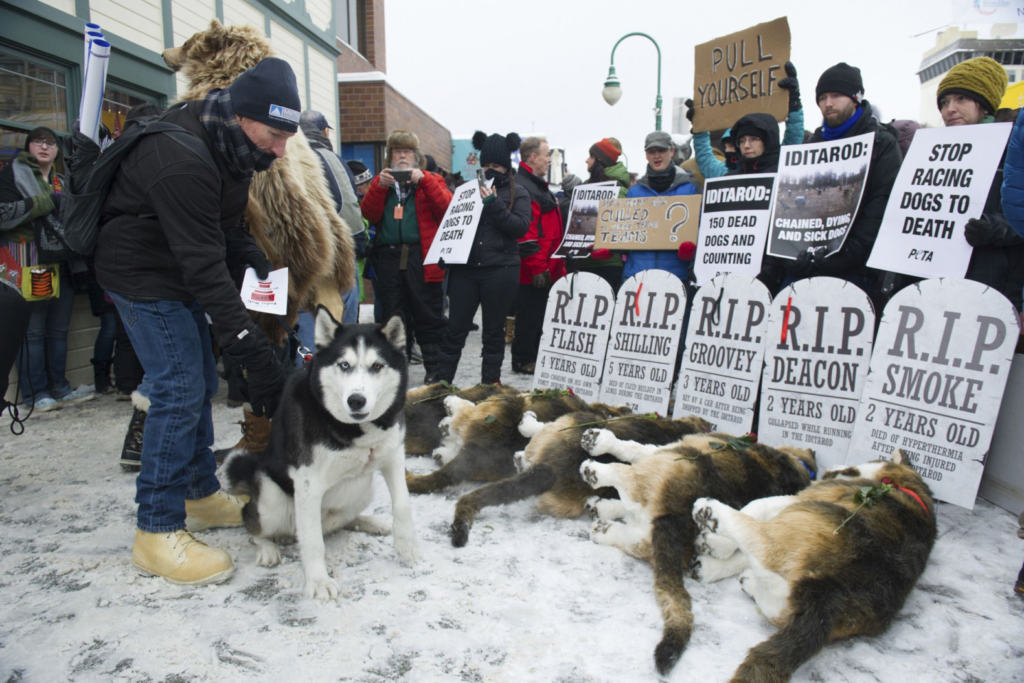
Perhaps the most troubling aspect of the debate involves dog fatalities.
Since the race began in the early 1970s, more than 150 dogs have reportedly died in connection with the event. While deaths are relatively rare compared with the thousands of dogs that have competed, each incident intensifies scrutiny over the safety of the race.
One of the leading causes of death identified in sled dog racing is aspiration pneumonia, which can occur when a dog inhales vomit during intense physical exertion.
Other deaths have been linked to heart failure, internal bleeding, hypothermia, or traumatic injuries.
Supporters of the race note that safety measures have improved over the decades and that fatalities are significantly less frequent today than in earlier years.
Nevertheless, critics argue that any sporting event involving repeated animal deaths warrants serious reevaluation.
Life Outside the Race
Another point of contention involves how sled dogs are treated outside the racing season.
Critics claim that many racing kennels keep dogs tethered to chains attached to small doghouses or barrels in open yards for much of their lives. Animal welfare advocates argue that these conditions limit social interaction and environmental enrichment for highly intelligent animals.
Mushers often respond that tethering systems allow dogs to move safely within kennel areas while preventing fights among large groups of energetic working animals.
Many kennels also incorporate regular exercise runs, training sessions, and social interaction as part of daily care routines.
The reality likely varies widely between individual operations, but the issue remains a major flashpoint in public debates about sled dog racing.
Legal and Regulatory Questions
In Alaska, sled dog racing occupies a unique legal position.
Certain traditional mushing practices are exempt from some animal cruelty statutes that might otherwise apply to other forms of animal labor or competition.
Supporters argue that these exemptions recognize the historical and cultural significance of sled dogs within Alaska.
Critics counter that such exemptions create loopholes that allow practices that might otherwise be considered abusive.
This legal framework has fueled calls from some advocacy groups for stronger protections for racing animals.
A Changing Public Conversation About Animal Welfare
The controversy surrounding the Iditarod reflects broader shifts in public attitudes toward animals.
Across the world, societies are reevaluating long-standing traditions that involve animals—from circuses and marine parks to horse racing and wildlife tourism.
Consumers and communities are increasingly asking whether entertainment or competition justifies potential harm to animals.
These evolving perspectives have led many industries to adopt stricter welfare standards or rethink certain practices entirely.
Sled dog racing now finds itself at the center of that cultural shift.
The Future of the Iditarod
Despite ongoing criticism, the Iditarod remains one of Alaska’s most recognizable events, drawing international attention and inspiring generations of mushers and dog enthusiasts.
However, the future of the race may depend on how organizers respond to growing concerns about animal welfare.
Some observers believe stronger veterinary oversight, shorter race distances, or expanded rest requirements could address certain criticisms while preserving the tradition of long-distance mushing.
Others argue that true reform requires reimagining the event entirely to ensure that the well-being of the dogs remains the central priority.
Why the Conversation Matters
The debate surrounding the Iditarod ultimately raises a deeper question about the relationship between humans and animals.
Working animals have long played roles in transportation, agriculture, and survival in harsh environments. Yet as societies evolve, so too do expectations about how those animals should be treated.
Examining traditions through the lens of modern science, ethics, and compassion does not necessarily mean abandoning them—but it does require thoughtful dialogue about how they should continue.
For advocates focused on animal welfare and environmental sustainability, the Iditarod represents more than a race. It is a moment to reconsider how cultural heritage, athletic competition, and humane treatment of animals can coexist in a changing world.
As the conversation continues, the voices of mushers, veterinarians, scientists, policymakers, and animal advocates will all play a role in shaping what comes next for sled dog racing—and for the animals whose strength and endurance have defined the sport for generations.