

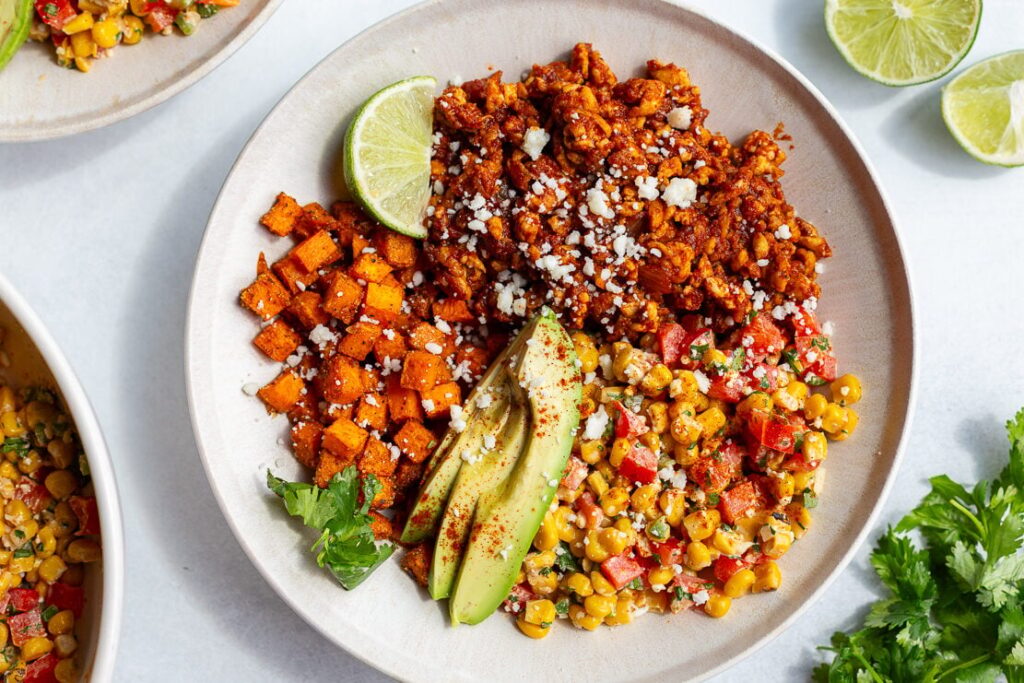
Mexican Street Corn Tofu Bowls Are Redefining the Viral Recipe Trend—A Bold, Plant-Forward Take That Actually Delivers. The next evolution of viral food culture isn’t just about recreating what’s trending—it’s about reengineering it into something smarter, more sustainable, and undeniably better. That’s exactly what’s happening right now inside the plant-forward movement, where comfort food classics are being reimagined without compromise. The latest standout is a fully vegetarian spin on the wildly popular street corn beef bowl concept—transformed into a deeply satisfying, flavor-loaded dish built around tofu, roasted vegetables, and vibrant, elote-inspired corn.
At Sustainable Action Now, this isn’t just another recipe—it’s a clear signal of where modern eating is heading. Flavor-first, resource-conscious, and designed for real-world cooking without sacrificing depth or texture, this dish captures the intersection of sustainability and crave-worthy food in a way that feels both accessible and elevated. Those looking to explore more recipes that align with this philosophy can dive deeper into the evolving collection available through the recipes section, where plant-forward cooking continues to push into new territory.
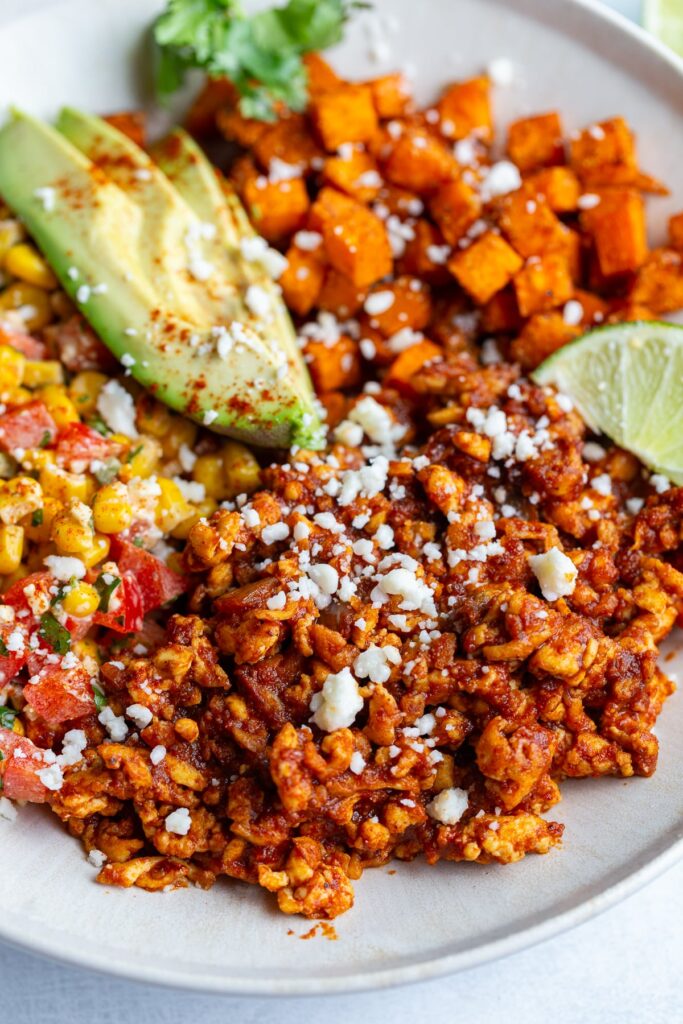
What makes this particular bowl resonate so strongly is its ability to translate a traditionally meat-heavy format into something equally indulgent, without relying on substitutes that feel processed or artificial. Instead, the core innovation centers on super-firm tofu—treated not as a compromise, but as a deliberate culinary tool. When shredded rather than cubed, tofu takes on a texture that closely mirrors ground meat, creating a base that is both hearty and adaptable. This approach allows it to absorb seasoning and sauce at a deeper level, resulting in a rich, savory profile that holds up against bold ingredients.
That seasoning is where the transformation becomes undeniable. The tofu is cooked until golden and slightly crisped, then coated in a layered sauce built on taco spices, tomato paste, salsa, and umami-forward elements that reinforce its depth. The result is a component that doesn’t try to imitate meat—it stands on its own as something just as satisfying, if not more dynamic.
Alongside it, roasted sweet potatoes introduce a natural sweetness and structural contrast that anchors the bowl. Tossed with seasoning and finished to achieve crisp edges and a tender interior, they deliver both substance and balance. The addition of cornstarch before roasting isn’t just a technique—it’s a strategic move that enhances texture, ensuring each bite has a subtle crunch that plays off the softness of the other elements.
The defining layer, however, is the street corn component. Inspired by traditional elote and esquites, this element brings everything together with a creamy, tangy, slightly smoky profile that cuts through the richness of the tofu and sweet potatoes. Built from corn combined with lime, garlic, chili, and a blend of creaminess, it introduces both brightness and complexity. Fresh additions like jalapeño, bell pepper, cilantro, and cotija cheese create a multidimensional finish that feels vibrant rather than heavy.
When assembled, the bowl operates as a complete system rather than a collection of ingredients. The tofu delivers depth, the sweet potatoes provide grounding, and the corn injects brightness and texture. Avocado adds a final layer of richness, while lime and herbs sharpen the overall profile, ensuring the dish remains balanced from start to finish.
This is exactly the kind of structure that defines modern sustainable cooking. It’s not about restriction—it’s about intelligent composition. Each element is chosen not just for flavor, but for how it contributes to the overall experience while maintaining a lower environmental footprint than traditional meat-based alternatives. Tofu, in particular, represents one of the most efficient protein sources available, requiring significantly fewer resources to produce while still delivering meaningful nutritional value.
Equally important is how approachable this recipe remains. Despite its layered flavor profile, it is built for real kitchens and real schedules. With a preparation time that fits comfortably into a weeknight routine, it removes the barrier that often prevents people from experimenting with plant-based meals. There’s no need for specialized equipment or hard-to-find ingredients—just a willingness to rethink familiar formats.
From a technical standpoint, the method reinforces best practices that elevate the final result. Shredding tofu increases surface area, allowing for better browning and absorption. Letting it cook long enough before adding sauce ensures moisture evaporates, preventing a soggy texture. Roasting vegetables at high heat promotes caramelization, enhancing natural sugars without additional ingredients. These are not minor details—they are the difference between a good dish and one that truly competes with its traditional counterpart.
Ingredients
For the sweet potato:
- 1 large sweet potato cut into bite-sized pieces
- ½ tablespoon olive oil
- 1 tablespoon taco seasoning
- salt and pepper to taste
- ½ tablespoon cornstarch
For the tofu taco meat:
- 15 oz extra firm tofu Super firm tofu also works great!
- 1 tablespoon olive oil divided
- 2 ½ tablespoons taco seasoning
- 3 tablespoons of your favorite salsa
- 1 teaspoon vegetarian beef bouillon*
- 1 ½ tablespoons soy sauce
- ⅓ cup water
- 2 tablespoons tomato paste
For the Mexican Street Corn Salad:
- 15 oz can of corn*
- 1 tablespoon sour cream or ideally, Crema Mexican Agria Sour Cream
- 1 tablespoon mayonnaise
- 1 large clove garlic minced
- ¼ teaspoon fine sea salt
- Juice and zest of ½ a lime
- ¼ teaspoon chipotle chili powder regular works as well
- ½ bell pepper finely diced*
- 1 small jalapeno finely diced (remove the seeds as desired)
- 2-3 tablespoons cotija cheese crumbled
- 2-3 tablespoons cilantro chopped
For serving:
- ½ avocado sliced or diced
- handful of cilantro chopped
Instructions
For the sweet potato:
- Preheat the oven to 425 degrees F.
- On a large baking tray, toss the sweet potato with the olive oil, salt + pepper, and taco seasoning. Spread in an even layer and roast for 25 minutes, tossing halfway, until fork-tender.
For the tofu “meat”:
- Using the large side of a box grater, shred the block of tofu. Some large chunks will fall off, so I take those and very gently push them through the grater.
- In a large skillet, heat ½ tablespoon of olive oil. Once hot, add in the shredded tofu and cook, stirring every couple of minutes, for about 10 minutes or until the tofu turns a golden brown color and most of the moisture has cooked out.
- Meanwhile, make the sauce by whisking together ½ tablespoon of olive oil, taco seasoning, salsa, bouillon, soy sauce, water, and tomato paste. Once the tofu has turned golden, add the sauce, stir, and cook for 2 more minutes.
For the street corn:
- Make the sauce by stirring together the sour cream, mayonnaise, garlic, salt, lime zest and juice, and chili powder.
- In a large bowl, combine the corn, bell pepper, jalapeno, cilantro, cotija cheese, and cream sauce. Toss to combine so that all of the corn is covered in the sauce.
Assemble:
- Assemble the bowls by dividing the tofu “beef”, sweet potato, street corn salad, avocado, and cilantro evenly among 2 bowls. Garnish with cilantro and ENJOY!
Notes
- Corn – you can also use 2 ears of cooked corn or 15oz of frozen corn, thawed
- Bell pepper – you can leave this out if you’d rather not have ½ of a bell pepper leftover.
- Bouillon – I highly recommend keeping some Better than Bouillon on hand at all times. This recipe calls for the vegetarian beef flavor, but I often just use the generic vegetarian bouillon. You could also use a bouillon cube OR swap the water in this recipe for broth.
Storage Instructions – Store each component separately in airtight containers in the fridge for up to 4 days. Reheat the tofu and sweet potatoes before assembling.
Nutrition
Calories: 749kcal | Carbohydrates: 87g | Protein: 30g | Fat: 36g | Saturated Fat: 7g | Polyunsaturated Fat: 9g | Monounsaturated Fat: 16g | Trans Fat: 0.01g | Cholesterol: 22mg | Sodium: 3141mg | Potassium: 1787mg | Fiber: 16g | Sugar: 25g | Vitamin A: 26330IU | Vitamin C: 58mg | Calcium: 244mg | Iron: 6mg
There is also a strategic flexibility built into the recipe that reflects how people actually cook. Ingredients can be adjusted based on availability, preferences, or dietary needs without compromising the integrity of the dish. Fresh, canned, or frozen corn all work effectively. The level of heat can be modified through jalapeño or chili adjustments. Even the dairy elements in the corn mixture can be adapted to suit different dietary approaches, making the dish more inclusive without diluting its impact.
Beyond the individual plate, this recipe represents a broader shift in how food trends are being interpreted. The viral cycle is no longer just about replication—it’s about evolution. Instead of simply recreating popular dishes, creators are asking how those dishes can be improved, made more sustainable, and aligned with a more thoughtful approach to consumption.
That shift matters. It signals a growing awareness that food is not just about taste, but about impact—on health, on resources, and on the systems that support production. Recipes like this one demonstrate that making more sustainable choices does not require sacrificing enjoyment. In fact, it often leads to more interesting, more layered, and ultimately more satisfying results.
Within the Sustainable Action Now framework, this is the standard moving forward. Recipes are not presented as isolated ideas—they are part of a larger ecosystem that encourages better decisions without losing sight of what makes food compelling in the first place. It’s about redefining expectations, proving that plant-forward meals can meet—and exceed—the benchmarks set by traditional formats.
This street corn tofu bowl is a clear example of that philosophy in action. It captures the energy of a viral trend, refines it through technique and intention, and delivers a final product that feels both familiar and entirely new. For anyone looking to rethink how they approach everyday meals, it offers a blueprint that is as practical as it is forward-thinking.
And importantly, it proves a point that continues to gain traction across the culinary landscape: the future of food isn’t about removing elements—it’s about building something better in their place. The Street Corn Tofu Bowls is a Food with Feeling Recipe.
The Modern Plant-Forward Salad Has Arrived: Why This Flavor-Driven Tofu Salad Is Setting a New Standard for Sustainable Eating
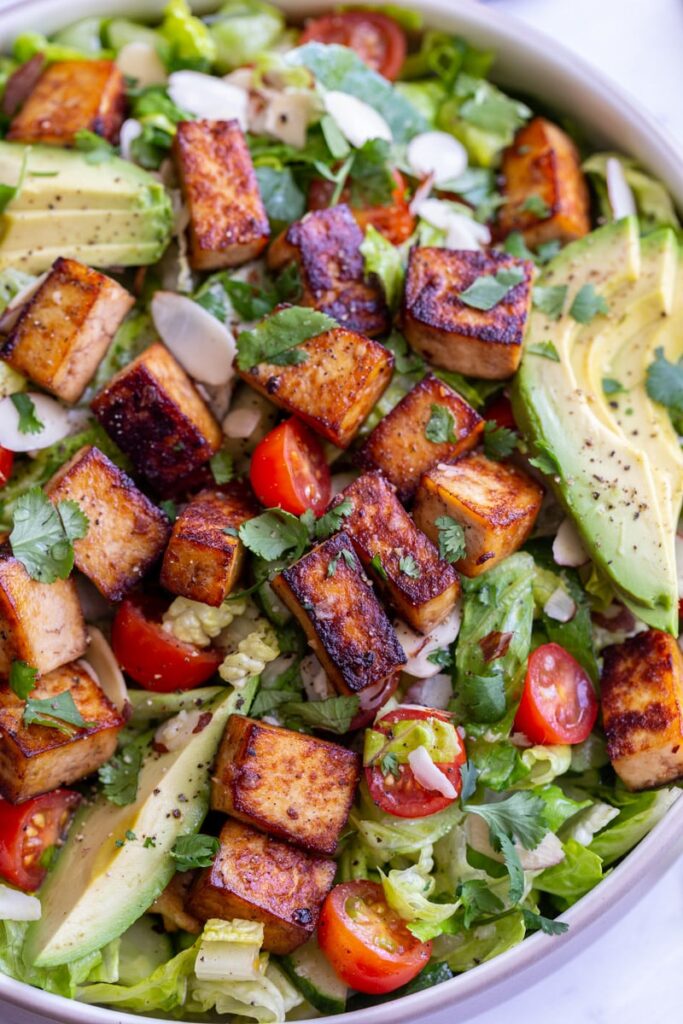
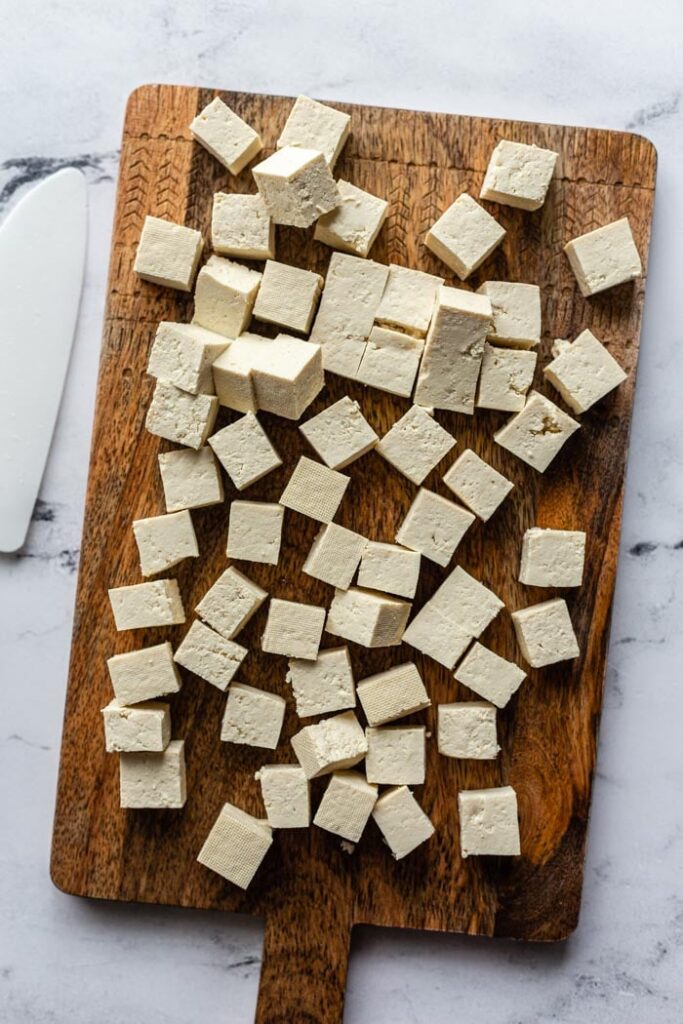
There is a quiet but undeniable shift happening in how people approach everyday meals, and it is no longer confined to niche dietary trends or temporary food movements. It is a structural change in how flavor, nutrition, and sustainability intersect on the plate. At the center of that shift is a new generation of recipes that do not rely on restriction or substitution as their defining characteristic, but instead build something compelling from the ground up. The latest standout emerging from the evolving recipes collection at Sustainable Action Now exemplifies this transformation with precision: a deeply satisfying tofu salad that redefines what a “simple salad” can actually be.
This is not a side dish. It is not an afterthought. It is a fully realized, flavor-forward composition designed to deliver texture, balance, and satiety in equal measure. Every element has a defined role, and together they create a meal that feels complete, intentional, and aligned with a more sustainable way of eating without sacrificing depth or satisfaction.
The foundation of the dish begins with tofu, but not in the passive, neutral way it is often treated. Here, tofu is engineered to carry the weight of the entire bowl. Through a carefully balanced marinade built from lemon juice, olive oil, balsamic vinegar, garlic, and a touch of natural sweetness, it becomes layered and dynamic rather than simply functional. This is a critical distinction. When tofu is given time to absorb flavor and then cooked to achieve a lightly crisped exterior, it develops both structure and character, transforming it into a centerpiece rather than a supporting ingredient.
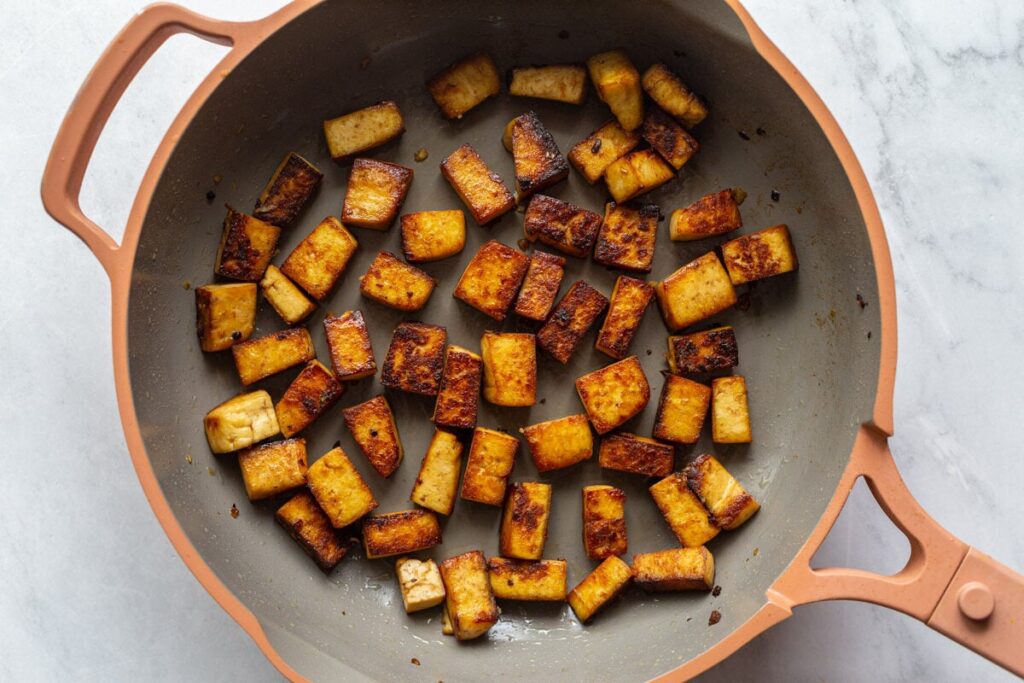
That transformation is amplified by technique. Whether pan-seared for controlled caramelization or air-fried for a lighter, crisp finish, the cooking method is not incidental—it is strategic. The goal is to remove excess moisture while building texture, ensuring that each bite offers resistance and richness instead of softness alone. For those working with super-firm tofu, the process becomes even more efficient, eliminating the need for pressing while maintaining density and integrity.
Surrounding that core is a carefully constructed framework of fresh components that elevate the entire dish. Crisp romaine provides the structural backbone, delivering the kind of clean, refreshing crunch that anchors each bite. Cucumbers extend that freshness while adding a subtle hydrating element that keeps the salad from feeling heavy. Tomatoes—whether cherry, grape, or peak-season varieties—introduce brightness and natural acidity, reinforcing the overall balance.
Ingredients
For the tofu:
- 14-16 ounce block of tofu
- 2 tablespoons olive oil
- 3 tablespoons balsamic vinegar
- 2 tablespoons water
- 2 tablespoons maple syrup
- 2 cloves garlic minced
- ¼ teaspoon salt
Herby Lemon Dressing:
- ¼ cup lemon juice
- ¼ cup olive oil
- 1 garlic clove minced
- 1 teaspoon dijon mustard
- 1 teaspoon maple syrup or honey
- 2 tablespoons fresh herbs 4-6 large basil leaves very finely diced
- Freshly ground salt and black pepper to taste
Salad:
- 2 large heads of romaine about 8 loosely packed cups of lettuce chopped
- ⅔ cup diced cucumber
- ⅔ cup cherry tomatoes halved
- 1 avocado diced or thinly sliced
- ¼ cup sliced almonds
Instructions
For the Tofu:
- Press your tofu (see my full guide on pressing tofu) and cut into your desired shape. I like larger cubes when serving in a salad but really anything works well.
- Make the marinade for the tofu by whisking together the olive oil, balsamic, water, maple syrup, garlic, and salt in a shallow dish. Put the tofu in and shake gently to coat the tofu in the marinade. Let sit for 15-30 minutes.
- To cook the tofu, you can bake it in the oven at 400 degrees for 15 minutes, flipping halfway. OR you can pan fry it, which is my favorite, by removing it from the marinade and putting it in a large skillet over medium heat. Flip every few minutes and cook until it’s lightly browned on all sides.
To make the dressing:
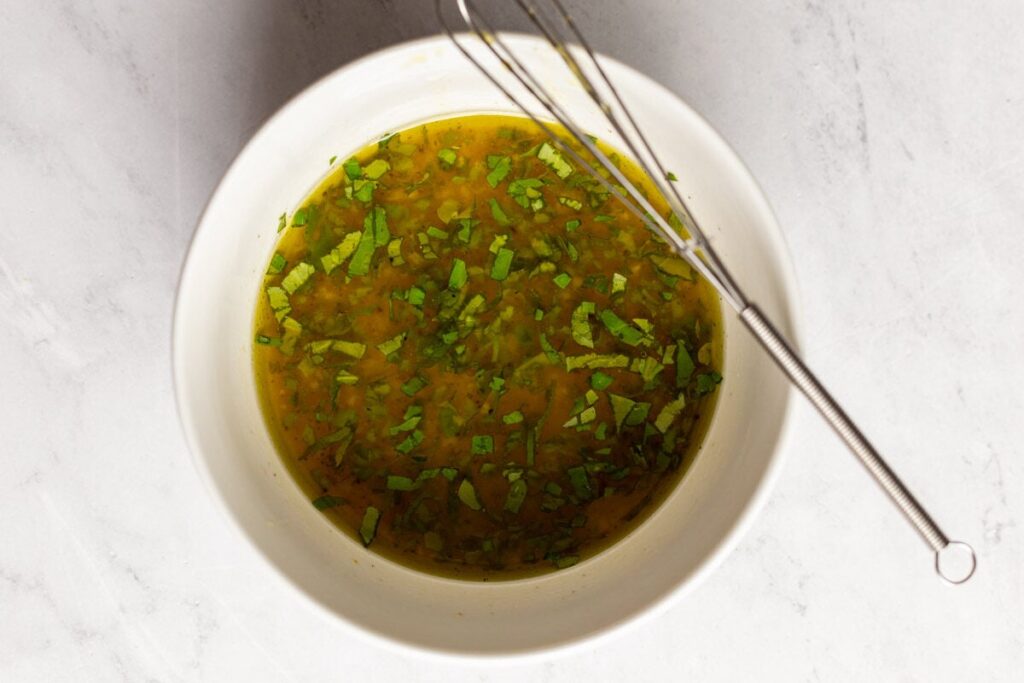
- Whisk together all of the ingredients in a medium bowl and set aside until ready to use.
To assemble the salad:
- Make the salad by layering in a large bowl the lettuce, cucumber, tomatoes, avocado and almonds. Pour on the dressing and toss gently to combine. Top with the tofu and any additional toppings.
- Serve and ENJOY! If making for meal prep, I suggest leaving off the avocado and simply add it right before serving or it will go brown.
Notes
Storage & Make-Ahead Tips:
- This salad doesn’t keep well for a long period of time because the avocado will brown and the almonds will become soft. However, it can be made in advance and stored as long as ingredients are stored separately. (Romaine, cucumbers and tomatoes together and everything else stored in separate containers — slice up the avocado right before serving).
- Dressing stays good for 3 to 5 days in an airtight container in the fridge. It can be made ahead of time — just shake it up before adding it to the salad.
Nutrition
Serving: 1serving | Calories: 876kcal | Carbohydrates: 43g | Protein: 24g | Fat: 71g | Saturated Fat: 9g | Polyunsaturated Fat: 13g | Monounsaturated Fat: 46g | Sodium: 352mg | Potassium: 949mg | Fiber: 11g | Sugar: 22g | Vitamin A: 2970IU | Vitamin C: 37mg | Calcium: 360mg | Iron: 5mg
Avocado plays a different but equally essential role. It introduces a layer of richness that rounds out the sharper elements, contributing healthy fats that enhance both flavor and satiety. This is not excess—it is calibration. The creaminess offsets the acidity of the dressing and the tang of the marinade, ensuring the dish remains cohesive rather than fragmented.
Texture, however, is where this salad truly separates itself from conventional expectations. Sliced almonds provide a precise counterpoint to the softer ingredients, delivering a nutty crunch that adds dimension and contrast. This interplay between crisp, creamy, and tender components is not accidental—it is engineered to keep the experience engaging from the first bite to the last.
The unifying element, and arguably the defining feature of the entire composition, is the herby lemon dressing. Bright, clean, and layered with subtle sweetness, it acts as both a finishing touch and a structural connector. Built from lemon juice, olive oil, garlic, Dijon mustard, and fresh herbs, it brings acidity, depth, and aromatic complexity into a single cohesive layer. It does not overwhelm—it sharpens. It does not mask—it enhances. This is the kind of dressing that elevates everything it touches, reinforcing the idea that simplicity, when executed correctly, can deliver remarkable results.
What makes this recipe particularly relevant within the broader Sustainable Action Now framework is its adaptability. This is not a rigid formula—it is a scalable system. The ingredient list invites variation without compromising integrity. Swap almonds for seeds, adjust herbs based on availability, introduce seasonal vegetables, or modify the dressing profile to suit different preferences. The structure remains intact because it is built on balance, not dependency.
That flexibility extends to preparation as well. The recipe accommodates both immediate cooking and strategic meal planning. Components can be prepared in advance and stored separately, allowing for quick assembly without sacrificing freshness. This is a crucial factor in real-world adoption, where convenience often determines whether a recipe becomes part of a regular rotation or fades into occasional use.
From a sustainability standpoint, the implications are significant. Tofu represents one of the most efficient protein sources available, requiring fewer resources than traditional animal-based proteins while still delivering meaningful nutritional value. By positioning it at the center of a dish that feels indulgent rather than restrictive, this recipe demonstrates how plant-forward eating can scale without compromise. It is not about removing elements from the plate—it is about replacing them with something equally compelling and more responsible.
Nutritionally, the composition reinforces that approach. The combination of plant-based protein, fiber-rich vegetables, and healthy fats creates a meal that is both satisfying and balanced. It sustains energy without excess, supports overall health without complexity, and aligns with a broader shift toward more intentional eating patterns.
There is also a cultural dimension to this evolution that cannot be ignored. The modern consumer is no longer satisfied with generic “healthy” options that lack identity or excitement. There is an expectation of flavor, of creativity, of something that feels worth choosing rather than merely acceptable. This tofu salad meets that expectation directly. It does not present itself as an alternative—it presents itself as the preferred option.
Within the expanding ecosystem of Sustainable Action Now, this is exactly the kind of recipe that defines the platform’s trajectory. It reflects a commitment to innovation without unnecessary complication, to sustainability without sacrifice, and to flavor without shortcuts. It is practical enough for everyday cooking, yet refined enough to stand alongside more complex dishes without feeling diminished.
The broader takeaway is clear. The future of food is not about categorizing meals as plant-based or traditional—it is about elevating the standard across the board. Recipes like this one are leading that shift by proving that thoughtful composition, strategic technique, and high-quality ingredients can produce results that exceed expectations on every level.
This tofu salad is not just another entry in a growing collection. It is a benchmark. It captures where modern cooking is headed and demonstrates, in a single, cohesive dish, how sustainability and satisfaction are no longer competing priorities—they are the same objective, executed correctly. The Tofu Salad is a Food with Feeling Recipe.
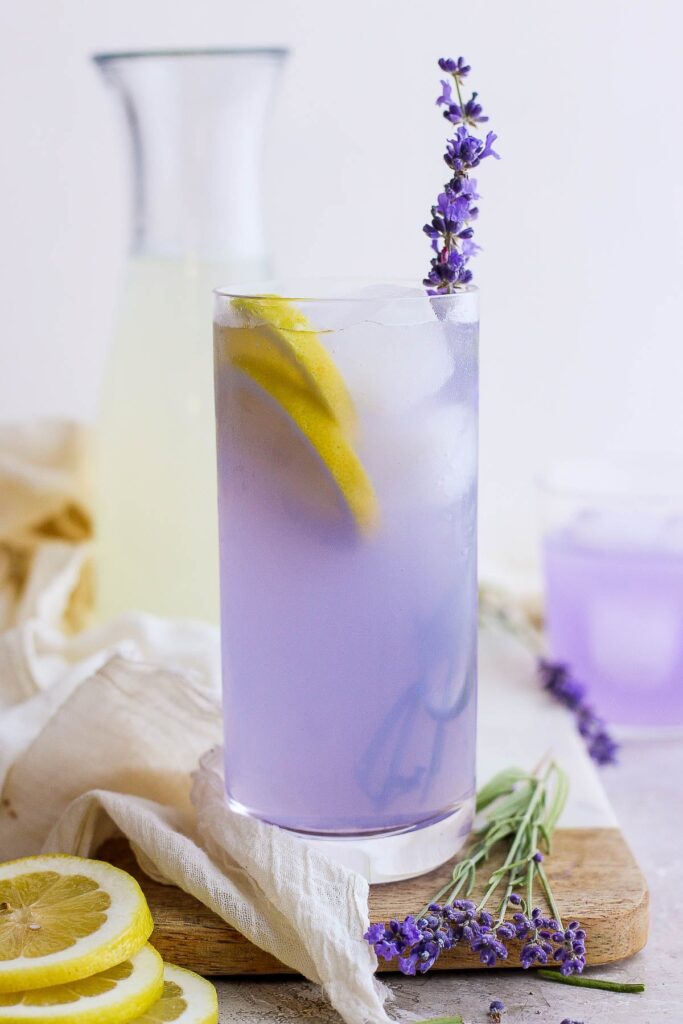
Lavender Lemonade Is the Elevated Summer Essential Redefining Refreshment Through Simplicity, Sustainability, and Flavor Precision

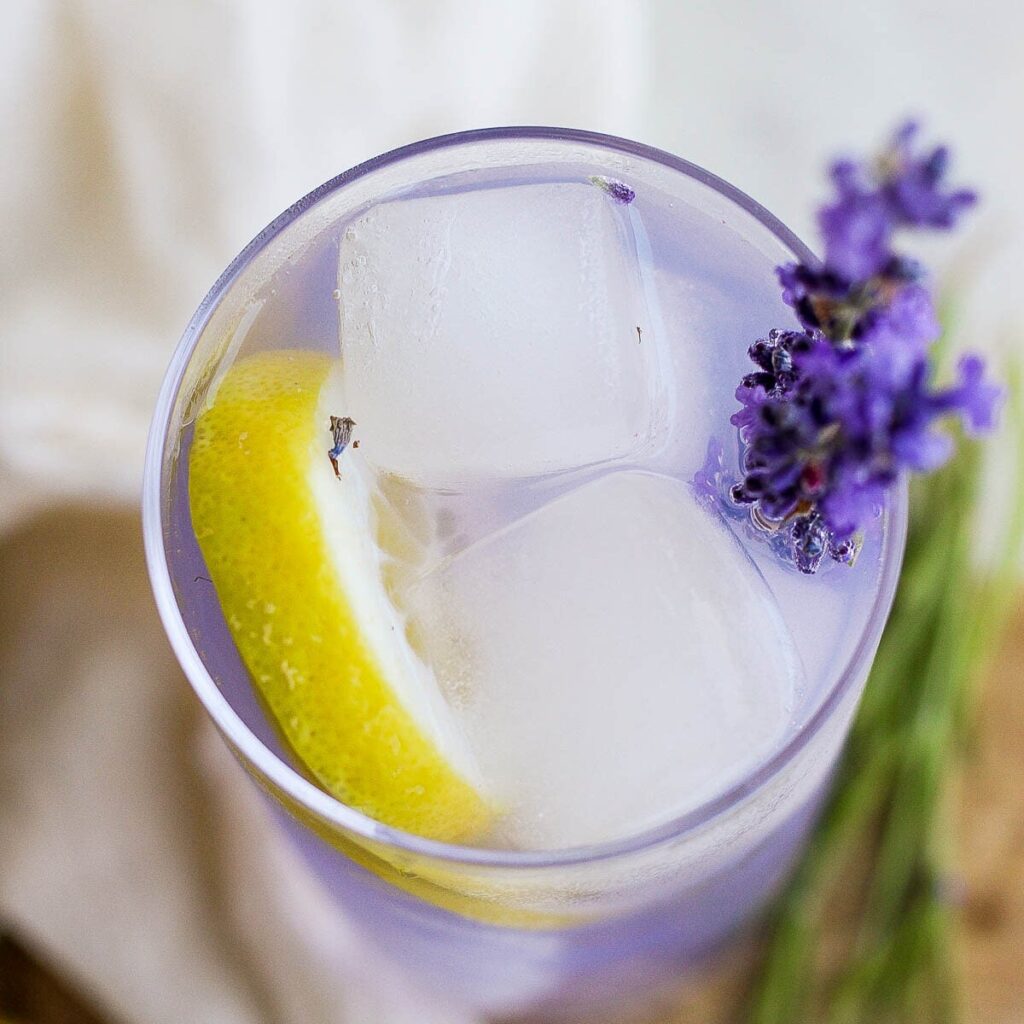
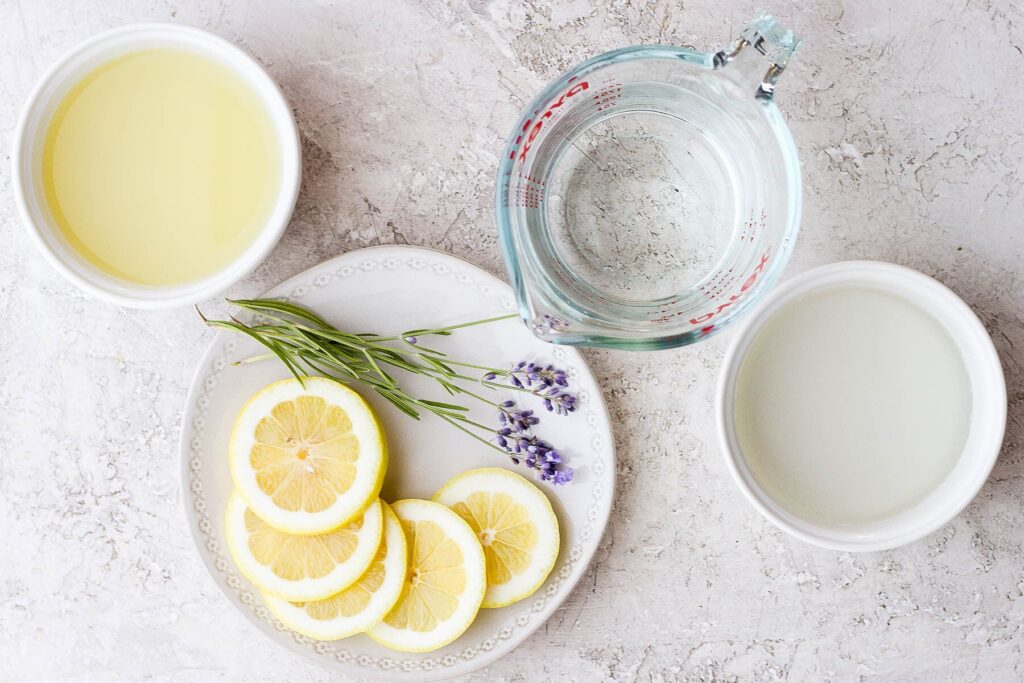
There are moments in seasonal cooking when a single recipe captures more than just taste—it captures a mood, a pace, and a philosophy. This is one of those moments. As temperatures rise and the rhythm of daily life shifts outdoors, the demand for something refreshing becomes more than a preference—it becomes essential. What’s emerging now from the evolving recipes collection at Sustainable Action Now is not just another summer beverage, but a refined expression of what modern refreshment should look like: clean, intentional, and unmistakably elevated without losing its accessibility.
Lavender lemonade, at its core, is deceptively simple. Lemon, water, sweetness, and a subtle infusion of floral notes. But in execution, it becomes something far more sophisticated. It transforms a familiar classic into an experience that feels curated rather than routine, offering a layered flavor profile that is both immediately refreshing and quietly complex. This is not about reinventing lemonade—it is about perfecting it.
What sets this version apart is its balance. The citrus delivers brightness and clarity, cutting through the heat with precision. The sweetness is controlled, not overwhelming, designed to support rather than dominate. And then there is the lavender—arguably the defining element—which introduces a delicate floral note that lingers just enough to elevate the entire composition without ever becoming overpowering. Achieving that balance is not accidental; it is the result of deliberate technique and restraint.
The foundation begins with a lavender-infused simple syrup, a component that carries both flavor and structure. By gently steeping culinary-grade lavender into a traditional sugar-water base, the syrup absorbs the plant’s aromatic qualities while maintaining clarity and smoothness. Timing here is critical. Over-steeping can introduce bitterness or a soapy edge, while a controlled infusion results in a clean, floral undertone that integrates seamlessly into the final drink. This is where the difference between novelty and refinement becomes clear.
Once the syrup is prepared and cooled, it is combined with fresh lemon juice and water to form the base of the lemonade. The choice of lemons plays a subtle but meaningful role. Meyer lemons, when available, introduce a softer, slightly sweeter citrus profile, while standard lemons provide a sharper, more traditional acidity. Both are effective, and the flexibility allows the recipe to adapt to availability without compromising its integrity.
The result is a beverage that operates on multiple levels. On the surface, it is immediately refreshing—cold, crisp, and hydrating. Beneath that, it reveals layers of flavor that unfold gradually: the initial citrus brightness, followed by a gentle sweetness, and finally the lingering floral note that defines its character. It is this progression that elevates the drink from something functional to something memorable.
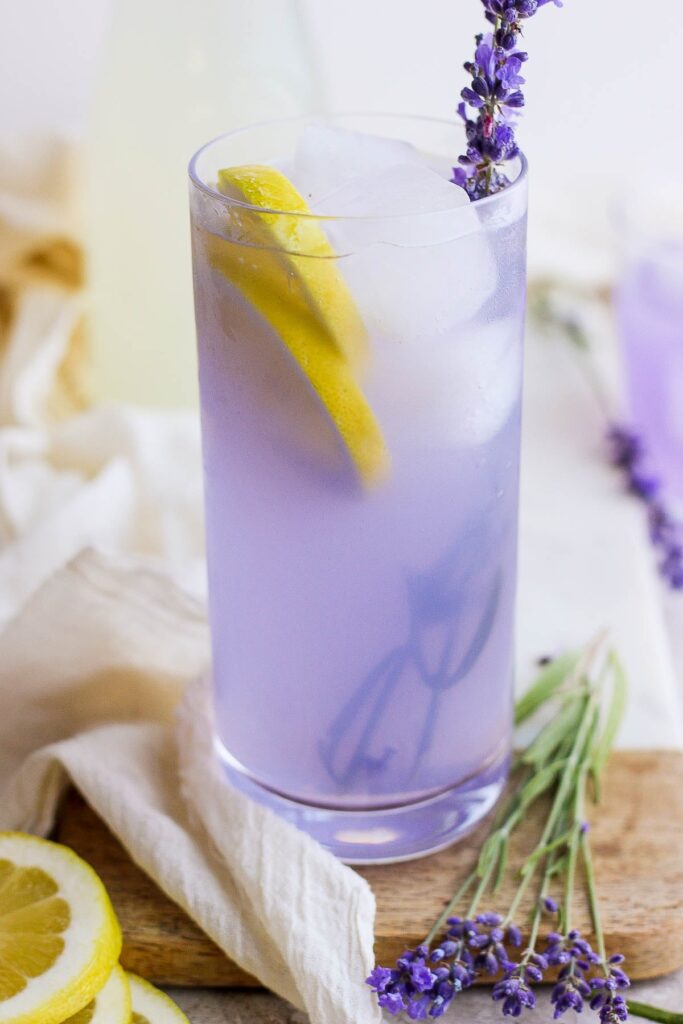
This delicious Lavender Lemonade is a refreshing, lightly floral twist on classic lemonade. Made with homemade lavender syrup, it’s simple, beautiful, and perfect for warm weather.
Ingredients
For the Syrup:
- 1 ¼ cup sugar*
- 1 cup water
- 1 ½ tablespoons dried lavender
For the lemonade:
- 1 batch of syrup from above
- 6 cups water
- 1 ¼ cups lemon juice freshly squeezed is great but from a bottle certainly works!
- Fresh lavender and lemon slices for garnish
- Optional for color: 1-2 drops of purple food coloring*
Instructions
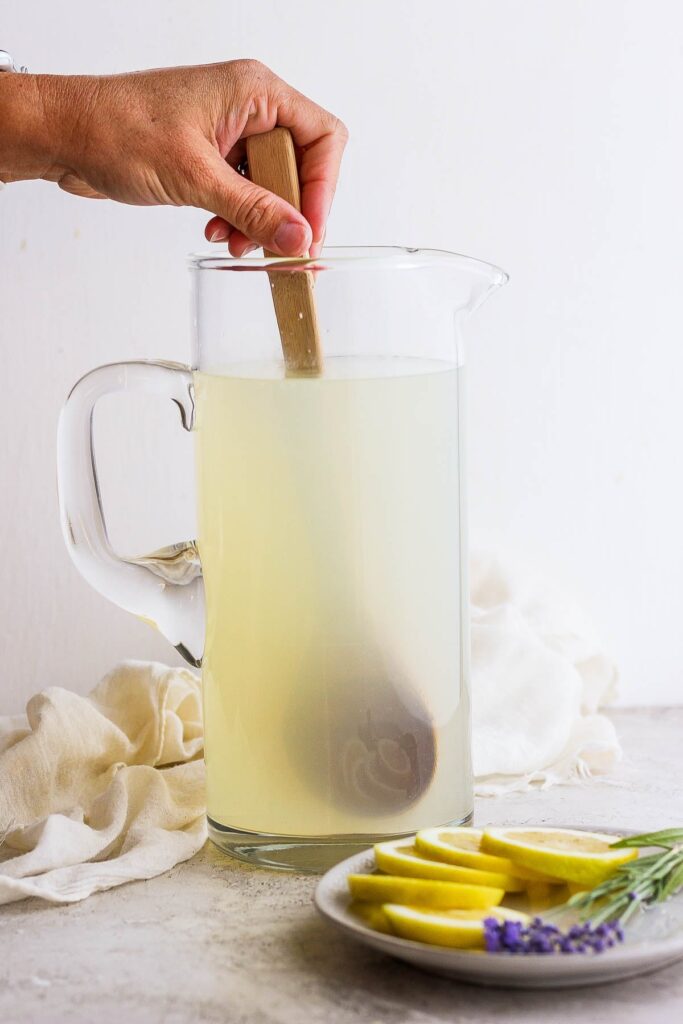
- In a small saucepan, combine the water, sugar, and lavender and place over medium heat. Bring the mixture to a simmer and lower the heat a bit. Cook over low heat, stirring frequently, for about 5 minutes at which time the sugar should have completely dissolved and the syrup started to thicken. Let cool for 5 minutes and then strain the mixture through a fine mesh sieve to remove the lavender. Place in the fridge to cool.
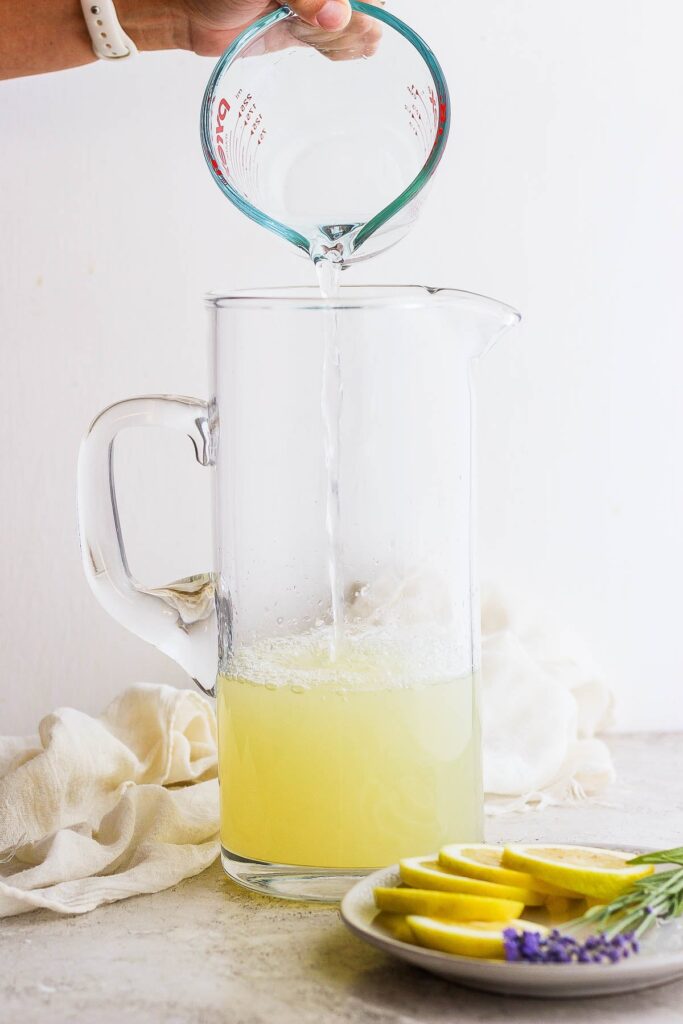
- In a large pitcher, stir together the cooled lavender simple syrup, 6 cups of water and the lemon juice. Mix until fully combined and then garnish with fresh lavender and lemon slices.
- As desired, mix 1-2 drops of purple food coloring into each glass of lemonade to give it the classic lavender color.
- Store leftovers in the fridge and ENJOY!
Notes
*The food coloring is optional but gives it that fun purple color. I mixed in just one drop of neon purple gel food coloring to each individual glass.
Try a fun spiked version by mixing in your desired amount of vodka, gin, etc.
Storage Instructions – Store leftover lavender lemonade in the refrigerator for up to 4 days. Stir before serving, as ingredients may settle. The syrup can also be stored separately for up to 1 week.
Nutrition
Serving: 1drink | Calories: 173kcal | Carbohydrates: 45g | Protein: 0.2g | Fat: 0.3g | Saturated Fat: 0.02g | Polyunsaturated Fat: 0.01g | Monounsaturated Fat: 0.003g | Sodium: 15mg | Potassium: 53mg | Fiber: 0.2g | Sugar: 43g | Vitamin A: 14IU | Vitamin C: 20mg | Calcium: 20mg | Iron: 0.1mg
Equally important is the adaptability built into the recipe. This is not a rigid formula—it is a framework that encourages personalization. The intensity of the lavender can be adjusted through the syrup concentration. The sweetness can be scaled up or down depending on preference. Even the texture can shift, with the option to introduce sparkling water for a more dynamic, effervescent finish. For those looking to create a more festive version, the addition of spirits such as gin or vodka integrates naturally, reinforcing the drink’s versatility across different settings.
From a sustainability perspective, the value of this recipe extends beyond its ingredients. It represents a move toward more intentional consumption—choosing to make something fresh rather than relying on pre-packaged alternatives that often contain unnecessary additives and excess sugar. By focusing on whole ingredients and simple processes, it aligns with a broader effort to reduce waste and prioritize quality over convenience without sacrificing ease.
There is also a practical efficiency to the approach. The lavender syrup can be prepared in advance and stored, allowing for quick assembly whenever needed. This makes it particularly well-suited for hosting, where consistency and timing matter. Whether served at a summer gathering, a casual outdoor meal, or simply as a personal reset on a warm afternoon, it delivers the same level of quality with minimal effort once the foundational components are in place.
Presentation, while not essential, becomes an extension of the experience. A slice of lemon, a sprig of lavender, or even a subtle hint of color can transform the drink visually, reinforcing its elevated nature. These details are optional, but they underscore a larger point: this is a recipe designed to feel intentional from start to finish.
What makes this lavender lemonade especially relevant within the Sustainable Action Now ecosystem is how seamlessly it bridges the gap between simplicity and sophistication. It proves that a recipe does not need to be complex to be impactful. It does not require rare ingredients or elaborate techniques to stand out. Instead, it relies on precision, balance, and an understanding of how small adjustments can create a significantly better outcome.
This is the direction modern recipes are heading. Less about excess, more about clarity. Less about replication, more about refinement. In that context, lavender lemonade is not just a seasonal favorite—it is a case study in how thoughtful cooking and preparation can elevate even the most familiar concepts into something that feels entirely new.
As more people look for ways to align their daily habits with broader sustainability goals, recipes like this provide a clear path forward. They are approachable enough to become part of a regular routine, yet distinctive enough to feel special every time. They encourage creativity without requiring complexity, and they deliver results that resonate beyond the immediate moment.
Lavender lemonade, in this form, is not just a drink. It is a reflection of a larger shift—one that prioritizes quality, intention, and experience in equal measure. And as that shift continues to shape the future of food and drink, it is exactly this kind of recipe that will define what comes next. The Easy Lavender Lemonade is a Food with Feeling Recipe.
Cinnamon Oatmeal Is the Quiet Powerhouse of Sustainable Mornings—A Nutrient-Dense, Flavor-Forward Reset for How We Start the Day
There is a growing recognition that the most impactful changes in how we eat do not come from dramatic overhauls or extreme diets, but from refining the fundamentals. Breakfast, often overlooked or rushed, is where that transformation is becoming most visible. At Sustainable Action Now, the latest addition to the evolving recipes collection brings that philosophy into sharp focus with a deceptively simple dish that delivers far more than its minimal ingredient list suggests. Cinnamon oatmeal, when executed with intention and precision, becomes more than a routine—it becomes a foundation for sustainable, consistent, high-quality nutrition.
This is not the instant oatmeal many people have come to associate with convenience. It is a deliberate return to whole ingredients, balanced flavor, and controlled preparation that produces a result significantly more satisfying, both nutritionally and experientially. What distinguishes this approach is not complexity, but clarity—understanding how each component contributes to the final outcome and optimizing it accordingly.
At its core, oatmeal is built on one of the most efficient and nutritionally valuable grains available. Whole oats provide a combination of fiber, plant-based protein, and essential micronutrients that support sustained energy rather than short-term spikes. Central to that profile is beta-glucan, a soluble fiber that plays a measurable role in supporting cardiovascular health and stabilizing blood sugar levels. This is not incidental—it is one of the reasons oats continue to hold a foundational place in health-conscious eating patterns.
However, the nutritional value alone does not define the success of this recipe. The transformation happens in how those oats are prepared and paired. Using a liquid base such as oat milk or coconut milk introduces a level of creaminess that water alone cannot replicate, enhancing both texture and flavor without requiring additional processing or additives. The result is a consistency that feels substantial and satisfying, rather than thin or utilitarian.
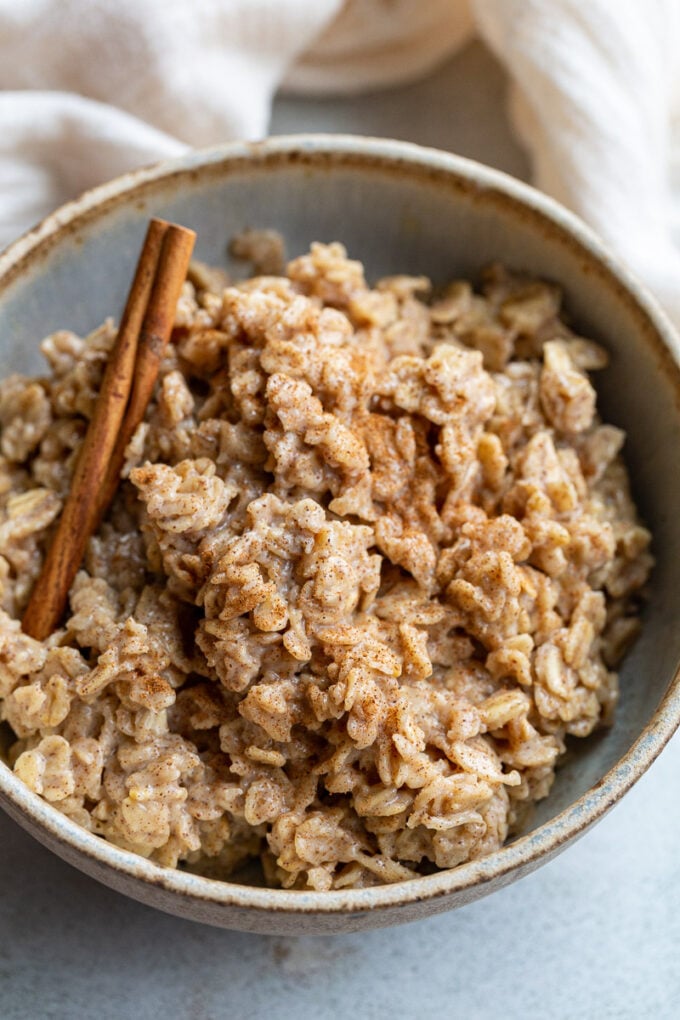
Cinnamon serves as more than a flavoring agent—it is a structural element within the dish. Its warm, aromatic profile brings depth and cohesion, reinforcing the natural sweetness of the oats while adding its own layer of complexity. Beyond taste, cinnamon contributes antioxidant properties that align with the broader health focus of the recipe, making it both a culinary and functional addition.
Ingredients
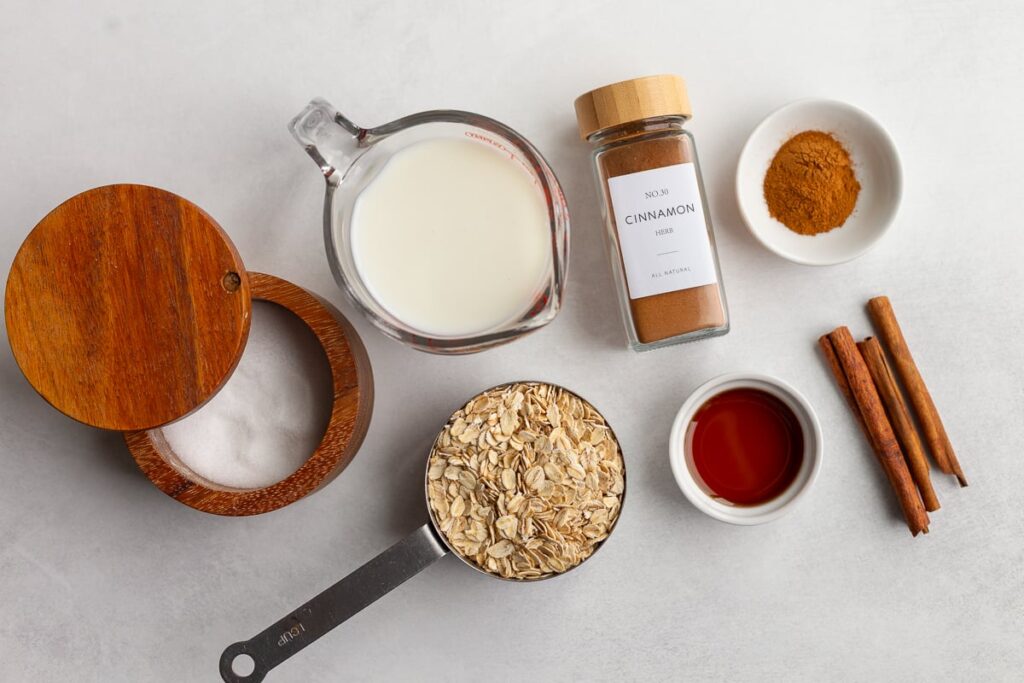
- 1 cup milk or water*
- 1 cup old fashioned oats
- 1 tablespoon honey or maple syrup or brown sugar
- pinch salt
- 1 ½ teaspoons cinnamon
- For serving: additional sweetener cinnamon, nuts, apples
Instructions
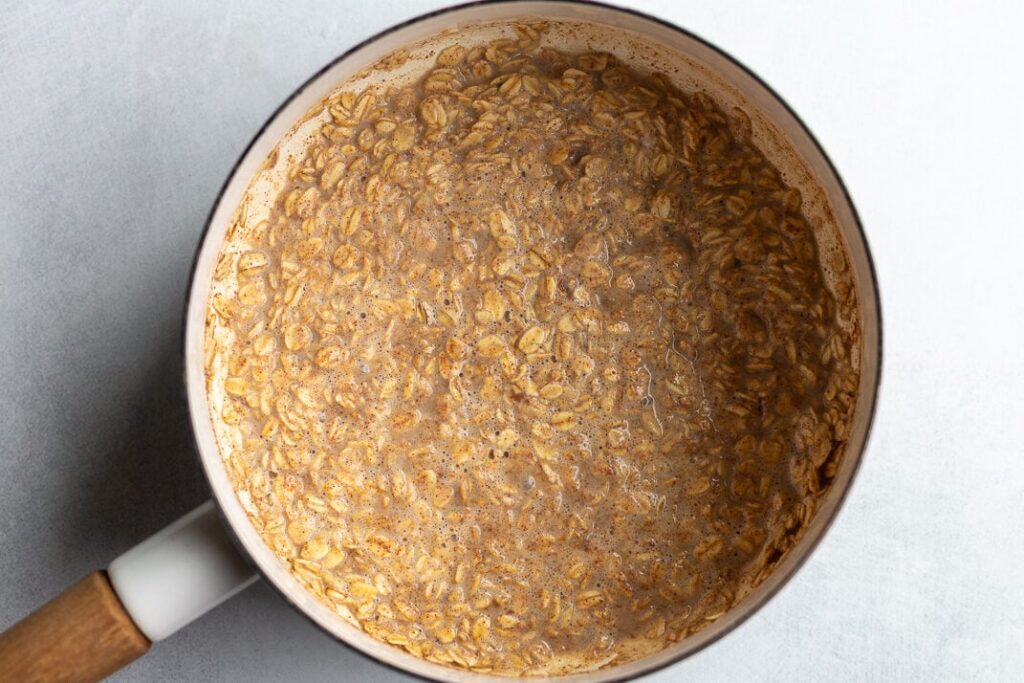
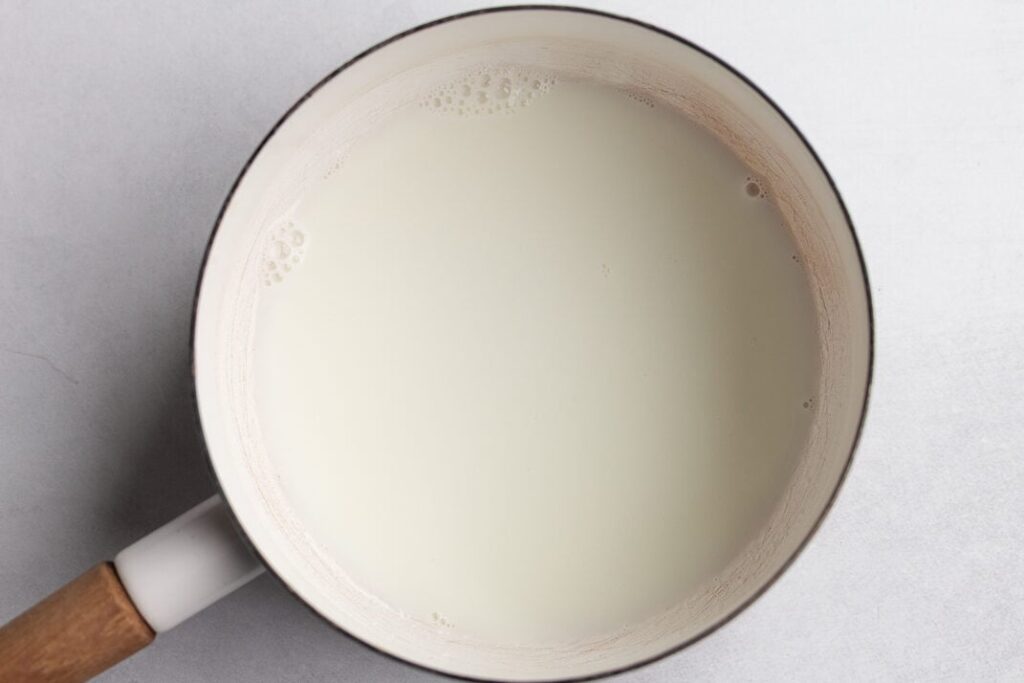
- In a medium saucepan, bring the milk/water to a boil. Once boiling, stir in the oats, maple syrup, salt, and cinnamon until well combined.
- Lower the heat to a simmer and cook the oatmeal, stirring often, for 5 minutes.
- Remove from the heat and stir in any additional sweetener and add any toppings as desired. Serve and enjoy!
Notes
*Use with oat milk or coconut milk. Both result in a deliciously creamy texture in the oatmeal. But water also works well! Leftover oatmeal can be refrigerated for up to about 5 days or frozen for 3 months. Reheat in the microwave or on the stove, adding milk or water as needed for the right consistency.
Nutrition
Calories: 262kcal | Carbohydrates: 43g | Protein: 9g | Fat: 7g | Saturated Fat: 3g | Polyunsaturated Fat: 1g | Monounsaturated Fat: 2g | Cholesterol: 15mg | Sodium: 49mg | Potassium: 342mg | Fiber: 5g | Sugar: 15g | Vitamin A: 202IU | Vitamin C: 0.1mg | Calcium: 187mg | Iron: 2mg
Sweetness, when included, is approached with restraint and purpose. Natural options such as honey or maple syrup integrate seamlessly into the dish, providing just enough contrast to the earthiness of the oats without overwhelming them. This is a critical distinction. The goal is not to mask the base ingredients, but to enhance them. The flexibility to adjust sweetness levels ensures the recipe can meet a range of preferences while maintaining its integrity.
What elevates this oatmeal further is its adaptability. It is not a fixed composition, but a framework that invites personalization without sacrificing balance. The addition of vanilla introduces a subtle aromatic lift. Spices such as nutmeg, ginger, or allspice can deepen the flavor profile. Fresh fruit, nuts, or seeds contribute texture and nutritional diversity, while nut butters add richness and additional protein. Each variation builds on the same foundation, allowing the dish to evolve without losing its core identity.
From a technical perspective, the stovetop method remains the most effective approach for achieving optimal results. Bringing the liquid to a controlled boil before introducing the oats ensures even hydration, while reducing the heat to a simmer allows the mixture to thicken gradually. This controlled cooking process is essential for developing the creamy texture that defines high-quality oatmeal. Rushing the process or relying solely on convenience methods often compromises that outcome.
Equally important is what happens after cooking. Allowing the oatmeal to rest briefly before serving gives it time to thicken naturally, intensifying both texture and flavor. This small step reflects a broader principle within sustainable cooking—patience and precision often yield better results than speed alone.
The practicality of this recipe cannot be overstated. In just over ten minutes, it delivers a complete, balanced meal that can anchor an entire morning. It scales easily for meal preparation, making it possible to cook in batches and store for later use without significant loss of quality. When reheated with a small addition of liquid, it returns to its intended consistency, maintaining both flavor and structure. This makes it an ideal solution for those balancing time constraints with a desire for higher-quality food.
From a sustainability standpoint, oats represent a low-impact ingredient with a strong nutritional return. They require fewer resources to produce compared to many other staple foods, making them a responsible choice for those looking to align their diets with broader environmental considerations. By building a meal around oats and complementing them with plant-based additions, this recipe reinforces a model of eating that is both efficient and effective.
There is also a broader cultural shift reflected in the renewed focus on dishes like this. As consumers move away from highly processed, pre-packaged options, there is a growing demand for meals that feel both intentional and achievable. Cinnamon oatmeal meets that demand by offering a solution that is as practical as it is refined. It does not rely on novelty or complexity to stand out—it succeeds through execution and consistency.
Within the Sustainable Action Now ecosystem, this recipe represents a clear standard. It demonstrates that sustainable eating does not require sacrifice or compromise. It can be simple, repeatable, and deeply satisfying. It can fit seamlessly into daily routines while still delivering measurable benefits.
)
What ultimately defines this cinnamon oatmeal is its ability to transform a familiar concept into something that feels purposeful and elevated. It is a reminder that the most effective changes often come from refining what already exists, rather than replacing it entirely. By focusing on quality ingredients, precise technique, and balanced composition, it sets a benchmark for what everyday meals can and should be.
In a landscape where food trends often prioritize speed and spectacle, this recipe offers something more durable. It is grounded, reliable, and adaptable—qualities that ensure it will remain relevant long after more fleeting ideas fade. And in that sense, it is not just a recipe. It is a blueprint for how sustainable, intentional eating can begin, one morning at a time. The Cinnamon Oatmeal is a Food with Feeling Recipe.
The Creamy Avocado Dressing That’s Redefining Plant-Based Flavor—A Clean, Nutrient-Rich Upgrade to Everything You Eat
STEP #1: Prep your ingredients
Gather everything you need. Wash and finely mince the cilantro. Slice the avocado, remove the pit, and scoop the flesh into your blender or food processor.
STEP #2: Blend until smooth
Add all the remaining ingredients, except the cilantro, and blend until creamy. If needed, add a small amount of additional water to help it blend smoothly.
)
STEP #3: Adjust the consistency
For a thinner, pourable dressing, add more water or a little extra lemon juice, one tablespoon at a time, until it reaches your desired texture.
Stir in the chopped cilantro.
)
STEP #4: Serve and enjoy
Drizzle over salads, grain bowls, bean tacos, or nachos—or use it as a dip for fresh veggies.
There is a clear evolution underway in how everyday cooking is being approached, and it is no longer centered on replacing ingredients—it is about upgrading them. The modern kitchen is moving toward simplicity that performs, where fewer ingredients deliver more impact, and where flavor, nutrition, and sustainability are engineered into every component. The latest standout emerging from the expanding recipes collection at Sustainable Action Now captures that shift with precision: a clean, dairy-free avocado dressing that transforms even the most basic meal into something elevated, intentional, and deeply satisfying.
This is not a dressing designed to sit quietly on the sidelines of a dish. It is a structural element—one that binds, enhances, and elevates everything it touches. Built around whole, recognizable ingredients and free from oil-heavy or processed shortcuts, it delivers the kind of creamy texture typically associated with far more complex preparations, while maintaining a nutritional profile that aligns with a smarter, more sustainable way of eating.
At the center of the recipe is avocado, an ingredient that has become synonymous with both versatility and nutrient density. Its natural composition provides a built-in creaminess that eliminates the need for dairy or emulsified oils, allowing the dressing to achieve a rich, velvety consistency through whole food alone. This is not just a stylistic choice—it is a functional advantage. Avocados are rich in monounsaturated fats, which contribute to satiety and support cardiovascular health, while also enhancing the body’s ability to absorb fat-soluble nutrients from other ingredients. In practical terms, this means the dressing does more than add flavor—it improves the overall nutritional value of the meal it accompanies.
The supporting ingredients are selected with equal intention. Citrus—whether lemon or lime—introduces brightness and acidity, cutting through the richness of the avocado and creating a balanced, dynamic profile. A small amount of natural sweetness, often from maple syrup, rounds out the sharper edges, ensuring the dressing feels cohesive rather than fragmented. Aromatics such as garlic and shallot add depth and subtle complexity, reinforcing the savory backbone without overwhelming the fresher elements.
What distinguishes this recipe is not just what is included, but what is excluded. There are no unnecessary additives, no stabilizers, and no long, unrecognizable ingredient lists. Every component serves a clear purpose, contributing either to flavor, texture, or nutritional value. This clarity is what allows the dressing to feel both clean and complete at the same time.
From a technical standpoint, the preparation is deliberately streamlined. A ripe avocado forms the base, ensuring a smooth blend and consistent texture. The remaining ingredients are combined and processed until fully emulsified, creating a uniform consistency that can be adjusted based on intended use. This adaptability is critical. By controlling the amount of liquid—whether water or additional citrus—the dressing can shift from a thick, spreadable format to a lighter, pourable consistency suitable for drizzling. This flexibility makes it not just a single-use recipe, but a multi-functional component that can be integrated across a wide range of meals.
And that versatility is where the recipe truly expands its value. On a crisp green salad, it replaces heavier dressings with something that feels both lighter and more flavorful. On a grain bowl, it acts as a unifying layer, tying together diverse ingredients into a cohesive whole. As a dip, it offers a healthier alternative to traditional options, pairing naturally with fresh vegetables. It can be spread onto wraps, layered into sandwiches, or used to finish roasted vegetables, adding both richness and brightness in a single step. This is not just a dressing—it is a foundational tool for building better meals.
The customization potential reinforces its role as a staple. Heat can be introduced through jalapeño or chili flakes, creating a sharper, more assertive version. Fresh herbs can shift the profile toward a more herbaceous, green-forward direction, while subtle adjustments—such as swapping citrus for vinegar or altering the sweetener—allow for nuanced variations without compromising the integrity of the base. This is a recipe designed to evolve alongside the preferences and creativity of the person making it.
There is also a practical intelligence built into its design. Because it relies on fresh, minimally processed ingredients, it is best prepared in small batches, ensuring peak flavor and texture. Proper storage techniques—such as limiting air exposure and leveraging the natural acidity of citrus—extend its usability while maintaining quality. These are small considerations, but they reflect a broader commitment to intentional cooking, where freshness and efficiency are prioritized over convenience alone.
From a sustainability perspective, the implications are significant. By replacing oil-heavy and dairy-based dressings with a whole-food alternative, this recipe reduces reliance on more resource-intensive ingredients while still delivering a premium experience. It aligns with a growing emphasis on plant-forward eating that does not compromise on taste or satisfaction. Instead, it proves that the most effective changes are often the simplest—replacing a single component with a better version that enhances the entire meal.
This is exactly the kind of approach that defines the direction of Sustainable Action Now. It is not about extremes or limitations—it is about precision, quality, and impact. Recipes are designed to integrate seamlessly into daily life while raising the standard of what everyday food can be. They are practical enough to be repeated consistently, yet refined enough to feel intentional every time.
The broader takeaway is clear. The future of food is not about reinventing everything from scratch—it is about refining the elements that matter most. A dressing might seem like a small detail, but it has the power to transform an entire dish. When that detail is executed with the level of thought and balance seen here, it becomes something far more significant.
This creamy avocado dressing is not just another addition to a growing collection—it is a clear example of how modern recipes can deliver more with less. It is efficient, adaptable, and deeply aligned with a more thoughtful approach to eating. And as that approach continues to define the next phase of home cooking, it is exactly this kind of recipe that will move from optional to essential. The Healthy Avocado Dressing Recipe (Dairy Free) is an EatPlant-Based Recipe.