

There are moments in advocacy filmmaking when a campaign stops feeling like a message and starts feeling like confrontation.
Not metaphorically. Emotionally.
The new short film Bodies of Research does exactly that.
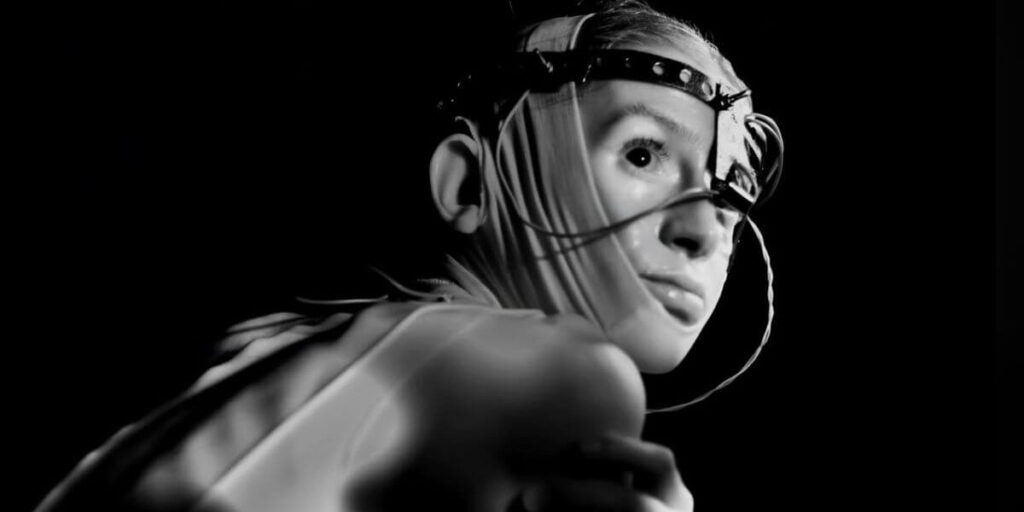
Released through PETA on May 18, 2026 and created by filmmakers Favio Vinson and Andres Gomez Orellana, the one-minute horror-style PSA has rapidly become one of the most unsettling and psychologically aggressive anti-animal-testing campaigns released in recent years. Shot beneath harsh fluorescent laboratory lighting and framed through disturbing body-horror cinematography, the film intentionally collapses the emotional distance audiences often maintain between themselves and laboratory animals by replacing the traditional subjects of experimentation with humans.
The result is deeply uncomfortable by design.
Viewers witness terrified “prisoners” trapped in barren enclosures, restrained on cold metal tables, injected with chemicals, and subjected to chaotic clinical procedures while sterile researchers move mechanically through the environment. Fear, panic, confusion, helplessness, and physical vulnerability dominate every frame. Then comes the twist.
Text suddenly appears across the screen:
“Relax, these are professional actors.”
Almost immediately afterward, the film delivers its central emotional strike:
“For millions of animals trapped in laboratories, there’s no such relief.”
At Sustainable Action Now, stories involving animal testing increasingly extend beyond activism alone. They intersect with ethics, biomedical science, public psychology, technological innovation, pharmaceutical accountability, cognitive science, emotional desensitization, and the rapidly evolving debate over whether modern societies can continue justifying experimental systems that subject millions of sentient animals to invasive procedures each year.
What makes Bodies of Research particularly significant is not simply its graphic emotional presentation. It is the strategic mechanism behind it.
The film weaponizes identification.
For decades, one of the largest barriers facing anti-animal-testing advocacy has been psychological distancing. Many people intellectually oppose cruelty in principle while simultaneously remaining emotionally detached from laboratory experimentation because the subjects themselves — mice, rabbits, monkeys, dogs, rats, and other animals — are culturally compartmentalized as “research animals” rather than individuals experiencing fear, trauma, pain, and confinement.
The filmmakers behind Bodies of Research appear determined to destroy that emotional compartment entirely.
By placing human actors directly into the same visual conditions associated with laboratory animal experimentation, the campaign bypasses abstraction and forces viewers to process the emotional reality of confinement and invasive testing through immediate identification rather than detached observation.
At Sustainable Action Now, this approach reflects a much broader transformation occurring throughout modern advocacy campaigns overall. Increasingly, organizations recognize that information alone rarely changes public behavior. Emotional immersion does.
Statistics may educate people intellectually, but emotional recognition often drives moral urgency.
That dynamic is central to why the film has already generated such strong reactions online. Many viewers describe feeling disturbed not because the imagery is especially graphic compared to modern horror cinema, but because the sterile realism of the environment creates an unnervingly plausible atmosphere. The fluorescent lights, restrained bodies, clinical procedures, plastic curtains, and emotionless routines feel less fictional than institutional.
That realism matters enormously.
Laboratory environments are specifically designed to appear procedural, controlled, and scientifically neutral. Yet critics of animal experimentation argue that this institutional framing often obscures the emotional and psychological suffering embedded inside the systems themselves. The language of research can sanitize realities many members of the public rarely witness directly.
Bodies of Research attempts to reverse that sanitization completely.
The film’s horror aesthetic also reflects something important culturally: public tolerance for emotionally detached institutional suffering is eroding across multiple industries simultaneously. Factory farming, wildlife captivity, prison conditions, elder care neglect, environmental destruction, and exploitative labor systems increasingly face scrutiny not only for operational outcomes, but for the emotional suffering hidden within bureaucratic structures.
Animal experimentation now sits increasingly inside that broader ethical reevaluation.
At Sustainable Action Now, one of the most consequential aspects of the campaign is how it combines emotional advocacy with scientific criticism simultaneously.
Alongside the film’s release, attention was drawn to longstanding concerns surrounding the actual predictive reliability of animal testing itself. The campaign referenced NIH-associated data frequently cited by critics of current research models: that approximately 95% of drugs passing animal testing stages ultimately fail during human clinical trials due to biological inconsistencies between species.
That statistic remains one of the most controversial and heavily debated elements inside modern pharmaceutical ethics discussions.
Critics of animal experimentation argue that despite decades of reliance on animal models, significant physiological differences between species often produce unreliable predictive outcomes for human biology. Drugs appearing safe or effective in animals may fail entirely in human testing phases due to metabolic, genetic, immunological, or neurological differences impossible to fully reconcile through cross-species modeling.
Supporters of animal research, meanwhile, argue that while imperfect, animal testing still provides critical biological insights difficult to replicate fully through alternative systems at current technological levels.
This debate is becoming increasingly urgent because scientific alternatives are advancing rapidly.
Artificial intelligence modeling, organ-on-chip systems, human cell cultures, computational toxicology, tissue engineering, 3D bioprinting, and advanced simulation technologies are beginning to challenge assumptions that live-animal experimentation remains scientifically indispensable in all contexts.
That technological shift matters profoundly.
Historically, public discomfort surrounding animal testing often existed alongside resignation — the belief that experimentation, while unfortunate, remained medically unavoidable. But as alternative technologies improve, the ethical calculation changes dramatically. Once viable non-animal systems become technologically credible, public tolerance for invasive experimentation may decline much faster.
Films like Bodies of Research appear designed specifically for that transitional cultural moment.
At Sustainable Action Now, another crucial dimension of the campaign involves desensitization itself.
Modern societies consume enormous amounts of mediated suffering daily. Violence, catastrophe, war footage, exploitation, and trauma circulate continuously through digital media ecosystems, often creating emotional numbness rather than sustained moral engagement. Advocacy campaigns therefore increasingly compete against psychological fatigue.
The “script-flip” structure used in Bodies of Research directly attacks that numbness.
The audience initially assumes the victims are human because empathy pathways activate immediately when viewers recognize themselves visually in suffering. Only afterward does the campaign reveal the substitution mechanism — effectively forcing audiences to confront the possibility that they instinctively assign different moral weight to identical suffering depending entirely on species.
That realization is where the film derives its psychological power.
The campaign’s timing also reflects broader cultural shifts surrounding animal cognition research. Over the past two decades, scientific understanding of animal intelligence, emotional complexity, social attachment, trauma responses, problem-solving capacity, and behavioral consciousness has expanded dramatically.
Many species traditionally used in experimentation are now widely understood to experience fear, stress, anticipation, attachment, and environmental suffering in far more sophisticated ways than earlier scientific frameworks acknowledged fully.
This creates increasing ethical tension.
If societies recognize animals as emotionally complex beings capable of profound suffering, then institutional systems involving confinement, invasive procedures, and disposability become more difficult to justify morally without intense scrutiny.
The title itself — Bodies of Research — carries enormous symbolic weight.
It deliberately strips individuality away, reducing living beings to biological material inside institutional systems. That phrasing mirrors one of the core criticisms advanced by animal rights advocates: that experimental systems often transform sentient life into functional research objects operationally rather than ethically.
At Sustainable Action Now, the larger significance of this campaign may ultimately involve its cultural framing rather than the film alone.
Animal experimentation debates are increasingly shifting away from narrow activist circles and entering mainstream public consciousness through emotionally sophisticated media, celebrity involvement, technological innovation, and growing skepticism toward older institutional assumptions.
The debate is no longer confined solely to “animal rights” as a niche issue. It now intersects with questions surrounding scientific efficiency, pharmaceutical accountability, technological modernization, public transparency, and evolving definitions of ethical progress itself.
That convergence changes the conversation fundamentally.
Because once people begin questioning not only whether animal experimentation is cruel, but also whether it is scientifically outdated, operationally inefficient, and technologically replaceable, the institutional pressure surrounding reform intensifies dramatically.
And perhaps that is why Bodies of Research feels so unsettling to audiences.
Not merely because it depicts suffering.
But because it forces viewers to confront an uncomfortable possibility many institutions have historically preferred remain emotionally distant: that systems capable of appearing clinical, procedural, and normalized from the outside may still conceal enormous suffering underneath the fluorescent lights.