

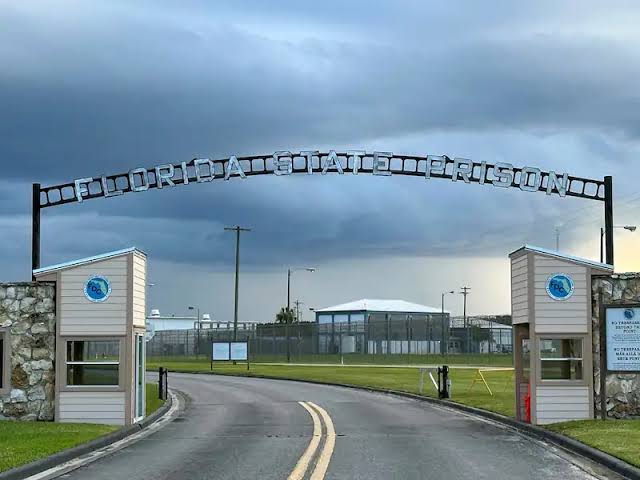
On the night of July 14, 2026, the State of Florida executed Dennis Sochor. He was 74 years old. He was a United States Army veteran. He had spent forty years on death row, which means he had spent the substantial majority of his adult life inside Florida State Prison, waiting to find out whether the state would eventually kill him. Tonight, it did.
We grieve for Patricia Gifford, whose life was taken in 1981, and for everyone who has carried the weight of that loss across four and a half decades. Nothing that happened on July 14, 2026 can restore what was taken from Patricia, and nothing about the case against Florida’s execution of Dennis Sochor diminishes the reality of her death or the grief of those who loved her. Those two truths can and must coexist: that Patricia Gifford deserved justice, and that what Florida carried out tonight was not justice. It was an act of violence committed in the name of every Florida citizen, and every Florida citizen bears some portion of the moral weight of it.
Sustainable Action Now has been covering Florida’s execution pace in 2026 with mounting alarm, and the execution of Dennis Sochor is the moment to say plainly what the numbers already show: Florida has executed more people in the first seven months of 2026 than every other state in the country combined. This is not a record to invoke in a political argument or a benchmark to celebrate in a governor’s press release. It is a moral reckoning, and it demands the kind of sustained public attention that executions have historically received only in the days immediately surrounding them, before the news cycle moves on and the name of the person killed fades.
Dennis Sochor’s name should not fade. His story is worth telling fully.
Who Dennis Sochor Was Before He Was a Death Row Number
Dennis Sochor did not arrive at Florida State Prison as a fully formed adult whose choices occurred in a vacuum. The biographical record of his early life, which emerged in the decades of litigation surrounding his case, reveals a person whose trajectory toward the decisions he made in 1981 was shaped profoundly by circumstances he did not choose and could not control. People with safe childhoods and nurturing family environments do not, as a general matter, end up convicted of violent crimes and sentenced to death. The path from a traumatic, neglected, mentally ill upbringing to a death sentence follows a logic that is not about excusing what happened to Patricia Gifford. It is about understanding how human beings become who they become, which is exactly the kind of understanding that the death penalty, in its current American application, consistently refuses to exercise.
Dennis experienced profound trauma, violence, and neglect in his formative years. He grew up with untreated bipolar disorder in an era when mental illness was even less understood, less accessible for treatment, and less likely to be recognized by the systems that should have intervened than it is today. He served his country in the United States Army. He came back from that service carrying whatever it had added to what he already carried. And in 1981, something happened that ended Patricia Gifford’s life and set Dennis on the path to a death sentence.
The State of Florida has argued for forty years that what happened in 1981 is fully understood and that the case against Dennis was settled beyond the reasonable doubt required to justify execution. The actual evidentiary record is considerably more complicated than that narrative allows.
The Case: What Was Certain and What Was Not
The State’s case against Dennis Sochor rested substantially on statements he made to police following his arrest, which were given during an untreated depressive episode of his bipolar disorder. Statements made by a person in acute psychological crisis, without adequate legal representation, during a mental health episode severe enough to have produced significant impairment of judgment and self-regulation, carry evidentiary weight that the legal system has historically been far more willing to assign than the science of mental health and interrogation psychology supports. These statements became the foundation of a capital conviction.
The prosecution also relied heavily on the testimony of Dennis’s brother, Gary, who was present on the night Patricia Gifford disappeared. Gary appears to have been granted immunity for his cooperation and was never charged with any crime related to the case. The asymmetry of that arrangement is significant: the person who was present and who cooperated with prosecution walked away without criminal accountability, while the person whose impaired statements formed the evidentiary core of the case received the death penalty.
The most troubling unresolved thread in this case, and the one that Florida’s advocates for Dennis raised repeatedly across decades of post-conviction proceedings, is the absence of Patricia Gifford’s body. Her remains were never found. The State has used this fact as evidence of Dennis’s remorselessness, arguing that his failure to lead authorities to Patricia’s location demonstrates the callous indifference to human life that capital punishment is supposed to be reserved for. Dennis’s own account was consistent across many years: he does not know precisely where Patricia was killed, and he stated clearly that if he did know, he would lead police to her. There is no obvious motivation for him to lie about this. He detailed his involvement to police after his arrest with a frankness that was, in the context of his mental state and the circumstances of his questioning, arguably more confession than calculation.
What makes the body’s absence particularly revealing in light of the State’s own conduct is what happened in 2022. Law enforcement contacted Gary, Dennis’s brother, requesting information about the location of Patricia’s remains. If the State is certain it has the full picture of this crime, if the case is as settled as forty years of litigation have been expected to establish, what are investigators still seeking from Gary? The question has never been adequately answered, and the execution of Dennis Sochor has now ensured it never will be.
The method of execution added its own layer of legal and ethical concern. Florida’s lethal injection protocol has been challenged repeatedly, and the legal system’s response to those challenges has been to erect procedural barriers that make meaningful review almost impossible to achieve before an execution date arrives. The state has altered its protocol across the years and then successfully argued that challenges to the new protocol were raised too late because previous challenges addressed the old one. This is not a legal system functioning with integrity. It is a shell game that allows the state to kill people before the courts can examine how it is killing them.
Forty Years on Death Row: The Man Dennis Sochor Became
The most powerful argument against executing Dennis Sochor was not procedural or evidentiary, though the procedural and evidentiary concerns are real and serious. It was the plainest and most human argument available: by July 2026, after four decades of imprisonment, Dennis Sochor was not the same person who entered Florida State Prison in the mid-1980s. He was not a threat to anyone. He was a septuagenarian who listened to classical music and read philosophy, who wrote letters to friends about suffering children in war zones and refugees living in poverty, who watched documentaries about migrating birds and looked forward to the rare sight of a bald eagle soaring over the prison yard, and who found in the small creatures that moved through the concrete geography of his imprisonment a reason to pay attention to life.
He fed the squirrels in the rec yard. He watched for eagles.
His letters, collected and published by a longtime penfriend who maintained correspondence with him across decades, reveal a person whose moral and intellectual life had not contracted into self-pity or resentment but had somehow expanded, in the most constrained and least hospitable conditions imaginable, toward a genuinely outward orientation. He wrote about people he had never met and would never meet, suffering at scales that dwarfed his own situation. He wrote about what he would do if he were ever released: find the most peaceful place on the planet and do as many good deeds as possible.
He wrote about learning to cherish life. About the necessity of self-love as a precondition for loving others. About searching for all signs of life in the loneliness of his circumstances. He found those signs in birds and squirrels and friendship and classical music and the philosophical texts that gave him a language for the reflection that forty years of waiting had made unavoidable.
The death penalty’s defenders will argue that this transformation is irrelevant to the question of what Dennis Sochor deserved for what he did in 1981. That argument has a certain internal consistency if you accept the premise that capital punishment is purely retributive, that the state’s interest in executing someone is independent of whether that person continues to represent any danger to anyone, and that the passage of forty years and the complete transformation of a person’s character and mind are morally weightless when the original crime was serious enough. If you accept those premises, the execution of a 74-year-old man who fed squirrels and watched for eagles and wrote letters about compassion is defensible.
Those are premises that Sustainable Action Now does not accept, and that an increasing number of Florida citizens, legal scholars, mental health professionals, and even former death penalty supporters do not accept either.
Florida at the Halfway Point: The Darkest Distinction
Halfway through 2026, Florida has executed more people than every other state in the country combined. That sentence requires a moment to sit with. Not because of its political implication, not because it scores a point in any argument, but because of what it actually means: that the government of the State of Florida, acting on behalf of the people of Florida, has killed more of its own citizens in the first seven months of this year than every other state government in the nation combined has done in the same period.
Governor Ron DeSantis has accelerated Florida’s execution pace in ways that are historically unprecedented in the modern death penalty era. The warrant signings have come at a frequency that advocacy organizations describe as unlike anything they have experienced, and the organizations doing this work, including the Florida Abolitionists for Death Penalty and Death Penalty Focus, have been working at a pace that the scale of the situation demands and that their resources make deeply difficult to sustain. Organizing statewide vigils, supporting the families of the condemned, educating legislators and the public, mobilizing thousands of Floridians to contact decision-makers, and responding immediately to each new death warrant while simultaneously building the long-term movement that will one day end capital punishment in Florida: these are the activities of a small number of people working against a state that has made execution its political identity.
The context that surrounds Florida’s execution pace deserves explicit acknowledgment. A significant proportion of the people Florida is executing are elderly, as Dennis Sochor was. Several are veterans, as Dennis Sochor was. A significant proportion have histories of childhood trauma, untreated mental illness, and poverty, as Dennis Sochor did. They are not the people that most Americans envision when they think about the death penalty being applied to the worst of the worst. They are people whose complex, broken, sometimes violent lives intersected with a criminal legal system that assigned them the ultimate punishment and then held them in cages for decades while appeals played out, aging into the elderly men and women who are now being killed at a pace the state has never previously maintained.
Dennis Sochor watched for bald eagles over Florida State Prison. He fed the squirrels that came into the rec yard. He wrote letters about compassion to a penfriend who kept them and published them so the world could read the words of a person Florida was preparing to kill.
Florida killed him anyway.
The Question That Every Execution Leaves Behind
The statement released by the Florida Abolitionists for Death Penalty following Dennis Sochor’s execution asked the question that the organization asks after every execution in the state: what part of our own humanity do we surrender when we allow killing to be carried out in our names?
It is a question worth carrying. Not as a rhetorical device but as a genuine inquiry into what capital punishment costs the society that practices it, beyond the financial costs of capital litigation and the human costs to the condemned and their families and the families of victims who spend decades in the shadow of a legal process that was supposed to deliver resolution and rarely does. What does it cost a society to maintain the machinery of state execution? What does it require of the correctional officers and execution teams who participate in the process? What does it do to the political culture of a state where executions have become a pacing item on the executive calendar, where the number of people killed per year has become a metric that a governor can invoke?
Ohio Governor Mike DeWine, standing before reporters in Columbus and announcing his support for abolition, offered one answer: that the moral justification for the death penalty collapses when you follow the evidence honestly, and that intellectual integrity requires acknowledging it. Florida’s governor is following the evidence to a different conclusion, or rather is not following the evidence at all but is executing people at a rate the evidence does not support and that the basic moral arithmetic of human dignity cannot justify.
Patricia Gifford deserved justice. She deserved a legal system that found the truth of what happened to her, that held the right people accountable with the right degree of certainty, and that gave her family the resolution that comes from knowing. Whether the execution of Dennis Sochor, on the basis of a case built on statements made during a mental health crisis and the testimony of a person granted immunity, delivered that justice is a question the State of Florida has chosen to consider permanently closed.
It is not permanently closed. Dennis Sochor is gone. The questions remain.
Sustainable Action Now remembers Patricia Gifford. We remember Dennis Sochor. We will continue covering the campaign to end capital punishment in Florida, in Ohio, and across every state where this machinery is still running.
The next execution on Florida’s calendar is already scheduled.
We are asking Florida to stop. We are asking you to join us in asking.
Contact your Florida state representatives and senators. Support the Florida Abolitionists for Death Penalty in their work to organize, educate, and mobilize the citizens of Florida against a pace of executions that no other state in the country is matching. Attend or host a vigil. Write a letter. Make a donation. Do not let the executions become so routine that they pass without the resistance they require.
Dennis Sochor is no longer waiting for an eagle to fly over Florida State Prison. He is gone. The rest of us are still here, and the question of what we do about what is being done in our names remains entirely, urgently open.
Sustainable Action Now will continue covering capital punishment, the Florida execution calendar, and the growing national movement toward abolition. Our death penalty coverage is updated as developments occur.